Photo via The Guardian

Skull fractures suggest servants of Egypt’s ancient kings were sacrificed

Read the original at The Guardian ↗
Cite

correspondent, N. D. S. (2026, October 5). Skull fractures suggest servants of Egypt’s ancient kings were sacrificed. The Guardian. https://www.theguardian.com/science/2026/oct/05/skull-fractures-suggest-servants-of-egypts-ancient-kings-were-sacrificed

Dated when The Aporia collected the article, usually within hours of publication. Check the original for its exact date and byline.

The Guardian · collected 2026-10-05 · by Nicola Davis Science correspondent

Quick Summary

No summary of this article yet; the story summary below covers the event.

AI analysis

Story summary

Dr Roselyn Campbell, a bioarchaeologist from Purdue University, has published research in the journal Frontiers in Environmental Archaeology suggesting that servants of early Egyptian kings may have been sacrificed upon their death. The study re-examined 46 skulls first excavated by British archaeologist Flinders Petrie at the royal cemetery of Umm el-Qa’ab near Abydos, which dates back to around 3,000 BC.

Campbell found significant cranial trauma in 18 out of the 46 skulls, indicating that these individuals may have died due to blunt force injuries shortly before or during burial. The graves surrounding the tombs of First Dynasty rulers were believed to belong to court officials and artisans who served the kings, supporting the theory of retainer sacrifice proposed by Petrie.

The new evidence provides a clearer picture of the violent end that some of these servants may have faced when their royal masters died, offering support for the practice of human sacrifice in ancient Egypt. The study concludes that at least 39% of the individuals represented in the examined skulls might have been deliberately killed as part of this sacrificial tradition.

Written for “Ancient Egyptian King Servant Sacrifice” on 2026-11-04, grounded in this article and the 2 other(s) covering the same event.

Story

📰 Ancient Egyptian King Servant Sacrifice
Science · 3 article(s) covering the same event. See how they differ ↓

Compared with similar articles

This article reads unscored and hedges 29% of its claims. Each row says how that neighbour differs.
Times of India
Hedges 8 of 40 claims Outlet record 59/100
Times of India
Hedges 15 of 49 claims Outlet record 59/100
How this article was measured signals, leaning charts, publisher record, byline, topics and claims

Signals How these are calculated →

Claims extracted
21
sentences that state something as happening or true
Uncertain
29%
6 of 21 hedged ("reportedly", "may", "according to")
Leaning
not political
takes no side on a contested political question
Publisher signals
66/100
The Guardian's corrections and hedging, across everything collected from it. Not a measure of accuracy.
Outlets on this story
3
Science
Same framing elsewhere
1
articles that frame the event the way this one does
Analyzed 2026-10-05 · how these are computed

How this is being covered How these are calculated →

Article leaning vs. publisher reliability
Source leaning vs. consistency

Publisher

The Guardian · 2937 article(s) · 6 correction(s) detected
Running correction rate · 6 correction(s)

Who wrote this

Nicola Davis Science correspondent
11 article(s) here · 1 carrying a prediction
🔮 But if campaigners get their way, this could be the last blast for bangers in the back yard.
🔮 However “a level below 50 might be a pointer of iron deficiency,” said Sue Pavord, professor of practice in medical haematology at Oxford University hospitals.
🔮 Cartmill said the preference could be rooted in the sound of laughter putting the orangutans in a more positive emotional state when they learned to associate the substance with food.
🔮 “Nobody of lower rank would have been buried in anything like that,” he said, adding that the lid was another clue.
🔮 Livestreaming an execution could cause post-traumatic stress disorder in the viewing public, mental health experts have said after the US confirmed plans to broadcast the death by firing squad of a man who shot dead 13 unarmed soldiers.
🔮 They will share a prize of 12m Swedish kronor (about £901,500).
🔮 Court officials and craftspeople serving early Egyptian kings may have been sacrificed when their ruler died, according to research that found fractures in several ancient skulls.
🔮 But such woes could soon be a thing of the past, with gene-edited bananas that keep their freshly peeled colour now one step closer to reaching British shoppers.
🔮 Drones could help cut the time it takes to get a defibrillator to people experiencing cardiac arrests when not in hospital, researchers have suggested.
🔮 Now experts are hoping a database of canine DNA could offer vital leads.
Also by Nicola Davis Science correspondent
Nothing else under this byline is closely related to this article, so these are simply their most recent.
All 11 articles by Nicola Davis Science correspondent →

Topics

Abydos Egypt Egyptian Frontiers in Environmental Archaeology Umm el-Qa’ab

Subjects

Campbell PERSON · 5× Egyptian NORP · 3× Egypt GPE · 2× Petrie PERSON · 2× Abydos GPE · 1× Aha PERSON · 1× Frontiers in Environmental Archaeology ORG · 1× Purdue University ORG · 1× Roselyn Campbell PERSON · 1× Umm el-Qa’ab GPE · 1×

Narrative

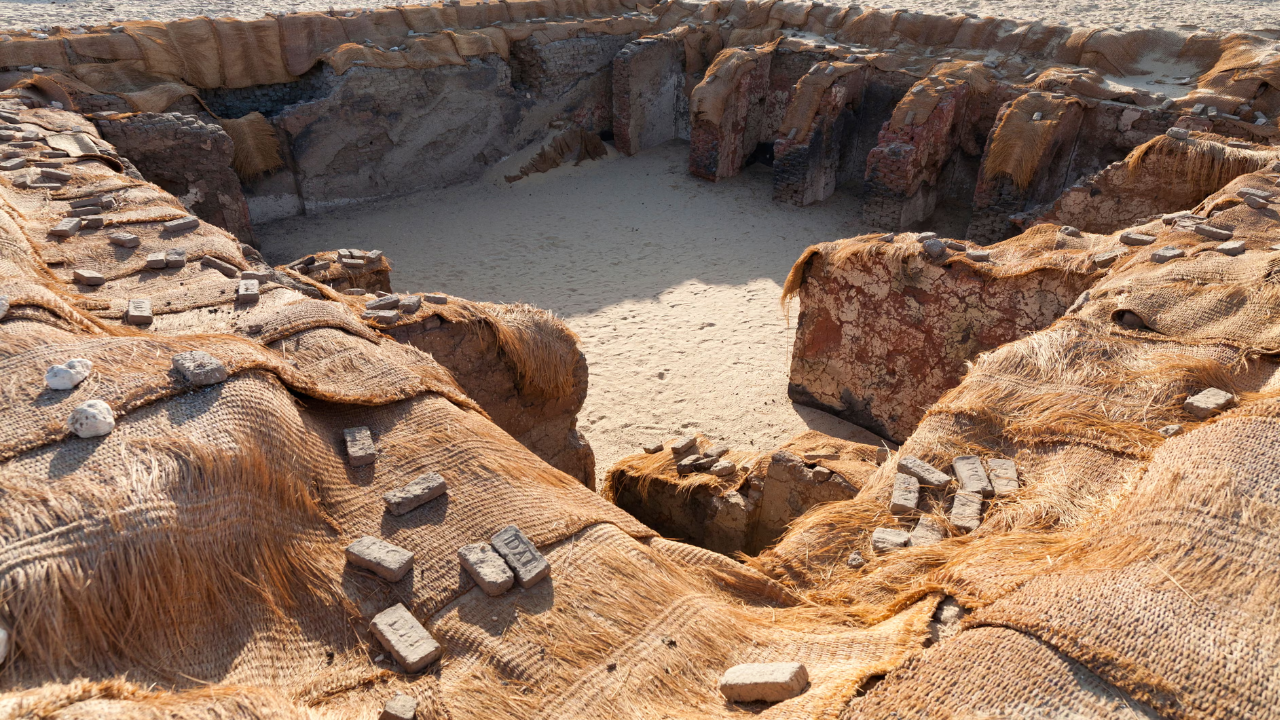
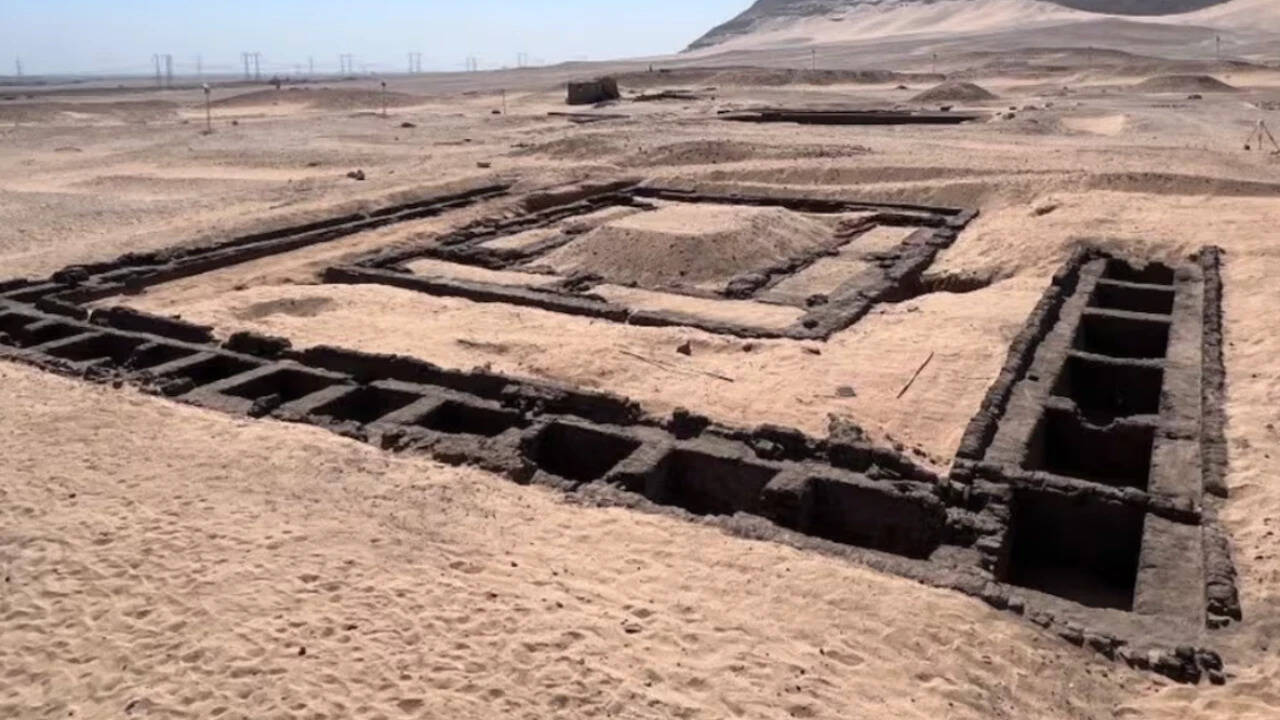
Not only royalty were buried at the site: surrounding these structures are graves thought to belong to people associated with the royal households – including ladies, seal-bearers, inspectors and artisans. Writing in the journal Frontiers in Environmental Archaeology, Dr Roselyn Campbell, author of the study from Purdue University in the US, notes: “While Aha, the first ruler of the First Dynasty, seems to have only had a few subsidiary burials, his successors included hundreds of subsidiary graves around their tombs and enclosures.”
framing: mixed · carried by 1 article(s) · first seen 2026-10-05
🔮 Court officials and craftspeople serving early Egyptian kings may have been sacrificed when their ruler died, according to research that found fractures in several ancient skulls.

Claims (21 extracted, 6 hedged)

Court officials and craftspeople serving early Egyptian kings may have been sacrificed when their ruler died, according to research that found fractures in several ancient skulls. uncertain
that → serve → skulls
The royal cemetery of Umm el-Qa’ab near Abydos features the tombs and enclosures of the First Dynasty rulers of Egypt, and dates as far back as 3,000BC. asserted
cemetery → feature → 3,000BC
Not only royalty were buried at the site: surrounding these structures are graves thought to belong to people associated with the royal households – including ladies, seal-bearers, inspectors and artisans. Writing in the journal Frontiers in Environmental Archaeology, Dr Roselyn Campbell, author of the study from Purdue University in the US, notes: “While Aha, the first ruler of the First Dynasty, seems to have only had a few subsidiary burials, his successors included hundreds of subsidiary graves around their tombs and enclosures.” asserted
successors → bury → tombs
The graves of the retainers were excavated in the 1920s by the English Egyptologist Flinders Petrie, who believed them to be an example of human sacrifice – a view some later experts agreed with. asserted
experts → excavate → sacrifice
But there was a snag: Petrie did not find any evidence of trauma on the remains. asserted
Petrie → be → remains
While he suggested the individuals may have been buried alive, others suggested the retainers died naturally and were later reburied at Abydos when their ruler died. uncertain
ruler → suggest → Abydos
Campbell re-examined the skulls of 46 retainers excavated from graves surrounding the funerary enclosures of three different royals – King Djer, King Djet, and Queen Merneith – from the Duckworth Collections at the University of Cambridge. asserted
re → re → Cambridge
“This question of whether or not retainer sacrifice was practised in Egypt has been debated for over a century, but this is the first study to examine the human remains from the tombs themselves,” Campbell told the Guardian. asserted
Campbell → practise → Guardian
Campbell reports that 18 of the skulls showed signs of potentially lethal trauma such as fractures and – in one case – a chopping injury to the eye. asserted
18 → report → eye
Campbell believs Petrie may have seen the skull fractures but did not realise they were injuries that occurred around the time of death, rather than arising as a result of later damage. uncertain
that → believ → damage
The fractures, she adds, are unlikely to have been caused by a mace – a weapon often depicted in ancient Egyptian art as being used by a victorious king to smite his enemies. asserted
she → add → enemies
Instead they are more likely to have been caused by flat, wide objects made of wood or antler. asserted
they → cause → wood
“For the crania without trauma, we cannot be certain they were sacrificed. asserted
they → sacrifice → trauma
It’s quite possible that some of the retainers were sacrificed, while others were not,” she said. asserted
she → ’ → retainers
“With such a small sample size of the original burial population, we simply can’t see the full extent of these funerary rituals, nor can we be sure that this sample is truly representative of all the retainers.” asserted
sample → see → retainers
Campbell noted the number of subsidiary graves tapered off quickly and seems to have disappeared with the beginning of the Second Dynasty. asserted
number → note → Dynasty
Salima Ikram, a professor at the American University in Cairo, said while the idea of retainer sacrifice was not totally new, “this paper is one of the few times that rigorous current methodologies are being used to evaluate these remains”. asserted
methodologies → say → remains
She added: “The practice was short-lived, with people being replaced by statuettes. asserted
people → add → statuettes
Possibly some or all retainers felt that this was a boon and that they would enjoy an eternal life in the service of the god-king, though they might also have resented it, been terrified, and tried to escape this fate.” uncertain
they → feel → fate
Dr Dawn McCormack, an Egyptologist at Samford University, Alabama, said similar sacrifices had occurred across different cultures and times, adding that not everyone at the Egyptian site may have been compliant. “If you really think about what those scenes would have looked like, it would have been very gruesome,” she said. uncertain
she → say → what
While noting that the study only involved a small number of skulls from the burial site, “the idea that some of the people may have been violently killed, I think, is something that in reality we might expect”, she said. uncertain
she → note → reality

💬Give feedback
🕘History 🎫Support