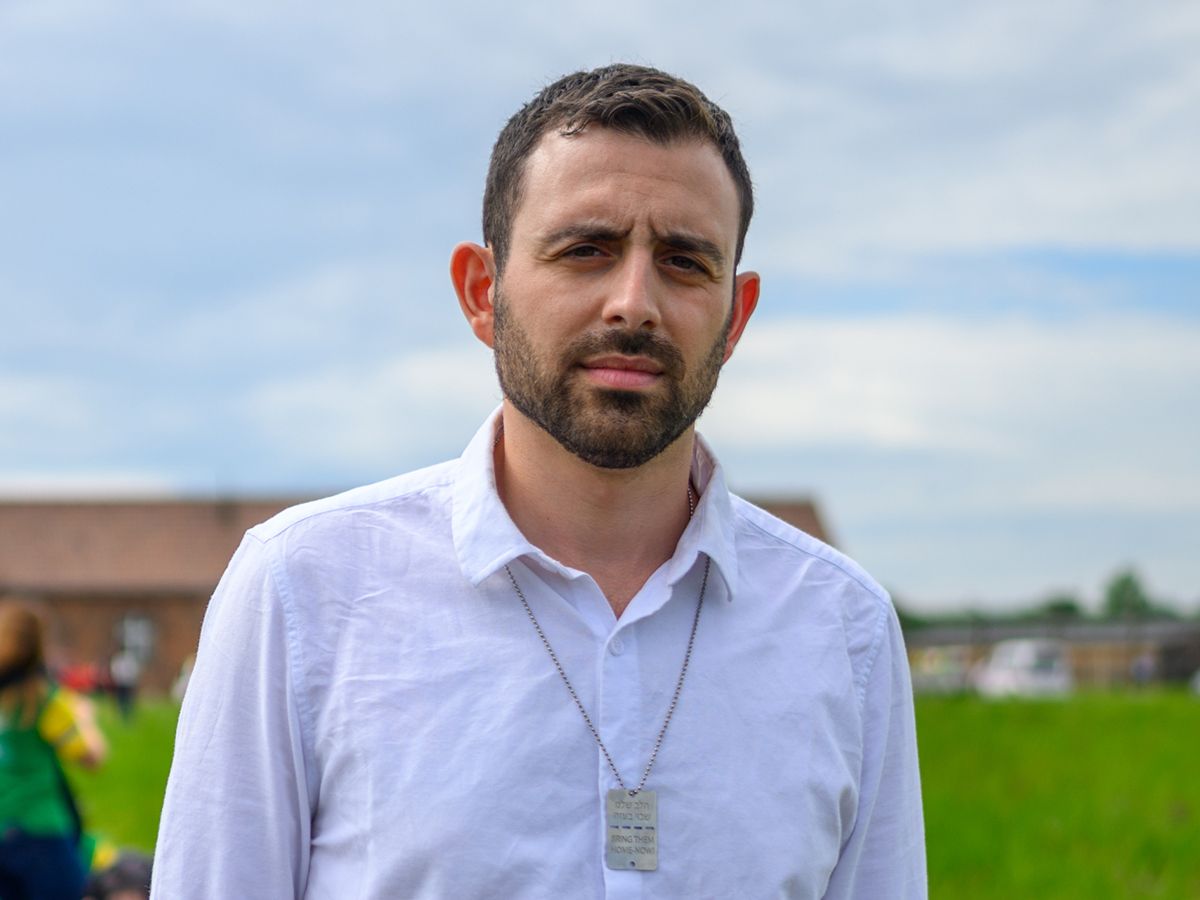
Photo via The Guardian

British Jews more likely to identify as Zionist since 7 October attacks, research finds

Read the original at The Guardian ↗
Cite

Osuh, C. (2026, October 5). British Jews more likely to identify as Zionist since 7 October attacks, research finds. The Guardian. https://www.theguardian.com/news/2026/oct/05/british-jews-more-likely-to-identify-as-zionist-since-7-october-attacks-research-finds

Dated when The Aporia collected the article, usually within hours of publication. Check the original for its exact date and byline.

The Guardian · collected 2026-10-05 · by Chris Osuh

Quick Summary

A study by the Institute for Jewish Policy Research shows that British Jews have become more likely to identify as Zionist, consider emigrating to Israel, and feel emotionally attached to Israel since October 2023 attacks. Specifically, the percentage of Zionists among British Jews increased from 59% in 2022 to 66% by June 2025, while those feeling antisemitism is a significant issue tripled to 50%. The study also found that Jewish members of the Green party, who were already least likely to feel attached to Israel, saw further declines in their emotional connection and support for Israel.
Written by AI on 2026-10-05, from this article's own text only (the story summary below draws on all the coverage).

AI analysis

Story summary

British Jews have become more likely to identify as Zionist, consider emigrating to Israel, and feel a close attachment to the country since the 7 October attacks in Israel, according to research from the Institute for Jewish Policy Research (JPR). The study found that the percentage of British Jews identifying as Zionist rose by seven points to 66% between 2022 and 2025. Additionally, those feeling "very emotionally attached" to Israel increased by 13 points to 51%, while the number believing antisemitism in the UK was a “very big problem” tripled to 50%. However, Jewish people who vote for the Green party felt their attachment to Israel had weakened, with mean scores declining from 0.7 to 0.2 on a scale of zero to 10 between 2022 and 2024. The study highlights growing ties among British Jews to Israel, influenced by personal connections and the impact of recent events.

Written for “British Jews Zionist Identification” on 2026-11-03, grounded in this article and the 0 other(s) covering the same event.

Story

📰 British Jews Zionist Identification
Politics · 1 article(s) covering the same event.

Compared with similar articles

This article reads leans right and hedges 4% of its claims. Each row says how that neighbour differs.
New York Post
Hedges 2 of 17 claims Outlet record 66/100
“Article A describes a specific incident at a Green Party conference in Brighton where they voted on an amendment regarding Zionism, while Article B reports on research findings about changes in British Jewish identity and views towards Zionism after the October 7 attacks.”
Daily Mail
⚖️ Leans left further left than this Hedges 1 of 35 claims Outlet record 69/100
“Article A discusses a research finding about British Jewish identity changes since the attacks, while Article B reports on Sadiq Khan's condemnation of Israel's actions on the third anniversary of the October 7 attacks.”
ABC News (AU)
Hedges 3 of 23 claims Outlet record 68/100
“Article A discusses a study's findings related to British Jews' identity changes following attacks, while Article B reports criticism of pro-Palestinian vigils marking the anniversary of Hamas attacks on Israel.”
New York Post
⚖️ Leans strongly right further right than this Hedges 0 of 24 claims Outlet record 66/100
“The articles discuss different aspects of Jewish identity and antisemitism but do not describe the same specific incident.”
Al Jazeera
⚖️ Leans strongly left further left than this Hedges 2 of 35 claims Outlet record 60/100
“The articles discuss different aspects related to the October 7 attacks but describe distinct events and impacts in British Jewish identity versus Israeli society.”
The Guardian
⚖️ Leans left further left than this Hedges 9 of 85 claims Outlet record 66/100
“The articles cover different topics related to Zionism but describe separate events: one discusses increased Zionist identification among British Jews post-attacks, while the other covers a Green party vote on Zionism.”
National Post
⚖️ Leans left further left than this Hedges 4 of 142 claims Outlet record 60/100
“Article A discusses research findings about British Jews' increased identification with Zionism following attacks on October 7, while Article B covers an interview regarding Israel's upcoming election and the mood in Israel related to Benjamin Netanyahu.”
New York Post
⚖️ Leans left further left than this Hedges 4 of 18 claims Outlet record 66/100
“The articles report on different polls with similar themes but covering distinct populations (British Jews vs. Jewish New Yorkers) and timeframes.”
The Guardian
Hedges 2 of 29 claims Outlet record 66/100
“Article A discusses research findings about changes in British Jewish identity following the attacks on 7 October, while Article B reports on a planned vigil for the victims of those attacks.”
How this article was measured signals, leaning charts, publisher record, byline, topics and claims

Signals How these are calculated →

Claims extracted
25
sentences that state something as happening or true
Uncertain
4%
1 of 25 hedged ("reportedly", "may", "according to")
Leaning
Leans right
of the writing, not the subject · beta estimate
Publisher signals
66/100
The Guardian's corrections and hedging, across everything collected from it. Not a measure of accuracy.
Outlets on this story
1
Politics
Same framing elsewhere
1
articles that frame the event the way this one does
Analyzed 2026-10-05 · how these are computed

How this is being covered How these are calculated →

Article leaning vs. publisher reliability
Source leaning vs. consistency

Publisher

The Guardian · 2872 article(s) · 6 correction(s) detected
Running correction rate · 6 correction(s)

Who wrote this

Chris Osuh
4 article(s) here · 1 carrying a prediction
🔮 Shabana Mahmood will announce sweeping new rules on Monday on how long legal migrants must wait for settlement in the UK, with most likely to wait a decade and some up to 15 years.
🔮 British Jewish organisations will gather in central London for a vigil honouring victims of the 7 October attacks in Israel on Wednesday, after a day of tributes from politicians and community leaders.
🔮 Funded legal support could make a real difference in helping people access the compensation and justice they deserve.
🔮 The JPR director, Jonathan Boyd, said Jewish Greens tended to be secular, adding: “If your social framework is much more open, you’re more likely to be shaped by the conversation in wider society.” Jewish Greens were least likely to say they would migrate to Israel in the next five years, with a mean score of 0.2 on a scale of zero to 10, declining from 0.7 between 2022 and 2024.
Also by Chris Osuh
Nothing else under this byline is closely related to this article, so these are simply their most recent.

Topics

British Jews Israel JPR Jewish Zionist

Subjects

Israel GPE · 17× Jewish NORP · 9× Jews NORP · 8× British NORP · 7× Boyd PERSON · 4× British Jews NORP · 3× Greens ORG · 3× JPR ORG · 3× Zionist NORP · 3× the Green party ORG · 2×

Narrative

Seventy per cent of British Jews have close friends and family there, those connections are very real and mean British Jews were impacted by the 7 October attacks.” Boyd said he expected the growth in the UK Orthodox community, who have higher birthrates than secular Jews, was likely to deepen attachment to Israel over time because of the strength of Orthodox culture in Israel, even though many Haredi Orthodox Jews do not identify with secular political Zionism.
framing: assertive · carried by 1 article(s) · first seen 2026-10-05
🔮 The JPR director, Jonathan Boyd, said Jewish Greens tended to be secular, adding: “If your social framework is much more open, you’re more likely to be shaped by the conversation in wider society.” Jewish Greens were least likely to say they would migrate to Israel in the next five years, with a mean score of 0.2 on a scale of zero to 10, declining from 0.7 between 2022 and 2024.

Claims (25 extracted, 1 hedged)

British Jews have become more likely to identify as Zionist, consider emigrating to Israel, and feel a close attachment to the country since the 7 October attacks, research has found. asserted
research → become → attacks
A study from the Institute for Jewish Policy Research (JPR) titled “October 8 Jews: The Impact of October 7 on British Jewish Identity”, by Dr David Graham, found the percentage of British Jews who identified as Zionist rose seven points to 66%, between 2022 and 2025. asserted
who → title → 2022
By June 2025, the numbers who felt antisemitism in the UK was a “very big problem” had tripled to 50%. asserted
antisemitism → feel → %
The percentage of British Jews who felt “very emotionally attached to Israel” rose to 51% in June 2025, up 13 points from before the Israel-Gaza war. asserted
who → feel → war
Meanwhile, those who felt supporting Israel was “very important” to their Jewish identity rose 10 points to 45%. asserted
supporting → feel → %
However, the report found Jewish people who vote for the Green party felt their attachment to Israel had weakened. asserted
attachment → find → Israel
The research was compiled before a motion stating “Zionism is racism” was voted on at this weekend’s Green party conference. asserted
Zionism → compile → conference
Previous JPR research found up to one in five British Jews were backing the Green party by June last year. asserted
Jews → find → June
The study found that between 2023 and 2024, the percentage of Jewish Greens who felt “very emotionally attached to Israel” fell one point to 7%, while the percentage who felt supporting Israel was “very important” to Jewish identity fell eight points to 3%. asserted
who → find → %
Jewish Greens were least likely to see antisemitism as a “very big problem in the UK”, with the percentage declining seven points to 7% in the same period. asserted
percentage → see → period
Meanwhile, between 2022 and 2024, the percentage of Greens who identify as Zionist fell three points to 14%. asserted
who → identify → %
The JPR director, Jonathan Boyd, said Jewish Greens tended to be secular, adding: “If your social framework is much more open, you’re more likely to be shaped by the conversation in wider society.” Jewish Greens were least likely to say they would migrate to Israel in the next five years, with a mean score of 0.2 on a scale of zero to 10, declining from 0.7 between 2022 and 2024. asserted
score → say → 2022
In the wider community, the score was at 1.99, rising from 1.38 before 7 October, with Haredi Orthodox Jews and 50- to 59-year-olds the most likely. asserted
Jews → rise → October
Sixteen- to 29-year-olds were also less likely to say Israel was “very important” to their identity, with the percentage falling by one point – to 27% – in 2024. asserted
percentage → say → 2024
Boyd said their experience of Israel had been “much more about Gaza and Hamas” than their parents’ generation. asserted
experience → say → generation
Boyd said the overall growth in British Jewish attachment to Israel was “directly associated with concern about antisemitism in Britain” as well as “associations with Israel as a Jewish homeland”. asserted
growth → say → homeland
He said the UK government had been “very supportive on a security level” to British Jews, but needed to show more commitment to bridging Israeli-Palestinian differences and an understanding of how policy could affect UK levels of antisemitism. uncertain
policy → say → antisemitism
He added that unless tougher rhetoric on Israel was balanced with a willingness to tell society “we understand why [Israel] is so important to Jews”, it risked “pushing Israelis rightwards and British Jews away”. asserted
it → add → Israelis
Boyd said: “Israel represents security to many Jews. asserted
Israel → say → Jews
When there’s a sense that Israel is more insecure, it is unsettling for Jews’ sense of safety, and they are likely to rally to its side. asserted
they → ’ → side
Seventy per cent of British Jews have close friends and family there, those connections are very real and mean British Jews were impacted by the 7 October attacks.” Boyd said he expected the growth in the UK Orthodox community, who have higher birthrates than secular Jews, was likely to deepen attachment to Israel over time because of the strength of Orthodox culture in Israel, even though many Haredi Orthodox Jews do not identify with secular political Zionism. asserted
Jews → have → Zionism
The research, using a sample of 2,500 people from the 315,000-strong British Jewish community, tracked opinion across the spectrum of Jewish religious and political affiliation apart from Reform UK supporters, because the tracking period predated the party’s rise. asserted
period → use → rise
Conservative voters led the growth towards pro-Israel and Zionist sentiment and were most likely to be concerned about antisemitism. asserted
voters → lead → antisemitism
The research period predated the Manchester synagogue attack, the first anniversary of which was this month, the Iran war, and new trade sanctions. asserted
anniversary → predate → which
The report comes after previous JPR research showed British-Jewish support for a two-state solution dropping to 49% – the lowest level since records began. asserted
records → come → %

💬Give feedback
🕘History 🎫Support