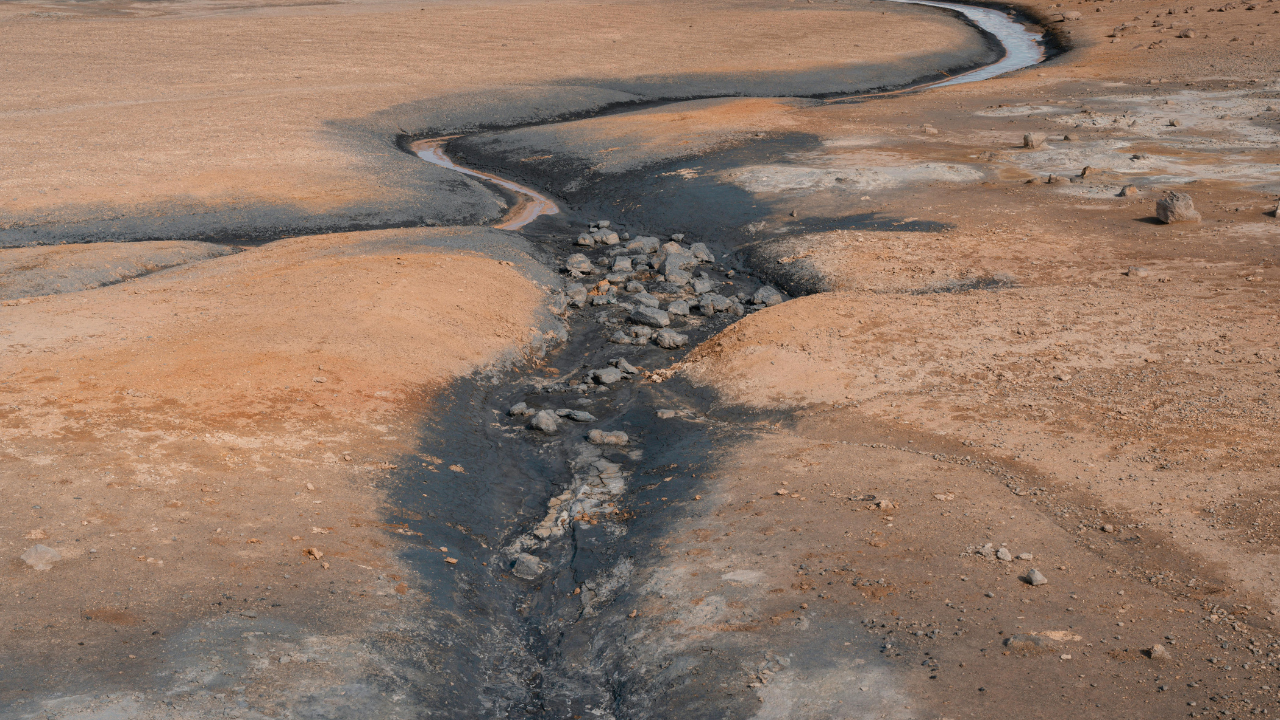
Photo via Times of India

Florida road test finds incinerator ash had no groundwater impact over 10 years

Read the original at Times of India ↗
Cite

TOI Science Desk. (2026, October 5). Florida road test finds incinerator ash had no groundwater impact over 10 years. Times of India. https://timesofindia.indiatimes.com/science/discovery/florida-researchers-tested-waste-incinerator-ash-beneath-a-working-road-for-10-years-groundwater-monitoring-found-no-evidence-of-impact/articleshow/134656996.cms

Dated when The Aporia collected the article, usually within hours of publication. Check the original for its exact date and byline.

Times of India · collected 2026-10-05 · by TOI Science Desk

Quick Summary

Researchers in Florida conducted a ten-year study to determine if municipal solid waste incinerator bottom ash could safely be used beneath roads without impacting groundwater. From 2014 to 2024, they built a test roadway incorporating the ash in its layers and monitored nearby groundwater wells for any contamination. The results showed no adverse effects on water quality over the decade-long period.
Written by AI on 2026-10-05, from this article's own text only (the story summary below draws on all the coverage).

AI analysis

Story summary

In Florida, researchers conducted a decade-long study from 2014 to 2024 to determine if incinerator bottom ash could safely be used as a base layer in road construction. They built a full-scale test roadway using this waste product, which is produced when burning everyday municipal solid waste. The project involved placing the ash beneath the pavement and incorporating it into both asphalt and concrete materials. Groundwater was closely monitored through wells placed around the site over the ten-year period. Despite concerns about potential contamination, the study found no evidence that the ash had affected groundwater quality during this time frame. This research aims to address environmental challenges by repurposing waste material, potentially reducing landfill use while maintaining road safety standards.

Written for “Incinerator Ash Safety Study” on 2026-11-03, grounded in this article and the 0 other(s) covering the same event.

Story

📰 Incinerator Ash Safety Study
Environment · 1 article(s) covering the same event.

Compared with similar articles

Nothing to compare against. No article is close enough to this one for the pipeline to have linked or judged the pair.
How this article was measured signals, leaning charts, publisher record, byline, topics and claims

Signals How these are calculated →

Claims extracted
34
sentences that state something as happening or true
Uncertain
15%
5 of 34 hedged ("reportedly", "may", "according to")
Leaning
not political
takes no side on a contested political question
Publisher signals
59/100
Times of India's corrections and hedging, across everything collected from it. Not a measure of accuracy.
Outlets on this story
1
Environment
Same framing elsewhere
1
articles that frame the event the way this one does
Analyzed 2026-10-05 · how these are computed

How this is being covered How these are calculated →

Article leaning vs. publisher reliability
Source leaning vs. consistency

Publisher

Times of India · 3982 article(s) · 3 correction(s) detected
Running correction rate · 3 correction(s)

Who wrote this

TOI Science Desk
307 article(s) here · 1 carrying a prediction
🔮 According to Reuters reporting by Will Dunham, a new study published in the journal Spixiana documents more than 90 Bangka slow lorises identified between 2015 and 2025.
🔮 “Normally, my job is quite monotonous, so I wanted to create something that would entertain people, turning my ‘serious’ job into something fun,” he said in a Guinness World Records news release.
🔮 The subsequent collision between the two galaxy clusters may then have compressed the cloud or re-energised its particles, causing it to shine more brightly in radio wavelengths once again.
🔮 The mathematicians at the University of California, Davis, argue that the answer may already lie within Einstein’s own equations and that an invisible form of energy may not be needed at all.
🔮 The work will be carried out by the West Tennessee River Basin Authority, which is preparing a plan to restore the river and the land around it.
🔮 Cornell University scientists have developed genetically engineered tomato plants that turn red-purple when nitrogen becomes scarce, giving farmers a visible warning that crops may need fertiliser.
🔮 By studying these crystals and other mineral grains, scientists could establish the meteorite's age and identify later changes caused by water.
🔮 Centuries later, bronze objects found in Scandinavia would preserve chemical signatures consistent with the metals produced at this Spanish site, offering evidence of connections that may have crossed much of Europe.
🔮 Deposited impurities and staining may also have contributed, while low temperatures and humidity could cause the fabric to crack.
🔮 Two male king cobras meeting during the breeding season may engage in a prolonged contest, using their bodies to wrestle for control rather than relying on the venomous strikes associated with these snakes.
Wire or desk byline, not an individual reporter.
Also by TOI Science Desk
Nothing else under this byline is closely related to this article, so these are simply their most recent.
All 307 articles by TOI Science Desk →

Topics

American Florida Pennsylvania the Environmental Protection Agency the United States

Subjects

the United States GPE · 4× Florida GPE · 3× American NORP · 1× Canva ORG · 1× European NORP · 1× Pennsylvania GPE · 1× the Environmental Protection Agency ORG · 1×

Narrative

Predictions state that groundwater 35 feet from the roadway would stay below regulatory thresholds (Image: Canva) What the full-scale Florida test road was built from and how groundwater was monitored The pilot road used bottom ash as the granular layer beneath the pavement and as an ingredient in both the asphalt and the concrete.
framing: assertive · carried by 1 article(s) · first seen 2026-10-05
🔮 In Florida, researchers tested whether ash left over from burning everyday waste could safely sit beneath a working road.

Claims (34 extracted, 5 hedged)

In Florida, researchers tested whether ash left over from burning everyday waste could safely sit beneath a working road. uncertain
ash → test → road
They built a full-scale test roadway using municipal solid waste incinerator bottom ash in the base layer, the asphalt and the concrete, then sampled groundwater from monitoring wells for ten years, from 2014 to 2024. asserted
They → build → 2024
The wells showed no evidence that the ash had affected groundwater. asserted
ash → show → groundwater
Here’s why the ash is being considered for roads, how the project was approved and tested, what the decade of results showed, and where the limits lie, using a published ten-year case study. asserted
limits → ’ → study
Why waste incinerator bottom ash is under study in the United States According to ‘ Environmental analysis of a ten-year pilot project using municipal solid waste incinerator bottom ash as road base: a case study’ uncertain
ash → use → base
Waste incineration plants in the United States burn over 30 million tonnes of municipal solid waste each year, which produces energy and shrinks the waste volume by about 90 per cent. asserted
which → burn → cent
The burning leaves two kinds of ash, fly ash, which is fine particles caught by pollution filters and makes up about 20 per cent of the total, and bottom ash, a coarse, gravel-like material made mostly of concrete, slag, glass and ceramic fragments. asserted
burning → burn → concrete
In the United States the two types are usually mixed and buried in landfills or dedicated ash disposal sites. asserted
types → mix → landfills
That may be changing. uncertain
That → change → ?
Reuse of bottom ash in construction is more established in Europe and Asia, and its success there has renewed American interest in recycling it. asserted
success → establish → it
How researchers tested the ash and modeled the risk to groundwater before the Florida road was built The project started with a risk assessment rather than construction. asserted
project → test → assessment
The main worry is leaching, which means water washing small amounts of metals out of a material. asserted
which → mean → material
Laboratory leaching tests identified aluminum, molybdenum and antimony as the substances most likely to exceed water quality thresholds. asserted
tests → leach → thresholds
The ash's total metal content was also checked, and the averages stayed below the limit for industrial and commercial settings, although arsenic, lead, iron and copper averaged above the limits for residential settings. asserted
arsenic → check → settings
The team then used computer modeling to predict how any released metals would travel through soil toward groundwater. asserted
metals → use → groundwater
Using a tool from the Environmental Protection Agency, they predicted that groundwater 35 feet from the roadway would stay below regulatory thresholds, provided that less than 7 per cent of rainfall seeped through the road. asserted
cent → use → road
That finding supported an environmental permit for the test roadway. asserted
finding → support → roadway
The permit step matters because there is no federal rule in the United States for approving this kind of reuse, although some states, such as Pennsylvania, have their own approval processes. asserted
states → matter → processes
Predictions state that groundwater 35 feet from the roadway would stay below regulatory thresholds (Image: Canva) What the full-scale Florida test road was built from and how groundwater was monitored The pilot road used bottom ash as the granular layer beneath the pavement and as an ingredient in both the asphalt and the concrete. asserted
road → state → asphalt
Groundwater was monitored on both the uphill and downhill sides of the road for 10 years. asserted
Groundwater → monitor → years
The design allowed a fair comparison. asserted
design → allow → comparison
Samples from both test and control sections were assessed, so that any release of metals could be traced to the ash rather than to natural background conditions. uncertain
release → assess → conditions
What ten years of groundwater tests showed for aluminum, molybdenum and antimony near this test road asserted
showed → show → road
From 2014 to 2024, molybdenum and antimony stayed below the detection level of 0.003 milligrams per litre, meaning the instruments could not find them. uncertain
instruments → stay → them
Aluminum showed no consistent increase over the monitoring period. asserted
Aluminum → show → period
The authors conclude that, when the ash is sealed inside the road, it can be used in construction without affecting the groundwater beneath. asserted
it → conclude → groundwater
The result fits with earlier European evidence. asserted
result → fit → evidence
A field study there tracked a road with a bottom ash sub-base for over two years and found that only about 3.5 per cent of rainfall passed through the asphalt. asserted
cent → track → asphalt
What the findings mean for recycling incinerator ash in roads The phrase "sealed inside the road" carries real weight. asserted
phrase → mean → weight
The conclusion applies to ash enclosed within a road structure, not to loose ash left exposed, and the authors tie their finding to those conditions. asserted
authors → apply → conditions
This is also one case study at one site, so places with different soils, rainfall and ash sources would still need their own risk assessments. asserted
places → need → assessments
Even so, the study fills a gap. asserted
study → fill → gap
Laboratory tests do not always capture how ash behaves in real roads, so field data is needed to check what models predict. asserted
models → capture → what
The authors say their decade of data connects laboratory and modeling work to real-world use, and offers lessons for anyone planning to use incinerator ash in road construction. asserted
decade → say → construction

💬Give feedback
🕘History 🎫Support