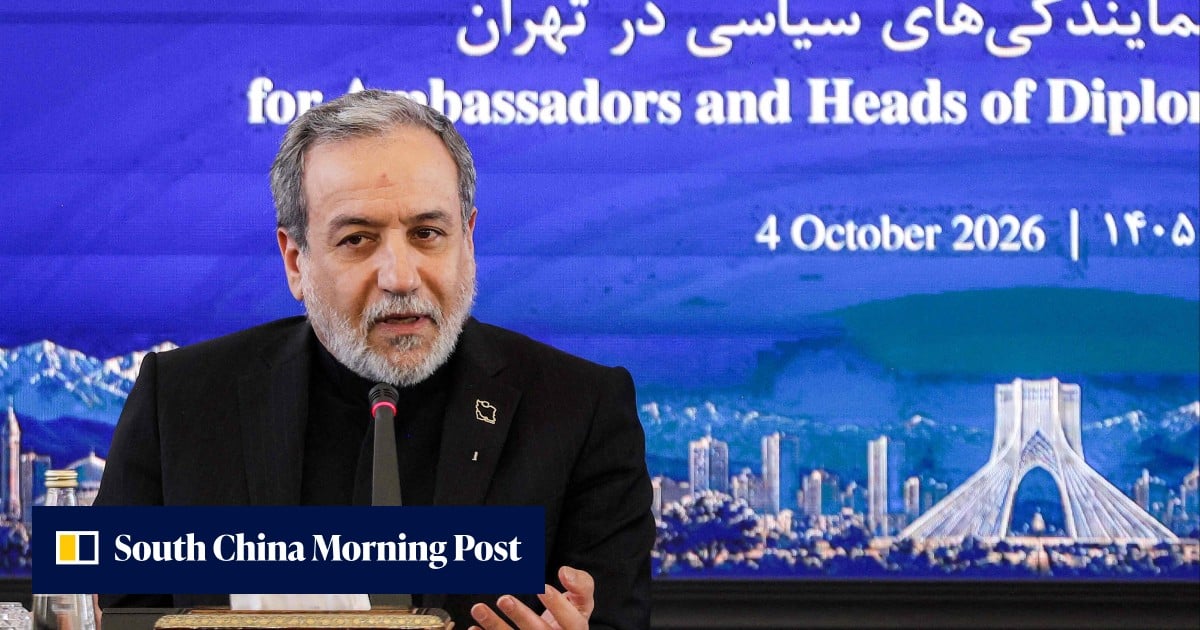
Photo via Al Jazeera

Is Iran charging a toll to allow oil traffic through Hormuz?

Read the original at Al Jazeera ↗
Cite

Siddiqui, U. (2026, October 5). Is Iran charging a toll to allow oil traffic through Hormuz? Al Jazeera. https://www.aljazeera.com/news/2026/10/5/is-iran-charging-a-toll-to-allow-oil-traffic-through-hormuz?traffic_source=rss

Dated when The Aporia collected the article, usually within hours of publication. Check the original for its exact date and byline.

Al Jazeera · collected 2026-10-05 · by Usaid Siddiqui

Quick Summary

A senior analyst from maritime tracking firm Kpler suggests that Gulf countries may be paying Iran a toll to allow their oil exports through the Strait of Hormuz, potentially comprising up to 20 percent of the cargo value. This claim comes as Middle East oil exports have surpassed pre-war levels despite Tehran's efforts to disrupt traffic through the strategic waterway. The analyst speculates this trend is unsustainable and reflects an attempt by countries to maximize their oil shipments before a potential resumption of conflict. However, the assertion remains unverified and speculative.
Written by AI on 2026-10-05, from this article's own text only (the story summary below draws on all the coverage).

AI analysis

Story summary

Crude oil exports from West Asia exceeded pre-war levels in four out of seven days at the end of September 2026, according to provisional data from ship-tracking firm Kpler. Despite ongoing tanker attacks, including one incident involving an unknown projectile hitting a large crude carrier (VLCC) named Kazimah III near the Strait of Hormuz on October 1st, which caused onboard fires and injuries to crew members. Before the war started in February 2026 between the U.S.-Israeli coalition and Iran, the region's exports averaged about 18 million barrels per day (bpd). During September, however, Kpler recorded peak daily export volumes ranging from 19.5 million bpd to 22.5 million bpd. This resurgence comes despite claims by senior Islamic Revolutionary Guard Corps commander Ali Fadavi that only 3-4 million bpd are currently moving through the route compared to pre-war traffic, dismissing this amount as "negligible." The increase is attributed partly to increased ship-to-ship transfers reducing risks of Iranian missile or drone strikes.

Written for “Oil Exports Amid Attacks” on 2026-11-02, grounded in this article and the 4 other(s) covering the same event.

Story

📰 Oil Exports Amid Attacks
Economy/Business · 5 article(s) covering the same event. Compare every outlet's account →

Compared with similar articles

This article reads leans right and hedges 22% of its claims. Each row says how that neighbour differs.
CBS News
Hedges 1 of 2 claims Outlet record 66/100
“The articles discuss oil exports and the situation in the Strait of Hormuz, but they are reporting on different aspects and time periods related to the issue.”
Dawn
Hedges 1 of 18 claims Outlet record 72/100
“The articles discuss different aspects related to Iran and oil exports; Article A focuses on the US response regarding Iraq and the Strait of Hormuz, while Article B discusses the impact of Iran's actions on Middle East oil exports.”
Al Jazeera
Hedges 0 of 3 claims Outlet record 60/100
“Article A describes a specific military deployment and an attack on a tanker in Hormuz, while Article B discusses oil exports and potential blockades by Iran.”
Dawn
Hedges 3 of 27 claims Outlet record 72/100
“Article A discusses Trump's reaction to Iran's offer to reopen the Strait of Hormuz, while Article B reports on the current status and trends in Middle East oil exports through the strait after a war.”
BBC News
Hedges 6 of 19 claims Outlet record 68/100
“While both articles discuss the recovery of Middle East oil exports to pre-war levels, they do not describe the same specific incident or occurrence; rather, they provide different analyses and perspectives on a similar trend.”
The Straits Times
⚖️ Leans right Hedges 0 of 7 claims Outlet record 66/100
“Article A describes a specific tanker attack in the Strait of Hormuz, while Article B discusses overall oil exports and traffic through the Strait of Hormuz without mentioning any particular incident.”
Daily Mail
Hedges 3 of 41 claims Outlet record 69/100
“The articles discuss Iran's stance on the Strait of Hormuz and its impact on oil exports, but they describe different aspects and do not clearly refer to the exact same incident occurring at the same time.”
Al Jazeera
⚖️ Leans left further left than this Hedges 1 of 14 claims Outlet record 60/100
“The articles describe different aspects of the situation around the Strait of Hormuz; one focuses on Iran's statement about keeping it closed until certain conditions are met, while the other discusses oil exports and trade despite the blockade attempts.”
South China Morning Post
⚖️ Leans left further left than this Hedges 0 of 6 claims Outlet record 63/100
“The articles discuss different aspects of Iran's interactions with the world, one focusing on diplomatic statements regarding military solutions and the other on oil exports through Hormuz.”
New York Post
Hedges 2 of 23 claims Outlet record 66/100
How this article was measured signals, leaning charts, publisher record, byline, topics and claims

Signals How these are calculated →

Claims extracted
41
sentences that state something as happening or true
Uncertain
22%
9 of 41 hedged ("reportedly", "may", "according to")
Leaning
Leans right
of the writing, not the subject · beta estimate
Publisher signals
60/100
Al Jazeera's corrections and hedging, across everything collected from it. Not a measure of accuracy.
Outlets on this story
5
Economy/Business
Same framing elsewhere
1
articles that frame the event the way this one does
Analyzed 2026-10-05 · how these are computed

How this is being covered How these are calculated →

Article leaning vs. publisher reliability
Source leaning vs. consistency

Publisher

Al Jazeera · 4688 article(s) · 3 correction(s) detected
Running correction rate · 3 correction(s)

Who wrote this

Usaid Siddiqui
11 article(s) here · 1 carrying a prediction
🔮 So a great divide could really mean an opportunity divide, and really could deepen the socioeconomic divide,” he said.
🔮 “Trade will prosper, and long-term investment will create its potential only with a safe and stable environment.”
🔮 Iranian strikes on Qatar’s Ras Laffan industrial complex in March damaged facilities, with repairs expected to take several years. “We were surprised,” Al Thani said when asked about the attack, adding that there had since been “a lot of discussion with Iran”.
🔮 “On the other hand, AI gives individuals access to types and quantities of information they didn’t have previously that may facilitate the commission of mass casualty events, a concern it’s not easy to dismiss.”
🔮 Varga said current flows could be maintained as long as those methods and routes remain secure.
🔮 Gulf countries, she suggested, may be paying Iran to allow their oil through – potentially handing Tehran a significant portion of the value of the cargo.
🔮 Sami Abu Shehadeh, the leader of the Balad party, withdrew his candidacy after the Supreme Court warned he could be disqualified from the race.
🔮 As Iran and the United States work with mediators to end seven months of hostilities, the reality in the Strait of Hormuz is shifting in ways that could prove to be a game-changer in ongoing negotiations.
🔮 The proposal, effectively an “AI hotline”, was discussed on Sunday during talks in New York between US Treasury Secretary Scott Bessent and Chinese Vice Premier He Lifeng, ahead of a summit between US President Donald Trump and Chinese President Xi Jinping in Washington this week. Recommended Stories list of 3 items- list 1 of 3Doomsday AI: panic, regulation and the China fear - list 2 of 3Australia seeks big tech support for internet safety, AI regulation - list 3 of 3Trump says he will create ‘AI Force’ with new ‘AI czar’ The two leaders are expected to consider establishing a broader US-China dialogue on AI, including the proposed notification system, around which details remain limited.
🔮 “Let’s see if a hike could open SOH or produce a single barrel,” he wrote, referring to interest rate hikes and the Strait of Hormuz, a crucial waterway Iran has effectively blocked for global shipping.
Also by Usaid Siddiqui
Nothing else under this byline is closely related to this article, so these are simply their most recent.
All 11 articles by Usaid Siddiqui →

Topics

Iran Iranian Israel Kpler Tehran

Subjects

Iran GPE · 8× Kpler ORG · 6× Iranian NORP · 2× Israel GPE · 2× Tehran GPE · 2× 3Iran ORG · 1× 3Iraq GPE · 1× Michelle Brohard PERSON · 1× Najaf GPE · 1× Rory Johnston PERSON · 1×

Narrative

list of 3 items- list 1 of 3Trump vs Europe as US presses for release of emergency diesel stocks - list 2 of 3Iraq grants Iranian airlines 40 daily Najaf flights after US exemption - list 3 of 3Iran says Hormuz to remain closed until US meets conditions This surge in oil exports from the region has so far largely been attributed to US ships shepherding tankers out of the Strait of Hormuz, coupled with increasing ship-to-ship transfers that reduce the risks of being targeted by Iranian missiles and drones.
framing: mixed · carried by 1 article(s) · first seen 2026-10-05
🔮 Gulf countries, she suggested, may be paying Iran to allow their oil through – potentially handing Tehran a significant portion of the value of the cargo.
2026-10-05 · Al Jazeera
Is Iran charging a toll to allow oil traffic through Hormuz? · mixed framing

Claims (41 extracted, 9 hedged)

Middle East oil exports have climbed back above levels seen before the US-Israel war on Iran began in February, despite Tehran’s attempts to blockade the Strait of Hormuz and attack vessels. asserted
war → climb → Hormuz
Crude exports from the region exceeded pre-war levels on four days in the final week of September, reaching between 19.5 and 22.5 million barrels per day (bpd), according to provisional data from maritime tracking firm Kpler. uncertain
exports → exceed → Kpler
Before the war, exports averaged about 18 million bpd. asserted
exports → average → bpd
list of 3 items- list 1 of 3Trump vs Europe as US presses for release of emergency diesel stocks - list 2 of 3Iraq grants Iranian airlines 40 daily Najaf flights after US exemption - list 3 of 3Iran says Hormuz to remain closed until US meets conditions This surge in oil exports from the region has so far largely been attributed to US ships shepherding tankers out of the Strait of Hormuz, coupled with increasing ship-to-ship transfers that reduce the risks of being targeted by Iranian missiles and drones. asserted
that → press → missiles
Meanwhile, the fact that oil prices have remained high has been explained by analysts as the result of still-elevated insurance rates — driven by fears of Iranian attacks — and a market factoring in the possibility of a return to a hot war. asserted
prices → remain → war
But a senior Kpler analyst last week offered a different explanation for the rise in oil exports at high prices. asserted
analyst → offer → prices
Gulf countries, she suggested, may be paying Iran to allow their oil through – potentially handing Tehran a significant portion of the value of the cargo. uncertain
she → suggest → cargo
Before the war, one-fifth of the world’s oil and natural gas exports passed through the Strait of Hormuz. asserted
fifth → pass → Hormuz
Does this explanation hold up, and what does it mean for the war and oil prices? asserted
it → hold → war
What did the Kpler analyst say? asserted
analyst → say → What
Michelle Brohard, head of policy and geopolitical risk at Kpler, recently said some countries could be paying Iran for passage through the Strait of Hormuz. uncertain
countries → say → Hormuz
“I suspect there is a toll that’s being paid, which is giving these ships safe passage,” she said in an interview last week with energy analyst Rory Johnston. “I also suspect that these countries know that this is unsustainable from a perspective of [the] US escorting [ships], and also unsustainable from them paying Iran 10 percent of their cargo, or 20 percent of their cargo,” she added. asserted
she → suspect → cargo
“So you’re starting to see like what I would call like a race to get out as much as possible, as quickly as possible before the war restarts.” asserted
war → start → race
The claim has not been independently verified, and Brohard presented it as speculation rather than a finding backed by evidence. uncertain
Brohard → verify → evidence
But as early as March, the shipping journal Lloyd’s List reported that Iran’s Islamic Revolutionary Guard Corps (IRGC) had already imposed a “toll booth” system to control vessel traffic through the strait. asserted
Corps → report → strait
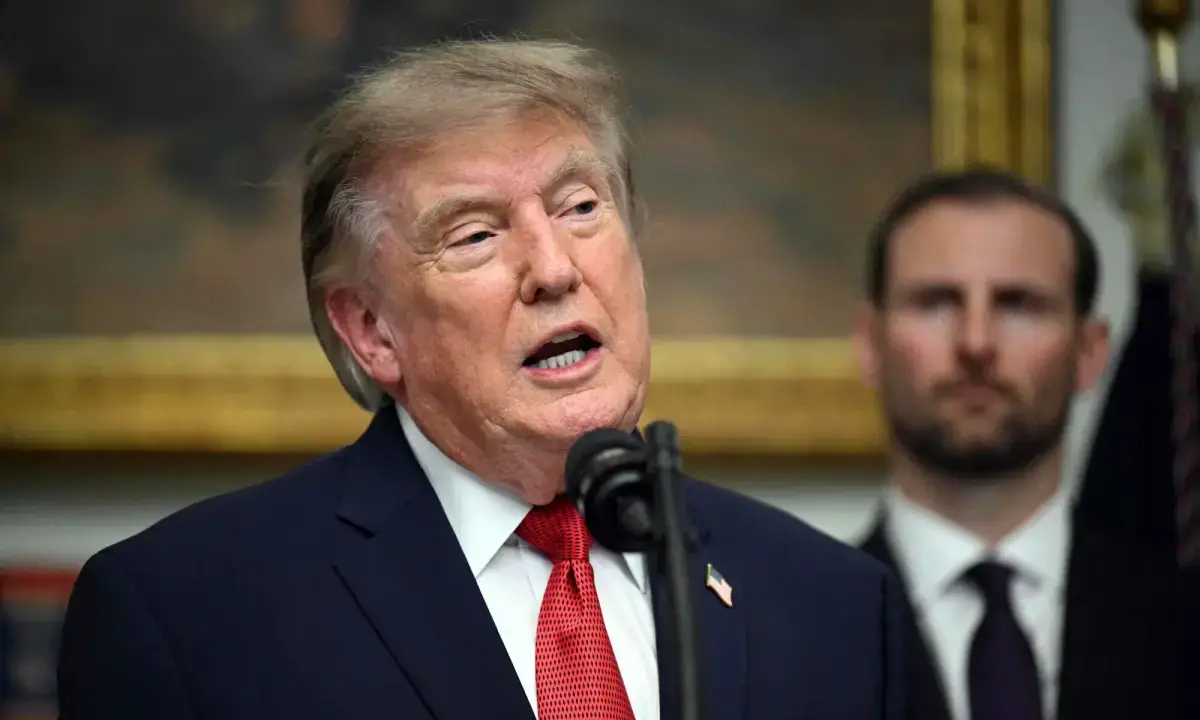
The Trump administration, during the course of the war, has repeatedly said Iran will not be permitted to charge a toll under any potential agreement with Washington. asserted
Iran → say → Washington
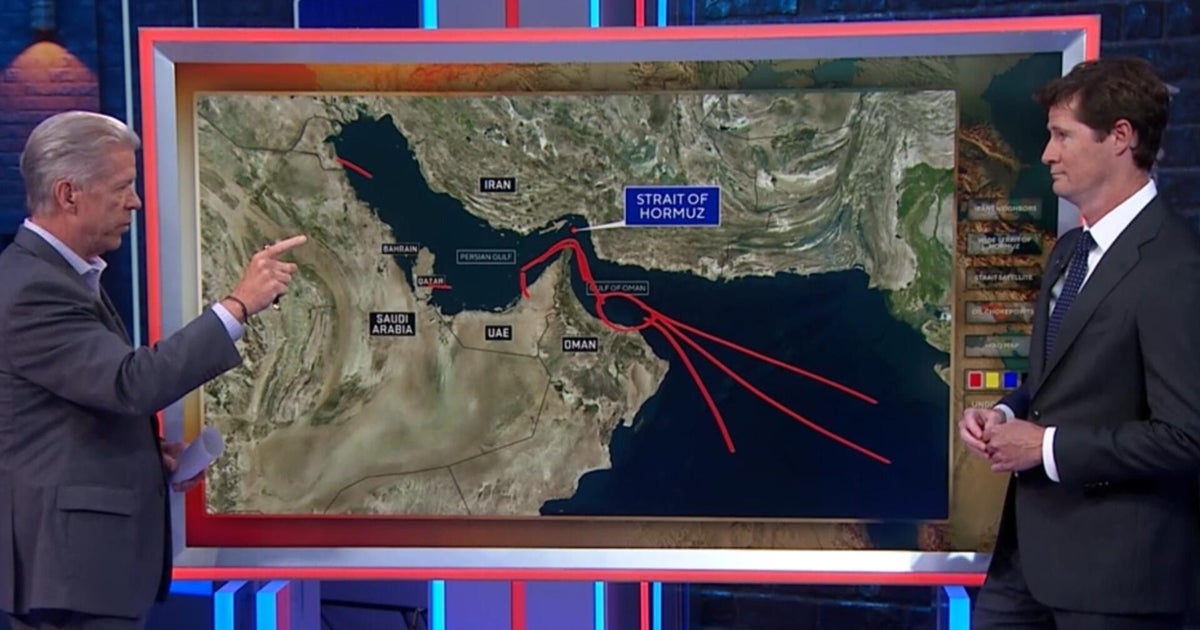
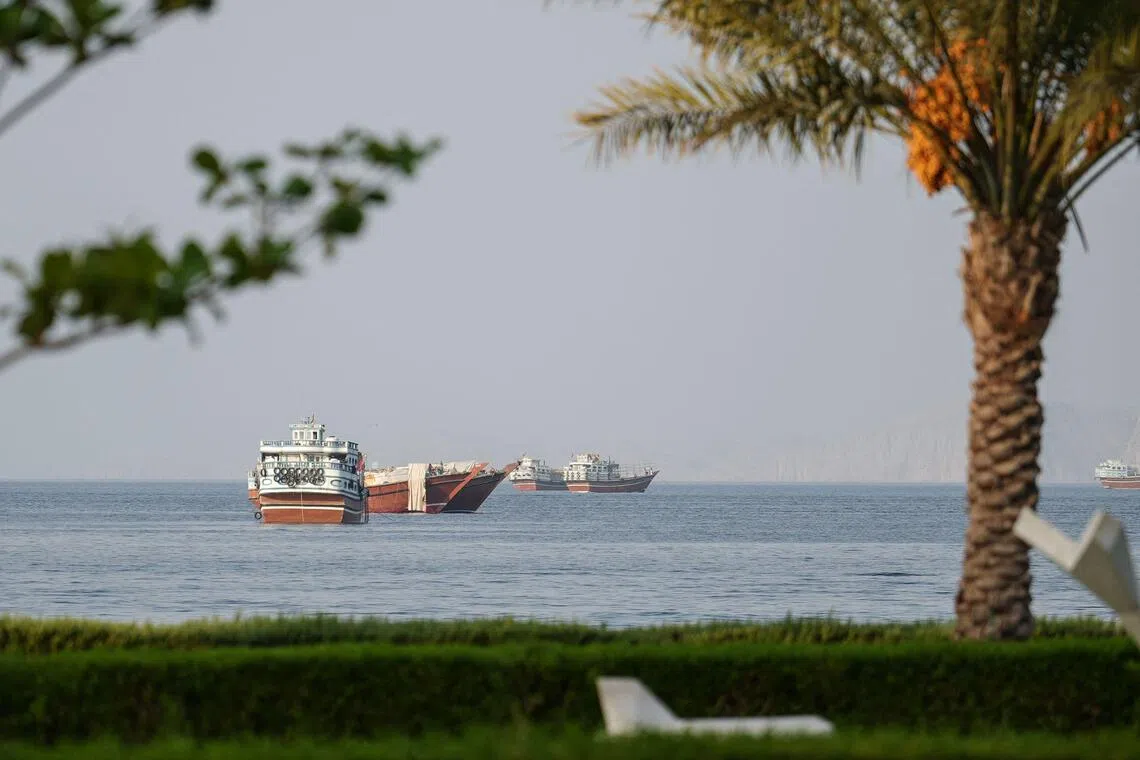
Closure of the strait has caused global fuel costs to soar and has tested agricultural sectors across the world. What does traffic in the Hormuz look like? Oil is increasingly getting out of the Middle East, marine trackers report. asserted
trackers → cause → East
In the last week of September, the seven-day average climbed above the roughly 18 million bpd recorded before the US-Israel war on Iran began in February – the first time since the conflict started. asserted
conflict → climb → February
Kpler said crude exports excluding Iran had also recovered to at least 16.5 million bpd as an average over September. asserted
exports → say → September
The pattern of increasing oil exports has continued into October. asserted
pattern → increase → October
Iraq’s state-owned Oil Tanker Company on Saturday announced that it had transported two million barrels of crude on a very large crude carrier (VLCC) through the Strait of Hormuz, in what its director general said was the company’s first such operation in decades. asserted
general → own → decades
According to Kpler, “40 percent now bypass Hormuz, and most crude crossing the strait changes tankers offshore”, with much of it flowing through Saudi Arabia and the United Arab Emirates pipelines. uncertain
much → accord → Arabia
The export figures also include supplies moved through the Red Sea, which has become an increasingly important alternative to the Strait of Hormuz. Moreover, the Kpler figures exclude any vessels that may have crossed the key transit route with their automatic identification system transponders turned off to avoid detection. uncertain
transponders → include → detection
Iran, however, disputes suggestions that it has lost control of the waterway. asserted
it → dispute → waterway
Senior IRGC commander Ali Fadavi said on Sunday only three to four million bpd were travelling along a US-supervised route and described that amount as “negligible” compared with pre-war traffic. asserted
bpd → say → traffic
Before the war erupted seven months ago, the strait routinely saw about 125 large commercial vessels a day, including tankers, gas carriers, bulk carriers and container ships. asserted
strait → erupt → tankers
Oil prices have eased marginally as exports from the Middle East recover. asserted
exports → ease → East
Last week, the Group of Seven countries also announced a decision to release 100 million barrels of oil from emergency reserves. asserted
countries → announce → reserves
But crude prices remain significantly higher than pre-war levels. asserted
prices → remain → levels
Brent crude was trading at about $101.59 a barrel on Monday, down 0.71 percent, while US West Texas Intermediate fell 1.2 percent to about $90.05. asserted
Intermediate → trade → 90.05
“Despite exports from the region resurging, much will depend, longer-term, on the security of energy supplies,” said Susannah Streeter, chief investment strategist at Wealth Club, noting that the “situation is still tense”. “The Strait of Hormuz remains a major flashpoint, with the attack on another tanker on Sunday keeping worries bubbling about the potential for further disruption to supplies, particularly if shipping companies become increasingly reluctant to risk sending vessels through the crucial chokepoint.” On Monday, an oil tanker transiting the Strait of Hormuz was instructed by the IRGC to turn back or risk being targeted, according to the United Kingdom Maritime Trade Operations (UKMTO) group that monitors shipping traffic. Does the Kpler analyst’s claim hold weight? uncertain
claim → resurge → weight
Academic Abdul Khalique says while Kpler analyst Brohard’s speculation that a transit-fee arrangement has been put in place may be “plausible”, it is best described as an “informal security mechanism rather than a formal maritime levy”. “No public proof confirms a systematic, state-run Iranian toll system,” Khalique, head of the Liverpool John Moores University Maritime Centre, told Al Jazeera. uncertain
Khalique → say → Jazeera
He said the United Nations Convention on the Law of the Sea (UNCLOS) safeguards transit passage through international straits, “rendering formal tolls legally dubious”. asserted
tolls → say → straits
Chris Beauchamp, chief market analyst at IG Group, told Al Jazeera that Brohard’s suspected scenario was “in part” possible. “Everything appears to be happening under the radar in the Middle East, from the US convoying ships to Iran quietly charging tolls,” he told Al Jazeera. asserted
he → tell → Jazeera
In September, the US government also imposed sanctions on a digital assets firm, BitBank, that it said had been used by Iran’s Hormuz Safe Marine Services Authority — a body set up by the country’s government to collect fees for allowing the safe transit of vessels through the strait — to transfer money to Tehran. asserted
it → impose → Tehran
However, Beauchamp said the biggest challenge for oil exports was now what he called the “problem of shipping”. asserted
he → say → shipping
“The shuttle system in the Gulf is doing wonders in getting oil out, but it requires plenty of ships, and that has pushed freight rates higher while also reducing supply beyond the region itself,” he added. asserted
he → do → region
According to Beauchamp, Asian buyers are having to find crude from further away too, “lengthening transit times”. uncertain
buyers → accord → times
“Previously a supply story, this is now one about the underlying mechanics of shipping. asserted
this → underlie → shipping
While less exciting, it is arguably much more important and trickier to solve,” he said. asserted
he → solve → ?
…and 1 more, not listed.

💬Give feedback
🕘History 🎫Support