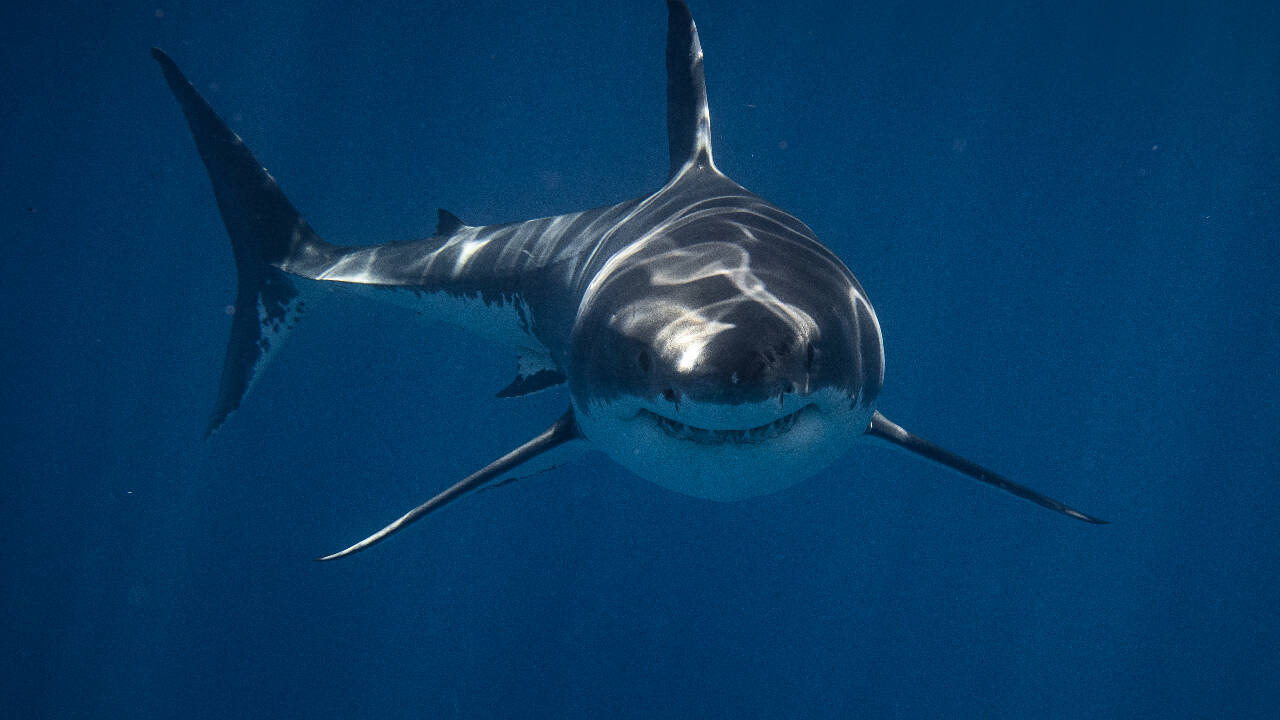
The ocean can hide an entire world beyond the reach of sight.
asserted
ocean → hide → sight
For sharks, however, sound may offer an early warning system, carrying information about prey, predators and movement through the water long before anything comes into view.
uncertain
anything → offer → view
A new study from Florida Atlantic University has now quantified how far that acoustic world extends for one familiar coastal predator.
asserted
world → quantify → predator
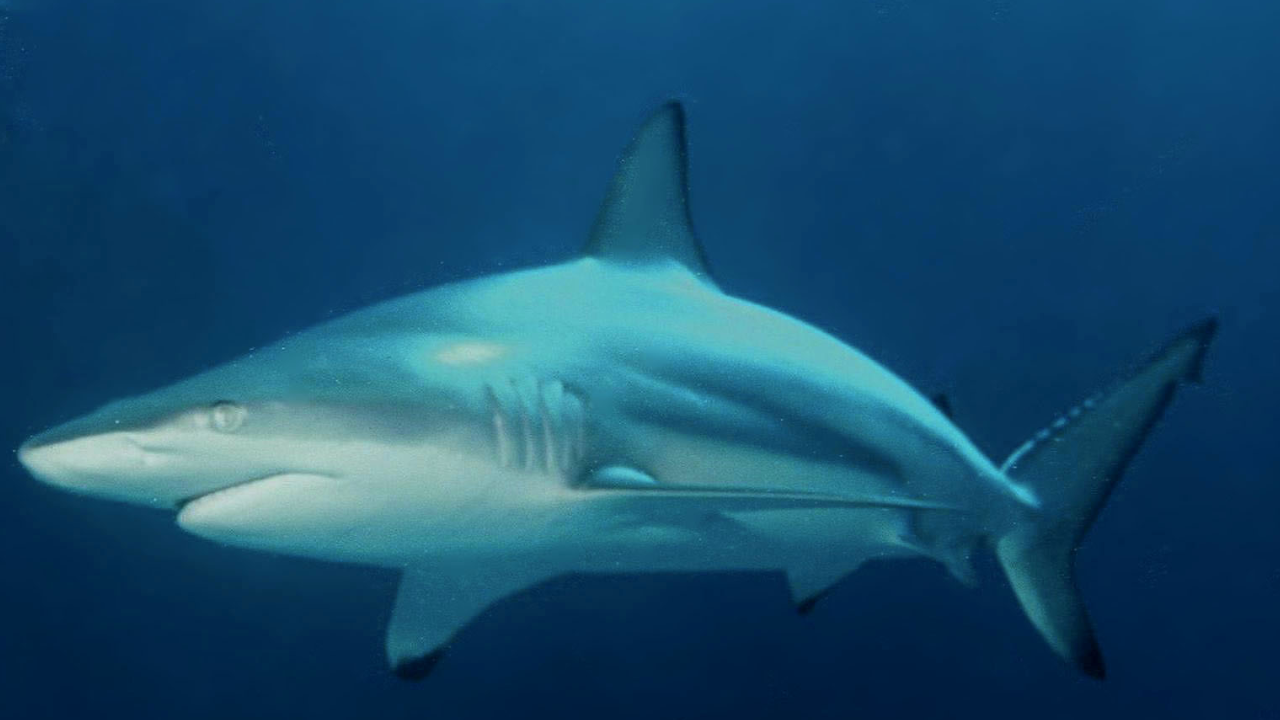
According to Science Daily, researchers studying wild blacktip sharks found that the animals could detect low-frequency sounds from as far as 74 metres, or about 243 feet, away.
uncertain
animals → accord → metres
Even more remarkably, the sharks could determine the sound's origin and quickly turn away from its source.
uncertain
sharks → determine → source
Listening to sharks in the wild
Understanding shark hearing has traditionally been difficult.
asserted
hearing → listen → wild
Laboratory experiments can reveal what frequencies an animal detects, but they do not always capture how it responds to sound while moving freely through the ocean.
asserted
it → reveal → ocean
According to Science Daily, blacktip sharks offered researchers an unusual opportunity.
uncertain
sharks → accord → opportunity
Large numbers gather along Florida's Palm Beach County coast during winter, with smaller groups present throughout the year.
asserted
groups → gather → year
The area's shallow, clear waters also made it possible to observe individual sharks from above without significantly disrupting their behaviour.
asserted
it → make → behaviour
The research team anchored a boat offshore and placed an underwater speaker in the water.
asserted
team → anchor → water
The speaker was allowed to drift with the current, helping separate the experimental sound from noise generated by the boat, the report adds.
asserted
report → allow → boat
Also, researchers played low-frequency sounds across three ranges: 100–200 hertz, 200–400 hertz and 400–800 hertz.
asserted
researchers → play → ranges
A 10-kilohertz sound, outside the known hearing range of sharks, served as a control.
asserted
sound → know → control
A reaction from 243 feet away
The team used calibrated hydrophones to measure sound levels at different points in the water.
asserted
team → use → water
At the same time, a drone flying roughly 40 to 50 metres above the surface captured the sharks' movements, the Science Daily report states.
asserted
report → fly → movements
Researchers later analysed the footage frame by frame, tracking each shark's position and changes in swimming direction when a sound was played.
asserted
sound → analyse → direction
And the results were striking, as blacktip sharks responded to all three low-frequency ranges but showed no comparable response to the 10-kilohertz control.
asserted
sharks → respond → control
Some detected the sounds from as far as 74 metres away.
asserted
Some → detect → sounds
The sharks also frequently made abrupt turns away from the underwater speaker.
asserted
sharks → make → speaker
This suggested that they were doing more than simply noticing that a sound existed.
uncertain
sound → suggest → more
They were able to determine its direction.
asserted
They → determine → direction
More than 70% of the recorded responses occurred in what scientists describe as the acoustic far field, where sound behaves differently from the patterns found close to its source.
asserted
sound → record → source
The sharks were particularly sensitive to lower-frequency sounds, detecting them at greater distances and at lower sound levels, the report explains further.
asserted
report → detect → levels
How do sharks hear underwater?
asserted
sharks → hear → ?
A specialised sensory structure called the macula neglecta is thought to play an important role in detecting vibrations and particle movement associated with sound travelling through water.
asserted
structure → call → water
The findings are especially intriguing because sharks do not have the gas-filled swim bladder found in many bony fish.
asserted
sharks → have → fish
Such an organ can assist sound detection by responding to changes in pressure.
asserted
organ → assist → pressure
Instead, sharks rely largely on their inner ears.
asserted
sharks → rely → ears
A specialised sensory structure called the macula neglecta is thought to play an important role in detecting vibrations and particle movement associated with sound travelling through water.
asserted
structure → call → water
The new research suggests that this sensory system is capable of picking up useful acoustic information even when a sound source is hundreds of feet away.
uncertain
source → suggest → feet
Why the ocean counts
The study also points to the importance of behavioural experiments in the natural environment.
asserted
study → count → environment
Sound does not behave the same way inside tanks, and the reflections from walls can create complicated acoustic patterns that can make an animal’s response difficult to interpret.
asserted
response → behave → patterns
In open water, researchers can see how sharks respond to sound without those artificial echoes.
asserted
sharks → see → echoes
This gives a more complete picture of how hearing functions as part of a predator’s everyday sensory toolkit.
asserted
hearing → give → toolkit
For a shark cruising the ocean, sound might offer clues to things still well beyond its sight.
uncertain
sound → cruise → sight
The ability to detect and orient towards or away from distant acoustic signals may help these predators gain information about their environment, locate potential opportunities or respond to threats.
uncertain
predators → detect → threats
The Florida study adds an important piece to the still incomplete picture of shark sensory biology.
asserted
study → add → biology
It also suggests that the underwater world may be far less silent than it appears from the surface, and that sharks are listening to much more of it than scientists once knew.
uncertain
scientists → suggest → it
 The Aporia