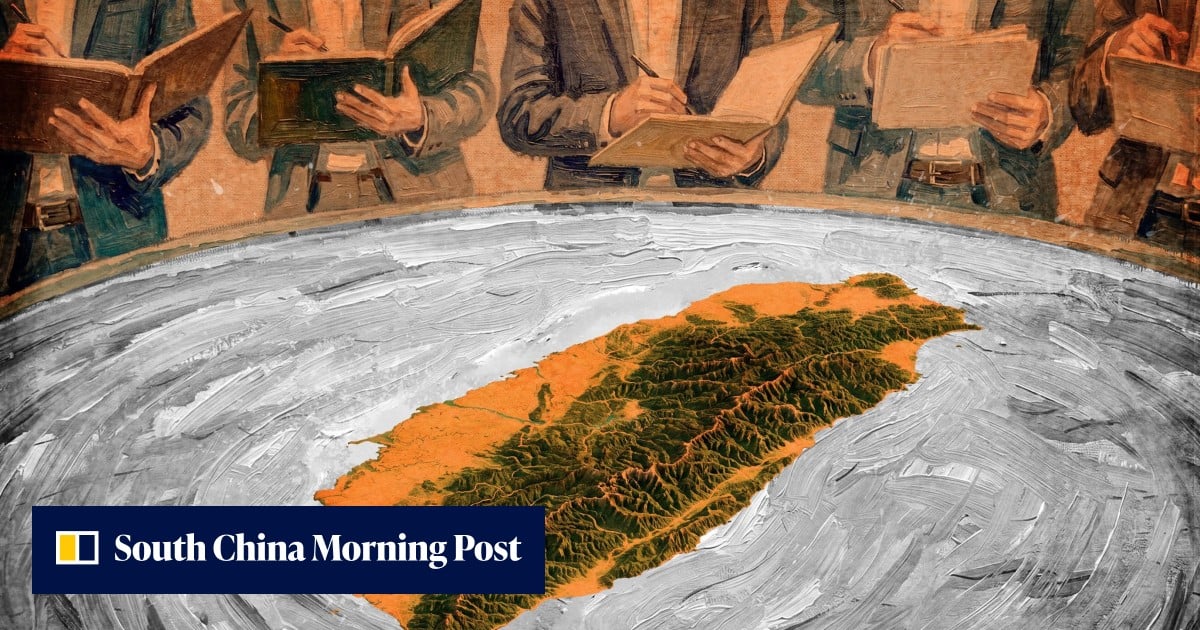
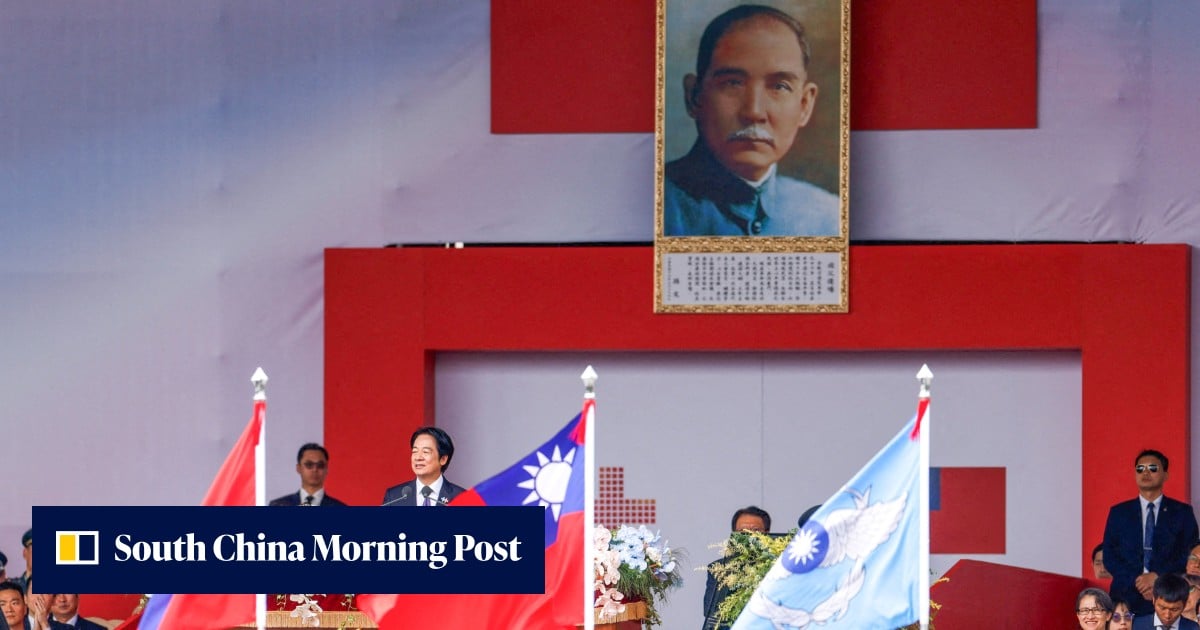
Photo via South China Morning Post

Beijing’s policy advisers map out how post-reunification Taiwan could be governed

Read the original at South China Morning Post ↗
Cite

Wang, A. (2026, October 6). Beijing’s policy advisers map out how post-reunification Taiwan could be governed. South China Morning Post. https://www.scmp.com/news/china/politics/article/3369782/beijings-policy-advisers-map-out-how-post-reunification-taiwan-could-be-governed?utm_source=rss_feed

Dated when The Aporia collected the article, usually within hours of publication. Check the original for its exact date and byline.

South China Morning Post · collected 2026-10-06 · by Amber Wang

Quick Summary

Mainland Chinese scholars are developing proposals for how Taiwan might be governed after reunification with China, according to the South China Morning Post. These plans, currently in progress or near completion, consider varying levels of autonomy depending on whether reunification is achieved peacefully or otherwise. Scholars suggest that peaceful reunification would allow for greater self-governance under Beijing’s “one country, two systems” framework, and emphasize that early engagement could provide Taiwan with more negotiating power.
Written by AI on 2026-10-06, from this article's own text only (the story summary below draws on all the coverage).

AI analysis

Story summary

Beijing's policy advisers are developing plans for how Taiwan could be governed after reunification with mainland China. Seven years since initial discussions began, leading research institutes in China have finalized or nearly completed their proposals. Instead of proposing one rigid model, scholars suggest multiple scenarios depending on the path to reunification. A peaceful reunification under Beijing's "one country, two systems" framework would grant Taiwan the most autonomy. Professor Chen Xiancai from Xiamen University emphasized that early engagement in talks with mainland China could give Taiwan more leverage to shape the terms of reunification.
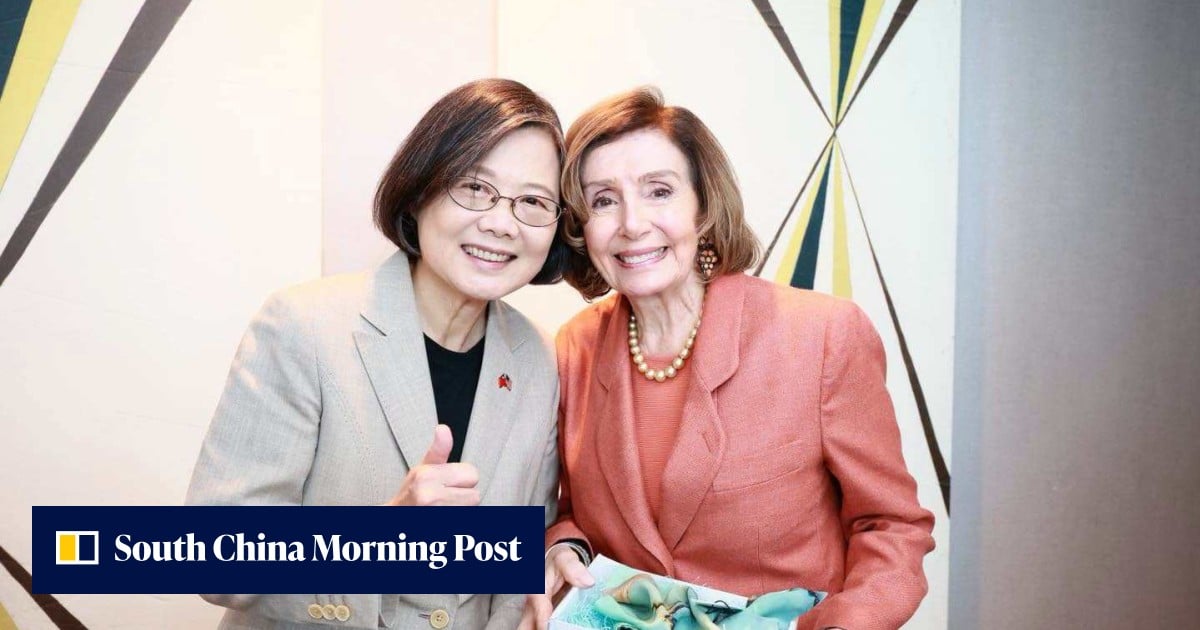
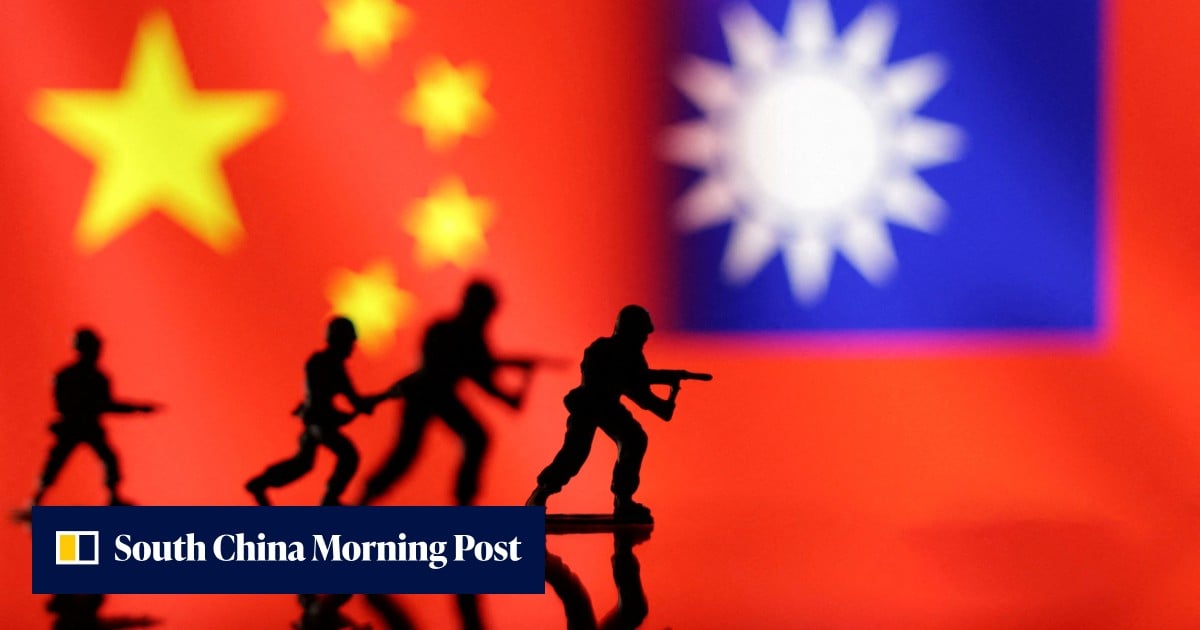
Written for “Taiwan Reunification Governance Plan” on 2026-11-04, grounded in this article and the 0 other(s) covering the same event.

Story

📰 Taiwan Reunification Governance Plan
Politics · 1 article(s) covering the same event.

Compared with similar articles

This article reads leans right and hedges 20% of its claims. Each row says how that neighbour differs.
South China Morning Post
Hedges 1 of 4 claims Outlet record 62/100
“The articles discuss different aspects related to Taiwan's relationship with China and the US, rather than the same specific incident.”
How this article was measured signals, leaning charts, publisher record, byline, topics and claims

Signals How these are calculated →

Claims extracted
5
sentences that state something as happening or true
Uncertain
20%
1 of 5 hedged ("reportedly", "may", "according to")
Leaning
Leans right
of the writing, not the subject · beta estimate
Publisher signals
62/100
South China Morning Post's corrections and hedging, across everything collected from it. Not a measure of accuracy.
Outlets on this story
1
Politics
Same framing elsewhere
1
articles that frame the event the way this one does
Analyzed 2026-10-06 · how these are computed

How this is being covered How these are calculated →

Article leaning vs. publisher reliability
Source leaning vs. consistency

Publisher

South China Morning Post · 3740 article(s) · 8 correction(s) detected
Running correction rate · 8 correction(s)

Who wrote this

Amber Wang
11 article(s) here · 1 carrying a prediction
🔮 Beijing hits out after Taipei bans mainland travel for Sun Yat-sen anniversary Taiwan officials seeking to attend events for revolutionary will have travel permits rejected in what Beijing calls a ‘betrayal of history’ Beijing on Wednesday lashed out at Taipei’s move to ban Taiwanese officials from attending events in the mainland Chinese capital marking the 160th anniversary of Sun’s birth on November 12.
🔮 Will Taiwan issue derail Washington and Beijing’s latest reset?
🔮 In FocusBeijing’s policy advisers map out how post-reunification Taiwan could be governed
🔮 Xi presses Trump to take the next step on Taiwan: oppose independence The change would mean a shift in Washington’s long-standing position and affect American arms sales to the island, according to analysts.
🔮 Beijing, Taipei need peace deal before reunification, Taiwanese scholar says An agreement ending hostilities could allow the two sides to discuss the future on an equal footing, Chang Ya-chung
🔮 Warning against Japan’s military build-up surfaces at Beijing Xiangshan conference Chinese scholars say Tokyo’s security expansion and US ties could trigger regional instability Japan might raise its midterm budget to 3-3.5 per cent of the country’s gross domestic product in line with Nato and other US allies, Bloomberg reported earlier this week, as the US pushes its allies in Asia and Europe to boost their own defences.
🔮 Exclusive‘Provocation’ could accelerate Taiwan reunification
🔮 US-China ties haunted by lack of mutual trust, Beijing Xiangshan Forum told No ‘illusion that things will be easy’ ahead, former Chinese ambassador to US says before President Xi Jinping is expected in Washington “
🔮 ExclusiveUS delegation to Xiangshan Forum to be led by senior Pentagon official for China SCMP learns Cynthia ‘Xanthi’ Carras to attend Beijing’s largest annual high-level security and defence conference This year’s Xiangshan Forum, the 13th edition of the event, will be held in Beijing from next Tuesday to Thursday.
Also by Amber Wang
Nothing else under this byline is closely related to this article, so these are simply their most recent.
All 11 articles by Amber Wang →

Topics

Chinese FocusBeijing SCMP Taiwan the South China Morning Post

Subjects

Taiwan GPE · 4× Beijing GPE · 1× Chen Xiancai PERSON · 1× Chinese NORP · 1× FocusBeijing GPE · 1× SCMP ORG · 1× Xiamen University ORG · 1× the South China Morning Post ORG · 1×

Narrative

Rather than setting out a single fixed model, scholars involved in those studies told the SCMP there should be different scenarios based on how reunification was achieved, with peaceful reunification granting Taiwan the largest scope of autonomy under Beijing’s “one country, two systems” framework for post-reunification governance.
framing: assertive · carried by 1 article(s) · first seen 2026-10-06
🔮 In FocusBeijing’s policy advisers map out how post-reunification Taiwan could be governed
2026-10-06 · South China Morning Post
Beijing’s policy advisers map out how post-reunification Taiwan could be governed · assertive framing

Claims (5 extracted, 1 hedged)

In FocusBeijing’s policy advisers map out how post-reunification Taiwan could be governed uncertain
Taiwan → map → ?
Mainland Chinese scholars discuss varying levels of autonomy for the island based on how reunification is achieved Seven years later, the first proposals from a handful of the mainland’s leading research institutes have either been finalised or are nearing completion, the South China Morning Post has learned. asserted
Post → discuss → completion
Rather than setting out a single fixed model, scholars involved in those studies told the SCMP there should be different scenarios based on how reunification was achieved, with peaceful reunification granting Taiwan the largest scope of autonomy under Beijing’s “one country, two systems” framework for post-reunification governance. asserted
reunification → set → governance
“The earlier Taiwan engages in talks with the mainland, the more bargaining power it would have, and therefore the greater the space it would have to shape the terms. asserted
it → engage → terms
That is almost inevitable,” said Chen Xiancai, a Taiwan affairs professor at Xiamen University. asserted
Xiancai → say → University
💬Give feedback · no sign-in needed

No sign-in needed for now. Your note is sent without a name, so it cannot be answered.

🕘History 🎫Support