Photo via Times of India

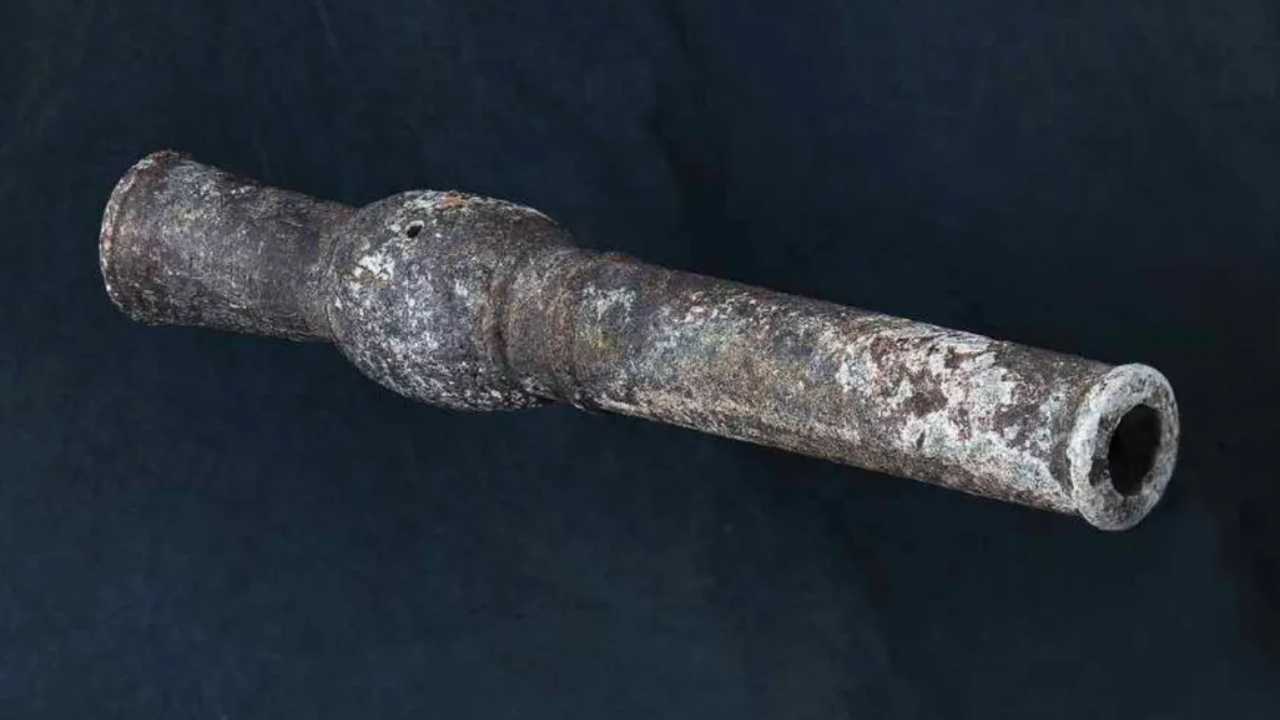
Soldiers looking for land mines in South Korea have found the country's oldest gun dating back to more than 600 years

Read the original at Times of India ↗
Cite

TOI Science Desk. (2026, October 6). Soldiers looking for land mines in South Korea have found the country's oldest gun dating back to more than 600 years. Times of India. https://timesofindia.indiatimes.com/science/archaeology/soldiers-looking-for-land-mines-in-south-korea-have-found-the-countrys-oldest-gun-a-600-year-old-inscribed-bronze-tube-used-to-fire-gunpowder-propelled-arrows/articleshow/134722534.cms

Dated when The Aporia collected the article, usually within hours of publication. Check the original for its exact date and byline.

Times of India · collected 2026-10-06 · by TOI Science Desk

Quick Summary

Soldiers searching for land mines on Mount Geumseong in South Korea discovered an ancient bronze weapon dating back to either 1377 or 1437. After nearly three years of analysis, researchers identified it as a Hwangja Hwatong, one of the earliest handheld gunpowder weapons from the late Goryeo or early Joseon dynasty periods. The weapon is about ten inches long and weighs slightly more than two pounds, with inscriptions detailing its name, weight, and maker. Researchers consider this discovery significant for academic, historical, and cultural reasons due to its rarity during transitional dynastic times in Korea.
Written by AI on 2026-10-06, from this article's own text only (the story summary below draws on all the coverage).

AI analysis

Story summary

In November 2023, soldiers searching for land mines on Mount Geumseong in southwestern South Korea discovered a small bronze object buried four inches below the soil. After nearly three years of analysis by researchers at the Naju National Research Institute of Cultural Heritage, it was identified as a Hwangja Hwatong, an early handheld gunpowder weapon dating back to the 14th or 15th century, likely over 600 years old. This artifact, also known as a "fire tube," consists of three main parts: a socket for a wooden handle, a chamber for gunpowder, and a muzzle for launching projectiles such as arrows.

The Hwangja Hwatong weighs about two pounds and is inscribed with 28 Korean characters documenting its name, weight, manufacturing supervisor, craftsman, and an incomplete date. This discovery provides significant historical insight into the use of early firearms in South Korea during a time when the region faced threats from Japanese pirates sailing up the Yeongsan River to plunder.

Written for “Ancient Weapon Discovery Korea” on 2026-11-01, grounded in this article and the 0 other(s) covering the same event.

Story

📰 Ancient Weapon Discovery Korea
Other · 1 article(s) covering the same event.

Compared with similar articles

Nothing to compare against. No article is close enough to this one for the pipeline to have linked or judged the pair.
How this article was measured signals, leaning charts, publisher record, byline, topics and claims

Signals How these are calculated →

Claims extracted
42
sentences that state something as happening or true
Uncertain
17%
7 of 42 hedged ("reportedly", "may", "according to")
Leaning
not political
takes no side on a contested political question
Publisher signals
59/100
Times of India's corrections and hedging, across everything collected from it. Not a measure of accuracy.
Outlets on this story
1
Other
Same framing elsewhere
1
articles that frame the event the way this one does
Analyzed 2026-10-06 · how these are computed

How this is being covered How these are calculated →

Article leaning vs. publisher reliability
Source leaning vs. consistency

Publisher

Times of India · 3845 article(s) · 2 correction(s) detected
Running correction rate · 2 correction(s)

Who wrote this

TOI Science Desk
299 article(s) here · 1 carrying a prediction
🔮 The work will be carried out by the West Tennessee River Basin Authority, which is preparing a plan to restore the river and the land around it.
🔮 Cornell University scientists have developed genetically engineered tomato plants that turn red-purple when nitrogen becomes scarce, giving farmers a visible warning that crops may need fertiliser.
🔮 By studying these crystals and other mineral grains, scientists could establish the meteorite's age and identify later changes caused by water.
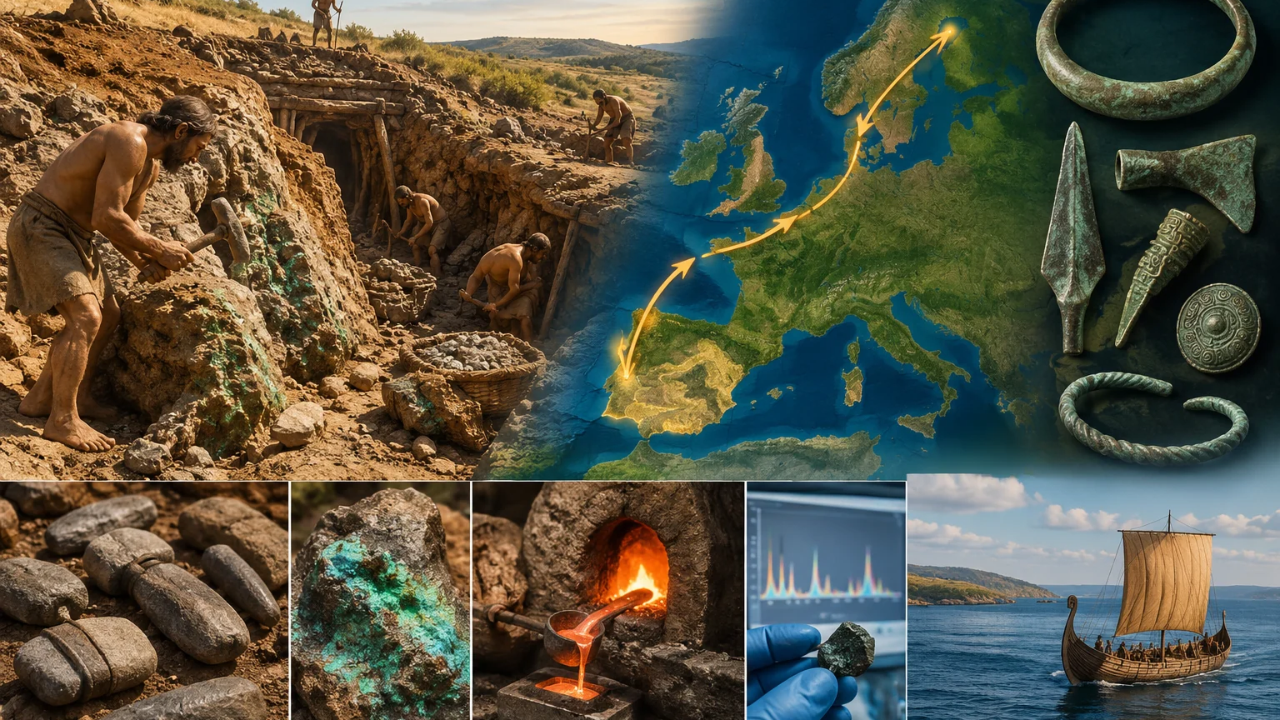
🔮 Centuries later, bronze objects found in Scandinavia would preserve chemical signatures consistent with the metals produced at this Spanish site, offering evidence of connections that may have crossed much of Europe.
🔮 She explored whether an inexpensive device could capture airborne genetic material and support the detection of bacterial pathogens.
🔮 This control may help it maintain its orientation and move along a narrow path without losing its bearings.
🔮 The university says the sculpture will subsequently go on permanent display at its Turner Museum of Glass.
🔮 By bringing together nature, wellness facilities and educational spaces, Winter Garden aimed to create a setting where visitors could exercise, learn about nutrition and gardening, and spend time outdoors.
🔮 Also discovered was a 4,500-year-old humanoid idol, which archaeologists hope will help shed light on the cultural traditions of the region.
🔮 When garlic mustard spreads across the forest floor, other plants may struggle to obtain the resources they need to survive.
Wire or desk byline, not an individual reporter.
Also by TOI Science Desk
Nothing else under this byline is closely related to this article, so these are simply their most recent.
All 299 articles by TOI Science Desk →

Topics

Korean Smithsonian Magazine South Korea a Hwangja Hwatong the Naju National Research Institute of Cultural Heritage

Subjects

Korean NORP · 3× the Naju National Research Institute of Cultural Heritage ORG · 3× Koreans NORP · 2× Cho Mi-soon PERSON · 1× Noksa An Hyu-bo PERSON · 1× Seok PERSON · 1× Smithsonian Magazine ORG · 1× South Korea GPE · 1× The Heritage Service ORG · 1× the Korea Times ORG · 1×

Narrative

Eo Changsun, head of academic research at the Naju National Research Institute of Cultural Heritage, told the Chosun Daily’s Heo Yun-hee that Japanese pirates once sailed up the Yeongsan River to plunder and the mountain was a geographical stronghold against them.
framing: assertive · carried by 1 article(s) · first seen 2026-10-06
🔮 Rather than a landmine, it was a gun, one that may have been buried for more than 600 years, according to a report by Smithsonian Magazine.

Claims (42 extracted, 7 hedged)

In November 2023, troops sweeping for a suspected minefield on Mount Geumseong in southwestern South Korea ended up uncovering a small bronze object about four inches beneath the soil. asserted
troops → sweep → soil
Rather than a landmine, it was a gun, one that may have been buried for more than 600 years, according to a report by Smithsonian Magazine. uncertain
that → bury → Magazine
After nearly three years of analysis, researchers with the Naju National Research Institute of Cultural Heritage have identified the object as a Hwangja Hwatong, an early handheld gunpowder weapon. asserted
researchers → identify → Hwatong
Also called the "fire tube", it is a ten-inch bronze instrument dating back to the 14th or 15th century. asserted
it → call → century
The weapon has three main sections: a socket that would hold a wooden handle, a gunpowder chamber, and a muzzle from which the projectile would be released. asserted
projectile → have → which
According to researchers, the weapon likely discharged arrows or other projectiles. uncertain
weapon → accord → arrows
An archaeological miracle The weapon weighs a little more than two pounds and is carved with 28 Korean characters. asserted
weapon → weigh → characters
Twenty-seven appear in six columns on the handle socket, recording its name, weight, manufacturing supervisor, craftsman, and an incomplete date. asserted
seven → appear → name
A separate character on the muzzle, 八, meaning “eight,” may have served as an inventory or production number. uncertain
character → mean → number
The Heritage Service translates them to read: “In the 12th month of the Jeongsa year, the Hwangja Hwatong was made. asserted
Hwatong → translate → year
“This is an extraordinary discovery with immense academic, historical and cultural value,” Cho Mi-soon, director of the Naju National Research Institute of Cultural Heritage, said at a recent press event, per the Korea Times. asserted
soon → say → Times
“It comes from a crucial transitional period between the late Goryeo and early Joseon dynasties, when physical artefacts of firearms are exceptionally rare.” asserted
artefacts → come → firearms
According to the agency's statement, “Hwangja” is a class designation; “geun” and “nyang” are traditional units of weight; and “Noksa” is the title of the official who oversaw the gun’s creation. uncertain
who → accord → creation
As for the date: Koreans used to measure time in 60-year cycles, and the 57th year in each sexagenary cycle was the Jeongsa year. asserted
year → use → cycle
So researchers analysing the hwatong determined that it was made in 1377 or 1437. asserted
it → analyse → 1377
In 1377, near the end of the Goryeo Dynasty, military official and inventor Choe Mu-seon persuaded the government to establish the Hwatong Dogam, an agency devoted to producing gunpowder weapons. asserted
seon → persuade → weapons
If the cannon dates to that year, it could be a surviving object from the very beginning of state-organised firearm production in Korea. uncertain
it → date → Korea
The alternative, 1437, places it under King Sejong the Great, when Korean engineers were actively improving firearms. asserted
engineers → place → firearms
Korean weapons makers standardised new firearm designs several years later, in 1445. asserted
makers → standardise → 1445
However, the CT scans revealed a rounded powder chamber unlike later Sejong-era firearms, which incorporated wooden wads to transfer more of the gunpowder's force into the projectile. asserted
which → reveal → projectile
Its simpler construction therefore resembles an earlier stage of firearm engineering. asserted
construction → resemble → engineering
Metallurgical analysis showed that the cannon makers cast it from copper, tin, and lead, keeping the tin content below 10% of the alloy. asserted
makers → show → alloy
Microscopy also revealed traces left by casting and impurities characteristic of the rather poor refining methods from that era. asserted
Microscopy → reveal → era
Researchers found no identifiable gunpowder residue inside the chamber. asserted
Researchers → find → chamber
As for why the hwatong was found lying on the ground on Geumseongsan Mountain? asserted
hwatong → find → Mountain
It might have been used by Koreans defending their land. uncertain
It → use → land
Eo Changsun, head of academic research at the Naju National Research Institute of Cultural Heritage, told the Chosun Daily’s Heo Yun-hee that Japanese pirates once sailed up the Yeongsan River to plunder and the mountain was a geographical stronghold against them. asserted
mountain → tell → them
The mountain is near the Yeongsan River region, which has historically served as an important area in terms of military strategy. asserted
which → serve → strategy
The summit, for instance, has been used by the military as an air-defence station since 1966. asserted
summit → use → 1966
The oldest weapon “Either way, it is the earliest gunpowder weapon found in Korea,” per the Heritage Service. asserted
it → find → Service
Gunpowder, which is essentially a mixture of sulfur, potassium nitrate and charcoal, was invented by Daoist alchemists in ninth-century China. asserted
which → invent → China
The monks were trying to create an elixir of life, but what they made became an instrument of death. asserted
made → try → death
Black powder was initially used only in fireworks and signals. asserted
powder → use → fireworks
In the tenth century, though, Chinese inventors packed it into projectiles in bamboo tubes, creating early, short-range guns. asserted
inventors → pack → guns
By the late 1200s, these guns were metal, and the technology had spread. asserted
technology → spread → 1200s
Previously, the earliest nationally designated Korean firearm with a securely inscribed manufacturing year was a Cheonja Chongtong from 1555, according to reporting by Kyunghyang Shinmun. uncertain
firearm → designate → Shinmun
If the Hwangja Hwatong dates to 1437, it pushes that physical record back 118 years. asserted
it → date → record
If it was made in 1377, the gap grows to 178 years. asserted
gap → make → years
Kyung Hee University Museum currently houses two other apparently early small cannons, but because no one recorded their original findspots, researchers cannot date them securely. asserted
researchers → house → them
The newly discovered weapon now gives archaeologists a well-documented point of comparison. asserted
weapon → discover → comparison
…and 2 more, not listed.

💬Give feedback
🕘History 🎫Support