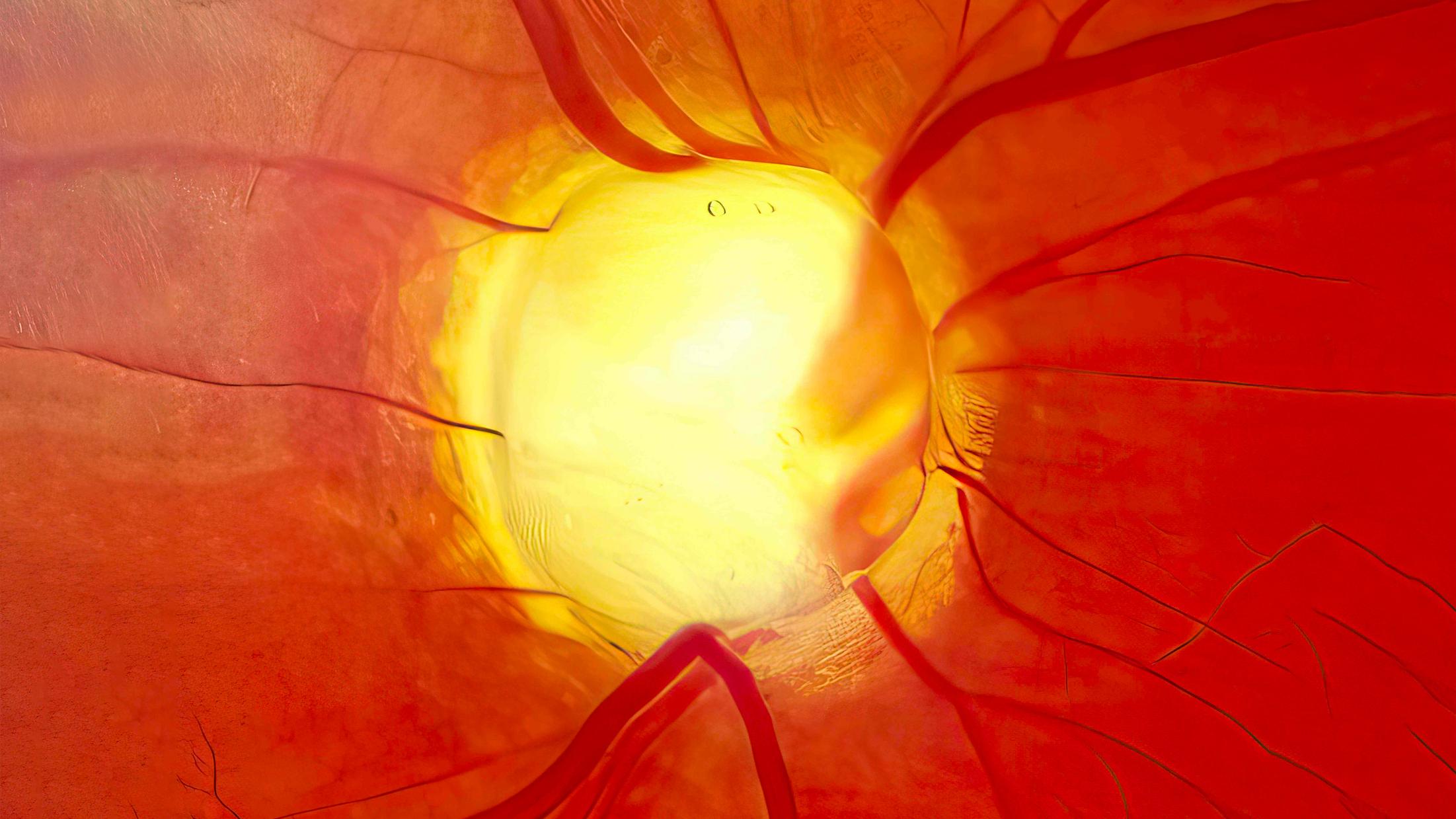
Photo via New York Post

A one-time treatment may fix damaged adult retinas — and reverse vision loss: study

Read the original at New York Post ↗
Cite

Sacks, R. (2026, October 6). A one-time treatment may fix damaged adult retinas — and reverse vision loss: study. New York Post. https://nypost.com/2026/10/06/health/one-time-treatment-may-fix-damaged-adult-retinas-reverse-vision-loss/

Dated when The Aporia collected the article, usually within hours of publication. Check the original for its exact date and byline.

New York Post · collected 2026-10-06 · by Rachel Sacks

Quick Summary

Researchers from Michigan State University have developed a one-time treatment using a harmless virus carrying a functional CaBP4 gene, which can repair damaged retinas and potentially reverse vision loss caused by a genetic deficiency. This therapy was tested on dogs and showed improvements in their night vision and reduced degradation of the retina, with benefits lasting up to three years post-treatment. The study suggests that this treatment could also help regenerate neural networks in mammals, an achievement previously deemed impossible.
Written by AI on 2026-10-06, from this article's own text only (the story summary below draws on all the coverage).

AI analysis

Story summary

Recent research from Michigan State University has identified a potential one-time treatment for repairing damaged retinas, which could reverse vision loss caused by faulty copies of the CaBP4 gene. This genetic mutation causes poor vision from childhood due to a deficiency in a critical protein necessary for proper signal transmission in the retina. Researchers tested their therapy on dogs, injecting them with a harmless virus carrying a working copy of the CaBP4 gene. The treatment improved vision in dim light and slowed degradation in damaged retinas while promoting growth in crucial visual structures like the outer plexiform layer and synaptic ribbons. This breakthrough not only addresses rare inherited conditions but also opens new possibilities for repairing nerve cells in mammals, previously considered impossible.

Written for “Retina Treatment Study” on 2026-11-03, grounded in this article and the 0 other(s) covering the same event.

Story

📰 Retina Treatment Study
Health · 1 article(s) covering the same event.

Compared with similar articles

This article reads unscored and hedges 11% of its claims. Each row says how that neighbour differs.
TIME
Hedges 8 of 52 claims Outlet record 59/100
“The articles discuss different aspects of retinal treatment research; Article A focuses on a study involving CaBP4 gene and dogs, while Article B reports on a presentation at an ophthalmology meeting with human subjects showing early signs of improved vision.”
How this article was measured signals, leaning charts, publisher record, byline, topics and claims

Signals How these are calculated →

Claims extracted
19
sentences that state something as happening or true
Uncertain
11%
2 of 19 hedged ("reportedly", "may", "according to")
Leaning
not political
takes no side on a contested political question
Publisher signals
66/100
New York Post's corrections and hedging, across everything collected from it. Not a measure of accuracy.
Outlets on this story
1
Health
Same framing elsewhere
1
articles that frame the event the way this one does
Analyzed 2026-10-06 · how these are computed

How this is being covered How these are calculated →

Article leaning vs. publisher reliability
Source leaning vs. consistency

Publisher

New York Post · 16360 article(s) · 35 correction(s) detected
Running correction rate · 35 correction(s)

Who wrote this

Rachel Sacks
39 article(s) here · 1 carrying a prediction
🔮 A disease that health officials have described as the fastest-spreading on record in Africa shows no signs of slowing down, and may soon afflict those outside the continent.
🔮 The estimated 40 million people who have diabetes may be prescribed a medication to manage blood sugar levels.
🔮 The good news is that an innovative treatment could not only replace the dental drill, but also spare those who brush off scheduling their next checkup.
🔮 The results of the phase 3 trial could offer hope for a disease that kills more than 97,000 people around the world each year.
🔮 A widespread problem, hair loss affects roughly 50 million men and 30 million women, and while there’s no special potion to reverse genetic or age-related decline, some products may slow down loss and promote regrowth.
🔮 Depressive symptoms may look similar, but there are various underlying causes.
🔮 The race is intended to give all kids the confidence boost that comes with crossing a finish line and hearing crowds cheering for them, with Collins noting that for some “it could be their first ever fitness event.”
🔮 And while a little meal before bedtime may curb your hunger in the short term, eating at the wrong time could increase the risk of a severe disease that causes permanent damage.
🔮 Massages may provide short-term relief for pain in the neck, shoulders, lower back and knees, as well as a part of supportive care for cancer patients.
2026-10-18 · assertive framing · You can now get a robot massage designed by Tom Brady
🔮 “The FDA should do whatever it possibly could do to get their hands on the actual drug that was injected by both of these patients,” associate professor at Harvard Medical School Pieter Cohen told CBS News.
Also by Rachel Sacks
Nothing else under this byline is closely related to this article, so these are simply their most recent.
All 39 articles by Rachel Sacks →

Topics

Michigan State University

Subjects

Billie Beckwith-Cohen PERSON · 1× Michigan State University ORG · 1×

Narrative

“One can essentially discuss the mutations in the retinal gene as a typo in a blueprint that makes the instructions incomprehensible to the system, resulting in a faulty design and subsequent vision loss,” study lead Billie Beckwith-Cohen said in a press release.
framing: assertive · carried by 1 article(s) · first seen 2026-10-06
🔮 Recent research has identified a one-time treatment that may repair damaged retinas and even reverse vision loss.

Claims (19 extracted, 2 hedged)

Recent research has identified a one-time treatment that may repair damaged retinas and even reverse vision loss. uncertain
that → identify → loss
This treatment, tested on an unexpected source, also raises the prospect of repairing nerve cells in mammals, a feat once thought impossible. asserted
treatment → test → feat
Faulty copies of the CaBP4 gene cause poor vision from childhood by creating deficiency of a protein necessary for vision and signal transmission in the retina. asserted
copies → cause → retina
This protein can also affect dogs, leading researchers from Michigan State University to create a potential remedy by injecting the retinas of the animals with a harmless virus carrying a working copy of the gene. asserted
protein → affect → gene
The single-dose therapy improved vision in dim light, which is where the CaBP4 protein deficiency makes the most difference. asserted
deficiency → improve → difference
The treatment also helped areas of the damaged retina degrade less, while the outer plexiform layer that holds crucial connectors for vision and the synaptic ribbons inside the eye’s light-sensing cells expanded. asserted
that → help → cells
Growth of both the outer plexiform layer and synaptic ribbons is stunted when the CaBP4 gene isn’t working properly. asserted
gene → stunt → layer
The researchers compared this underdevelopment to building blueprints. asserted
researchers → compare → blueprints
“One can essentially discuss the mutations in the retinal gene as a typo in a blueprint that makes the instructions incomprehensible to the system, resulting in a faulty design and subsequent vision loss,” study lead Billie Beckwith-Cohen said in a press release. asserted
Cohen → discuss → release
The treatment allows the growth of a layer in the eye that didn’t form as it typically would have during retinal development, establishing that the outer plexiform layer of the retina has the ability to change. asserted
layer → allow → ability
It also allows for synaptic features that support proper vision to grow properly, building a better support system for the whole retinal neural network. asserted
that → allow → network
Another highlight of the single-dose treatment is its ability to repair years of damage. asserted
highlight → repair → damage
The team saw evidence of nerve cells being rewired, even after years of stunted growth in the eye and ensuing damage to nerve cell connections. asserted
cells → see → connections
The benefits were long-lasting as well, as seen in follow-up periods three years after the initial treatment. asserted
benefits → last → treatment
While the genetic condition is rare in both humans and dogs, the findings could provide other methods for repairing damaged neural networks. uncertain
findings → provide → networks
One such application would look at the role that calcium signaling plays in handling cell communication in the eye — which also involves CaBP4. asserted
which → look → CaBP4
The treatment has yet to be applied to humans. asserted
treatment → have → humans
However, researchers are confident it will work. asserted
it → work → ?
“Our results show that gene therapy is not only capable of restoring retinal function but is also able to establish a nearly normal anatomical arrangement in the OPL of the retina,” they wrote in the paper. asserted
they → show → paper

💬Give feedback
🕘History 🎫Support