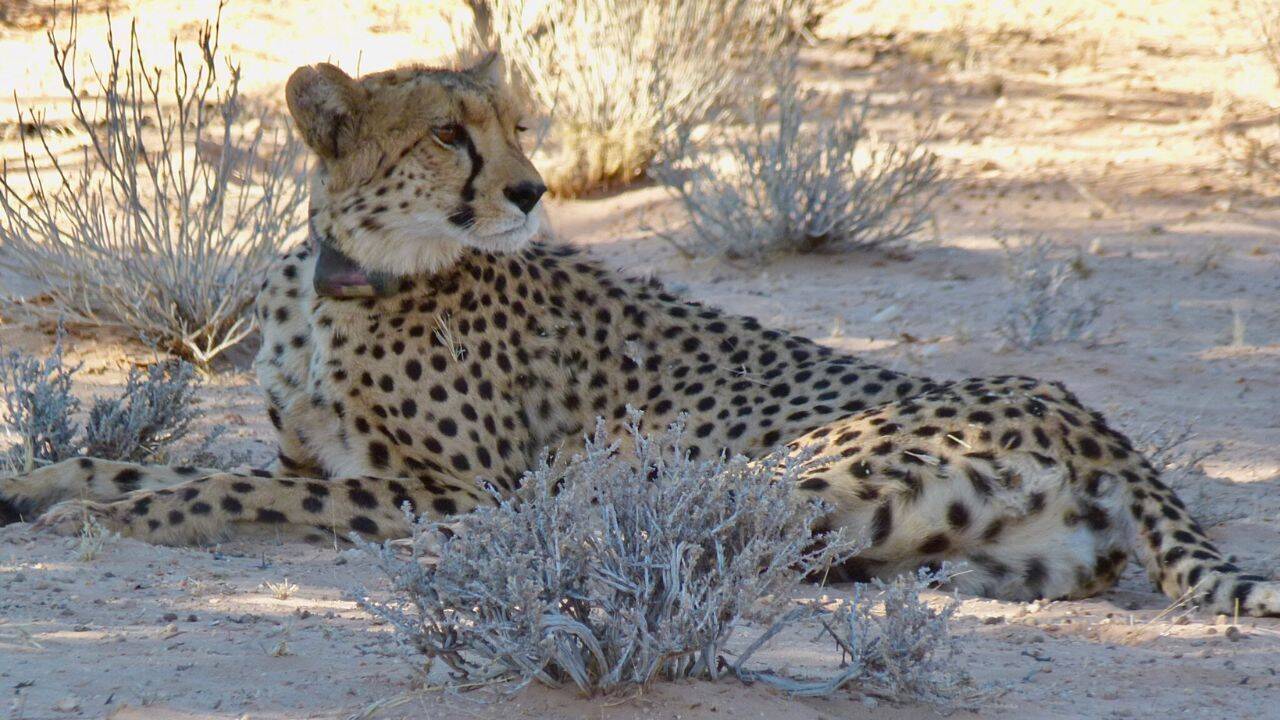
Photo via Times of India

Cheetahs return to Zambia's Greater Luangwa after nearly 30 years

Read the original at Times of India ↗
Cite

TOI Science Desk. (2026, October 7). Cheetahs return to Zambia's Greater Luangwa after nearly 30 years. Times of India. https://timesofindia.indiatimes.com/science/wildlife/cheetahs-disappeared-from-zambias-greater-luangwa-for-nearly-30-years-six-are-back-as-conservationists-rebuild-the-ecosystem/articleshow/134738904.cms

Dated when The Aporia collected the article, usually within hours of publication. Check the original for its exact date and byline.

Times of India · collected 2026-10-07 · by TOI Science Desk

Quick Summary

Six cheetahs have been reintroduced into Zambia’s Greater Luangwa Ecosystem after nearly three decades of absence, with the last confirmed sighting in 1997 due to anthrax outbreaks and human disturbances. The animals were relocated from South Africa in July 2026 as part of a conservation project aimed at rebuilding the cheetah population by restoring habitat and securing community support. North Luangwa National Park was chosen for its diverse habitats, which offer suitable conditions for cheetahs to thrive and avoid competition with other predators.
Written by AI on 2026-10-07, from this article's own text only (the story summary below draws on all the coverage).

AI analysis

Story summary

In July 2026, six cheetahs were reintroduced into the Greater Luangwa Ecosystem in Zambia after nearly three decades without confirmed sightings. The last known cheetah sighting was in 1997, with their disappearance linked to anthrax outbreaks and increased human activity. Conservationists from The Cheetah Conservation Initiative began planning the project during a 2017–18 revision of Zambia’s National Conservation Action Plan, identifying the Luangwa Valley as suitable for cheetah recovery. The initiative involved moving three males and three females from South Africa to a remote area in North Luangwa National Park, with extensive habitat assessment, protection measures, and community engagement preceding their release. This reintroduction marks a significant step toward rebuilding a sustainable wild population of cheetahs in the region.

Written for “Cheetah Reintroduction Zambia” on 2026-11-04, grounded in this article and the 0 other(s) covering the same event.

Story

📰 Cheetah Reintroduction Zambia
Environment · 1 article(s) covering the same event.

Compared with similar articles

Nothing to compare against. No article is close enough to this one for the pipeline to have linked or judged the pair.
How this article was measured signals, leaning charts, publisher record, byline, topics and claims

Signals How these are calculated →

Claims extracted
49
sentences that state something as happening or true
Uncertain
10%
5 of 49 hedged ("reportedly", "may", "according to")
Leaning
not political
takes no side on a contested political question
Publisher signals
59/100
Times of India's corrections and hedging, across everything collected from it. Not a measure of accuracy.
Outlets on this story
1
Environment
Same framing elsewhere
1
articles that frame the event the way this one does
Analyzed 2026-10-07 · how these are computed

How this is being covered How these are calculated →

Article leaning vs. publisher reliability
Source leaning vs. consistency

Publisher

Times of India · 4073 article(s) · 4 correction(s) detected
Running correction rate · 4 correction(s)

Who wrote this

TOI Science Desk
308 article(s) here · 1 carrying a prediction
🔮 Researchers are continuing to examine daily measurements to determine whether temperatures will climb further.
🔮 According to Reuters reporting by Will Dunham, a new study published in the journal Spixiana documents more than 90 Bangka slow lorises identified between 2015 and 2025.
🔮 “Normally, my job is quite monotonous, so I wanted to create something that would entertain people, turning my ‘serious’ job into something fun,” he said in a Guinness World Records news release.
🔮 The subsequent collision between the two galaxy clusters may then have compressed the cloud or re-energised its particles, causing it to shine more brightly in radio wavelengths once again.
🔮 The mathematicians at the University of California, Davis, argue that the answer may already lie within Einstein’s own equations and that an invisible form of energy may not be needed at all.
🔮 The work will be carried out by the West Tennessee River Basin Authority, which is preparing a plan to restore the river and the land around it.
🔮 Cornell University scientists have developed genetically engineered tomato plants that turn red-purple when nitrogen becomes scarce, giving farmers a visible warning that crops may need fertiliser.
🔮 By studying these crystals and other mineral grains, scientists could establish the meteorite's age and identify later changes caused by water.
🔮 Centuries later, bronze objects found in Scandinavia would preserve chemical signatures consistent with the metals produced at this Spanish site, offering evidence of connections that may have crossed much of Europe.
🔮 Deposited impurities and staining may also have contributed, while low temperatures and humidity could cause the fabric to crack.
Wire or desk byline, not an individual reporter.
Also by TOI Science Desk
Nothing else under this byline is closely related to this article, so these are simply their most recent.
All 308 articles by TOI Science Desk →

Topics

Mongabay North Luangwa South Africa The Cheetah Conservation Initiative Zambia

Subjects

The Cheetah Conservation Initiative ORG · 3× Zambia GPE · 3× Africa Geographic ORG · 2× North Luangwa GPE · 2× Wildlife Vagabond ORG · 2× African NORP · 1× Endangered Wildlife Trust ORG · 1× Mongabay ORG · 1× South Africa GPE · 1× the Zoological Society of London ORG · 1×

Narrative

The Cheetah Conservation Initiative says planning began during the 2017–18 revision of Zambia’s National Conservation Action Plan, with the Luangwa Valley identified as suitable for cheetah recovery.
framing: assertive · carried by 1 article(s) · first seen 2026-10-07
🔮 The government formally approved the project in May 2024 after years of preparation and discussions with conservation partners and local communities.
2026-10-07 · Times of India
Cheetahs return to Zambia's Greater Luangwa after nearly 30 years · assertive framing

Claims (49 extracted, 5 hedged)

Six cheetahs have returned to Zambia’s Greater Luangwa Ecosystem after nearly three decades without confirmed sightings. asserted
cheetahs → return → sightings
The 3 males and 3 females were moved from South Africa to a remote part of North Luangwa National Park in July 2026, beginning a carefully planned effort to rebuild a wild population. asserted
males → move → population
The project is not simply about releasing 6 animals. asserted
project → release → animals
Conservationists have spent years assessing habitat, strengthening protection and working with communities so the wider landscape can support cheetahs again. asserted
landscape → spend → cheetahs
The first arrivals are now being closely watched as the restoration effort moves into its most important stage. asserted
effort → watch → stage
Cheetahs are returning to the Greater Luangwa Ecosystem Cheetahs were once part of the Luangwa Valley, but they disappeared from the region during the 1990s. asserted
they → return → 1990s
The Cheetah Conservation Initiative says the last sighting was recorded in 1997. asserted
sighting → say → 1997
The disappearance is associated with successive anthrax outbreaks and wider human disturbance. asserted
disappearance → associate → outbreaks
The landscape has changed since then. asserted
landscape → change → ?
According to Mongabay, conservation work in North Luangwa and South Luangwa national parks has helped produce healthier prey populations and allowed other large carnivores, including lions and African wild dogs, to flourish. uncertain
carnivores → accord → lions
However, cheetahs are unlikely to return naturally because the nearest viable populations are too far away and disconnected. asserted
populations → return → ?
That makes a planned reintroduction the practical route back. asserted
reintroduction → make → ?
The Cheetah Conservation Initiative says planning began during the 2017–18 revision of Zambia’s National Conservation Action Plan, with the Luangwa Valley identified as suitable for cheetah recovery. asserted
Valley → say → recovery
The government formally approved the project in May 2024 after years of preparation and discussions with conservation partners and local communities. uncertain
government → approve → partners
A second group of cheetahs is scheduled to join them later to strengthen the founding population. asserted
group → schedule → population
What makes North Luangwa suitable for the cats North Luangwa was selected after a detailed assessment rather than simply because cheetahs historically lived there. asserted
cheetahs → make → assessment
Africa Geographic reports that the Zoological Society of London used information on cheetah movements and habitat use from other locations to assess suitable areas in the Luangwa Valley. asserted
Society → report → Valley
Four potential sites were compared before a remote southern section of North Luangwa National Park was chosen. asserted
section → compare → Park
The area also offers a mixture of habitats. asserted
area → offer → habitats
Riverine woodland, floodplains, thickets and more open ground give cheetahs different places to hunt and move through. asserted
woodland → give → places
This variety could also help them avoid lions, leopards and spotted hyenas, all of which can compete with or kill cheetahs. uncertain
all → help → cheetahs
Discover Africa notes that North Luangwa covers more than 4,500 square kilometres and contains riverine forests, open grasslands and prey such as impala and puku. asserted
Luangwa → note → impala
The wider Greater Luangwa Ecosystem covers about 70,000 square kilometres, giving a wide-ranging species room to move beyond the initial release area. asserted
Ecosystem → cover → area
The first group consists of three males and three females selected from South Africa’s managed cheetah population. asserted
group → consist → population
Wildlife Vagabond reports that the males include two brothers and a solitary male, while the females include two sisters and a solitary female. asserted
females → report → sisters
The animals underwent veterinary checks before being transported to Zambia. asserted
animals → undergo → Zambia
The selection was also based on qualities that could improve their chances of coping with North Luangwa. uncertain
that → base → Luangwa
Africa Geographic reports that the founders were chosen for factors including age, sex, genetic diversity and previous experience living alongside competing predators. asserted
founders → report → predators
They came from South African reserves where they had already lived independently with lions and similar prey. asserted
they → come → lions
The Cheetah Conservation Initiative describes a three-stage process. asserted
Initiative → describe → process
The project built 4 holding bomas and a 2,000-hectare predator-proof sanctuary for the process. asserted
project → build → process
The cats were flown directly to a remote sector in the southern section of the park. asserted
cats → fly → park
What happens before the cheetahs roam freely The cats are not being released straight into the wilderness. asserted
cats → happen → wilderness
Discover Africa reports that they underwent quarantine before being flown to a remote part of southern North Luangwa, where they entered a two-stage soft-release process. asserted
they → report → process
The sanctuary allows them to become familiar with the surroundings before they move into the unfenced landscape. asserted
they → allow → landscape
The Cheetah Conservation Initiative says the sanctuary is intended to encourage familiarity with the release area and support natural social behaviour and territory formation. asserted
sanctuary → say → behaviour
The animals are also fitted with satellite and VHF tracking collars. asserted
animals → fit → collars
8 trained Zambian monitors will follow the cheetahs, while veterinary and conservation teams will watch their health, movements, hunting behaviour and interactions with other animals. asserted
teams → train → animals
The information will help managers change future releases if the first animals face unexpected difficulties. asserted
animals → help → difficulties
Can six animals establish a lasting population asserted
animals → establish → population
…and 9 more, not listed.

💬Give feedback
🕘History 🎫Support