Photo via Reason

Are Economists Measuring the Wrong Things?

Read the original at Reason ↗
Cite

Gillespie, N. (2026, October 7). Are Economists Measuring the Wrong Things? Reason. https://reason.com/podcast/2026/10/07/are-economists-measuring-the-wrong-things/

Dated when The Aporia collected the article, usually within hours of publication. Check the original for its exact date and byline.

Reason · collected 2026-10-07 · by Nick Gillespie

Quick Summary

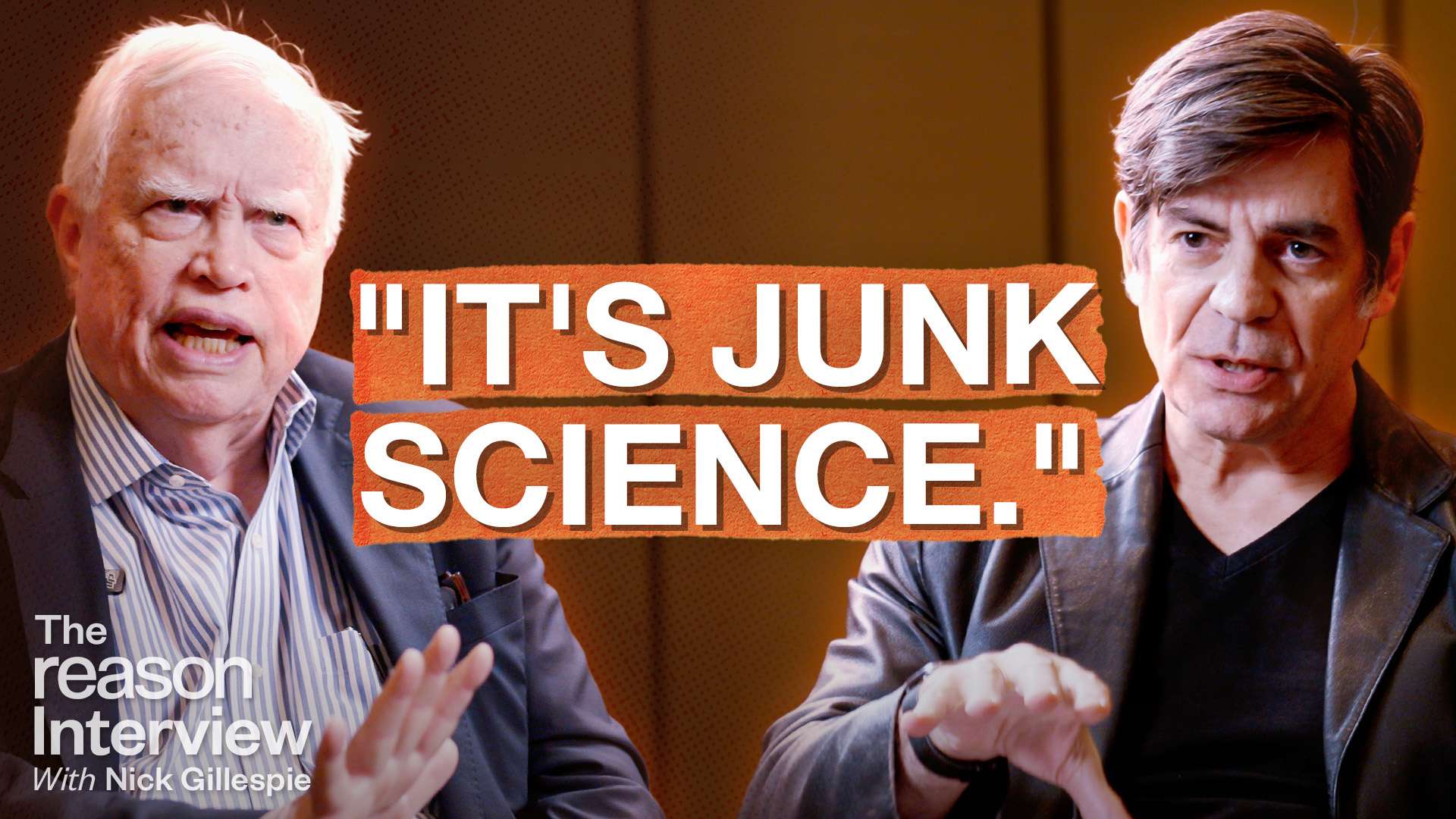
James Heckman, a Nobel Prize-winning economist, discusses his research on early childhood interventions during an interview at the Winds of Change conference in Buenos Aires. He clarifies that while his work shows such interventions can benefit low-income children, these findings have been misused to justify costly universal preschool programs. The conversation also delves into topics like income mobility in America and critiques directed towards other economists regarding economic determinism based on location or background.
Written by AI on 2026-10-07, from this article's own text only (the story summary below draws on all the coverage).

AI analysis

Story summary

James Heckman, a Nobel Prize-winning economist, discussed his misunderstood work at the Winds of Change conference in Buenos Aires. He argues that intensive early interventions can help low-income children close achievement gaps, but his research has been misinterpreted to support expensive and impractical universal preschool programs he calls "political ploys." Heckman also criticized economists like Raj Chetty for suggesting that economic mobility is largely determined by ZIP code, emphasizing that the economics profession often prioritizes status-seeking over intellectual rigor. The conversation covered topics including neighborhood effects on development, education's role in family involvement, and Heckman's research into intelligence measurement with AI assistance.


Written for “Economic Measurement Critique” on 2026-11-03, grounded in this article and the 0 other(s) covering the same event.

Story

📰 Economic Measurement Critique
Economy/Business · 1 article(s) covering the same event.

Compared with similar articles

Nothing to compare against. No article is close enough to this one for the pipeline to have linked or judged the pair.
How this article was measured signals, leaning charts, publisher record, byline, topics and claims

Signals How these are calculated →

Claims extracted
6
sentences that state something as happening or true
Uncertain
0%
0 of 6 hedged ("reportedly", "may", "according to")
Leaning
withheld
no quote in the article backed the model's score
Publisher signals
67/100
Reason's corrections and hedging, across everything collected from it. Not a measure of accuracy.
Outlets on this story
1
Economy/Business
Same framing elsewhere
1
articles that frame the event the way this one does
Analyzed 2026-10-07 · how these are computed

How this is being covered How these are calculated →

Article leaning vs. publisher reliability
Source leaning vs. consistency

Publisher

Reason · 1074 article(s) · 4 correction(s) detected
Running correction rate · 4 correction(s)

Who wrote this

Nick Gillespie
8 article(s) here · 1 carrying a prediction
🔮 This was for the October 2004 issue, which would run a bit before John Kerry squared off against George Bush in the presidential election.
🔮 With little more than two weeks to go until the midterm elections, it seems increasingly possible that the Democrats, already a big favorite to win control of the House of Representatives, will also take charge of the planet's most elite nursing home, the United States Senate, where the median age is 64 years old.
🔮 His research showing that intensive, early interventions can help low-income children close achievement gaps has been, he says, willfully misinterpreted as support for expensive and unworkable universal preschool programs that he calls "political ploys."
2026-10-07 · assertive framing · Are Economists Measuring the Wrong Things?
🔮 Later in the piece, Najya, now 16 years old and attending a competitive public high school of her own choosing, tells her mother, "Sometimes I wish instead of always thinking about other kids, you would have thought about me.
🔮 If Texans are interested in continuing the sort of uninterrupted economic and cultural growth they've experienced over the past 40 years, they will spurn nativism and tribalism and embrace the future-oriented, individualistic, and open-minded attitudes and policies that have made the state America's "new centre of gravity" (according to The Economist).
🔮 Of outrage at the tin-eared dismissal on September 12 of "the little Eichmanns inhabiting the sterile sanctuary of the twin towers" by an academic who would later be unmasked as a liar about Native American heritage.
2026-09-11 · assertive framing · Americans Have Learned Virtually No Lessons From 9/11
🔮 Any sentient being watching the 2024 Republican National Convention—especially the moment in which Hulk Hogan tore off his own shirt and declared "Let Trumpamania run wild, brother!"—would have to compare that spectacle to Idiocracy.
Also by Nick Gillespie
Nothing else under this byline is closely related to this article, so these are simply their most recent.
All 8 articles by Nick Gillespie →

Topics

America Buenos Aires GED Reason Winds of Change

Subjects

America GPE · 1× Buenos Aires GPE · 1× Charles Murray PERSON · 1× Heckman PERSON · 1× James Heckman PERSON · 1× Nick Gillespie PERSON · 1× Raj Chetty PERSON · 1× Reason ORG · 1× Richard J. Herrnstein PERSON · 1× Winds of Change ORG · 1×

Narrative

0:00—The experience of winning a Nobel Prize 3:04—Neighborhood effects on human development 8:02—Education and parental involvement 18:28—Universal preschool 22:31—Family environments 28:40—The problem with the GED 36:13—Title VII and Affirmative Action 40:05—When is intervention harmful? 52:57—Economic mobility 59:07—Javier Milei 1:01:43—President Donald Trump's economy Upcoming Reason Events The world premiere of Escaping Venezuela is on October 13.
framing: assertive · carried by 1 article(s) · first seen 2026-10-07
🔮 His research showing that intensive, early interventions can help low-income children close achievement gaps has been, he says, willfully misinterpreted as support for expensive and unworkable universal preschool programs that he calls "political ploys."
2026-10-07 · Reason
Are Economists Measuring the Wrong Things? · assertive framing

Claims (6 extracted, 0 hedged)

Today's guest, Nobel Prize winner James Heckman, is one of the world's most influential—and misunderstood—economists. asserted
guest → misunderstand → economists
His research showing that intensive, early interventions can help low-income children close achievement gaps has been, he says, willfully misinterpreted as support for expensive and unworkable universal preschool programs that he calls "political ploys." asserted
he → show → that
Nick Gillespie caught up with Heckman at the Winds of Change conference in Buenos Aires, where they discussed whether income mobility has stagnated in America, how the economics profession has been captured by status seeking rather than serious intellectual endeavors, and why AI is helping him extend the depth and breadth of his research into his 80s. asserted
him → catch → 80s
They revisit his controversial 1995 Reason review of The Bell Curve, by Richard J. Herrnstein and Charles Murray, and other attempts to quantify intelligence as a fixed thing, and his critiques of economists like Raj Chetty, who argue that when it comes to economic mobility, "ZIP code is destiny." asserted
code → revisit → mobility
0:00—The experience of winning a Nobel Prize 3:04—Neighborhood effects on human development 8:02—Education and parental involvement 18:28—Universal preschool 22:31—Family environments 28:40—The problem with the GED 36:13—Title VII and Affirmative Action 40:05—When is intervention harmful? 52:57—Economic mobility 59:07—Javier Milei 1:01:43—President Donald Trump's economy Upcoming Reason Events The world premiere of Escaping Venezuela is on October 13. asserted
premiere → win → October
If we fund your idea, you spend two years executing it. asserted
you → fund → it
💬Give feedback
🕘History 🎫Support