Photo via New York Post

A lawsuit claims Starbucks’ ‘sugar-free’ protein drinks aren’t what they seem — so we asked an expert

Read the original at New York Post ↗
Cite

Beard, M. (2026, October 7). A lawsuit claims Starbucks’ ‘sugar-free’ protein drinks aren’t what they seem — so we asked an expert. New York Post. https://nypost.com/2026/10/07/health/starbucks-hit-with-lawsuit-over-sugar-free-protein-drinks/

Dated when The Aporia collected the article, usually within hours of publication. Check the original for its exact date and byline.

New York Post · collected 2026-10-07 · by McKenzie Beard

Quick Summary

A lawsuit filed last week by Hagens Berman law firm claims that Starbucks mislabels its protein drinks as "sugar-free" despite each serving containing up to twenty-one grams of sugar. The plaintiffs argue this violates federal regulations which prohibit labeling beverages with more than 0.5 grams of sugar per 12-ounce serving as “sugar-free.” Starbucks maintains it does not add sugar to the drinks and uses lactose-containing milk, arguing that their products are accurately described under a "no added sugar options" category on their website.
Written by AI on 2026-10-07, from this article's own text only (the story summary below draws on all the coverage).

AI analysis

Story summary

A lawsuit filed in Seattle federal court accuses Starbucks of misleadingly labeling eight protein drinks as "sugar-free" despite containing between 13 to 21 grams of sugar per serving. The plaintiffs, represented by Hagens Berman on behalf of three consumers from California, New York, and Washington, argue that this mislabeling violates federal regulations prohibiting the use of "sugar-free" for beverages with more than 0.5 grams of sugar per 12-ounce serving. For context, a Reese’s peanut butter cup contains 11 grams of sugar. Starbucks denies the allegations, stating they have provided clear nutritional information across various platforms and intend to defend themselves vigorously in court.

Written for “Starbucks Sugar Mislabeling Lawsuit” on 2026-11-03, grounded in this article and the 6 other(s) covering the same event.

Story

📰 Starbucks Sugar Mislabeling Lawsuit
Other · 7 article(s) covering the same event. Compare every outlet's account →

Compared with similar articles

This article reads unscored and hedges 3% of its claims. Each row says how that neighbour differs.
Toronto Star
Hedges 2 of 18 claims Outlet record 64/100
Global News
Hedges 3 of 20 claims Outlet record 63/100
New York Post
Hedges 10 of 27 claims Outlet record 66/100
Fox News
Hedges 3 of 23 claims Outlet record 69/100
NBC News
Hedges 2 of 14 claims Outlet record 60/100
How this article was measured signals, leaning charts, publisher record, byline, topics and claims

Signals How these are calculated →

Claims extracted
35
sentences that state something as happening or true
Uncertain
3%
1 of 35 hedged ("reportedly", "may", "according to")
Leaning
not political
takes no side on a contested political question
Publisher signals
66/100
New York Post's corrections and hedging, across everything collected from it. Not a measure of accuracy.
Outlets on this story
7
Other
Same framing elsewhere
1
articles that frame the event the way this one does
Analyzed 2026-10-07 · how these are computed

How this is being covered How these are calculated →

Article leaning vs. publisher reliability
Source leaning vs. consistency

Publisher

New York Post · 16438 article(s) · 35 correction(s) detected
Running correction rate · 35 correction(s)

Who wrote this

McKenzie Beard
20 article(s) here · 0 carrying a prediction
🔮 A Virginia woman in the throes of a life-threatening allergic reaction was told to cough up hundreds of dollars before a nurse would administer an EpiPen.
🔮 “He has been held in the warm embrace of family and friends, surrounded by live music, prayer, tears, laughter, and the kind of profound emotion that only he could inspire after a lifetime of devotion to us all,” read a statement posted Thursday to Stewart’s Instagram page.
🔮 Today, they’re attracting an increasingly mainstream crowd, with many betting that these once-taboo substances could be the next big thing in mental health.
🔮 Zyn may have taken nicotine pouches mainstream, but we’ve come a long way since the brand popularized the “lip pillow.”
🔮 But that scan may reveal more than just how the girls are doing.
🔮 Holding your breath may be more than just a good party trick.
🔮 The findings, from Canada, could be a warning sign for the US, where the activity has taken off in recent years.
🔮 “I was searching for a magical reset button where I didn’t have to take time off and it would take care of all of my misbehavior and all of my poor choices would be erased and I would feel anew again,” Stratton, who lives in Palm City, Florida, said.
🔮 Its restaurant, Votana, is set to open Oct. 15 and will serve dishes inspired by the coastal cuisines of California, Greece, Italy, Spain and Southern France.
🔮 A 2024 survey of more than 18,000 men across seven countries found that 61% would consider trying a new male contraceptive within its first year on the market, including 49% of those in the US.
Also by McKenzie Beard
Nothing else under this byline is closely related to this article, so these are simply their most recent.
All 20 articles by McKenzie Beard →

Topics

California Hagens Berman New York Seattle Starbucks

Subjects

Starbucks ORG · 8× White PERSON · 2× Berman PERSON · 1× California GPE · 1× Hagens Berman ORG · 1× New York GPE · 1× Seattle GPE · 1× Steve Berman PERSON · 1× The Post ORG · 1× Washington GPE · 1×

Narrative

“Starbucks has consistently and clearly provided information about its protein beverages, sugar-free options, customization choices, and nutritional content across product announcements, menus, marketing materials, Starbucks.com and the Starbucks app, and we intend to vigorously defend ourselves in this matter.
framing: assertive · carried by 1 article(s) · first seen 2026-10-07

Claims (35 extracted, 1 hedged)

The numbers are at the heart of the lawsuit, which accuses Starbucks of using “false, deceptive and unlawful” naming and marketing for the drinks. asserted
which → accuse → drinks
The complaint further alleges that the chain violated federal labeling regulations, which prohibit using “sugar-free” on beverages containing more than 0.5 grams of sugar per 12-ounce serving. asserted
which → allege → serving
“Twenty-one grams is hardly ‘sugar-free,’” Steve Berman, co-founder and managing partner of Hagens Berman, said in a press release. asserted
Berman → manage → release
The law firm brought the lawsuit last week in federal court in Seattle on behalf of three consumers who purchased the protein drinks in California, New York and Washington. asserted
who → bring → California
“Consumers avoid sugar for various reasons whether that be general health, diabetes and blood glucose levels or other factors, and for many, a staunch mislabeling like this is significant,” Berman added. asserted
Berman → avoid → this
“Beverages with this much sugar are like drinking a candy bar.” asserted
Beverages → drink → bar
Starbucks isn’t buying it. asserted
Starbucks → buy → it
“We believe these claims have no merit,” a spokesperson for the company told The Post. uncertain
spokesperson → believe → Post
“Starbucks has consistently and clearly provided information about its protein beverages, sugar-free options, customization choices, and nutritional content across product announcements, menus, marketing materials, Starbucks.com and the Starbucks app, and we intend to vigorously defend ourselves in this matter. asserted
we → provide → matter
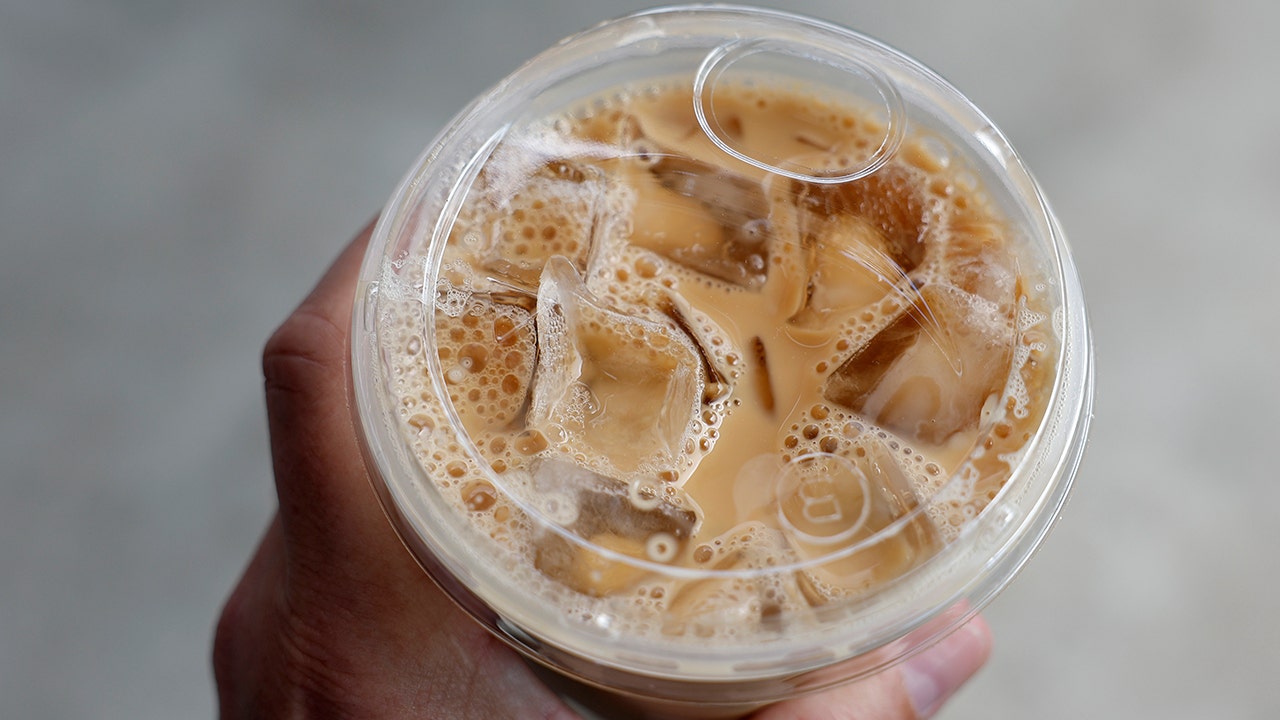
So what’s really in the cup? asserted
what → ’ → cup
The issue, it seems, comes down to wording. asserted
it → seem → wording
Starbucks says the drinks in question contain lactose, a naturally occurring sugar found in the protein-boosted milk used in the beverages. asserted
drinks → say → beverages
The company says it doesn’t add sugar to the beverages and instead uses sugar-free syrup for flavoring. asserted
it → say → flavoring
And while the drinks’ individual names describe them as “sugar-free,” Starbucks’ website places them under a “no added sugar options” section. asserted
website → describe → section
That distinction has prompted some online users to argue that the “sugar-free” label refers to the syrup used — not the entire beverage. asserted
label → prompt → syrup
Last-minute Prime Day deals end tonight—don't miss out! asserted
deals → end → ?
“All of the “sugar-free” protein lattes are labeled “sugar-free vanilla protein latte/match” or “sugar free caramel protein latte/matcha” the sugar-free label is before the syrup. asserted
label → label → syrup
It does not say the drink is sugar free,” one TikToker noted. asserted
TikToker → say → ?
“It’s called a sugar free (syrup) protein latte/matcha indicating the syrup used is sugar free not the [whole] drink as most know milk has natural sugar,” another wrote. asserted
another → call → sugar
But others argue it’s not that simple. asserted
it → argue → ?
“Most of y’all are missing the point they marketed it as sugar free, it’s false advertising,” commented one user. asserted
user → miss → it
“I get what ppl are saying, but it should be ‘no added sugar’ instead of ‘sugar free,'” another wrote. asserted
another → get → what
“People forgetting diabetes is a thing and that ordering something that is sugar free but actually has sugar is not a good thing,” chimed in a third. asserted
third → forget → sugar
An expert weighs in asserted
expert → weigh → ?
For an expert take, The Post turned to Dana Angelo White, a registered dietitian and certified athletic trainer. asserted
Post → turn → White
She didn’t mince words: “This entire thing is silly. asserted
thing → mince → words
I don’t blame consumers for being a bit confused, but Starbucks isn’t lying to anyone.” asserted
Starbucks → blame → anyone
While the company’s app doesn’t indicate “no added sugars” in the drinks’ names, White said customers can look at the ingredients to see that the lattes don’t contain added sugar. asserted
lattes → indicate → sugar
“There is a decent amount of milk because it’s a latte,” she noted. asserted
she → be → milk
“There is also some whey protein isolate which is how they get the protein total so high.” asserted
total → be → ?
White pointed out that while milk contains natural sugars, those aren’t the same as the added sugars found in a Reese’s cup. asserted
those → point → cup
“Milk sugar comes along with plenty of other nutritious attributes including calcium, Vitamin D, B-vitamins and protein,” she said. asserted
she → come → calcium
“This food matrix is very different from candy, plus it is digested more slowly thanks to the protein in it. asserted
it → digest → it
” The lawsuit is seeking monetary damages for customers who bought the protein beverages. asserted
who → seek → beverages
It also asks the court to order Starbucks to stop labeling the drinks “sugar-free” if they contain sugar. asserted
they → ask → sugar

💬Give feedback
🕘History 🎫Support