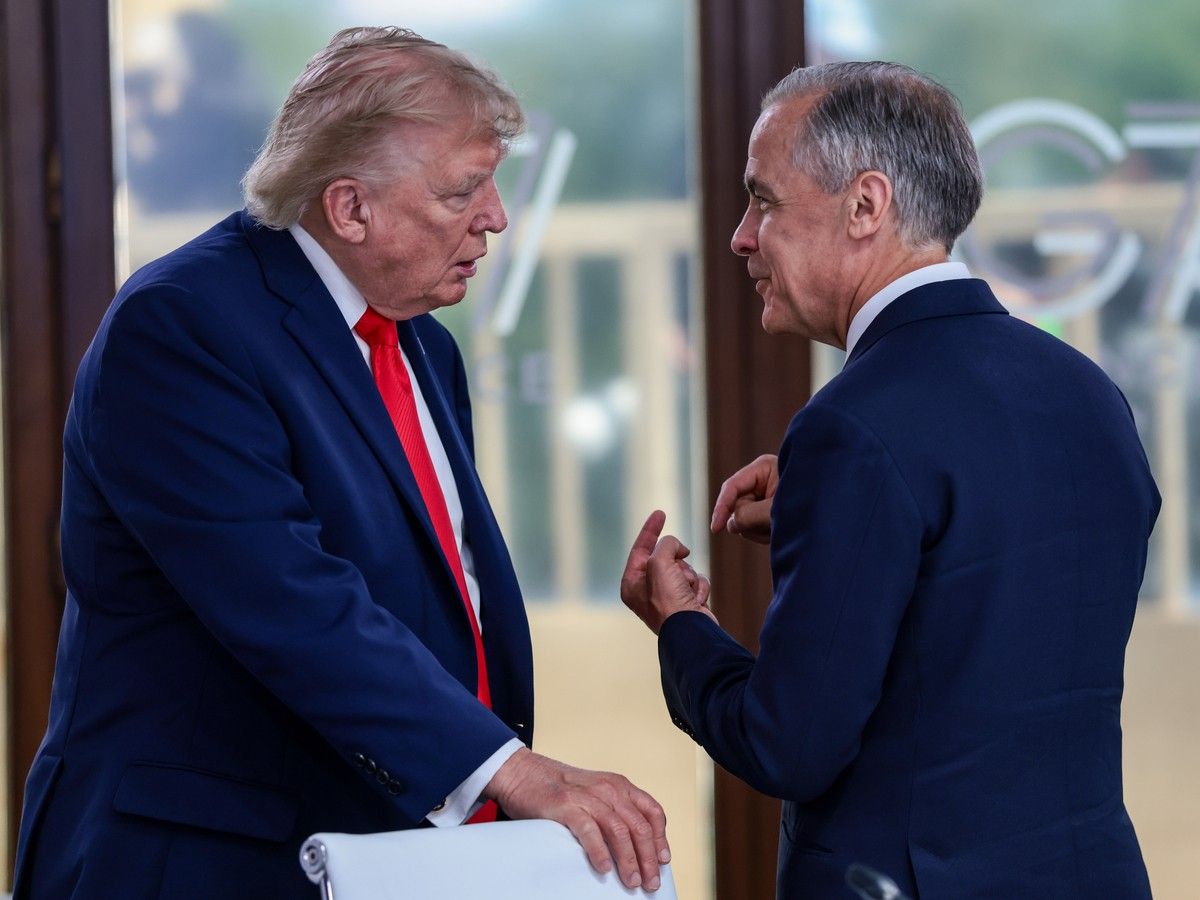
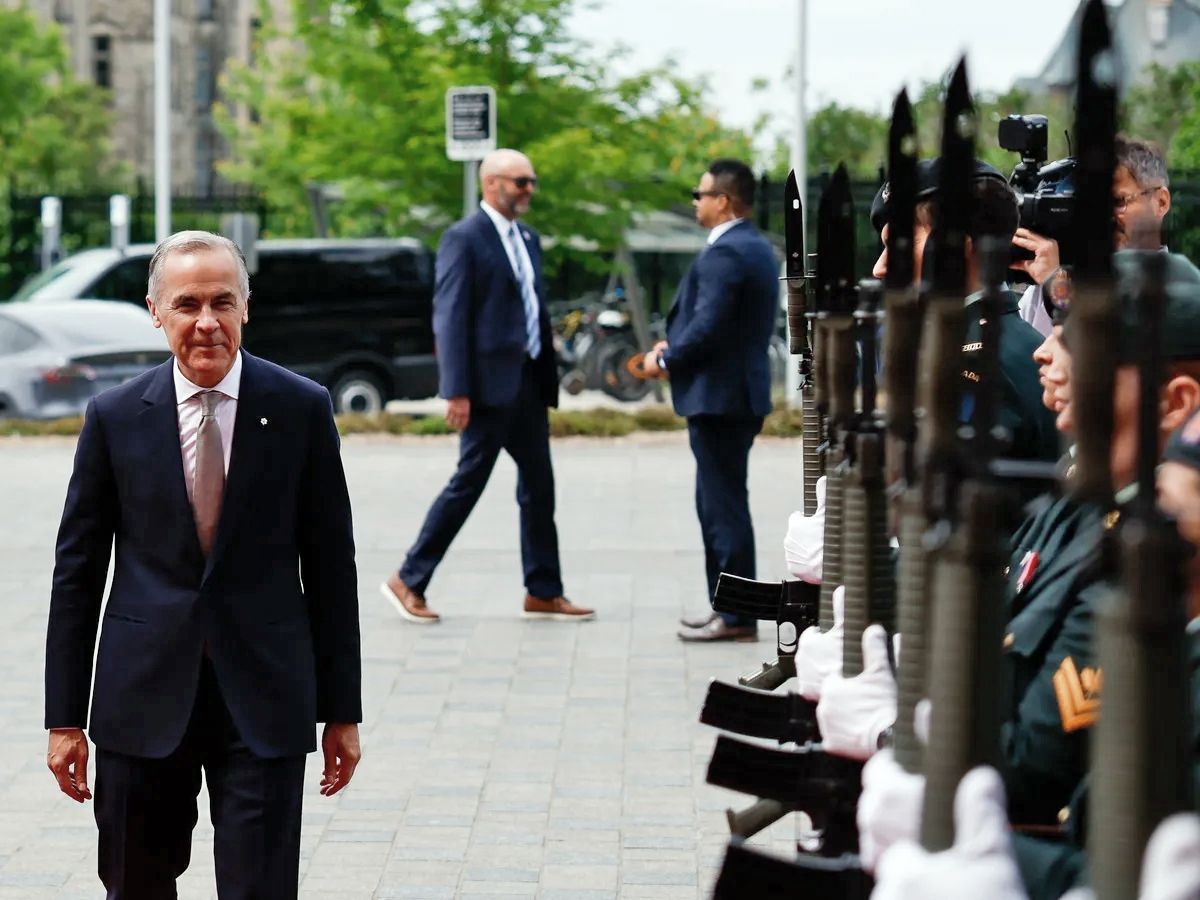
The political pendulum appears to be swinging left south of the border, with November’s midterm elections expected to give Democrats a House majority.
asserted
elections → appear → majority
Depending on how a few toss-up races go, Democrats may also have a credible path to winning control of the Senate.
uncertain
Democrats → depend → Senate
Some Republicans, meanwhile, are already wondering how the party might respond to those losses.
uncertain
party → wonder → losses
Sen. Thom Tillis (R-N.C.), who has been in a long-running feud with President Donald Trump and is retiring in January rather than defending his seat, pointed to a “risk” that Trump could lash out if the GOP does as poorly as polls suggest during an interview this week on “60 Minutes.”
uncertain
polls → run → Minutes
Tillis fears Trump could attack fellow Republicans or dispute the election results, or both.
uncertain
Trump → fear → results
Last week, Trump’s trade adviser Peter Navarro told Canadian lobbyists to “get the hell out of our country” and warned that “if you interfere in our elections in Maine and Michigan, you will pay even more dearly.”
So could Canada become a scapegoat for Republican losses?
uncertain
Canada → tell → losses
And, even if it does not, would a weakened Trump be any easier on Canada?
asserted
Trump → do → Canada
“It’s certainly the case that the administration will probably latch onto any sort of external cause to blame bad election results,” said Alfredo Carrillo Obregon, a trade policy analyst at the Cato Institute in Washington.
asserted
Obregon → ’ → Washington
“I think it’s not off the table that someone like Peter Navarro could go onto whatever news outlet he gets interviewed at these days and say that Canada is at fault,” he added.
uncertain
he → think → fault
“But I just don’t see that becoming the primary explanation or the primary narrative coming out of the White House.”
asserted
that → see → House
Most pundits and trade watchers agree that Trump will likely lash out, but their views vary on how the president will focus that anger.
asserted
president → agree → anger
For Canada, most say there’s little good news either way.
asserted
most → say → Canada
Christopher Sands, director of the Center for Canadian Studies at the Johns Hopkins School of Advanced International Studies in Washington, is not worried about the “gloves coming off” as Trump enters his lame-duck phase.
asserted
Trump → come → phase
When asked whether Trump will be less restrained with Canada after the election, Sands said he doesn’t expect major changes in the approach either way.
asserted
he → ask → approach
“I’m not worried because I don’t think (Trump) took the midterms as much of a constraint,” he said.
asserted
he → ’m → constraint
Sands is more concerned about Canada becoming a target of partisan recrimination.
asserted
Canada → become → recrimination
There is a risk, he said, that “if Democrats do well but are nonetheless seen as the enemy, and Canada is associated with just one party, then it becomes harder to have conversations with Republicans who you’ll need unless the Republicans are completely wiped out.”
asserted
Republicans → be → who
“That may be part of what the Trump administration’s hoping — to push Canada into a partisan alliance that it can then condemn Mark Carney with all the Democrats that they don’t like,” Sands explained.
uncertain
Sands → hop → that
Politicians have an incentive to shift blame for the costs of their policies, says Richard Stern, vice president of the Plymouth Institute for Free Enterprise at Advancing American Freedom, referring to the unpopular tariffs.
asserted
Stern → have → tariffs
The U.S. administration has been trying to paint the tariffs as a foreign policy tool that foreigners pay for when they are really “an offensive, aggressive tax that’s been levied on the American people,” he said.
asserted
he → try → people
Politicians running for reelection “don’t want to tell voters, ‘I’ve done something terrible to you,’” Stern said.
asserted
Stern → run → you
“They want to point the finger overseas and at other people.”
asserted
They → want → people
But even if Navarro, Trump, or other leading Republicans try to direct blame north, most experts agree that it’s unlikely to land with the American public.
asserted
it → lead → public
“I think President Trump lashing out in the face of a loss is … almost a certainty,” said Christopher Hernandez-Roy, acting director and senior fellow at the Americas Program of CSIS in Washington.
asserted
Roy → think → Washington
“They can … try to blame Canada, but … I don’t see how that’s really gonna get much traction.”
asserted
that → try → traction
“One thing is lashing out and threatening to do things.
asserted
thing → lash → things
Another is actually … creating some sort of a crisis,” he added.
asserted
he → create → crisis
Still, many experts expect Trump to continue being tough on Canada.
asserted
Trump → expect → Canada
I doubt very much the president is going to be in any sort of accommodating mood with Canada
Stephen Nagy, senior fellow at the Macdonald-Laurier Institute, says the president will likely stick to his usual playbook.
“I suspect Trump will do what he always does based on Roy Cohn’s rules of winning, taught to a young Donald Trump: centre on relentless aggression, total denial, and never admitting defeat,” he said.
asserted
he → doubt → defeat
“Based on that, he will say that the vote was against bad candidates, not a vote against himself,” Nagy added, noting that Trump’s lost latitude domestically means he will probably focus increasingly on foreign policy.
asserted
he → base → policy
Many experts agree that the president’s last two years in office, especially if Republicans lose control of the House, will be focused more on international affairs, and that it’s likely bad news for Ottawa.
asserted
it → agree → Ottawa
“I doubt very much the president is going to be in any sort of accommodating mood with Canada,” said Hernandez-Roy.
asserted
Roy → doubt → Canada
“I think the likely scenario is that he’ll continue to put a lot of pressure on Canada… and driving a very hard bargain with Canada, even if, the Congress, now in Democratic hands, would be much more sympathetic to Canada,” he added, noting that the Democrats are unlikely to win enough seats to have a veto-proof majority.
asserted
Democrats → think → majority
So, even if Trump and other MAGA Republicans can’t make Canada their scapegoat for a GOP midterm collapse, the country may still need to brace itself.
uncertain
country → make → itself
“I would expect the next four, five, six months to be rather difficult for Canada,” said Hernandez-Roy.
asserted
Roy → expect → Canada
But consistent criticism of Ottawa and making demands may continue without a sharp uptick in post-election targeting, too.
uncertain
making → make → targeting
Unlike those who think a more Democratic Congress could be friendlier toward Canada but without much effect, leaving Canada subject to a tougher tone from Trump, Inu Manak, senior fellow at the Peterson Institute for International Economics, expects pressure to build on the president to tone things down.
uncertain
pressure → think → things
“We will probably see a little bit more moderation in … the tone towards Canada,” she said, noting that while Trump will likely focus more on foreign policy in his final months, he will also be keen to shore up his place in history.
asserted
he → see → history
“Presidents tend to focus on foreign policy in their second term,” she said.
asserted
she → tend → term
“But he also has to think about his legacy, and how much time do you want to spend in your last two years berating Canada?”
asserted
you → have → Canada
 The Aporia