Photo via Semafor

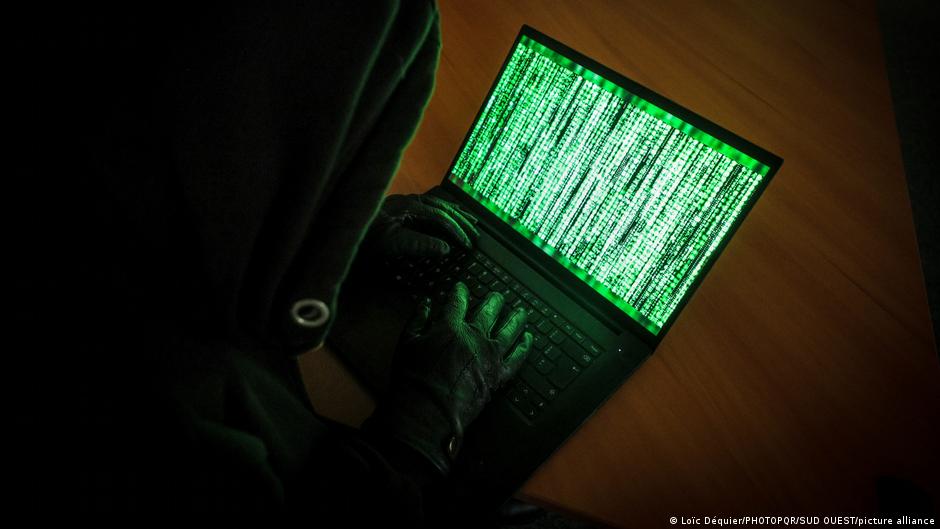
Companies in Japan, South Korea hit by major cyberattacks

Read the original at Semafor ↗
Cite

Gonzalez, J. (2026, October 8). Companies in Japan, South Korea hit by major cyberattacks. Semafor. https://www.semafor.com/article/10/08/2026/companies-in-japan-south-korea-hit-by-major-cyberattacks

Dated when The Aporia collected the article, usually within hours of publication. Check the original for its exact date and byline.

Semafor · collected 2026-10-08 · by Jeronimo Gonzalez

Quick Summary

Recent cyberattacks in Japan and South Korea exposed millions of customer records, highlighting concerns about advanced hacking techniques possibly enhanced by artificial intelligence. These incidents follow another large-scale breach where hackers used Chinese and US AI models to steal credit card details from hundreds of thousands of individuals. Corporate leaders are increasingly worried that industrial-scale AI hacking poses a significant threat to businesses, prompting many to accelerate their adoption of AI technologies as protection. Experts warn that some companies may already be behind in the race against AI-driven cyber threats.
Written by AI on 2026-10-08, from this article's own text only (the story summary below draws on all the coverage).

AI analysis

Story summary

Companies in Japan and South Korea recently faced major cyberattacks, resulting in the exposure of millions of customer records. This incident has heightened concerns about the potential use of artificial intelligence (AI) to enhance hacking efforts on an industrial scale. Just days before these attacks, Chinese and US AI models were reportedly used to steal hundreds of thousands of credit card details, described by analysts as one of the most severe abuses of AI for malicious purposes ever recorded. Corporate leaders, particularly in finance, view such threats from AI-driven cyberattacks as a critical danger to their businesses. Many companies are now urgently adopting AI technologies themselves, seeing them as the only effective countermeasure against these sophisticated attacks. Experts warn that some firms may already be behind in the race to protect against AI-powered hacking vulnerabilities.

Written for “Cyber Attacks In Asia” on 2026-11-04, grounded in this article and the 0 other(s) covering the same event.

Story

📰 Cyber Attacks In Asia
Technology · 1 article(s) covering the same event.

Compared with similar articles

This article reads leans left and hedges 50% of its claims. Each row says how that neighbour differs.
South China Morning Post
⚖️ Leans left Hedges 1 of 9 claims Outlet record 62/100
“The articles discuss different aspects of AI risks and cyberattacks without clearly referring to the exact same incident.”
The Hindu
Hedges 7 of 18 claims Outlet record 77/100
“The articles discuss related topics but describe different events: one reports on specific cyberattacks in Japan and South Korea, while the other covers the IMF's warnings about AI market corrections and general financial system risks at an international gathering.”
Deutsche Welle
Hedges 6 of 29 claims Outlet record 95/100
“While both articles discuss cyberattacks in South Korea, they do not specify the exact same incident with the same time and place.”
The Hindu
Hedges 1 of 8 claims Outlet record 60/100
“Article A focuses on South Korea's President Lee Jae Myung's statements about AI being used in hacking incidents against banks, while Article B mentions broader cyberattacks affecting companies in both Japan and South Korea.”
How this article was measured signals, leaning charts, publisher record, byline, topics and claims

Signals How these are calculated →

Claims extracted
4
sentences that state something as happening or true
Uncertain
50%
2 of 4 hedged ("reportedly", "may", "according to")
Leaning
Leans left
of the writing, not the subject · beta estimate
Publisher signals
59/100
Semafor's corrections and hedging, across everything collected from it. Not a measure of accuracy.
Outlets on this story
1
Technology
Same framing elsewhere
1
articles that frame the event the way this one does
Analyzed 2026-10-08 · how these are computed

How this is being covered How these are calculated →

Article leaning vs. publisher reliability
Source leaning vs. consistency

Publisher

Semafor · 1478 article(s) · 3 correction(s) detected
Running correction rate · 3 correction(s)

Who wrote this

Jeronimo Gonzalez
67 article(s) here · 1 carrying a prediction
🔮 The US said it will suspend South Africa and Rwanda from its free trade pact with sub-Saharan Africa, after months of fraying ties with both nations.
🔮 Intense domestic competition has pushed producers to cut prices, moves that will likely anger China’s trading partners that are already frustrated by a flood of imports they say is undermining their domestic industry.
2026-11-02 · assertive framing · China’s manufacturing growth slows, adding to worries
🔮 “This may be the most transformative tech boom yet, but it’s not big enough to defy the high price of money,” an expert wrote.
🔮 Brazil’s debt burden steadily climbed over Lula’s third term and the deficit hit a record high; his reelection tanked Brazilian markets, reflecting investors’ fears the country’s fiscal picture will only worsen under his tenure as economic growth is forecast to cool in the years ahead and new benefits — including a reduction in the working week and an expansion of housing and education support — take hold.
2026-10-30 · assertive framing · Brazil’s economic outlook darkens as debt soars
🔮 Bolsonaro — who faces a corruption investigation but lost his legal immunity after resigning as a lawmaker to run for president — looked set to join the new right that has risen to power across the region in recent years.
🔮 While the political challenge against Lula’s victory appears to have subsided for now — the party of opposition leader Flávio Bolsonaro, who said the vote was rigged, conceded the election and US President Donald Trump signaled he would not intervene — Brasília is nonetheless staring at a fiscal reckoning.
2026-10-27 · assertive framing · Brazilian markets tumble on Lula's election victory
🔮 Many hope Big Tech earnings due this week will further stabilize a wobbly market that has grown wary of excessive AI spending.
2026-10-27 · assertive framing · Anthropic prospectus cheers investors ahead of IPO
🔮 However, the “soaring” similarity in the export baskets of China and the West could add to already high trade tensions, an expert at the Council on Foreign Relations argued.
2026-10-25 · assertive framing · Western luxury falters in China
🔮 Whoever comes out on top will have to navigate a tricky balance between maintaining strong ties to China, Brazil’s biggest trading partner, and the US: The last seven elections across Latin America have been won by conservatives friendly to Washington and its crackdown on immigration and drug trafficking.
2026-10-23 · assertive framing · Brazil deadlocked ahead of Sunday vote
🔮 The leading parties in next week’s election were in a dead heat, a new poll showed, though both are short of a majority, meaning they would need to ally with minority parties.
Also by Jeronimo Gonzalez
Nothing else under this byline is closely related to this article, so these are simply their most recent.
All 67 articles by Jeronimo Gonzalez →

Topics

Chinese Google Japan South Korea

Subjects

Chinese NORP · 1× Google ORG · 1× Japan GPE · 1× South Korea GPE · 1×

Narrative

The revelations come days after Chinese and US models were used to steal hundreds of thousands of credit card details, a breach an analyst called one of the “most severe abuses of AI for exploitation” on record. Corporate leaders, especially in finance, say industrial-scale AI hacking represents a severe threat to business, with many racing to adopt the technology themselves as the only antidote.
framing: mixed · carried by 1 article(s) · first seen 2026-10-08
🔮 Companies in Japan and South Korea were hit with major cyberattacks, exposing millions of customer records and feeding fears that AI may be turbo-charging hacking efforts.
2026-10-08 · Semafor
Companies in Japan, South Korea hit by major cyberattacks · mixed framing

Claims (4 extracted, 2 hedged)

Companies in Japan and South Korea were hit with major cyberattacks, exposing millions of customer records and feeding fears that AI may be turbo-charging hacking efforts. uncertain
AI → hit → efforts
The revelations come days after Chinese and US models were used to steal hundreds of thousands of credit card details, a breach an analyst called one of the “most severe abuses of AI for exploitation” on record. Corporate leaders, especially in finance, say industrial-scale AI hacking represents a severe threat to business, with many racing to adopt the technology themselves as the only antidote. asserted
many → come → antidote
Some may already be too late: “There’s a misconception that the AI vulnerability race is imminent,” an expert at Google said. uncertain
expert → ’ → Google
“The reality is that it’s already begun.” asserted
it → begin → ?
💬Give feedback
🕘History 🎫Support