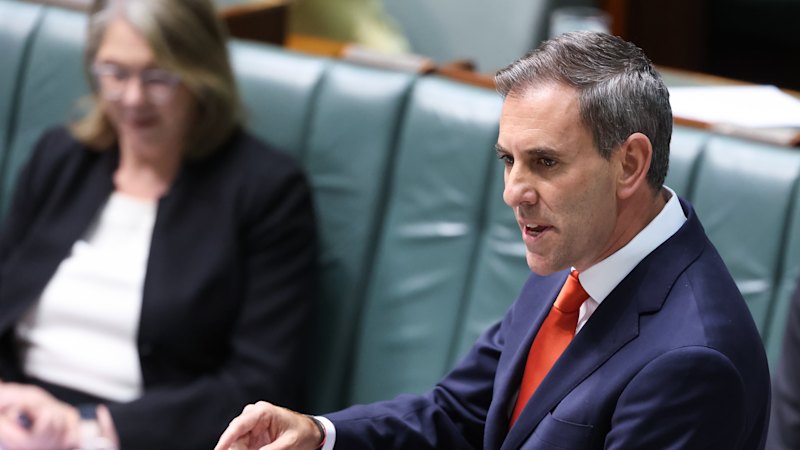
Photo via ABC News (AU)

How the card surcharge ban could change our relationship with cash

Read the original at ABC News (AU) ↗
Cite

Maguire, D. (2026, October 9). How the card surcharge ban could change our relationship with cash. ABC News (AU). https://www.abc.net.au/news/2026-10-09/card-surcharge-ban-cash-use-australia/107239200

Dated when The Aporia collected the article, usually within hours of publication. Check the original for its exact date and byline.

ABC News (AU) · collected 2026-10-09 · by Dannielle Maguire

Quick Summary

The Reserve Bank of Australia's ban on card surcharges has come into effect, potentially influencing businesses to offer discounts for cash payments in Australia. According to RBA data from 2025, cash usage increased slightly to 50% of transactions compared to 47% in 2022 but remains significantly lower than the 97% recorded in 2007. Experts like John Hawkins and Angel Zhong suggest that while there might be a modest rise in cash use, especially among older adults and those with limited access to banking services, long-term trends favor card payments due to convenience and other factors. The ban could lead some small businesses to offer cash discounts as a way to offset rising operating costs and compensate for the inability to charge additional fees for card transactions.
Written by AI on 2026-10-09, from this article's own text only (the story summary below draws on all the coverage).

AI analysis

Story summary

The Reserve Bank of Australia (RBA) has implemented a ban on card surcharges, which might lead local businesses to offer discounts for cash payments. According to the RBA's 2025 Consumer Payments Survey, only 50% of Australians used cash in a typical week, compared to 97% in 2007 and 47% in 2022. This slight uptick in 2025 could be due to the government's requirement that most grocery stores and petrol stations accept cash starting January 1st of an unspecified year prior to 2025. Professor John Hawkins from the University of Canberra predicts only a modest increase in cash use, while Professor Angel Zhong suggests that if businesses offer discounts for cash payments, it could slightly shift consumer behavior towards using more cash, especially at smaller establishments like cafés and barbershops.

Written for “Card Surcharge Ban Impact” on 2026-11-03, grounded in this article and the 0 other(s) covering the same event.

Story

📰 Card Surcharge Ban Impact
Economy/Business · 1 article(s) covering the same event.

Compared with similar articles

This article reads unscored and hedges 23% of its claims. Each row says how that neighbour differs.
The Sydney Morning Herald
⚖️ Leans left Hedges 1 of 23 claims Outlet record 61/100
“The articles discuss different aspects of policy changes related to card surcharges but do not describe the same specific incident or outcome.”
The Sydney Morning Herald
⚖️ Leans left Hedges 3 of 22 claims Outlet record 61/100
“The articles discuss related topics (card surcharge ban) but describe different aspects and outcomes.”
ABC News (AU)
Hedges 2 of 31 claims Outlet record 68/100
“While both articles discuss the RBA's ban on card surcharges, Article A focuses on how this change might affect cash usage in Australia generally, whereas Article B specifically covers small businesses in NSW grappling with the costs and potential strategies to offset merchant fees.”
How this article was measured signals, leaning charts, publisher record, byline, topics and claims

Signals How these are calculated →

Claims extracted
35
sentences that state something as happening or true
Uncertain
23%
8 of 35 hedged ("reportedly", "may", "according to")
Leaning
not political
takes no side on a contested political question
Publisher signals
68/100
ABC News (AU)'s corrections and hedging, across everything collected from it. Not a measure of accuracy.
Outlets on this story
1
Economy/Business
Same framing elsewhere
1
articles that frame the event the way this one does
Analyzed 2026-10-09 · how these are computed

How this is being covered How these are calculated →

Article leaning vs. publisher reliability
Source leaning vs. consistency

Publisher

ABC News (AU) · 4688 article(s) · 10 correction(s) detected
Running correction rate · 10 correction(s)

Who wrote this

Dannielle Maguire
10 article(s) here · 1 carrying a prediction
🔮 While the causes may be different in each country, experts say they speak to the overwhelming mood of discontent among young people.
🔮 It raises questions about whether Australian supermarkets could be vulnerable to similar attacks.
🔮 US President Donald Trump says a new deal with Russia will lower diesel prices, but experts say it won't "move the dial" on costs for consumers.
2026-10-12 · assertive framing · Trump's diesel deal not expected to lower prices
🔮 With the Reserve Bank of Australia's (RBA) ban on card surcharges now in effect you might start seeing local businesses offering discounts if you pay in cash.
🔮 If you were to plan what your home life would be like in the future, what would be on your wishlist?
🔮 Many Australians are set to enjoy a three-day weekend, with half the country having a public holiday on Monday.
2026-10-02 · assertive framing · Which states get a public holiday on Monday?
🔮 Daylight saving time is looming for many Australians, meaning half the country will be adjusting to a new time zone.
2026-10-01 · assertive framing · How to prepare for daylight saving time
🔮 If you're having a tax agent file your return, they'll generally have a special lodgement schedule, which means they may be able to lodge returns for clients later than November 2.
2026-10-01 · assertive framing · Putting off your tax return? You have a month to file
🔮 If you're unfamiliar with the popularity contest, or missed this year's festivities, our Fat Bear Week group chat will get you up to speed.
2026-09-30 · assertive framing · The backstory of this year's Fat Bear Week winner
🔮 Warning: This story contains details of a crime that may be distressing for some readers.
Also by Dannielle Maguire
Nothing else under this byline is closely related to this article, so these are simply their most recent.
All 10 articles by Dannielle Maguire →

Topics

Australia Australians RBA the Reserve Bank of Australia's the University of Canberra

Subjects

RBA ORG · 4× Zhong PERSON · 4× ACCC ORG · 2× Australia GPE · 2× Australians NORP · 2× Angel Zhong PERSON · 1× Hawkins PERSON · 1× John Hawkins PERSON · 1× the Reserve Bank of Australia's ORG · 1× the University of Canberra ORG · 1×

Narrative

"I expect a modest uptick [in cash use] mostly at the margins: the café, the barber or the tradie offering a few per cent off for cash," Professor Zhong says. "Australians moved to cards and mobile wallets mainly because of convenience, speed and record keeping, not because of price. "
framing: mixed · carried by 1 article(s) · first seen 2026-10-09
🔮 With the Reserve Bank of Australia's (RBA) ban on card surcharges now in effect you might start seeing local businesses offering discounts if you pay in cash.
2026-10-09 · ABC News (AU)
How the card surcharge ban could change our relationship with cash · mixed framing

Claims (35 extracted, 8 hedged)

With the Reserve Bank of Australia's (RBA) ban on card surcharges now in effect you might start seeing local businesses offering discounts if you pay in cash. uncertain
you → start → cash
Cash payments in Australia are much less common than they were a decade ago, but the RBA's latest data showed a slight uptick in cash use in 2025. asserted
data → show → 2025
How could the ban on card surcharges impact how cash is used in Australia? uncertain
cash → impact → Australia
How often do people use cash? asserted
people → use → cash
This graph from the RBA's 2025 Consumer Payments Survey tracks the percentage of Australians who use cash in a typical week. asserted
who → track → week
As you can see, 2025's figure of 50 per cent is much lower than the 97 per cent in 2007. asserted
figure → see → 2007
Will we move back to cash? asserted
we → move → cash
John Hawkins, a senior economic lecturer at the University of Canberra, doesn't expect cash use to skyrocket. asserted
use → expect → Canberra
"From January the government has required most grocery stores and petrol stations to accept cash, which may see some modest increase in its use," Dr Hawkins says. " uncertain
Hawkins → require → use
On the other hand, about 20 per cent of consumers say they used cash to avoid card surcharges. asserted
they → say → surcharges
"As these no longer apply we could see some drop in cash use." Loading... uncertain
we → apply → use
Angel Zhong, a finance professor at RMIT, says she would be surprised if the surcharge ban reverses the long-term trend of card payments. asserted
ban → say → payments
"I expect a modest uptick [in cash use] mostly at the margins: the café, the barber or the tradie offering a few per cent off for cash," Professor Zhong says. "Australians moved to cards and mobile wallets mainly because of convenience, speed and record keeping, not because of price. " asserted
Australians → expect → price
A small discount at a handful of businesses is unlikely to change entrenched habits for most people." asserted
discount → change → people
Data from the RBA's 2025 survey showed people aged 65 and older were the most likely to use cash. asserted
people → show → cash
Cash might also still be preferred by people in regional areas with limited bank access or poor internet signal, people managing tight budgets, and people who have privacy concerns. uncertain
who → prefer → concerns
Professor Zhong says the goal should be to continue offering people the choice of using cash or paying by card. asserted
goal → say → card
Why would cafés offer cash discounts? asserted
cafés → offer → discounts
Professor Zhong sees cash discounts as a sign of how much pressure small businesses are under. asserted
businesses → see → pressure
"The RBA paired the ban with a cut to interchange fees, which was meant to soften the blow by lowering what businesses pay to accept cards," she says. " asserted
she → pair → cards
Small businesses typically pay their payment service provider a bundled rate, and there's no guarantee that the interchange savings flow through to that rate. asserted
savings → pay → rate
" While big businesses could leverage their bargaining power to negotiate savings in their contracts, smaller businesses don't have that option. uncertain
businesses → leverage → option
And that means losing the ability to surcharge while missing out on a drop in costs. asserted
that → mean → costs
"Against thin margins and rising operating costs, offering a discount for cash is one of the few ways a small business can steer customers toward a cheaper payment method," Professor Zhong says. asserted
Zhong → rise → method
The Australian Competition and Consumer Commission (ACCC) says businesses can offer discounts to customers paying via particular means such as cash or PayID, but there are a few rules. asserted
businesses → say → cash
Discounts should be clearly disclosed before payment and they have to advertise the non-discounted price. asserted
they → disclose → price
They're not allowed to display the discounted price more prominently than the full price. asserted
They → allow → price
Is it legal to hike prices to cover the surcharge ban? asserted
it → hike → ban
Yes, but there are rules about how businesses label these price hikes. asserted
businesses → be → hikes
"They must not mislead consumers about prices, including about the reasons for any price increases," the ACCC says. asserted
ACCC → mislead → increases
An example of this might be nursery that used to apply a 1 per cent credit card surcharge for its products. uncertain
that → use → products
To compensate for that cost, they might increase the cost of a $10 pot plant to $10.10. uncertain
they → compensate → 10.10
But let's say the nursery owner decides that, while they're setting new figures, they'll increase the pot plant's price to $12 to cover the rise in their electricity and water bills. asserted
they → let → bills
But they aren't allowed to say the price increase from $10 to $12 is because of the ban. asserted
increase → allow → ban
"This will be misleading because the price increase also reflects other business costs, not just the cost of accepting card payments," the ACCC says. asserted
ACCC → reflect → payments

💬Give feedback
🕘History 🎫Support