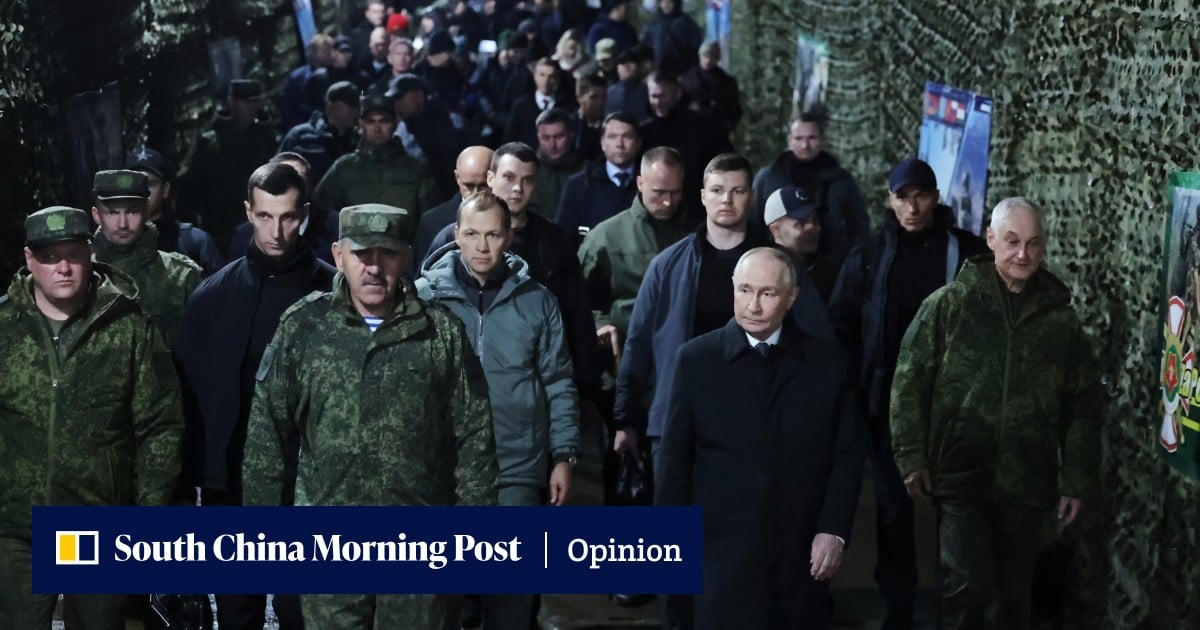
Photo via South China Morning Post

US-Japan-Poland strategic triangle can encourage a ‘peaceful war’

Read the original at South China Morning Post ↗
Cite

Mendis, P. (2026, October 9). US-Japan-Poland strategic triangle can encourage a ‘peaceful war’. South China Morning Post. https://www.scmp.com/opinion/world-opinion/article/3370030/us-japan-poland-strategic-triangle-can-encourage-peaceful-war?utm_source=rss_feed

Dated when The Aporia collected the article, usually within hours of publication. Check the original for its exact date and byline.

South China Morning Post · collected 2026-10-09 · by Patrick Mendis

Quick Summary

Dr. Patrick Mendis discusses the emerging strategic alliance between the US, Japan, and Poland in response to increasing military cooperation between Russia and China. He highlights recent joint exercises involving Russian and Chinese troops as evidence of a growing threat that bridges the Euro-Atlantic and Indo-Pacific regions. The article suggests this new alliance could serve as a deterrent against aggressive actions by these nations without escalating into full-scale war.
Written by AI on 2026-10-09, from this article's own text only (the story summary below draws on all the coverage).

AI analysis

Story summary

Dr Patrick Mendis, a Harvard-affiliated scholar, argues that recent military exercises involving Russia, China, and other nations signal a new era of strategic deterrence. Russian President Vladimir Putin observed the final stage of the large-scale Tsentr-2026 military exercise in the Urals, which involved over 47,000 troops, including those from China, Belarus, and others. This came as Chinese forces were simultaneously training with Russian and Belarusian troops elsewhere. These exercises incorporate lessons learned from Russia's invasion of Ukraine. Mendis suggests these developments are linking previously distinct strategic theaters in Eurasia, particularly the Euro-Atlantic region and East Asia, highlighting a growing interdependence between China and Russia in military affairs.

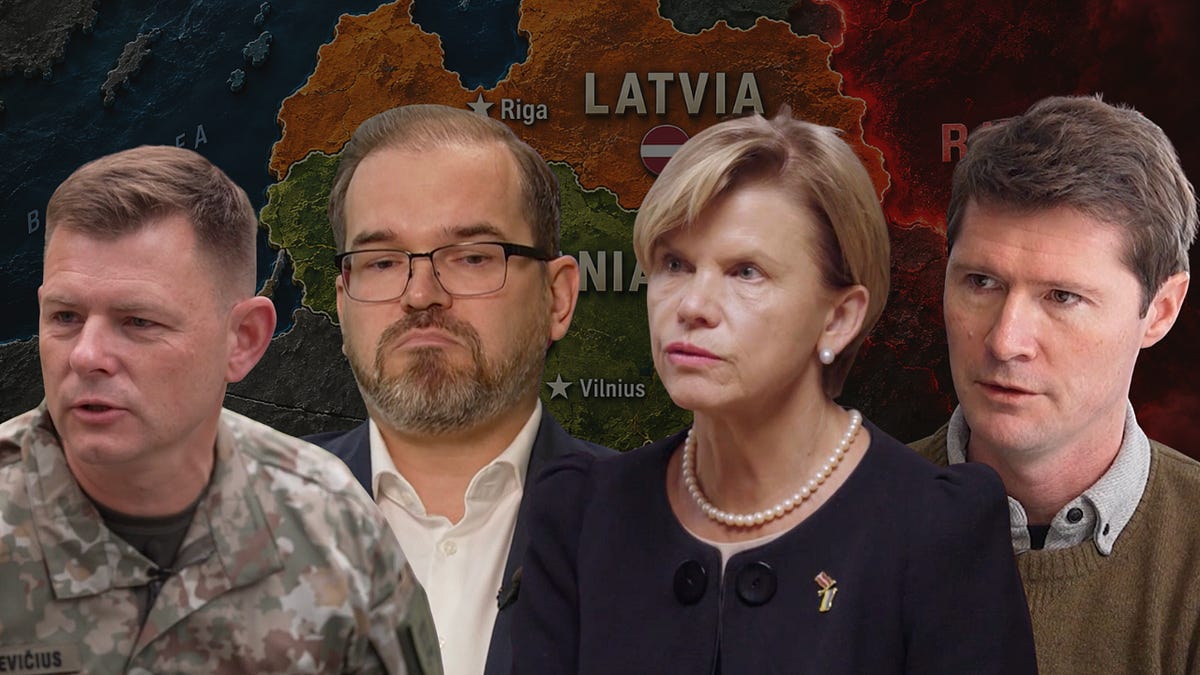
Written for “Strategic Alliances Strengthening” on 2026-11-04, grounded in this article and the 0 other(s) covering the same event.

Story

📰 Strategic Alliances Strengthening
Politics · 1 article(s) covering the same event.

Compared with similar articles

This article reads leans right and hedges 0% of its claims. Each row says how that neighbour differs.
Evening Standard
⚖️ Leans right Hedges 2 of 17 claims Outlet record 64/100
“The articles discuss different aspects of international defense and diplomacy without referencing the same specific incident or occurrence.”
The Free Press
Hedges 1 of 3 claims Outlet record 97/100
“The articles discuss different aspects of geopolitical tensions and military preparedness in Eastern Europe but do not describe the same specific incident or occurrence.”
How this article was measured signals, leaning charts, publisher record, byline, topics and claims

Signals How these are calculated →

Claims extracted
6
sentences that state something as happening or true
Uncertain
0%
0 of 6 hedged ("reportedly", "may", "according to")
Leaning
Leans right
of the writing, not the subject · beta estimate
Publisher signals
62/100
South China Morning Post's corrections and hedging, across everything collected from it. Not a measure of accuracy.
Outlets on this story
1
Politics
Same framing elsewhere
1
articles that frame the event the way this one does
Analyzed 2026-10-09 · how these are computed

How this is being covered How these are calculated →

Article leaning vs. publisher reliability
Source leaning vs. consistency

Publisher

South China Morning Post · 3740 article(s) · 8 correction(s) detected
Running correction rate · 8 correction(s)

Who wrote this

Patrick Mendis
1 article(s) here · 0 carrying a prediction
The only article under this byline in the corpus.

Topics

China Japan Poland Russia Russian

Subjects

China GPE · 3× Russia GPE · 3× Belarus GPE · 2× Chinese NORP · 2× Japan GPE · 2× Poland GPE · 2× Russian NORP · 2× Ukraine GPE · 2× Patrick Mendis PERSON · 1× a Harvard Kennedy School's ORG · 1×

Narrative

The catalyst for this new architecture of deterrence in an age of fragmented interdependence lies less in China than in Russia 3-MIN READ3-MIN Dr Patrick Mendis, a Harvard Kennedy School's former Rajawali senior fellow, is an associate-in-research at the Fairbank Center for Chinese Studies at Harvard University, a senior fellow of the Pangoal Institution in Beijing, and a distinguished visiting professor of Asian-Pacific affairs at Shandong University in Jinan, China. As Russian President Vladimir Putin watched the final stage of the massive Tsentr-2026 military exercise in the Urals recently, Chinese troops were training alongside forces from Russia, Belarus and other countries.
framing: assertive · carried by 1 article(s) · first seen 2026-10-09
2026-10-09 · South China Morning Post
US-Japan-Poland strategic triangle can encourage a ‘peaceful war’ · assertive framing

Claims (6 extracted, 0 hedged)

Advertisement US-Japan-Poland strategic triangle can encourage a ‘peaceful war’ asserted
triangle → encourage → war
The catalyst for this new architecture of deterrence in an age of fragmented interdependence lies less in China than in Russia 3-MIN READ3-MIN Dr Patrick Mendis, a Harvard Kennedy School's former Rajawali senior fellow, is an associate-in-research at the Fairbank Center for Chinese Studies at Harvard University, a senior fellow of the Pangoal Institution in Beijing, and a distinguished visiting professor of Asian-Pacific affairs at Shandong University in Jinan, China. As Russian President Vladimir Putin watched the final stage of the massive Tsentr-2026 military exercise in the Urals recently, Chinese troops were training alongside forces from Russia, Belarus and other countries. asserted
troops → lie → Russia
More than 47,000 military personnel joined the exercise, which incorporated lessons from the war in Ukraine. asserted
which → join → Ukraine
The symbolism extends beyond Chelyabinsk. asserted
symbolism → extend → Chelyabinsk
From Russia’s invasion of Ukraine to Chinese military exercises with Belarus – and now China’s participation alongside Russian and Belarusian forces in Tsentr-2026 – Eurasian developments are connecting two strategic theatres once considered largely separate: the Euro-Atlantic and Indo-Pacific. asserted
developments → connect → theatres
Against this background, a new strategic triangle is quietly taking shape among the United States, Japan and Poland. Select Voice Select Speed 1x AI-generated voice asserted
triangle → take → voice
💬Give feedback · no sign-in needed

No sign-in needed for now. Your note is sent without a name, so it cannot be answered.

🕘History 🎫Support