A 2,100-year-old shipwreck off the coast of Turkey has revealed thousands of luxury dishes of a type once prized by Cicero, the famed Roman statesman whose writings later influenced America's Founding Fathers — with an expert calling the find "quite rare."
asserted
expert → reveal → find
The recovery was recently announced by Turkish officials, the state-run Anadolu Agency (AA) reported Sept. 28.
asserted
Agency → announce → officials
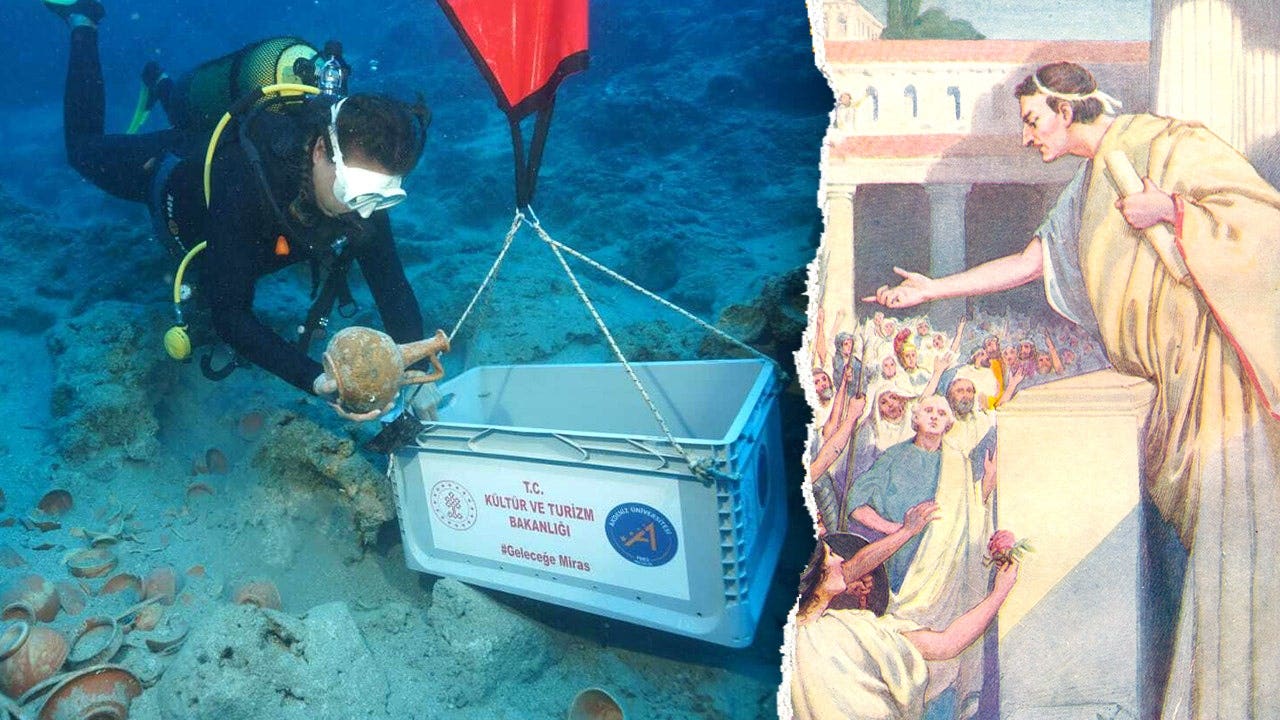
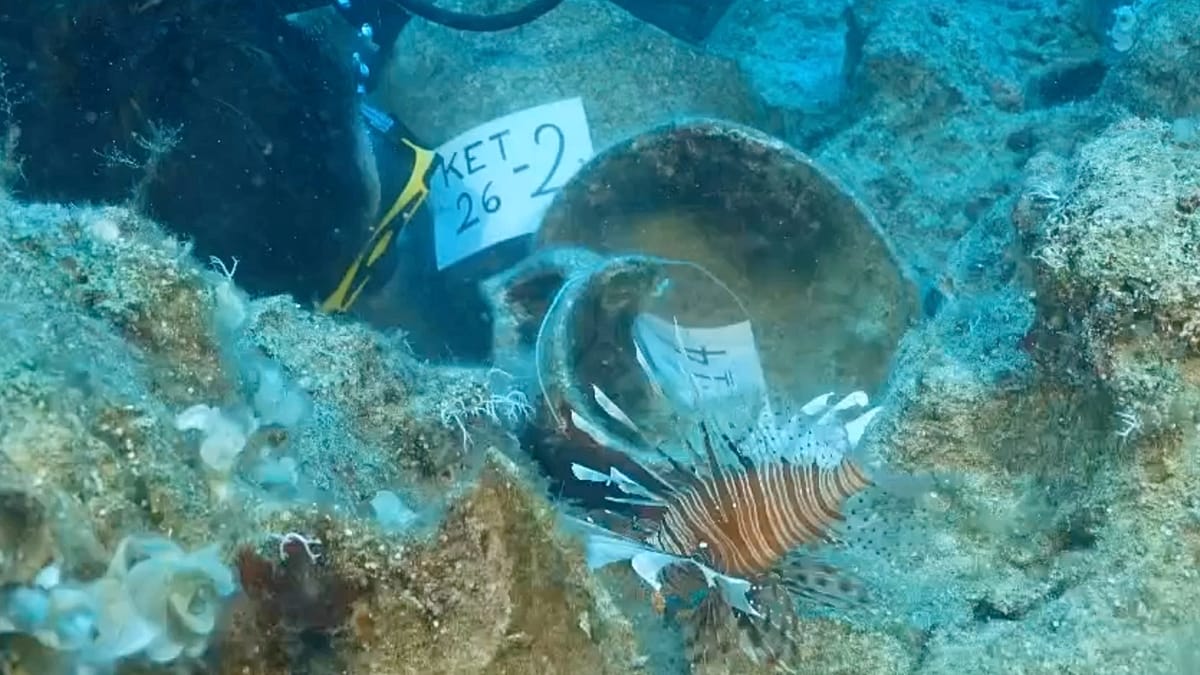
Pictures show divers working among piles of ancient pottery, with ceramic plates and bowls scattered across the sandy seabed.
asserted
divers → show → seabed
The artifacts include 122 different forms and sizes of plates, bowls and trays, including dishes used for nuts, soup and fish.
asserted
artifacts → include → nuts
Researchers believe the ship was traveling from Rhosus to Rome when it struck a shallow area during a storm and sank, according to AA.
uncertain
it → believe → AA
The wreck lies about 138 to 180 feet below the surface.
asserted
wreck → lie → surface
The discovery is particularly significant because the ceramics are believed to have originated in Rhosus, a production center mentioned in the writings of Cicero — though there's no evidence that the recovered dishes belonged to Cicero himself.
asserted
dishes → believe → Cicero
Cicero, one of ancient Rome's most celebrated orators and politicians, significantly influenced the U.S.' Founding Fathers, especially Thomas Jefferson and John Adams.
asserted
Cicero → influence → Fathers
In a letter to his friend Atticus in 50 B.C., the statesman wrote that he had ordered ceramic vessels from Rhosus for him, according to AA.
uncertain
he → write → AA
Taco Terpstra, a professor of classics and history at Northwestern University, told Fox News Digital that the discovery offers an unusual opportunity to connect ancient artifacts with historical writings.
asserted
discovery → tell → writings
"It's unusual that we have so much of this type of ceramic," Terpstra said.
asserted
Terpstra → have → ceramic
He explained that coins found aboard the ship help researchers date the wreck, while the pottery can be traced to a production region in what is now southern Turkey and northern Syria.
asserted
what → explain → region
"This is for a high-end market, which is one reason why Cicero talks about these.
asserted
Cicero → talk → these
"
The combination of archaeological evidence, ancient coins and historical writings makes the discovery especially rare, he said.
asserted
he → make → evidence
Terpstra also described the ceramics as "the equivalent of fine china" today.
asserted
Terpstra → describe → china
"This is not ordinary tableware," he said.
asserted
he → say → ?
"This is not the kind of stuff that ordinary Romans would have on their table."
asserted
Romans → have → table
"This is for a high-end market, which is one reason why Cicero talks about these."
asserted
Cicero → talk → these
Turkish Culture and Tourism Minister Mehmet Nuri Ersoy said the ceramics were remarkably well-preserved because clay had been packed between them before they were placed in wooden crates — a detail that caught Terpstra's attention.
asserted
that → say → attention
The historian suggested the material may have been unfired clay, although he noted that the report did not specify its exact form.
uncertain
report → suggest → form
"I imagine they meant unfired soft clay, which, when the ship went down, preserved the ceramics to a very high degree," Terpstra said.
asserted
Terpstra → imagine → degree
Terpstra added that, while Roman shipwrecks in the Mediterranean are "quite common," the convergence of historical evidence makes this find exceptional.
asserted
find → add → evidence
"It's quite rare for all of it … [all] the lines of evidence to come together, like monetary, archeological, literary," Terpstra said.
asserted
Terpstra → come → literary
 The Aporia