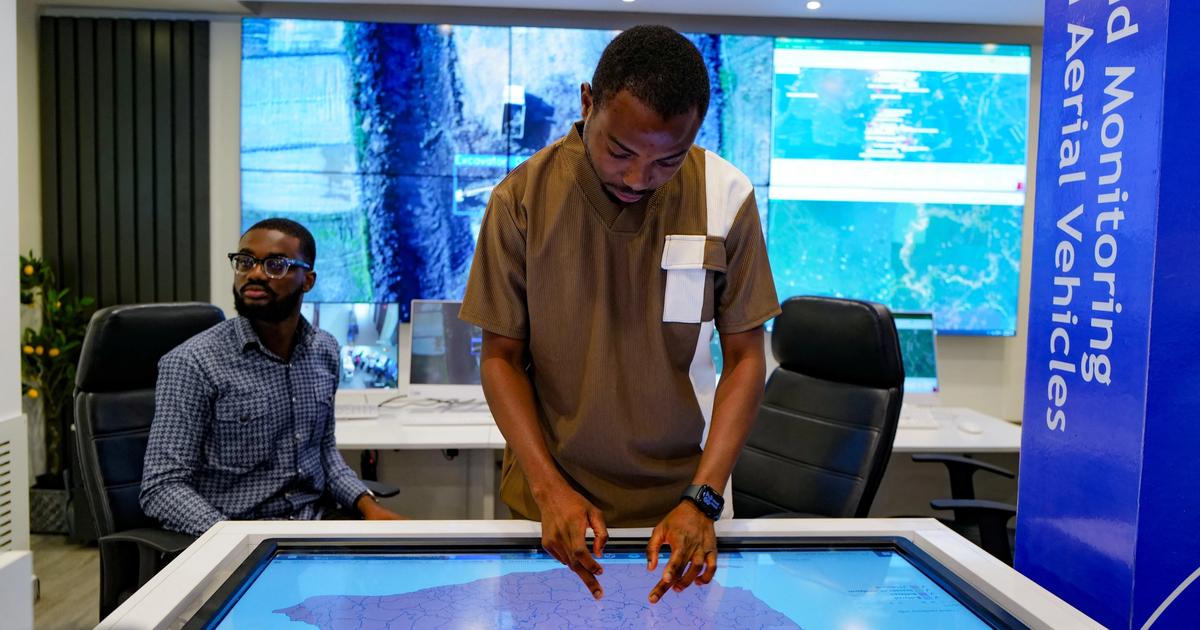
Photo via Semafor

AI's uncertain opportunity for Africa

Read the original at Semafor ↗
Cite

Adegoke, Y. (2026, October 9). AI's uncertain opportunity for Africa. Semafor. https://www.semafor.com/article/10/09/2026/ais-uncertain-opportunity-for-africa

Dated when The Aporia collected the article, usually within hours of publication. Check the original for its exact date and byline.

Semafor · collected 2026-10-09 · by Yinka Adegoke

Quick Summary

Yinka's column discusses how Togo is encouraging citizens to contribute data to enhance AI models' understanding of the country’s diverse languages, reflecting broader concerns about African language representation in global AI technology. The article notes that while global AI investment is projected to reach $2 trillion this year, Africa captures very little of it due to limited infrastructure and energy capacity, with only 0.6% of global data-center capacity equipped for advanced AI workloads. It emphasizes the potential economic benefits of inclusive AI adoption in Africa, estimating it could add up to $1 trillion to GDP by 2035, but stresses the need for adaptation over creation of large models, highlighting practical applications such as education and agriculture.
Written by AI on 2026-10-09, from this article's own text only (the story summary below draws on all the coverage).

AI analysis

Story summary

This month, Togo invited citizens to contribute texts, recordings, and translations to help AI models understand the country’s 50 local languages. Despite Africa having 18% of the world's population, it only has 0.6% of global data-center capacity, according to the World Bank, with just 5% equipped for advanced AI workloads. The continent faces a challenge as tech giants compete to build computing power and infrastructure, with estimated global AI investment reaching $2 trillion this year. While Africa’s main connection to the AI boom is currently demand for minerals like copper and cobalt, the bigger opportunity lies in enhancing productivity through farming and government services. Initiatives like Togo's suggest that making AI technology useful for more people may be key to unlocking these opportunities rather than focusing on building the largest models.
Written for “AI Opportunity In Africa” on 2026-11-04, grounded in this article and the 0 other(s) covering the same event.

Story

📰 AI Opportunity In Africa
Technology · 1 article(s) covering the same event.

Compared with similar articles

This article reads leans strongly left and hedges 23% of its claims. Each row says how that neighbour differs.
South China Morning Post
⚖️ Leans left further right than this Hedges 2 of 13 claims Outlet record 62/100
“The articles discuss different countries and contexts for AI development, with Article A focusing on Togo and Africa's language inclusion in AI models, while Article B discusses India's stance between American and Chinese AI influences.”
How this article was measured signals, leaning charts, publisher record, byline, topics and claims

Signals How these are calculated →

Claims extracted
13
sentences that state something as happening or true
Uncertain
23%
3 of 13 hedged ("reportedly", "may", "according to")
Leaning
Leans strongly left
of the writing, not the subject · beta estimate
Publisher signals
59/100
Semafor's corrections and hedging, across everything collected from it. Not a measure of accuracy.
Outlets on this story
1
Technology
Same framing elsewhere
1
articles that frame the event the way this one does
Analyzed 2026-10-09 · how these are computed

How this is being covered How these are calculated →

Article leaning vs. publisher reliability
Source leaning vs. consistency

Publisher

Semafor · 1469 article(s) · 3 correction(s) detected
Running correction rate · 3 correction(s)

Who wrote this

Yinka Adegoke
11 article(s) here · 1 carrying a prediction
🔮 But the F-1 filing warned investors that shares traded in Lagos may not be exchangeable for the New York-listed American depositary shares, potentially limiting liquidity and allowing prices to diverge.
🔮 That might mean developing smaller models adapted to African languages, but also systems that let governments and businesses keep control of sensitive data and apply AI to local problems in energy, agriculture, and commerce.
2026-10-30 · mixed framing · Africa’s AI bet is on building, not catching up
🔮 “It would have been more helpful if we could hear, ‘what is not good enough?’”
🔮 But initiatives like Togo’s suggest the future of AI in Africa may hinge less on who builds the biggest model than on who makes the technology useful to the most people.
2026-10-09 · mixed framing · AI's uncertain opportunity for Africa
🔮 Asked whether local partnership would be mandatory for foreign investors, she told Semafor: “In fact, we are putting it in the law.”
2026-09-25 · assertive framing · Namibia eyes local mineral processing
🔮 Nigeria’s trade minister Jumoke Oduwole put the ambition plainly when discussing the country’s talks with US companies on critical minerals, saying her government is looking for “partners that will make sure that the value chain development [and] the jobs are created on Nigerian soil.”
2026-09-23 · assertive framing · The limitations of Africa's 'value addition' mantra
🔮 The African diaspora is often discussed as a vast reservoir of capital and goodwill waiting to be tapped for the continent’s development.
2026-09-18 · mixed framing · Africa’s diaspora needs a bigger role
🔮 The bigger opportunity may be in pooling African loans, say the report’s authors.
2026-09-12 · speculative framing · Africa's private credit market triples to $5.6B
🔮 The actual number may be higher, since there is no centralized data, but there’s still little evidence these programs have generated significant, sustained investment.
2026-09-04 · assertive framing · View / How to share history
Also by Yinka Adegoke
Nothing else under this byline is closely related to this article, so these are simply their most recent.
All 11 articles by Yinka Adegoke →

Topics

African Togo West African Yinka the World Bank

Subjects

African NORP · 4× Togo GPE · 3× the World Bank ORG · 3× Gartner ORG · 1× The African Development Bank ORG · 1× West African NORP · 1× Yinka PERSON · 1×

Narrative

But few African companies are capturing the cloud computing spending, and even then the numbers are tiny: Africa has 18% of the world’s population, but only 0.6% of global data-center capacity, the World Bank says — and just 5% of that is equipped for advanced AI workloads.
framing: mixed · carried by 1 article(s) · first seen 2026-10-09
🔮 But initiatives like Togo’s suggest the future of AI in Africa may hinge less on who builds the biggest model than on who makes the technology useful to the most people.
2026-10-09 · Semafor
AI's uncertain opportunity for Africa · mixed framing

Claims (13 extracted, 3 hedged)

This month, Togo invited citizens to contribute texts, recordings, and translations to help AI models understand the West African country’s 50 local languages. asserted
models → invite → languages
The absence of African languages from large language models has become a major concern for the continent’s policymakers and tech leaders. asserted
absence → become → policymakers
But initiatives like Togo’s suggest the future of AI in Africa may hinge less on who builds the biggest model than on who makes the technology useful to the most people. uncertain
technology → suggest → people
Global AI investment is expected to hit $2 trillion this year, according to research firm Gartner, as tech giants race to build computing power and infrastructure. uncertain
giants → expect → power
But few African companies are capturing the cloud computing spending, and even then the numbers are tiny: Africa has 18% of the world’s population, but only 0.6% of global data-center capacity, the World Bank says — and just 5% of that is equipped for advanced AI workloads. asserted
% → capture → workloads
The bigger prize is productivity, from how farmers reach markets to how governments deliver services. asserted
governments → reach → services
The African Development Bank estimates inclusive AI adoption could add up to $1 trillion to Africa’s GDP by 2035. uncertain
adoption → estimate → 2035
But without the infrastructure and energy to deploy it, AI is unlikely to add meaningfully to growth. asserted
AI → deploy → growth
That’s why the World Bank argues in its biannual Economic Update, published this week, that most African economies should adopt and adapt AI rather than build frontier models from scratch — an expensive use of limited resources. asserted
economies → ’ → resources
Togo shows what adaptation looks like: A model that can’t understand citizens’ languages is of little use in delivering government services. asserted
that → show → services
African countries don’t need to win the race to build the biggest model, but they do need to make AI productive across their economies. asserted
AI → need → economies
They also can’t afford to merely be suppliers to the AI revolution or just consumers of finished AI products; they need to become places where that revolution delivers its biggest gains. asserted
revolution → afford → gains
Notable - The World Bank highlighted several low-cost but impactful uses of AI in Africa: Tools that support student learning, help farmers detect and manage livestock diseases, and automate tasks such as accounting for small businesses. asserted
farmers → highlight → businesses
💬Give feedback
🕘History 🎫Support