
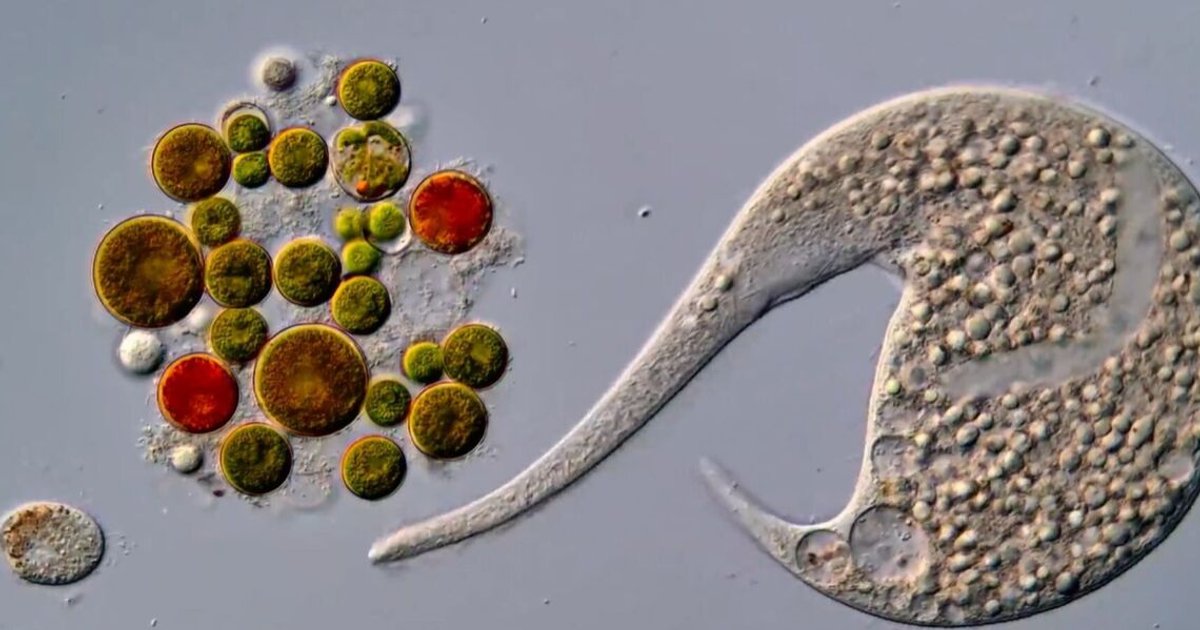
Photo via BBC News

Prize-winning image which sparked backlash was AI-generated, Nikon rules

Read the original at BBC News ↗
Cite

Kleinman, Z. (2026, October 9). Prize-winning image which sparked backlash was AI-generated, Nikon rules. BBC News. https://www.bbc.co.uk/news/articles/cr86z33pdy9vo?at_medium=RSS&at_campaign=rss

Dated when The Aporia collected the article, usually within hours of publication. Check the original for its exact date and byline.

BBC News · collected 2026-10-09 · by Zoe Kleinman

Quick Summary

Nikon disqualified the winner of its Small World In Motion scientific photography competition after determining that the winning video was created using generative AI, which violated contest rules. Dr. Ning Xu from Tsinghua University in China submitted a video showing cilia movement in a child's airway affected by PCD but used artificial intelligence in the composition process. Other scientists raised concerns about the authenticity of the video on Nikon’s LinkedIn page, prompting an investigation that led to its disqualification. Nikon stated it would review contest rules and procedures following this incident.
Written by AI on 2026-10-09, from this article's own text only (the story summary below draws on all the coverage).

AI analysis

Story summary

In October 2023, Nikon disqualified the winning entry from its annual Small World In Motion contest after discovering that the submitted video used generative AI, which violated competition rules. The contest, running since 2011, focuses on microscopic videos and images. Dr Ning Xu from Tsinghua University in China had won with a short video depicting tiny hair-like structures called cilia moving in the airway of a child suffering from Primary Ciliary Dyskinesia (PCD). Several scientists, including former judges, initially raised concerns about the authenticity of the winning entry. Nikon confirmed the disqualification after reviewing the submission and consulting its judging panel, emphasizing that this decision was not a reflection on Dr Xu's professional reputation or contributions to science but rather adherence to contest rules. The company stated it would now review and potentially update its guidelines regarding AI-generated content in future contests.
Written for “AI Generated Image Controversy” on 2026-11-02, grounded in this article and the 1 other(s) covering the same event.

Story

📰 AI Generated Image Controversy
Technology · 2 article(s) covering the same event. See how they differ ↓

Compared with similar articles

This article reads unscored and hedges 0% of its claims. Each row says how that neighbour differs.
The Straits Times
Hedges 0 of 4 claims Outlet record 66/100
How this article was measured signals, leaning charts, publisher record, byline, topics and claims

Signals How these are calculated →

Claims extracted
11
sentences that state something as happening or true
Uncertain
0%
0 of 11 hedged ("reportedly", "may", "according to")
Leaning
not political
takes no side on a contested political question
Publisher signals
68/100
BBC News's corrections and hedging, across everything collected from it. Not a measure of accuracy.
Outlets on this story
2
Technology
Same framing elsewhere
1
articles that frame the event the way this one does
Analyzed 2026-10-09 · how these are computed

How this is being covered How these are calculated →

Article leaning vs. publisher reliability
Source leaning vs. consistency

Publisher

BBC News · 4864 article(s) · 6 correction(s) detected
Running correction rate · 6 correction(s)

Who wrote this

Zoe Kleinman
6 article(s) here · 1 carrying a prediction
🔮 Under the UK's social media ban - which is due to come into force in March next year - those under that age will be prevented from accessing ten of the biggest platforms, including Instagram, TikTok and Snapchat.
🔮 It said it would now look at the rules and procedures of the annual contest, which has been running for 15 years and is specifically for microscopic images.
🔮 - Published Google Maps will now show fuel prices to help motorists find cheaper petrol and diesel in the UK as costs continue to soar.
🔮 Hickey said it would be unfair on other entrants if it turned out the winning video was unfairly altered by AI.
2026-09-30 · assertive framing · Tiny image sparks big backlash in Nikon photo contest
🔮 - Published The tech giant OpenAI will share its AI cyber defence system Daybreak for free with the Ukraine government to help it protect civilian infrastructure, like hospitals and power plants, from cyber-attacks.
2026-09-23 · assertive framing · OpenAI gives cyber defence tools to Ukraine
🔮 They all add up to a chorus of serious voices urging a slowdown, but although it might sound like a quick fix, it is far from an easy solution.
Also by Zoe Kleinman
Nothing else under this byline is closely related to this article, so these are simply their most recent.
All 6 articles by Zoe Kleinman →

Topics

BBC China LinkedIn Nikon Tsinghua University

Subjects

Nikon ORG · 4× BBC ORG · 1× China GPE · 1× Hirst PERSON · 1× LinkedIn ORG · 1× NHS ORG · 1× Ning Xu PERSON · 1× Robert Hirst PERSON · 1× Tsinghua University ORG · 1× University of Leicester ORG · 1×

Narrative

University of Leicester scientist Dr Robert Hirst, who was among the first experts to voice concerns, said he was "not surprised" and he "knew immediately that the video was fabricated". "I have been diagnosing PCD for 20 years by examining their cilia waveform, length, cell size and shape," he said.
framing: assertive · carried by 1 article(s) · first seen 2026-10-09
🔮 It said it would now look at the rules and procedures of the annual contest, which has been running for 15 years and is specifically for microscopic images.

Claims (11 extracted, 0 hedged)

- Published The winner of a prestigious scientific photography competition has been disqualified following concerns raised by other scientists that it was fake. asserted
it → publish → scientists
Nikon said the use of generative AI in the composition of the video broke the rules of its Small World In Motion contest, which accepts photos and video taken using powerful microscopes. asserted
which → say → microscopes
The firm said the video "did not comply with the competition rules regarding generative AI", but added it was not a judgement of the entrant's professional reputation or scientific contributions. asserted
it → say → reputation
It said it would now look at the rules and procedures of the annual contest, which has been running for 15 years and is specifically for microscopic images. asserted
which → say → images
Nikon said it came to the decision "after thoroughly re-evaluating the video and supporting materials and consulting with members of our judging panel". asserted
it → say → panel
The winning entry came from Dr Ning Xu, from Tsinghua University in China, who submitted a short video showing tiny, hair-like structures called cilia moving in the airway of a child with the respiratory condition PCD. asserted
who → win → condition
The BBC has approached him for comment. asserted
BBC → approach → comment
A number of scientists, including former competition judges, complained to Nikon on its LinkedIn page that the video did not appear to be real. asserted
video → include → page
Xu had acknowledged using AI, but said he believed he had acted within the rules, and had cooperated with Nikon's investigation. asserted
he → acknowledge → investigation
University of Leicester scientist Dr Robert Hirst, who was among the first experts to voice concerns, said he was "not surprised" and he "knew immediately that the video was fabricated". "I have been diagnosing PCD for 20 years by examining their cilia waveform, length, cell size and shape," he said. asserted
he → voice → waveform
Hirst, who is lead scientist for the NHS centre for PCD diagnosis at the university, said the cells and cilia "look nothing like those from PCD patients". "This controversy has impacted a lot of patients, scientists, doctors and PCD support networks around the world," he said. asserted
he → say → world
💬Give feedback
🕘History 🎫Support