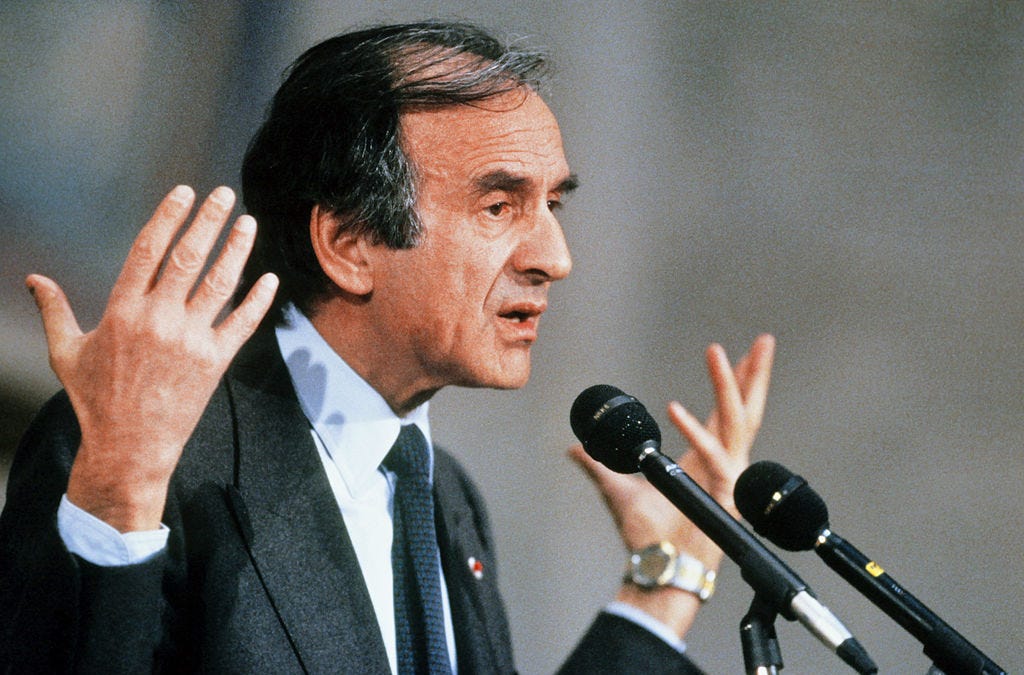
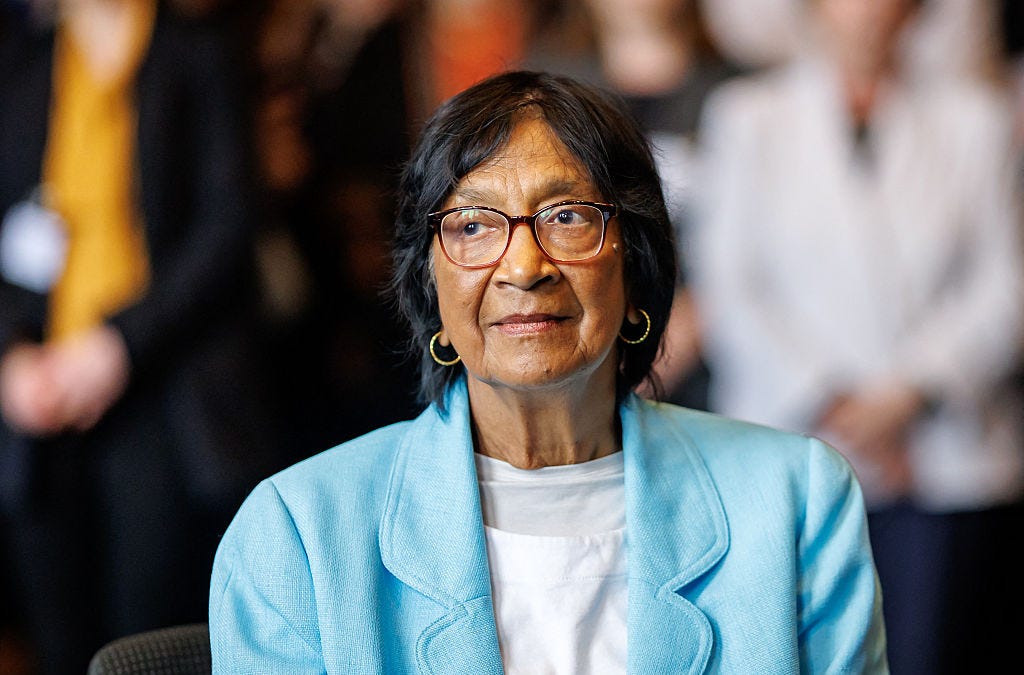
Photo via The Free Press

Elisha Wiesel: The Death of the Nobel Peace Prize

Read the original at The Free Press ↗
Cite

Wiesel, E. (2026, October 9). Elisha Wiesel: The Death of the Nobel Peace Prize. The Free Press. https://www.thefp.com/p/elie-wiesel-death-nobel-peace-prize-israel

Dated when The Aporia collected the article, usually within hours of publication. Check the original for its exact date and byline.

The Free Press · collected 2026-10-09 · by Elisha Wiesel analysis

Quick Summary

Elisha Wiesel discusses his father Elie Wiesel's acceptance of the Nobel Peace Prize in 1986 and criticizes the committee’s recent award to Navi Pillay, whom he accuses of bias against Israel. Wiesel argues that Pillay's actions, including her support for sanctioning Israel as an apartheid state, contradict the values his father represented when receiving the prize. He also points out a pattern where the Nobel Committee has applied different standards to Israeli laureates compared to others, suggesting ongoing issues with impartiality and fairness in award decisions.
Written by AI on 2026-10-09, from this article's own text only (the story summary below draws on all the coverage).

AI analysis

Story summary

On December 10, 1986, Elisha Wiesel was 14 years old when he watched his father, Elie Wiesel, receive the Nobel Peace Prize in Oslo City Hall. Elie Wiesel's acceptance speech emphasized the importance of taking sides against oppression and remembering genocide as a moral duty to the living.

However, on December 10, 2023, the same committee awarded the prize to Navi Pillay, who led a UN commission that issued a report on September 16, 2022, which Wiesel claims "betrayed the meaning of the word genocide and weaponized it against Israel." The commission criticized Israel for not meeting impossible moral standards expected of no other nation defending itself.

Wiesel criticizes Pillay's history of anti-Israel advocacy, noting her signature on a manifesto in 2020 calling for sanctions against "Apartheid Israel," further highlighting the perceived shift in values behind the Nobel Peace Prize.

Written for “Elisha Wiesel Dies” on 2026-11-01, grounded in this article and the 0 other(s) covering the same event.

Story

📰 Elisha Wiesel Dies
Politics · 1 article(s) covering the same event.

Compared with similar articles

This article reads unscored and hedges 9% of its claims. Each row says how that neighbour differs.
The Free Press
Hedges 1 of 5 claims Outlet record 96/100
“The articles discuss different events centered around the Nobel Peace Prize: Article A criticizes the prize awarded to Navi Pillay, while Article B reflects on Elie Wiesel receiving the prize.”
How this article was measured signals, leaning charts, publisher record, byline, topics and claims

Signals How these are calculated →

Claims extracted
22
sentences that state something as happening or true
Uncertain
9%
2 of 22 hedged ("reportedly", "may", "according to")
Leaning
withheld
no quote in the article backed the model's score
Publisher signals
96/100
The Free Press's corrections and hedging, across everything collected from it. Not a measure of accuracy.
Outlets on this story
1
Politics
Same framing elsewhere
1
articles that frame the event the way this one does
Analyzed 2026-10-09 · how these are computed

How this is being covered How these are calculated →

Article leaning vs. publisher reliability
Source leaning vs. consistency

Publisher

The Free Press · 406 article(s) · 0 correction(s) detected
No corrections detected for this publisher. That may mean careful reporting, or simply that nothing has been checked.

Who wrote this

Elisha Wiesel
1 article(s) here · 1 carrying a prediction
🔮 I will never forget the look of hope on his face that day.
2026-10-09 · assertive framing · Elisha Wiesel: The Death of the Nobel Peace Prize
The only article under this byline in the corpus.

Topics

Berlin Israel Israeli Jewish Nazis

Subjects

Israel GPE · 4× Pillay PERSON · 4× Israeli NORP · 2× Berlin GPE · 1× Elie Wiesel PERSON · 1× Jewish NORP · 1× Navi Pillay PERSON · 1× Nazis NORP · 1× Shimon Peres PERSON · 1× the Nobel Committee ORG · 1×

Narrative

This morning, the same committee awarded the same prize to Navi Pillay, who chaired the UN commission of inquiry that, on September 16 of last year, betrayed the meaning of the word genocide and weaponized it against Israel.
framing: assertive · carried by 1 article(s) · first seen 2026-10-09
🔮 I will never forget the look of hope on his face that day.
2026-10-09 · The Free Press
Elisha Wiesel: The Death of the Nobel Peace Prize · assertive framing

Claims (22 extracted, 2 hedged)

On December 10, 1986, I was 14 years old, sitting in Oslo City Hall as my father, Elie Wiesel, accepted the Nobel Peace Prize. asserted
father → sit → Prize
I will never forget the look of hope on his face that day. asserted
I → forget → face
He had spent his life tortured by the thought that the world had looked away from the Jewish people as the Nazis filled the gas chambers and crematoria with our brothers and sisters, aunts and uncles, children. asserted
Nazis → spend → brothers
Finally, he felt seen, and he had a message to share. asserted
he → feel → message
As he put it in his acceptance speech, “We must always take sides. asserted
We → put → sides
Neutrality helps the oppressor, never the victim.” asserted
Neutrality → help → oppressor
My father was honored because he had turned the memory of genocide into a moral duty to the living. asserted
he → honor → living
This morning, the same committee awarded the same prize to Navi Pillay, who chaired the UN commission of inquiry that, on September 16 of last year, betrayed the meaning of the word genocide and weaponized it against Israel. asserted
that → award → Israel
Her commission held Israel to impossible moral standards demanded of no other sovereign nation defending itself from attack. asserted
commission → hold → attack
The decision followed years of anti-Israel advocacy by Pillay, including signing a manifesto in 2020 calling on governments to “Sanction Apartheid Israel.” asserted
decision → follow → Israel
Others have been able to see Pillay for who she is. asserted
she → see → Pillay
In 2022, for example, Berlin’s mayor withdrew her support from an event honoring Pillay with a peace medal. asserted
mayor → withdraw → medal
The event was subsequently canceled. asserted
event → cancel → ?
The decision to honor Pillay is not a onetime lapse for the Nobel Committee. asserted
decision → honor → Committee
It is part of a long-standing trend. asserted
It → stand → trend
Members of the committee have said publicly that they wished they could take back former Israeli Prime Minister Shimon Peres’s 1994 prize because of concerns over Israel’s conduct. uncertain
they → say → conduct
A decade later, four of the five members were still defending former Palestine Liberation Organization chairman Yasser Arafat’s prize, awarded that same year. asserted
members → defend → prize
The Israeli laureate was judged by everything he did afterward. asserted
he → judge → everything
The Palestinian laureate was never judged again. asserted
laureate → judge → ?
Antisemitism today looks less like hatred than like scrutiny with one permanent defendant, carried out in the language of justice. asserted
Antisemitism → look → justice
Kåre Kristiansen, a member of the committee, understood this. asserted
Kristiansen → understand → this
He resigned within an hour of the 1994 announcement because he could not honor a man whose record was soaked in terror. uncertain
record → resign → terror

💬Give feedback
🕘History 🎫Support