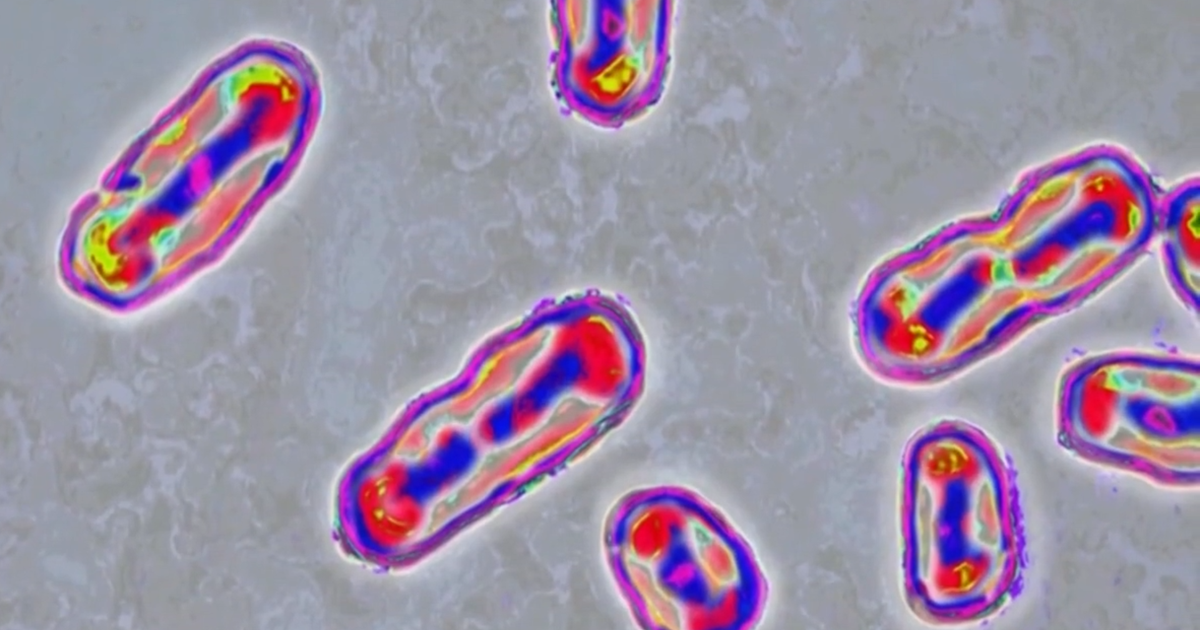
Photo via Daily Mail

It strikes suddenly, causing high fever, headache, and chills that set the body shaking. No, not the Covid sweeping Britain right now... but the BUBONIC PLAGUE

Read the original at Daily Mail ↗
Cite

Barbour, M. (2026, October 10). It strikes suddenly, causing high fever, headache, and chills that set the body shaking. No, not the Covid sweeping Britain right now... but the BUBONIC PLAGUE. Daily Mail. https://www.dailymail.com/news/article-16196863/It-strikes-suddenly-causing-high-fever-headache-chills-set-body-shaking-No-not-Covid-sweeping-Britain-right-BUBONIC-PLAGUE.html?ns_mchannel=rss&ns_campaign=1490&ito=1490

Dated when The Aporia collected the article, usually within hours of publication. Check the original for its exact date and byline.

Daily Mail · collected 2026-10-10 · by Matthew Barbour

Quick Summary

Lucinda Marker reflects on her personal experience with bubonic plague after hearing about the suspected death of Russian laboratory technician Darya Shipilova from pneumonic plague. In 2002, Marker and her husband were the first people diagnosed with bubonic plague in New York City in over a century. The disease's symptoms include high fever, headache, chills, muscle pain, and painful swellings known as buboes. Unlike the historical bubonic form, pneumonic plague, which recently caused concern in Russia, is transmitted through respiratory droplets and is nearly 100% fatal without prompt treatment.
Written by AI on 2026-10-10, from this article's own text only (the story summary below draws on all the coverage).

AI analysis

Story summary

A 28-year-old laboratory assistant named Darya Shipilova died in early October after reportedly breaking a test tube containing potentially dangerous pathogens at the Irkutsk Anti-Plague Research Institute in Shelekhov, Russia. Despite extensive speculation that she may have contracted pneumonic plague, Russian authorities continue to maintain that her death was due to pneumonia of unknown origin and have not identified the specific pathogen involved. At least 197 people who had close contact with Shipilova were placed under quarantine or surveillance, while international health organizations like the CDC remain vigilant but assert that the risk to other countries is minimal. The incident has sparked concerns about Russia's transparency regarding biological research and safety protocols at such facilities.

Written for “Plague Outbreak In Siberia” on 2026-10-31, grounded in this article and the 113 other(s) covering the same event.

Story

📰 Plague Outbreak In Siberia
Health · 114 article(s) covering the same event. Compare every outlet's account →

Compared with similar articles

This article reads unscored and hedges 10% of its claims. Each row says how that neighbour differs.
NBC News
Hedges 4 of 21 claims Outlet record 60/100
South China Morning Post
Hedges 1 of 4 claims Outlet record 64/100
CBC News
Hedges 4 of 46 claims Outlet record 60/100
Al Jazeera
Hedges 19 of 69 claims Outlet record 60/100
CBS News
Hedges 1 of 3 claims Outlet record 66/100
Washington Examiner
Hedges 1 of 27 claims Outlet record 70/100
Toronto Star
Hedges 1 of 3 claims Outlet record 64/100
How this article was measured signals, leaning charts, publisher record, byline, topics and claims

Signals How these are calculated →

Claims extracted
124
sentences that state something as happening or true
Uncertain
10%
12 of 124 hedged ("reportedly", "may", "according to")
Leaning
not political
takes no side on a contested political question
Publisher signals
68/100
Daily Mail's corrections and hedging, across everything collected from it. Not a measure of accuracy.
Outlets on this story
114
Health
Same framing elsewhere
1
articles that frame the event the way this one does
Analyzed 2026-10-10 · how these are computed

How this is being covered How these are calculated →

Article leaning vs. publisher reliability
Source leaning vs. consistency

Publisher

Daily Mail · 8448 article(s) · 20 correction(s) detected
Running correction rate · 20 correction(s)

Who wrote this

Matthew Barbour
4 article(s) here · 1 carrying a prediction
🔮 'No one in our family or friends knew a cold sore could kill a baby.
🔮 One in five young adults think babies born today could live to 150 and many are already experimenting with ice baths, extreme fasting and 'sleepmaxxing' in a bid to extend their own lives.
🔮 Despite repeated searches and appeals, owner Mary Bowie, from Fraserburgh, Aberdeenshire, feared she would never see Pandora again.
Also by Matthew Barbour
Nothing else under this byline is closely related to this article, so these are simply their most recent.

Topics

New Mexico New York New York City Russia Santa Fe

Subjects

John PERSON · 7× Lucinda PERSON · 6× New York GPE · 3× Shipilova PERSON · 3× John Tull PERSON · 2× Lucinda Marker PERSON · 2× New York City GPE · 2× Russia GPE · 2× Santa Fe GPE · 2× MATTHEW BARBOUR PERSON · 1×

Narrative

In 2002, Lucinda Marker and her husband John Tull became the first people diagnosed with bubonic plague in New York City for 100 years But when they flew to New York in November 2002 to celebrate the launch of their business together, financial adviser Lucinda, then 47, and lawyer John, 53, had unknowingly been bitten by infected fleas.
framing: assertive · carried by 1 article(s) · first seen 2026-10-10
🔮 When I saw the news, I thought it could be bioterrorism.

Claims (124 extracted, 12 hedged)

When Lucinda Marker heard of the suspected death from 'plague' of 28-year-old laboratory technician Darya Shipilova in Russia last week, she was overcome by a harrowing sense of recognition. ‘This disease changes your life. asserted
disease → hear → life
When I saw the news, I thought it could be bioterrorism. uncertain
it → see → news
This is such a rare disease: there has to be something else going on.’ asserted
This → have → ?
Though Russia has refused to confirm the cause of Shipilova’s death, reports claim that she became ill after dropping a test tube containing a sample of the pneumonic plague pathogen at her laboratory. uncertain
she → refuse → laboratory
The hospital in which Shipilova was treated was placed under strict lockdown but only days later, another plague death was reported in the region, sparking fears about a resurgence of one of history’s most feared diseases. asserted
death → treat → diseases
Shipilova contracted the deadliest form of the disease. asserted
Shipilova → contract → disease
Unlike bubonic plague, known as the Black Death, which laid waste to Europe in the 14th century and is usually transmitted through the bite of an infected flea, pneumonic plague attacks the lungs and can spread directly between people through infectious respiratory droplets. asserted
plague → know → droplets
Both infections are caused by the same bacterium, Yersinia pestis. asserted
infections → cause → bacterium
And as Lucinda knows all too well, even the more common bubonic plague can have devastating consequences. asserted
plague → know → consequences
In November 2002, she and her husband, John Tull, became the first people diagnosed with bubonic plague in New York City in more than 100 years. asserted
she → become → years
The couple, who had three children from John’s previous relationship, lived outside Santa Fe, New Mexico, on desert scrubland where the disease still circulates among wild rodents and their fleas. asserted
disease → have → rodents
They were aware of it: two dead animals on their land, a rabbit and a rat, had tested positive for plague. asserted
animals → test → plague
‘We were so cautious,’ says Lucinda. asserted
Lucinda → say → ?
‘When we stacked wood, we’d cover up head to toe, wear masks and use bleach. asserted
we → stack → bleach
We used flea treatments. asserted
We → use → treatments
We hadn’t done anything risky.’ asserted
We → do → anything
In 2002, Lucinda Marker and her husband John Tull became the first people diagnosed with bubonic plague in New York City for 100 years But when they flew to New York in November 2002 to celebrate the launch of their business together, financial adviser Lucinda, then 47, and lawyer John, 53, had unknowingly been bitten by infected fleas. asserted
Lucinda → become → fleas
Bubonic plague takes up to six days to show itself, so they were already infected when they arrived in New York on November 1. asserted
they → take → November
They both fell seriously ill two days later. asserted
They → fall → ?
‘It was terrifying,’ says Lucinda. asserted
Lucinda → say → ?
Neither of us had ever had the flu, so we thought it must be that. asserted
it → have → flu
We were feverish, writhing around in bed on soaked sheets. asserted
We → writhe → sheets
Bubonic plague strikes suddenly, causing a high fever, pounding headache, chills that set the whole body shaking, aching muscles and exhaustion. asserted
that → strike → body
Then come the terrifying buboes – the swellings that give the disease its name. asserted
that → come → name
Lucinda and John developed agonising swellings in their groins. asserted
Lucinda → develop → groins
Caused by inflamed lymph glands, the swellings can grow to the size of a hen’s egg and are excruciatingly painful. asserted
swellings → cause → egg
Initially, they put the swellings down to walking so much around New York. asserted
they → put → York
But, too weak to leave their beds for any length of time, they spent two nights feverish and dehydrated in their hotel room. ‘We were so dehydrated, and our sheets were drenched with sweat,’ says Lucinda. asserted
Lucinda → leave → sweat
‘I kept limping to the bathroom to get a cold flannel to put on John’s head. asserted
I → keep → head
‘I remember getting sicker and sicker, with this feeling of impending doom and darkness.’ asserted
I → remember → doom
John called his doctor in Santa Fe, who urged them to seek medical attention immediately. asserted
who → call → attention
Both of John's feet had to be amputated and he needed further surgery to reshape his legs for prosthetics asserted
he → amputate → prosthetics
The hotel called them a cab to visit a travel doctor on Fifth Avenue. asserted
hotel → call → Avenue
John was so weak that he had to lie on the surgery floor – not that he remembers. asserted
he → have → floor
By then, he later discovered, his organs had already started shutting down. asserted
organs → discover → ?
Their doctor had never seen a case of bubonic plague before, but recognised the symptoms immediately. asserted
doctor → see → symptoms
‘I think he was quite excited,’ says Lucinda. asserted
Lucinda → think → ?
‘He pulled a book off his shelf and showed us a photograph of a bubo. asserted
He → pull → bubo
‘I didn’t believe it. asserted
I → believe → it
I didn’t believe we were that sick. asserted
we → believe → ?
…and 84 more, not listed.

💬Give feedback
🕘History 🎫Support