Photo via Times of India

Scientists planted 40,000 seedlings in Yosemite; 3 years later, meadow is still losing carbon

Read the original at Times of India ↗
Cite

TOI Science Desk. (2026, October 10). Scientists planted 40,000 seedlings in Yosemite; 3 years later, meadow is still losing carbon. Times of India. https://timesofindia.indiatimes.com/science/nature/scientists-planted-40000-native-seedlings-in-yosemites-damaged-tuolumne-meadows-three-years-later-soil-organic-matter-was-improving-but-the-meadow-was-still-losing-more-carbon-than-it-gained/articleshow/134787244.cms

Dated when The Aporia collected the article, usually within hours of publication. Check the original for its exact date and byline.

Times of India · collected 2026-10-10 · by TOI Science Desk

Quick Summary

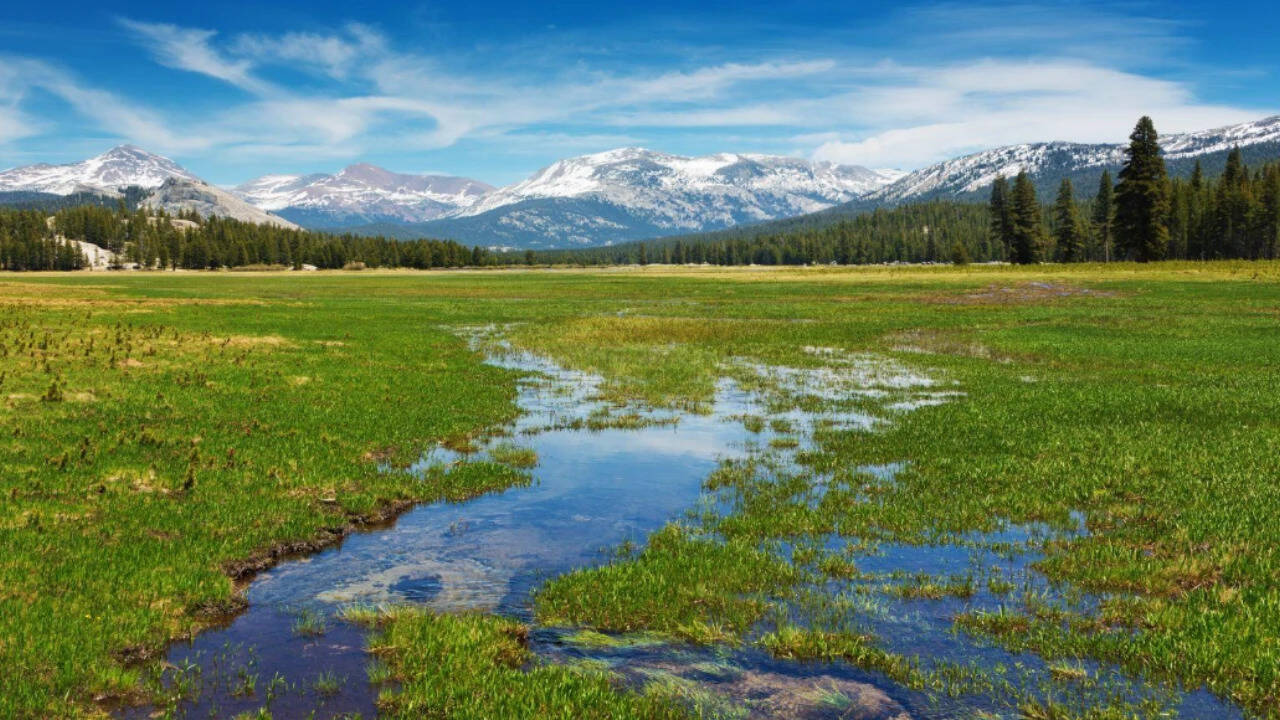
Scientists planted 40,000 native sedge seedlings in Yosemite National Park’s Tuolumne Meadows to restore damage from historical sheep grazing. Three years later, while there are signs of progress such as increased soil organic matter, the meadow continues to lose more carbon than it gains. The restoration project, led by Colorado State University researchers, aims to reverse century-old environmental degradation but acknowledges that full recovery could take 25 to 50 years.
Written by AI on 2026-10-10, from this article's own text only (the story summary below draws on all the coverage).

AI analysis

Story summary

In 2019, scientists at Colorado State University (CSU) planted 40,000 native sedge seedlings in Yosemite National Park's Tuolumne Meadows to restore damage caused by livestock grazing over a century ago. Despite initial signs of improvement, after three years, the meadow continues to lose more carbon than it gains, highlighting ongoing soil degradation issues. The project aims to reverse ecological harm and restore deep-rooted vegetation that once helped retain moisture and store carbon in the wet meadows. Yosemite's wildlife and landscape have been affected by this prolonged damage, raising concerns about the long-term impact on both natural ecosystems and visitor experiences. According to the study published in the Journal of Geophysical Research: Biogeosciences, full restoration could take several decades.

Written for “Meadow Carbon Loss” on 2026-11-03, grounded in this article and the 0 other(s) covering the same event.

Story

📰 Meadow Carbon Loss
Environment · 1 article(s) covering the same event.

Compared with similar articles

Nothing to compare against. No article is close enough to this one for the pipeline to have linked or judged the pair.
How this article was measured signals, leaning charts, publisher record, byline, topics and claims

Signals How these are calculated →

Claims extracted
40
sentences that state something as happening or true
Uncertain
18%
7 of 40 hedged ("reportedly", "may", "according to")
Leaning
not political
takes no side on a contested political question
Publisher signals
59/100
Times of India's corrections and hedging, across everything collected from it. Not a measure of accuracy.
Outlets on this story
1
Environment
Same framing elsewhere
1
articles that frame the event the way this one does
Analyzed 2026-10-10 · how these are computed

How this is being covered How these are calculated →

Article leaning vs. publisher reliability
Source leaning vs. consistency

Publisher

Times of India · 3984 article(s) · 3 correction(s) detected
Running correction rate · 3 correction(s)

Who wrote this

TOI Science Desk
308 article(s) here · 1 carrying a prediction
🔮 Researchers are continuing to examine daily measurements to determine whether temperatures will climb further.
🔮 According to Reuters reporting by Will Dunham, a new study published in the journal Spixiana documents more than 90 Bangka slow lorises identified between 2015 and 2025.
🔮 “Normally, my job is quite monotonous, so I wanted to create something that would entertain people, turning my ‘serious’ job into something fun,” he said in a Guinness World Records news release.
🔮 The subsequent collision between the two galaxy clusters may then have compressed the cloud or re-energised its particles, causing it to shine more brightly in radio wavelengths once again.
🔮 The mathematicians at the University of California, Davis, argue that the answer may already lie within Einstein’s own equations and that an invisible form of energy may not be needed at all.
🔮 The work will be carried out by the West Tennessee River Basin Authority, which is preparing a plan to restore the river and the land around it.
🔮 Cornell University scientists have developed genetically engineered tomato plants that turn red-purple when nitrogen becomes scarce, giving farmers a visible warning that crops may need fertiliser.
🔮 By studying these crystals and other mineral grains, scientists could establish the meteorite's age and identify later changes caused by water.
🔮 Centuries later, bronze objects found in Scandinavia would preserve chemical signatures consistent with the metals produced at this Spanish site, offering evidence of connections that may have crossed much of Europe.
🔮 Deposited impurities and staining may also have contributed, while low temperatures and humidity could cause the fabric to crack.
Wire or desk byline, not an individual reporter.
Also by TOI Science Desk
Nothing else under this byline is closely related to this article, so these are simply their most recent.
All 308 articles by TOI Science Desk →

Topics

CSU California Colorado State University University the Journal of Geophysical Research, Biogeosciences

Subjects

CSU ORG · 1× California GPE · 1× Colorado State University ORG · 1× University ORG · 1× the Journal of Geophysical Research, Biogeosciences ORG · 1×

Narrative

The deterioration has affected Yosemite's wildlife and threatened the mountain meadow landscape visited by people. Scientists planted 40,000 seedlings To address the damage, researchers planted 40,000 native sedge seedlings across the affected meadow and monitored changes over three years.
framing: assertive · carried by 1 article(s) · first seen 2026-10-10
🔮 The results, however, also show that restoring the meadow's soil and its ability to store carbon could take several decades.

Claims (40 extracted, 7 hedged)

Scientists who planted 40,000 native sedge seedling to restore the damaged Tuolumne Meadows in California's Yosemite National Park, have found early signs of improvement after. asserted
who → plant → improvement
The results, however, also show that restoring the meadow's soil and its ability to store carbon could take several decades. uncertain
restoring → show → decades
Three years after the planting, while the soil organic matter increased, the meadow continued to lose more carbon than it gained. asserted
it → increase → carbon
The restoration project, led by researchers at Colorado State University (CSU), aims to reverse damage caused by livestock grazing more than a century ago. asserted
project → lead → grazing
According to the an official release by the University, sheep grazing during the 19th century severely reduced the native plants that once covered the wet meadows. uncertain
that → accord → meadows
Although grazing ended long ago, the original vegetation has not returned naturally. asserted
vegetation → end → ?
The loss of plants has affected the soil's ability to retain moisture and store carbon. asserted
loss → affect → carbon
As the soil dries and organic matter continues to decompose, carbon is released from the meadow. asserted
carbon → dry → meadow
Researchers are now trying to restore the deep-rooted vegetation that previously helped maintain these conditions. asserted
that → try → conditions
The findings, published on Tuesdat, in the Journal of Geophysical Research, Biogeosciences, suggest that the restoration is making progress, although the meadow remains degraded. asserted
meadow → publish → progress
Scientists believe that bringing back native sedges could help prevent further damage, but full recovery may take between 25 and 50 years. uncertain
recovery → believe → years
Sheep grazing damaged meadows asserted
grazing → damage → meadows
The damage to Tuolumne Meadows dates back to the mid-1800s, when large numbers of livestock, mainly sheep, grazed across the landscape. asserted
numbers → date → landscape
Grazing continued until years after Yosemite National Park was established in 1890. asserted
Park → continue → 1890
During this period, sheep heavily grazed the native sedges and help store carbon in the soil. asserted
sheep → graze → soil
However, their numbers declined so sharply that they have not recovered naturally, even more than a century after grazing stopped. asserted
grazing → decline → ?
As the sedges disappeared, shallow-rooted plants came in their place. asserted
plants → disappear → place
Unlike the original vegetation, they did not provide deep-rooted biomass that helped maintain soil conditions. asserted
that → provide → conditions
With time, parts of the meadow became exposed and the soil began losing moisture. asserted
soil → become → moisture
According to the researchers, more than 20% of the meadow's topsoil remains bare. uncertain
% → accord → topsoil
The deterioration has affected Yosemite's wildlife and threatened the mountain meadow landscape visited by people. Scientists planted 40,000 seedlings To address the damage, researchers planted 40,000 native sedge seedlings across the affected meadow and monitored changes over three years. asserted
researchers → affect → years
This was done in order to reintroduce the vegetation that historically dominated the area. asserted
that → do → area
The results of the research showed that the planted sedges were gradually increasing soil organic matter which was encouraging because organic matter plays an important role in maintaining healthy soil. asserted
matter → show → soil
However, the improvement was not enough to reverse the meadow's overall carbon losses. asserted
improvement → reverse → losses
The researchers also found that decomposition of existing soil organic matter was had continued. asserted
decomposition → find → matter
This meant the meadow was still releasing more carbon than it gained. asserted
it → mean → carbon
Restoring vegetation therefore is an important first step, but rebuilding the soil's capacity to retain moisture and store carbon will require much more time. asserted
rebuilding → restore → time
Meadow is still losing carbon asserted
Meadow → lose → carbon
The researchers identified the loss of deep-rooted vegetation as a major reason for the meadow's continuing deterioration. asserted
researchers → identify → deterioration
Native sedges previously helped maintain soil moisture and contributed carbon to the soil. asserted
sedges → help → soil
When grazing removed these plants, the meadow lost an important part of the system that supported its soil health. asserted
that → remove → health
Without sufficient deep-rooted vegetation, the soil became drier. asserted
soil → become → vegetation
Continued decomposition of soil organic matter also contributed to carbon losses. asserted
decomposition → contribute → losses
The restoration project is intended to reverse these changes by re-establishing the plants that once supported the meadow's ecosystem. asserted
that → intend → ecosystem
But the three-year results indicate that improvements in soil organic matter do not immediately mean that the meadow has regained its ability to store more carbon than it releases. asserted
it → indicate → carbon
Recovery could take 25 to 50 years David Cooper, the study's lead author and a senior research scientist emeritus in CSU's Department of Forest and Rangeland Stewardship, said damaged ecosystems do not always recover naturally, even when vegetation is visible. uncertain
vegetation → take → Stewardship
"Many ecosystems do not naturally recover from severe disturbance, and while a place may look green, it may be severely degraded and in need of restoration,” Cooper said. uncertain
Cooper → recover → restoration
“We feel our approach of planting the species that was and should be the dominant vegetation is the path forward.” asserted
that → feel → species
According to Cooper, reversing damage that has developed over roughly 150 years could take another 25 to 50 years. uncertain
that → accord → years
“I think the meadow can be restored, but these things take time,” he said. asserted
he → think → time

💬Give feedback
🕘History 🎫Support