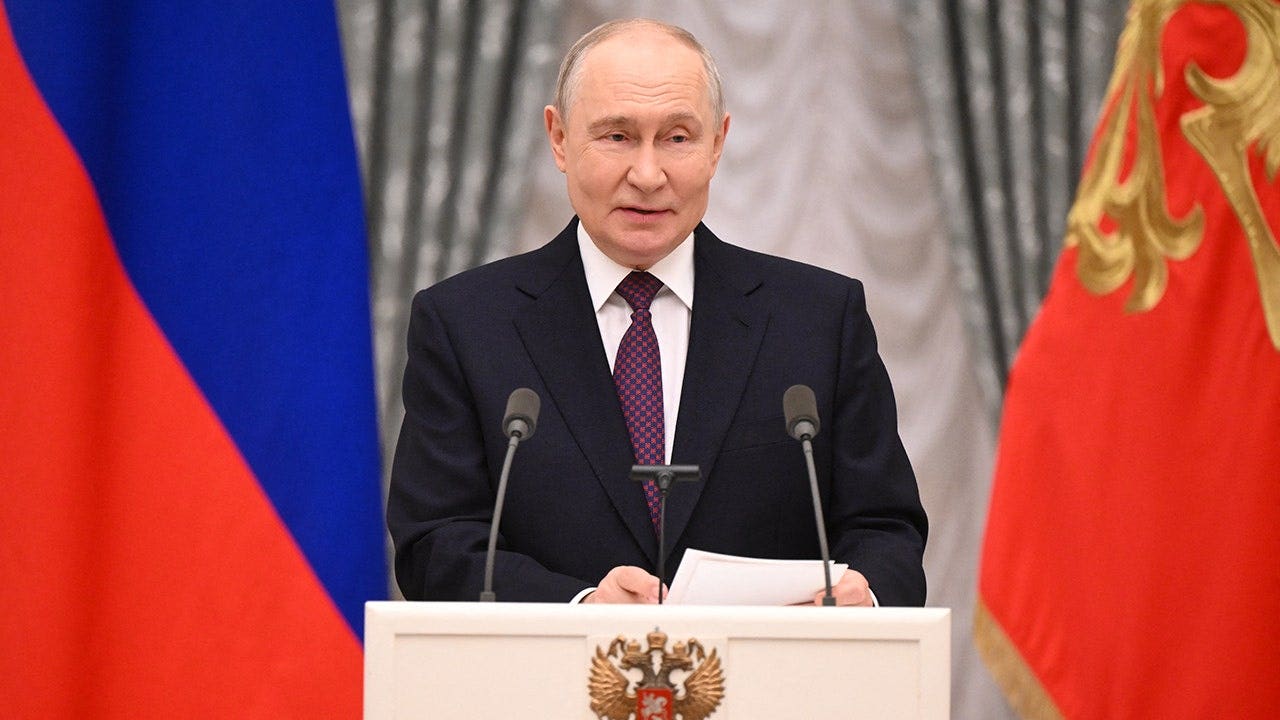
Photo via Daily Mail

The 'biological Chernobyl' lab leak that Russia covered up as 'food poisoning': How dozens died frothing at the mouth after anthrax blunder at bioweapons unit

Read the original at Daily Mail ↗
Cite

Penty, S. (2026, October 10). The 'biological Chernobyl' lab leak that Russia covered up as 'food poisoning': How dozens died frothing at the mouth after anthrax blunder at bioweapons unit. Daily Mail. https://www.dailymail.com/news/article-16186689/biological-Chernobyl-lab-leak-Russia-covered-food-poisoning-dozens-died.html?ns_mchannel=rss&ns_campaign=1490&ito=1490

Dated when The Aporia collected the article, usually within hours of publication. Check the original for its exact date and byline.

Daily Mail · collected 2026-10-10 · by Sabrina Penty
Content note This article describes violence described in detail.

Quick Summary

In April 1979, an anthrax outbreak in Sverdlovsk (now Yekaterinburg), Soviet Union, killed 66 people who experienced severe symptoms like coughing up blood and high fever within two days of falling ill. Despite the evidence pointing to a biological weapons lab accident, Russian officials initially covered it up as food poisoning from contaminated meat. The incident, later termed the 'biological Chernobyl', was exposed only years later due to international pressure and investigations by US intelligence agencies.
Written by AI on 2026-10-10, from this article's own text only (the story summary below draws on all the coverage).

AI analysis

Story summary

In April 1979, dozens of people in the Soviet city of Sverdlovsk fell mysteriously ill. Patients showed symptoms like coughing up blood, foaming at the mouth, and extreme fever. Within two days, they died, causing widespread panic. Workers tried to clean streets while residents stayed indoors fearing infection. Health officials initially claimed 66 deaths due to food poisoning but later revealed it was an anthrax leak from a biological weapons lab. This incident, known as the 'biological Chernobyl,' wasn't exposed until over a decade later when defector Ken Alibek disclosed the truth. The actual death toll is likely higher than reported due to Russian authorities' attempts to cover up the outbreak.

Written for “Russian Anthrax Lab Leak Coverup” on 2026-11-01, grounded in this article and the 0 other(s) covering the same event.

Story

📰 Russian Anthrax Lab Leak Coverup
Politics · 1 article(s) covering the same event.

Compared with similar articles

This article reads leans right and hedges 18% of its claims. Each row says how that neighbour differs.
Fox News
⚖️ Leans strongly left further left than this Hedges 1 of 25 claims Outlet record 69/100
“The articles describe different events: one refers to recent concerns about a pneumonic plague incident in Siberia, while the other recounts historical events from 1979 related to an anthrax outbreak in Sverdlovsk.”
Toronto Star
⚖️ Leans left further left than this Hedges 6 of 44 claims Outlet record 64/100
“The articles refer to different historical periods and events, with Article A discussing recent concerns about secrecy regarding a suspected plague case, while Article B describes a past incident in Sverdlovsk in 1979 involving anthrax.”
How this article was measured signals, leaning charts, publisher record, byline, topics and claims

Signals How these are calculated →

Claims extracted
57
sentences that state something as happening or true
Uncertain
18%
10 of 57 hedged ("reportedly", "may", "according to")
Leaning
Leans right
of the writing, not the subject · beta estimate
Publisher signals
68/100
Daily Mail's corrections and hedging, across everything collected from it. Not a measure of accuracy.
Outlets on this story
1
Politics
Same framing elsewhere
1
articles that frame the event the way this one does
Analyzed 2026-10-10 · how these are computed

How this is being covered How these are calculated →

Article leaning vs. publisher reliability
Source leaning vs. consistency

Publisher

Daily Mail · 8613 article(s) · 20 correction(s) detected
Running correction rate · 20 correction(s)

Who wrote this

Sabrina Penty
75 article(s) here · 1 carrying a prediction
🔮 The removal of 33 members meant that the CCP saw more empty seats than ever before at its annual meeting, underscoring the scale of Xi's anti-corruption campaign. The party said it had 'squarely confronted the grim reality that party leadership had at times weakened or hollowed out' and that it will continue to 'enforce strict party self-governance, including turning the knife inwards to... curb disorder'.
🔮 Speaking to the Daily Mail, Craig Delahaye, Associate Director, Legal Operations, National Accident Helpline, said: 'Travellers must remember that such incidents are vanishingly rare, but when they do occur, knowing where to position yourself in the carriage could be the difference between a few scrapes and much more serious injuries. '
🔮 The union also called for guarantees that trains would be 'reliable and safe', adding: 'We demand real and definitive technical solutions to the safety and reliability issues that have long plagued our rolling stock.' After the January incident in Adamuz, several critics blamed socialist Prime Minister Pedro Sanchez, raising questions over whether his government had spent enough on railway maintenance in a country where train travel accounts for about 57 per cent of all transport. And while the cause of Wednesday's accident has yet to be confirmed, the collision has raised questions over the state of the country's infrastructure, and why there have been so many deadly crashes in recent months.
🔮 In 2015, the Express reported that a Kremlin insider said nobody could be taller than the president in official photos.
🔮 An independent investigation will be launched to establish the circumstances surrounding the incident.
2026-10-28 · assertive framing · Child 'is mauled by wolf' at German wildlife park
🔮 Brigitte Macron's defamation lawsuit against Candace Owens has suffered its first legal hurdle after a judge ruled that the right-wing commentator could not be held personally liable.
🔮 Violent protests have erupted at a Spanish university against far-right figure Vito Quiles dubbed 'Spain's Charlie Kirk' Vito Quiles pictures at a political rally in Pamplona on October 15 Members of the Basque police blocke the access to the University of Deusto to prevent potential disturbances that might arise from a visit by Spanish right-wing activist Vito Quiles on October 26, 2026 in Bilbao 'Today it has become clear who the real ultras are, and the majority of Spaniards have seen it,' he added on social media.
🔮 Mr Ranitz acknowledged the broadcaster's decision would disappoint many Dutch Eurovision fans and stressed the contest would still be aired on public channels.
🔮 Footage shows the oil rig off the coast of Gabon tipping at an angle Members of staff are seen in video putting on life jackets and running across the rig's deck Employees boarded life boats and drifted away from the rig as it collapsed Gabon President Brice Clotaire Oligui Nguema speaks with survivors and relatives affected by the sinking of the Borr Prospector 5 oil rig in Port-Gentil, Gabon Gabon's Ministry of Petroleum and Gas said it had activated a crisis unit and ordered the navy to reinforce search and rescue operations at sea, with helicopters and underwater equipment deployed. Petroleum and Gas Minister Clotaire Kondja said in a statement that the navy was assisting in the search-and-rescue operations and that the ministry had ordered a technical investigation to establish what happened. Mr Kondja assured that no harmful substances had been observed, adding: 'The area is under continuous surveillance, and pollution-response resources remain deployed to protect the coastline and Mayumba National Park.
🔮 While viewers mostly found humour in the moment, some social media users raised questions over why the TV crew were filming by the sea despite weather warnings. However, Ovejero later clarified that he and his colleagues had spent more than an hour in the area and had not expected to be struck by the waves.
Also by Sabrina Penty
Nothing else under this byline is closely related to this article, so these are simply their most recent.
All 75 articles by Sabrina Penty →

Topics

Chernobyl Soviet Sverdlovsk USSR the Los Angeles Times

Subjects

Sverdlovsk GPE · 6× Soviet NORP · 4× American NORP · 2× Russian NORP · 2× Alevtina Nekrasova PERSON · 1× Russia GPE · 1× USSR GPE · 1× Yekaterinburg GPE · 1× the Los Angeles Times ORG · 1× the National Academy of Sciences ORG · 1×

Narrative

Pictured: American scientist Jeanne Guillamin and a Russian researcher with a family affected by the Sverdlovsk outbreak Scientist Ken Alibek (pictured) defected to the US and revealed that anthrax had gotten out after an air filter at the Sverdlovsk plant was not replaced While reports say 66 people died, the death toll is likely to be much higher due to Russian authorities trying to cover up the outbreak.
framing: assertive · carried by 1 article(s) · first seen 2026-10-10
🔮 The case would later be dubbed the 'biological Chernobyl', but it wasn't until more than a decade later that the truth came out.

Claims (57 extracted, 10 hedged)

In April 1979, dozens of people in the Soviet city of Sverdlovsk fell mysteriously ill. asserted
dozens → fall → Sverdlovsk
Patients poured into hospitals, and with each ambulance came people coughing up blood and frothing at the mouth. asserted
people → pour → mouth
Others said their lungs felt as though they were on fire, while doctors recorded dangerously high temperatures. asserted
doctors → say → temperatures
Within two days, they were dead, and panic gripped the city. asserted
panic → grip → city
Workers began hosing down roofs and disinfecting the streets, while residents hid inside their homes, too afraid to get sick. asserted
residents → begin → homes
Alevtina Nekrasova, whose father died after falling ill, told the Los Angeles Times: 'Everyone sat at home, with windows and doors shut tight, shivering with fear and waiting for the first symptoms to develop. asserted
symptoms → die → fear
We all thought we were going to die.' asserted
we → think → ?
The deadly outbreak claimed the lives of 66 people, and health officials put the illness down to food poisoning from contaminated meat. asserted
officials → claim → meat
In reality, the disease was the result of an accident at a biological weapons lab that allowed toxic anthrax spores to contaminate Sverdlovsk's air. asserted
spores → allow → air
The case would later be dubbed the 'biological Chernobyl', but it wasn't until more than a decade later that the truth came out. asserted
truth → dub → ?
File image (edited into black and white) of Soviet scientists taking samples Aerial view of Compound 19 - a bioweapons facility on the outskirts of Sverdlovsk Doctors and relatives of those who died were the first to realise something was not right. asserted
something → edit → those
Following the dozens of deaths, autopsies carried out on the victims reportedly found their lungs to be the consistency of jelly, while doctors were ordered to wrap their bodies in polythene and douse them in chlorine. uncertain
doctors → follow → chlorine
Teams of men wearing hazmat suits began visiting the families of the people who had died and decontaminated their homes, while the city was put under a temporary curfew. asserted
city → wear → curfew
Meanwhile, health officials ordered that all of the dead be buried together in a single section of the city's cemetery. asserted
all → order → cemetery
But while Soviet officials worked to eliminate any trace of the outbreak, some foreign newspapers began reporting on rumours of anthrax leaking from a military facility at Sverdlovsk. asserted
newspapers → work → Sverdlovsk
Western scientists, too, raised suspicions. asserted
scientists → raise → suspicions
US intelligence services stepped in and began reviewing classified data, which led them to accuse the USSR of violating the 1972 Biological Weapons Convention. asserted
which → step → Convention
Soviets denied the claims, and even travelled to the US in 1988 to give a presentation at the National Academy of Sciences, offering figures and slides of gut tissue from autopsies they claimed to have carried out in a bid to put an end to accusations of a biological weapons leak. uncertain
they → deny → leak
However, US intelligence services kept a watchful eye. asserted
services → keep → eye
Four years later, a team of American scientists travelled to Russia to investigate further and found that in Sverdlovsk, now renamed Yekaterinburg, not everything was as it seemed. asserted
it → travel → Sverdlovsk
In 1979, Russian pathologists Faina Abramova and Lev Grinberg carried out the autopsies on those who died of the mystery illness. asserted
who → carry → illness
But when they heard the KGB wanted to look at autopsy records, they defiantly hid tissue samples in jars and preserved them in formaldehyde. asserted
they → hear → formaldehyde
When a team of American scientists led by biologist Matthew Meselson arrived in the Russian town over a decade later, they showed them their original samples. asserted
they → lead → samples
With this evidence, US scientists were finally able to confirm the victims had died of inhalation anthrax - an infection caused by breathing in the spores of the Bacillus anthracis bacterium - and not intestinal anthrax from eating contaminated meat. asserted
victims → confirm → meat
The Americans interviewed families of the victims and local doctors and managed to map out exactly where patients were when they fell ill. asserted
they → interview → victims
Scientists quickly realised all victims lived downwind of Compound 19 - a bioweapons facility on the outskirts of the city. asserted
victims → realise → city
And in 1992, when Soviet scientist Ken Alibek defected to the US, he revealed that anthrax had gotten out after an air filter at the Sverdlovsk plant was not replaced. asserted
filter → defect → plant
Alibek was involved in the Soviet Union's Biopreparat germ-warfare machine, overseeing a secret network of laboratories developing deadly pathogens for use as weapons. asserted
Alibek → involve → weapons
He confirmed that Compound 19 had been mass-producing a lethal, powdered variant known as Anthrax 836, which was being designed for use in ballistic missiles. asserted
which → confirm → missiles
The pathogen contaminated sheep and cows and remains the largest documented outbreak of human inhalation anthrax in the world. asserted
pathogen → contaminate → world
Pictured: American scientist Jeanne Guillamin and a Russian researcher with a family affected by the Sverdlovsk outbreak Scientist Ken Alibek (pictured) defected to the US and revealed that anthrax had gotten out after an air filter at the Sverdlovsk plant was not replaced While reports say 66 people died, the death toll is likely to be much higher due to Russian authorities trying to cover up the outbreak. asserted
authorities → picture → outbreak
The 1979 anthrax leak serves as a warning of the catastrophic impacts the secret development of bioweapons poses to public safety. asserted
development → serve → safety
Earlier this month, a young lab worker died after developing a mysterious form of pneumonia in Siberia, and speculation has turned to her place of work. asserted
speculation → die → work
Darya Shipilova, 28, was working at the Irkutsk Anti-Plague Institute when she fell ill and died soon after, on October 2. asserted
she → work → October
Nearly 200 people who had been in contact with her were placed under quarantine after it emerged that she had broken a test tube. But while Russian authorities said her death was caused by pneumonia of unknown origin, speculation that she may have contracted the plague has continued to grow. uncertain
she → place → plague
The uncertainty surrounding the young woman's death has revived memories of the mysterious outbreak in the former Soviet Union and raises questions over what could be happening inside the remote Siberian lab. uncertain
what → surround → lab
The Anti-Plague Research Institute in Irkutsk is one of dozens of disease labs built to study pathogens. asserted
Institute → build → pathogens
While on paper, these labs were purely for public health, Russia has been suspected of turning deadly diseases into weapons. asserted
Russia → suspect → weapons
In an interview with the Daily Mail earlier this month, Alibek said: 'Russia is working on biological weapons, no doubt, otherwise they wouldn't have built such huge facilities,' pointing to a recent expansion of Russian biological facilities. asserted
they → say → facilities
His remarks came after it emerged that a second person had died of the plague in the Irkutsk region earlier this week, according to local media. uncertain
person → come → media
…and 17 more, not listed.

💬Give feedback
🕘History 🎫Support