Photo via Fox News

Supreme Court climate case could bankrupt oil companies, send gas prices soaring, experts warn

Read the original at Fox News ↗
Cite

Mallon, E. (2026, October 10). Supreme Court climate case could bankrupt oil companies, send gas prices soaring, experts warn. Fox News. https://www.foxnews.com/politics/supreme-court-climate-case-could-bankrupt-oil-companies-send-gas-prices-soaring-experts-warn

Dated when The Aporia collected the article, usually within hours of publication. Check the original for its exact date and byline.

Fox News · collected 2026-10-10 · by Elaine Mallon

Quick Summary

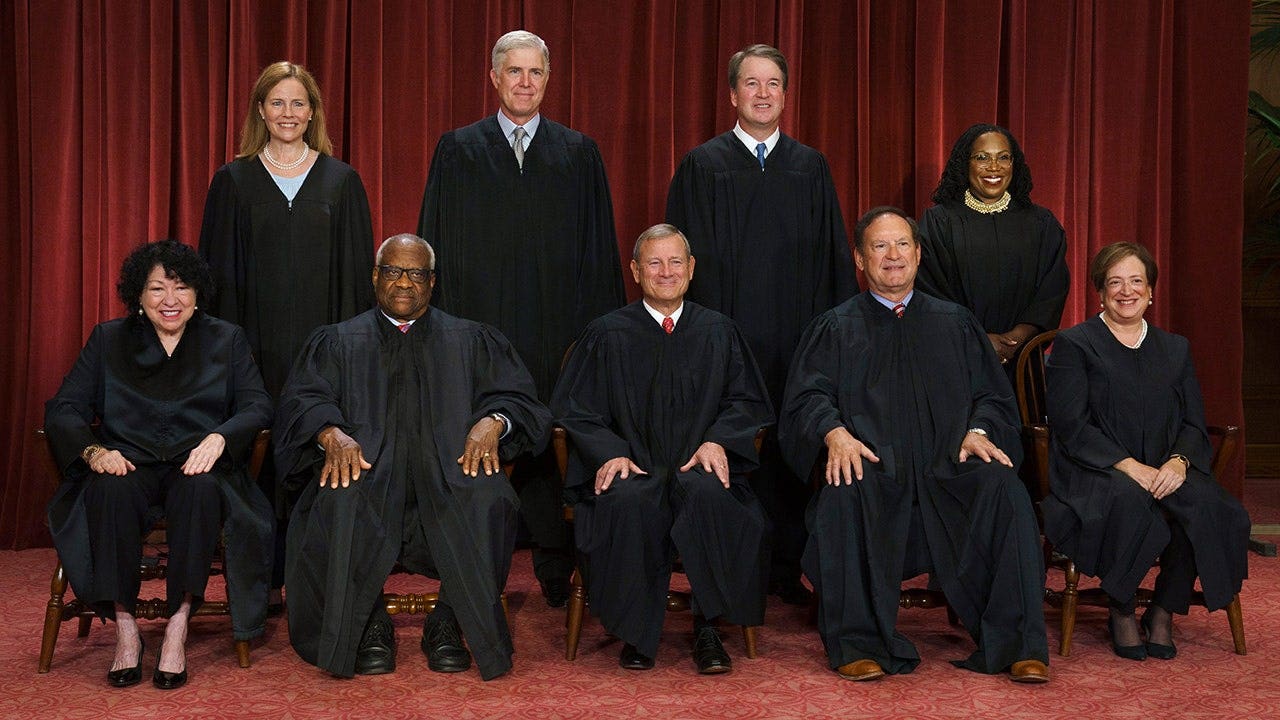
Energy policy experts warn that a Supreme Court decision in favor of climate change lawsuits against oil companies could lead to the bankruptcy of these firms and significant increases in gas prices. The case, Suncor v. Boulder, centers on whether federal law preempts state legal claims seeking damages from fossil fuel producers for alleged climate-related harms. During oral arguments, Justice Clarence Thomas questioned if such suits could extend beyond oil companies to other businesses, while Justice Brett Kavanaugh highlighted potential financial risks that could bankrupt defendants and impact multiple industries.
Written by AI on 2026-10-10, from this article's own text only (the story summary below draws on all the coverage).

AI analysis

Story summary

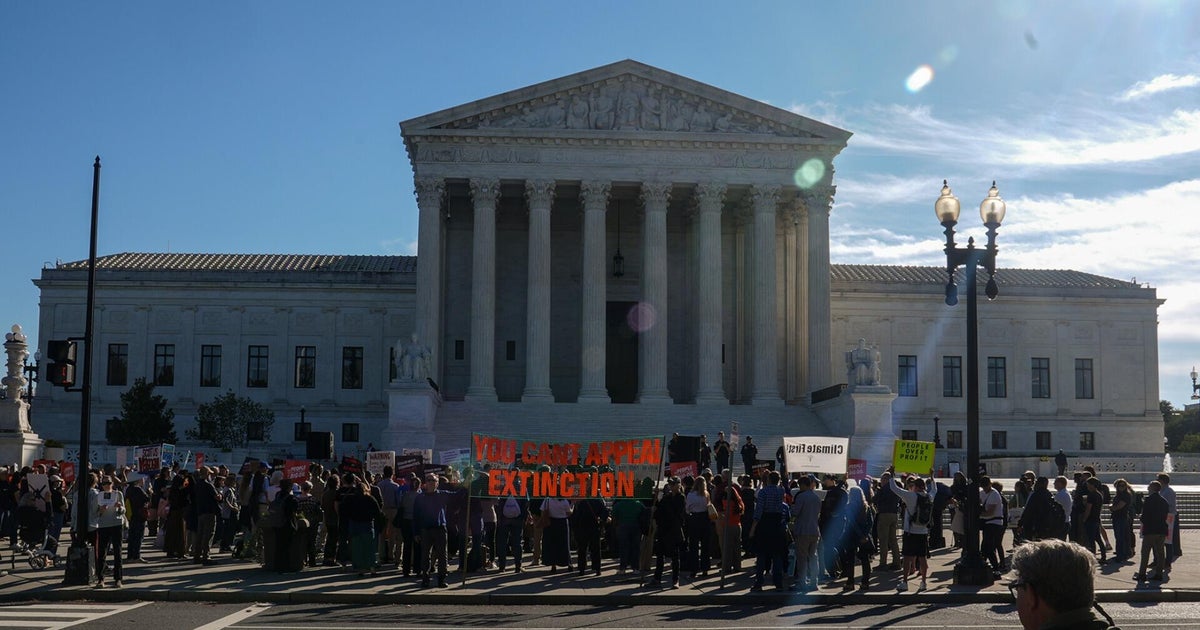
The Supreme Court opened its new term on Monday by hearing arguments in Suncor Energy v. Boulder County, a landmark case that could determine whether states and local governments can sue oil and gas companies for climate change damages. The case, which began in 2018 when Boulder County sued Exxon Mobil and Suncor Energy, accuses these companies of contributing to climate-related harms through their fossil fuel operations. The lawsuit aims to hold the companies financially responsible for local climate impacts using state tort laws.

If the Supreme Court allows such lawsuits, it could set a precedent for similar cases across the nation, potentially affecting industries that emit carbon and leading to increased costs for consumers due to higher legal liabilities. Conversely, if the court rules against Boulder County, it would limit states' ability to use their courts for addressing national policy issues like climate change through tort law, thereby protecting manufacturers from an expanding patchwork of lawsuits based on complex environmental problems.

Written for “Supreme Court Climate Case” on 2026-11-04, grounded in this article and the 35 other(s) covering the same event.

Story

📰 Supreme Court Climate Case
Environment · 36 article(s) covering the same event. Compare every outlet's account →

Compared with similar articles

This article reads unscored and hedges 26% of its claims. Each row says how that neighbour differs.
CBS News
⚖️ Leans left Hedges 0 of 1 claims Outlet record 65/100
Al Jazeera
Hedges 1 of 22 claims Outlet record 60/100
“Article A reports on a court ruling against coal mine expansion, while Article B discusses potential consequences if similar climate lawsuits succeed, focusing more on speculative impacts rather than the specific case mentioned in Article A.”
CBS News
Hedges 0 of 2 claims Outlet record 65/100
“While both articles discuss the Supreme Court hearing arguments regarding climate change lawsuits against energy companies, they do not describe the same specific incident or outcome.”
Fox News
Hedges 4 of 33 claims Outlet record 68/100
“While both articles discuss climate lawsuits against oil companies in the Supreme Court, they do not describe the exact same specific incident or outcome.”
ABC News (AU)
Hedges 3 of 35 claims Outlet record 67/100
“The articles discuss different court systems (High Court in NSW vs. Supreme Court) and their impacts on oil and gas industries, suggesting they are referring to distinct rulings or potential scenarios.”
Fox News
Hedges 12 of 38 claims Outlet record 68/100
“The articles discuss different aspects of a Supreme Court case related to climate change lawsuits against oil companies, but they are not reporting on the same specific incident or occurrence.”
NBC News
Outlet record 78/100
“Article A reports on arguments heard in a Supreme Court case, while Article B discusses potential outcomes and warnings from experts regarding the case's implications.”
CBC News
⚖️ Leans left Hedges 6 of 41 claims Outlet record 60/100
“Article A reports on a hearing at the U.S. Supreme Court regarding climate damages from oil and gas, while Article B discusses potential outcomes and warnings if the court rules in favor of cities and states pursuing billions in damages against fossil fuel companies.”
Fox News
⚖️ Leans right Hedges 11 of 35 claims Outlet record 68/100
“Article A describes the Supreme Court oral arguments, while Article B discusses potential consequences if certain outcomes occur from those arguments.”
The Guardian
⚖️ Leans right Hedges 4 of 29 claims Outlet record 66/100
“Article A discusses potential outcomes and warnings from experts about a Supreme Court climate case, while Article B mentions the specifics of the Suncor Energy Inc v County Commissioners of Boulder County case to be tested at the Supreme Court.”
How this article was measured signals, leaning charts, publisher record, byline, topics and claims

Signals How these are calculated →

Claims extracted
31
sentences that state something as happening or true
Uncertain
26%
8 of 31 hedged ("reportedly", "may", "according to")
Leaning
withheld
no quote in the article backed the model's score
Publisher signals
68/100
Fox News's corrections and hedging, across everything collected from it. Not a measure of accuracy.
Outlets on this story
36
Environment
Same framing elsewhere
1
articles that frame the event the way this one does
Analyzed 2026-10-10 · how these are computed

How this is being covered How these are calculated →

Article leaning vs. publisher reliability
Source leaning vs. consistency

Publisher

Fox News · 6507 article(s) · 12 correction(s) detected
Running correction rate · 12 correction(s)

Who wrote this

Elaine Mallon
45 article(s) here · 1 carrying a prediction
🔮 Jackson's victory will end Collins’ nearly three-decade career in the Senate.
🔮 The Fox News Decision Desk projects that Democratic Rep. Chris Pappas of New Hampshire will defeat former Republican Sen. John E. Sununu in a competitive and expensive swing state race.
🔮 His administration previously filed a lawsuit against Alaska officials to prevent them from certifying election results if it was deemed Daniel J. Sullivan may have cost Sen. Sullivan the election.
🔮 Sen. Elissa Slotkin's warning to young Americans not to join the Trump administration could backfire by handing Trump officials legal ammunition to derail the investigations Democrats hope to launch if they retake Congress, a former federal prosecutor warned.
🔮 Michael Heyman announced at a Friday press conference that the Justice Department has been investigating whether Daniel J. Sullivan, a retired school teacher who will appear on the ballot without a party affiliation, was colluding with Democratic operatives tied to Democratic candidate Mary Peltola's campaign.
🔮 "But there are a lot of cases that seem to be going to judges maybe based on those cases having similarities which is not what the local rules say," Wessan told Fox News Digital.
🔮 However, the appeals court ruled that the lower court's preliminary injunction could not be enforced, finding that the immigration law firm Red Eagle, which represents individuals going through the visa lottery process, did not have standing to sue the federal government.
🔮 "This would have never happened if we didn't have ranked-choice voting," Dunleavy told Fox News Digital.
🔮 U.S. District Judge Ada Brown of the Northern District of Texas, who is Black and Native American, was temporarily removed from her docket by the Fifth Circuit Judicial Council earlier this month, following a May judicial-conduct complaint filed by attorney Ezra Young, whose permission to practice before Brown had previously been revoked.
🔮 And one of its leaders is warning that young professionals could face reputational damage and steep legal bills.
Also by Elaine Mallon
Nothing else under this byline is closely related to this article, so these are simply their most recent.
All 45 articles by Elaine Mallon →

Topics

Americans Boulder ExxonMobil Suncor Supreme Court

Subjects

Boulder GPE · 7× ExxonMobil ORG · 3× Congress ORG · 2× Fox News Digital ORG · 2× Russell PERSON · 2× Suncor ORG · 2× Supreme Court ORG · 2× American Energy Institute ORG · 1× Americans NORP · 1× Jason Isaac PERSON · 1×

Narrative

But Boulder has maintained that the case is not an attempt to regulate national climate policy, arguing instead that Colorado has the authority to hold companies accountable under state law for alleged harms suffered within its borders. "Since the founding, states have had the power to provide tort remedies for injuries occurring within their borders even when the conduct causing those injuries occurred elsewhere," Russell told the justices.
framing: mixed · carried by 1 article(s) · first seen 2026-10-10
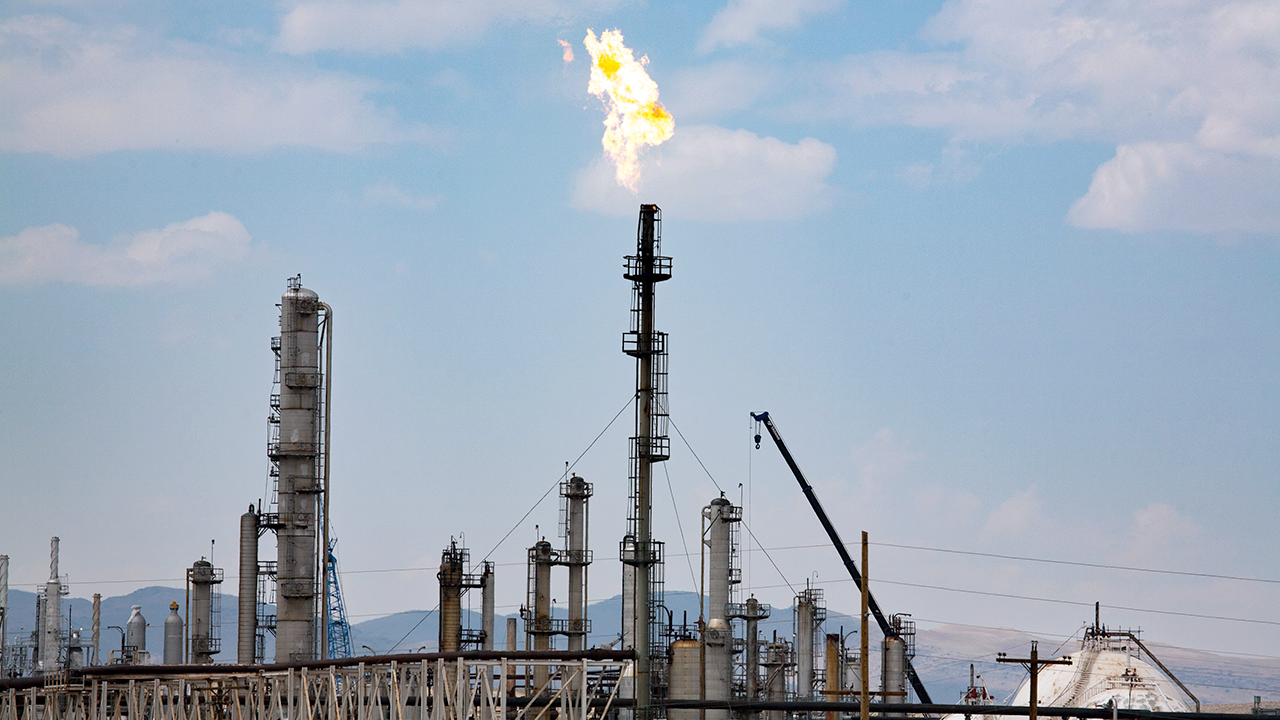
🔮 A Supreme Court showdown over climate change lawsuits could leave oil companies bankrupt, gas stations facing financial ruin and Americans paying more at the pump if the justices allow cities and states to pursue billions in damages against the fossil fuel industry, energy policy experts warn.

Claims (31 extracted, 8 hedged)

A Supreme Court showdown over climate change lawsuits could leave oil companies bankrupt, gas stations facing financial ruin and Americans paying more at the pump if the justices allow cities and states to pursue billions in damages against the fossil fuel industry, energy policy experts warn. uncertain
experts → leave → industry
"You would see mass exodus and that would create more scarcity with fuel, more so than we're seeing already today, higher prices," Jason Isaac, CEO of American Energy Institute, told Fox News Digital. asserted
Isaac → see → Digital
It's about controlling these companies and stopping the use of hydrocarbons." asserted
It → control → hydrocarbons
The Supreme Court heard arguments Monday in Suncor v. Boulder, a dispute over whether federal law prevents cities and states from suing oil companies under state law for alleged climate damage linked to emissions that cross state borders. asserted
that → hear → borders
During oral arguments, Justice Clarence Thomas pressed Boulder's attorney, Kevin Russell, on whether the legal theory could expose businesses beyond oil producers to similar lawsuits, including large retailers. uncertain
theory → press → retailers
"Nothing in our theory prevents that," Russell acknowledged, although he noted that state tort law could impose additional limitations. uncertain
law → prevent → limitations
Justice Brett Kavanaugh separately raised concerns about the potential financial consequences of widespread litigation, warning that enough lawsuits could "bankrupt" defendants and questioning whether virtually any manufacturer or business could face similar claims. uncertain
manufacturer → raise → claims
The city and county of Boulder, Colo., sued oil giants ExxonMobil and Suncor Energy in 2018, accusing the companies of knowingly contributing to climate change while misleading the public about the alleged dangers of fossil fuels. asserted
city → sue → fuels
The municipalities are seeking damages to help cover the mounting costs of climate-related harms. asserted
municipalities → seek → harms
Boulder's lawsuit alleged ExxonMobil and Suncor knew for decades about the climate risks associated with fossil fuels but misled the public about those risks. asserted
ExxonMobil → allege → risks
The complaint pointed to a 1977 internal memo from ExxonMobil that circulated among the company's highest-level managers. asserted
that → point → managers
The memo reported that "current scientific opinion overwhelmingly favors" that fossil fuels contribute to the rise in CO2 emissions. asserted
fuels → report → emissions
David Bookbinder, who previously served as counsel of record for Boulder but is no longer involved in the case, described the lawsuit as a way to implement an "indirect carbon tax" during a Federalist Society forum last year. asserted
who → serve → forum
But Boulder has maintained that the case is not an attempt to regulate national climate policy, arguing instead that Colorado has the authority to hold companies accountable under state law for alleged harms suffered within its borders. "Since the founding, states have had the power to provide tort remedies for injuries occurring within their borders even when the conduct causing those injuries occurred elsewhere," Russell told the justices. asserted
Russell → maintain → justices
O.H. Skinner, executive director of the Alliance for Consumers, argued that the lawsuits are an attempt to accomplish through the courts what climate advocates have been unable to achieve through Congress. asserted
advocates → argue → Congress
"When you really boil it down, and you separate it from all the legal arguments, the advocates who push these cases are very clear," Skinner told Fox News Digital. asserted
Skinner → boil → Digital
"That it's an effort to get a backdoor carbon tax, because carbon taxes have never passed in Congress, or to bankrupt the energy industry. asserted
taxes → get → industry
" Justice Samuel Alito has recused himself from the case without providing an explanation. asserted
Alito → recuse → explanation
Isaac warned that a Supreme Court ruling in Boulder's favor could open "Pandora's box," allowing thousands of jurisdictions to pursue similar lawsuits. uncertain
thousands → warn → lawsuits
He said a 4-4 split could have a similar practical effect by leaving the lower court's ruling in place, although a tie would not establish nationwide precedent. uncertain
tie → say → precedent
"There are over 90,000 levels of government — government entities just in the United States alone — that could also begin lawsuits against energy companies," Isaac told Fox News Digital. uncertain
Isaac → be → Digital
"Driving up cost to consumers because the cost to defend those would be astronomical." asserted
cost → drive → those
Skinner argued that who could be sued could extend beyond oil producers to businesses across the energy supply chain, including gas stations, automakers and utilities that sell or use fossil fuels. uncertain
that → argue → fuels
"From Boulder's perspective, anybody who's contributed to climate change would reliable, any sort of company, big or small, and the problem here is that to the left, climate change is everything and everything is climate change," Skinner told Fox News Digital. asserted
Skinner → contribute → Digital
"So it's very hard to find a line for who isn't contributing to climate change. asserted
who → find → change
But Isaac said the case is different from lawsuits against tobacco or opioid companies because greenhouse gas emissions come from countless sources around the world and cross state and national borders, making it difficult to isolate responsibility for climate-related damage. asserted
it → say → damage
"Emissions are a global phenomenon," Isaac told Fox News Digital. asserted
Isaac → tell → Digital
ExxonMobil and Suncor argue that because greenhouse gas emissions travel globally, Colorado cannot use state law to hold companies liable for emissions originating outside its borders. asserted
companies → argue → borders
The companies contend that such disputes should instead be governed by federal law. asserted
disputes → contend → law
Meanwhile, other states such as Utah have barred these types of state tort lawsuits from being pursued. asserted
states → bar → lawsuits
"If the energy companies were to lose and Colorado were to win, this would in effect drive up the prices of gas all across the country," Utah Attorney General Derek Brown told Fox News Digital. asserted
Brown → lose → Digital

💬Give feedback
🕘History 🎫Support