Photo via BBC News

Northern Lights stun UK down to England's south coast

Read the original at BBC News ↗
Cite

Coughlan, J., & Fawkes, C. (2026, October 10). Northern Lights stun UK down to England's south coast. BBC News. https://www.bbc.co.uk/news/articles/c9rkyey458xdo?at_medium=RSS&at_campaign=rss

Dated when The Aporia collected the article, usually within hours of publication. Check the original for its exact date and byline.

BBC News · collected 2026-10-10 · by Joe Coughlan, Chris Fawkes

Quick Summary

Residents across the UK witnessed the Northern Lights, or Aurora Borealis, on Friday and Saturday evenings due to increased solar activity. While typically visible only near the Arctic Circle and northern Scotland, strong geomagnetic storms allowed sightings as far south as Devon, Hampshire, and Kent. The Met Office reported that aurora activity levels reached 600 nanotesla (nT), making it visible across the entire UK, though such widespread visibility is rare. Sighting opportunities could continue through Tuesday with clear skies, encouraging people to look northward away from light pollution for the best view.
Written by AI on 2026-10-10, from this article's own text only (the story summary below draws on all the coverage).

AI analysis

Story summary

The Northern Lights, or Aurora Borealis, illuminated skies across the UK on Friday and Saturday evenings, surprising residents as far south as Devon, Hampshire, and Kent. Usually visible near the Arctic Circle and northern Scotland, the strong solar activity levels allowed for a rare southern sighting. The Met Office predicted sightings could continue through Tuesday during clear nights. Caused by charged particles from the sun colliding with Earth's atmosphere, these lights create colorful displays primarily around magnetic poles but were exceptionally bright due to increased geomagnetic storms. Stargazers captured stunning images of the phenomenon, sharing them on social media.

Written for “Northern Lights in UK” on 2026-11-04, grounded in this article and the 2 other(s) covering the same event.

Story

📰 Northern Lights in UK
Environment · 3 article(s) covering the same event. Compare every outlet's account →

Compared with similar articles

This article reads unscored and hedges 18% of its claims. Each row says how that neighbour differs.
The Guardian
Hedges 2 of 12 claims Outlet record 66/100
Daily Mail
Hedges 3 of 11 claims Outlet record 69/100
Times of India
Hedges 8 of 38 claims Outlet record 59/100
“The articles describe different time periods and locations for aurora borealis sightings, with Article A predicting a possible show on October 8-9 mainly in northern parts of the US and Canada, while Article B reports actual sightings from across the UK on October 10.”
ABC News (US)
Hedges 7 of 14 claims Outlet record 67/100
“While both articles describe auroras resulting from increased solar activity, they refer to different occurrences in distinct geographic locations (northern US and UK) on separate nights.”
How this article was measured signals, leaning charts, publisher record, byline, topics and claims

Signals How these are calculated →

Claims extracted
17
sentences that state something as happening or true
Uncertain
18%
3 of 17 hedged ("reportedly", "may", "according to")
Leaning
not political
takes no side on a contested political question
Publisher signals
68/100
BBC News's corrections and hedging, across everything collected from it. Not a measure of accuracy.
Outlets on this story
3
Environment
Same framing elsewhere
1
articles that frame the event the way this one does
Analyzed 2026-10-10 · how these are computed

How this is being covered How these are calculated →

Article leaning vs. publisher reliability
Source leaning vs. consistency

Publisher

BBC News · 5045 article(s) · 6 correction(s) detected
Running correction rate · 6 correction(s)

Who wrote this

Joe Coughlan
6 article(s) here · 1 carrying a prediction
🔮 - Published Borat actor Sacha Baron Cohen will star in a new play in London's West End from Hollywood director Quentin Tarantino.
🔮 Such occurrences are mostly visible near the Arctic Circle and northern Scotland, but particularly strong activity levels meant they could be seen as far south as Devon, Hampshire and Kent on Saturday night.
2026-10-10 · assertive framing · Northern Lights stun UK down to England's south coast
🔮 It issued the update after BBC News told the retailer it had been contacted by cyber criminals who said this week's breach went beyond the "basic contact details" Asos previously said might have been accessed.
2026-10-10 · assertive framing · King warns malicious online actors are evolving tactics
🔮 "Iran has been notified that any ship or boat placing new mines will be immediately and systematically destroyed," Trump said in a post on his Truth Social platform.
2026-08-26 · assertive framing · Trump says all mines cleared from Strait of Hormuz
🔮 It added that Crown Prince Haakon, aged 53, will serve as regent while his father is on sick leave.
🔮 - Published Russia has attacked Ukraine with ballistic missiles and drones, killing at least 17 people, as Ukraine's President Volodymyr Zelensky said interceptors "could have saved lives".
Also by Joe Coughlan
Nothing else under this byline is closely related to this article, so these are simply their most recent.
All 6 articles by Joe Coughlan →
Chris Fawkes
4 article(s) here · 1 carrying a prediction
🔮 - Published Thick fog has formed on Friday morning across parts of the United Kingdom which could lead to hazardous driving conditions.
🔮 South West England is forecast to be worst hit by the storm which the Met Office warns could bring travel disruption, power cuts and a possible danger to life.
🔮 This year the headlines have been about worsening drought rather than the impact of gales. However, could this be the calm before the storms as the Met Office predict a growing chance that late autumn and early winter will turn wetter and windier as El Niño strengthens in the Pacific.
2026-10-17 · assertive framing · Why hasn't the UK had any named storms yet?
🔮 Such occurrences are mostly visible near the Arctic Circle and northern Scotland, but particularly strong activity levels meant they could be seen as far south as Devon, Hampshire and Kent on Saturday night.
2026-10-10 · assertive framing · Northern Lights stun UK down to England's south coast
Also by Chris Fawkes
Nothing else under this byline is closely related to this article, so these are simply their most recent.

Topics

Devon Hampshire Kent Scotland The Met Office

Subjects

Scotland GPE · 2× The Met Office ORG · 2× Devon GPE · 1× Hampshire GPE · 1× Kent GPE · 1×

Narrative

The reason you need to use a camera is because in low-light conditions at night our eyes use rod cells to see - these cells do not perceive colour and so we actually see in black and white.
framing: assertive · carried by 1 article(s) · first seen 2026-10-10
🔮 Such occurrences are mostly visible near the Arctic Circle and northern Scotland, but particularly strong activity levels meant they could be seen as far south as Devon, Hampshire and Kent on Saturday night.
2026-10-10 · BBC News
Northern Lights stun UK down to England's south coast · assertive framing

Claims (17 extracted, 3 hedged)

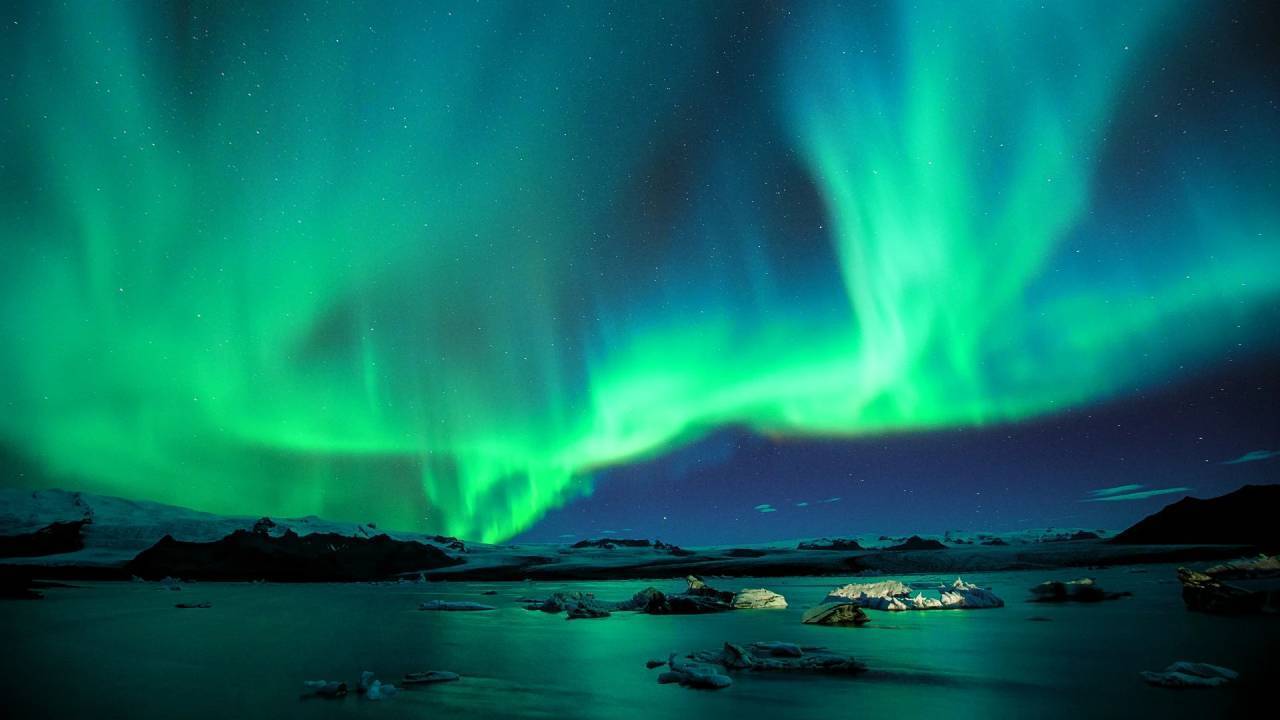
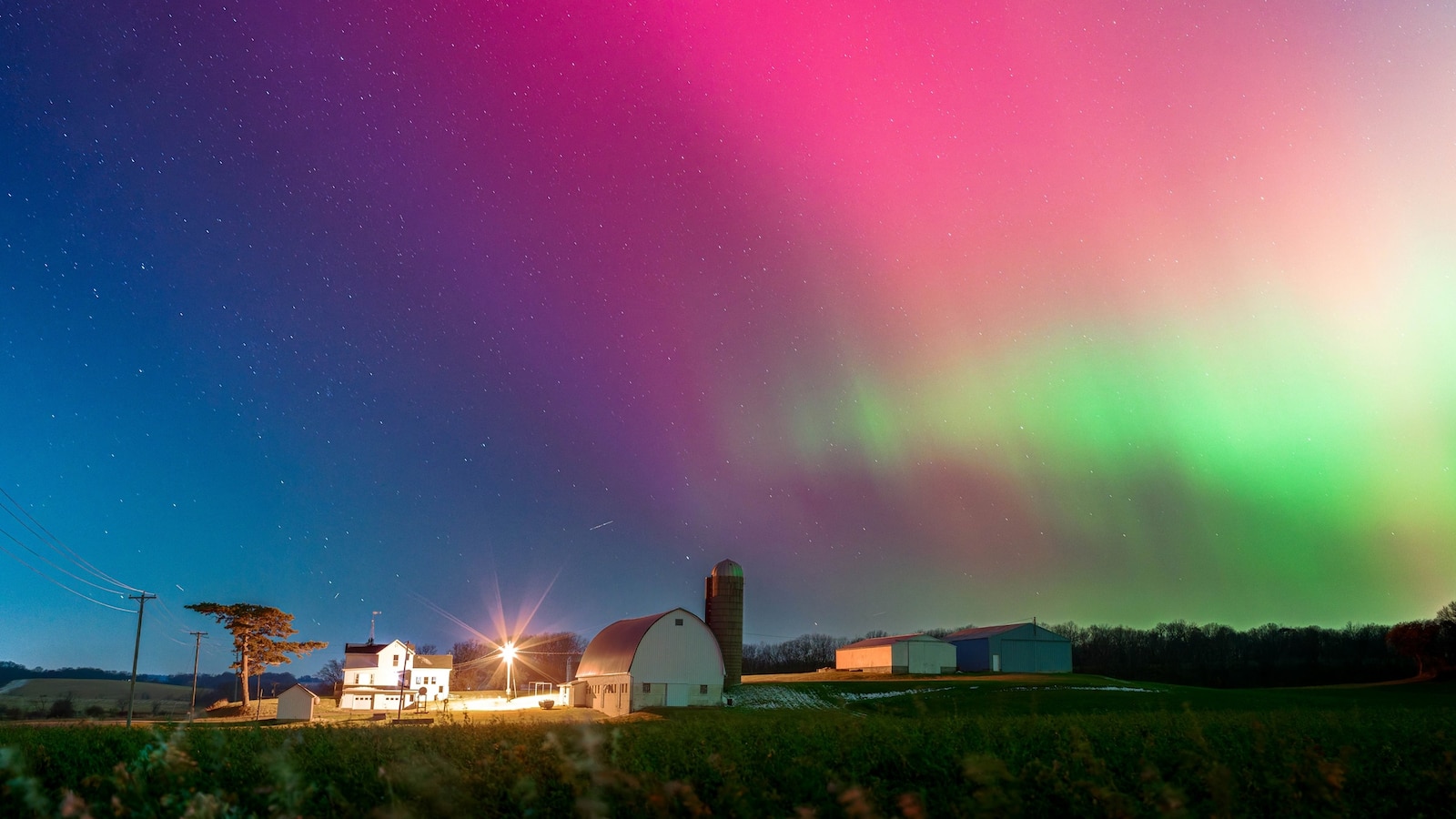
- Published Residents across the UK were left stunned as the sky was illuminated by the spectacular colours of the Northern Lights on Friday and Saturday evenings. asserted
sky → publish → evenings
The natural phenomenon, known as the Aurora Borealis, is the result of increased solar activity. asserted
phenomenon → know → activity
Such occurrences are mostly visible near the Arctic Circle and northern Scotland, but particularly strong activity levels meant they could be seen as far south as Devon, Hampshire and Kent on Saturday night. uncertain
they → mean → night
The Met Office has said sightings could continue to be possible during clear skies until Tuesday. uncertain
sightings → say → Tuesday
Northern Lights are caused by powerful solar eruptions from the Sun, called coronal mass ejections (CMEs). asserted
Lights → cause → Sun
Towards the end of last week, the Sun was observed to unleash CMEs directed towards the Earth. asserted
Sun → observe → Earth
This stream of charged particles can get captured by the Earth's magnetic field and directed into our atmosphere, especially towards polar regions. asserted
stream → charge → regions
When these charged particles collide with oxygen and nitrogen, photons of coloured light are emitted - this is the aurora. asserted
this → charge → light
The chances of seeing the aurora vary across the UK depending upon its strength. asserted
chances → see → strength
When activity levels reach 200nT (nanotesla) the aurora would be visible in the north of the UK, but not the south. asserted
aurora → reach → UK
On Saturday evening, those levels reached 600nT, meaning it would be visible across the whole of the UK, even in the south, which is a much rarer phenomenon. asserted
which → reach → south
Experts have previously said 2026 will be a peak year for aurora-spotting as the Sun has been in a heightened state of activity as part of its 11-year natural cycle. asserted
Sun → say → cycle
If you missed out this time, the aurora may return on Sunday. uncertain
aurora → miss → Sunday
The Met Office has said sightings remain possible across Scotland and similar geomagnetic longitudes during clear skies until Tuesday. asserted
sightings → say → Tuesday
To see them, you need to look northwards, away from bright streetlights, and look through a mobile phone camera. asserted
you → see → camera
The reason you need to use a camera is because in low-light conditions at night our eyes use rod cells to see - these cells do not perceive colour and so we actually see in black and white. asserted
we → need → black
Cameras do not have the same limitations. asserted
Cameras → have → limitations

💬Give feedback
🕘History 🎫Support