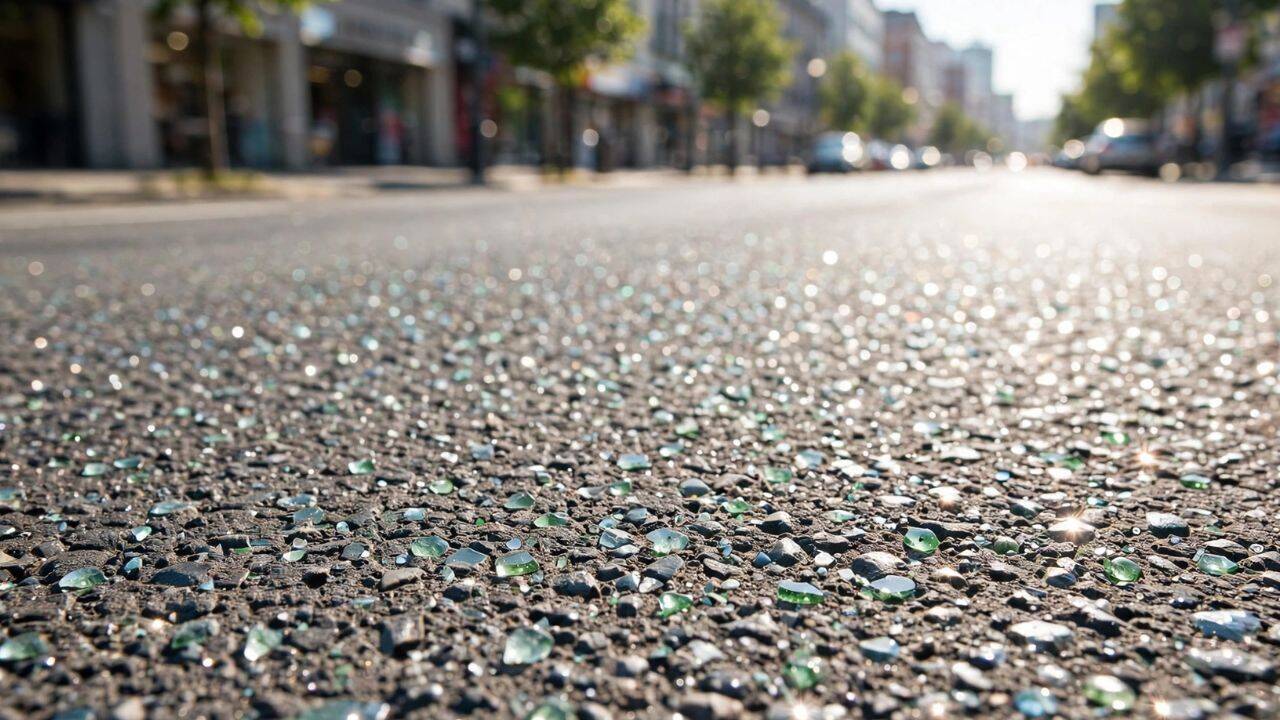
Photo via Times of India

Baltimore used crushed glass on 17 streets to create a sparkling effect

Read the original at Times of India ↗
Cite

TOI World Desk. (2026, October 11). Baltimore used crushed glass on 17 streets to create a sparkling effect. Times of India. https://timesofindia.indiatimes.com/world/us/baltimore-turned-waste-glass-into-road-surfaces-on-at-least-17-streets-the-crushed-glass-made-the-pavement-sparkle-under-sunlight-and-streetlights/articleshow/134765186.cms

Dated when The Aporia collected the article, usually within hours of publication. Check the original for its exact date and byline.

Times of India · collected 2026-10-11 · by TOI World Desk

Quick Summary

Baltimore paved at least 17 streets using recycled glass mixed into asphalt, resulting in sparkling road surfaces when hit by sunlight or streetlights. This practice is part of a larger trend where cities use crushed waste glass to replace some traditional aggregate materials in road construction. For optimal performance and durability, the Federal Highway Administration recommends mixing no more than 10 to 15% recycled glass into asphalt for surface pavements. New York City has previously used about 225,000 metric tonnes of glass in its roads from 1990 to 1995.
Written by AI on 2026-10-11, from this article's own text only (the story summary below draws on all the coverage).

AI analysis

Story summary

In a unique initiative to reduce waste and create visually appealing roads, Baltimore paved at least 17 streets with recycled glass. This practice involves crushing waste glass to use it as an aggregate in asphalt mixes, creating road surfaces that sparkle under sunlight or streetlights. The Federal Highway Administration has supported the use of recycled glass in road construction since field demonstrations in the late 1960s and early 1970s across the United States and Canada. Properly processed glass can replace up to 15% of conventional aggregate, leading to successful projects such as New York City's, which used approximately 225,000 metric tonnes of recycled glass in road resurfacing between 1990 and 1995. However, earlier experiments showed issues when large pieces or high percentages of glass were incorporated into asphalt mixes, highlighting the need for proper processing and proportions.

Written for “Crushed Glass Streets Baltimore” on 2026-10-31, grounded in this article and the 0 other(s) covering the same event.

Story

📰 Crushed Glass Streets Baltimore
Environment · 1 article(s) covering the same event.

Compared with similar articles

Nothing to compare against. No article is close enough to this one for the pipeline to have linked or judged the pair.
How this article was measured signals, leaning charts, publisher record, byline, topics and claims

Signals How these are calculated →

Claims extracted
37
sentences that state something as happening or true
Uncertain
14%
5 of 37 hedged ("reportedly", "may", "according to")
Leaning
not political
takes no side on a contested political question
Publisher signals
59/100
Times of India's corrections and hedging, across everything collected from it. Not a measure of accuracy.
Outlets on this story
1
Environment
Same framing elsewhere
1
articles that frame the event the way this one does
Analyzed 2026-10-11 · how these are computed

How this is being covered How these are calculated →

Article leaning vs. publisher reliability
Source leaning vs. consistency

Publisher

Times of India · 3737 article(s) · 2 correction(s) detected
Running correction rate · 2 correction(s)

Who wrote this

TOI World Desk
1245 article(s) here · 1 carrying a prediction
🔮 Prince William and Kate Middleton may have been made aware of serious allegations against Meghan Markle’s father, Thomas Markle Sr., after a letter detailing the claims was reportedly sent to the joint office shared by the two royal couples at Kensington Palace in 2019.
🔮 The money will support nearly 7,000 children.
🔮 Within two months, Conard identified a property in a Denver strip mall that could be used for a haunted house.
🔮 They allege that Meta could combine this information with activity tracked on Eyemart’s website to identify them and deliver targeted advertisements.
🔮 People from outside Indiana University had also contacted Brian Williams, a professor at the Kelley School of Business who helped develop the programme, expressing interest in taking the course.
🔮 On October 31, the family will take the experience further by welcoming relatives from out of town to help bring the display to life with live actors.
🔮 Thus, a decade ago, he began collecting Halloween costumes for kids who couldn't afford them.
🔮 He expressed concern that the confrontation could cost him his job.
🔮 They said the celebrity's "suicide risk" could be lowered through treatment.
🔮 In one recording, Higby explained that they wanted to find out whether people could vote without showing identification.
Wire or desk byline, not an individual reporter.
Also by TOI World Desk
Nothing else under this byline is closely related to this article, so these are simply their most recent.
All 1245 articles by TOI World Desk →

Topics

Baltimore Canada New York City the Federal Highway Administration the United States

Subjects

Baltimore GPE · 4× the United States GPE · 3× Canada GPE · 1× FHWA ORG · 1× New York City GPE · 1× the Federal Highway Administration ORG · 1×

Narrative

How did Baltimore’s recycled glass roads create a sparkling effect Waste glass was tested for use in hot mix asphalt during field demonstrations in the United States in the late 1960s and early 1970s.
framing: assertive · carried by 1 article(s) · first seen 2026-10-11
🔮 At least 17 streets in Baltimore were paved with recycled glass, creating road surfaces that could sparkle when sunlight or streetlights hit them.
2026-10-11 · Times of India
Baltimore used crushed glass on 17 streets to create a sparkling effect · assertive framing

Claims (37 extracted, 5 hedged)

At least 17 streets in Baltimore were paved with recycled glass, creating road surfaces that could sparkle when sunlight or streetlights hit them. uncertain
sunlight → pave → them
Baltimore's approach is part of a broader practice of using crushed waste glass in asphalt mixes. asserted
approach → use → mixes
Properly processed glass can replace some of the conventional aggregate used in road construction. asserted
glass → process → construction
Wearing surfaces containing 10 to 15% crushed glass have performed well. asserted
surfaces → wear → glass
According to the Federal Highway Administration, recycled glass has also been used in road projects elsewhere in the United States. uncertain
glass → accord → States
New York City used about 225,000 metric tonnes of glass in resurfacing applications between 1990 and 1995. asserted
City → use → 1990
However, earlier projects found problems when glass was used in high percentages or as large pieces. asserted
glass → find → pieces
The guidance recommends using properly processed glass in suitable proportions for asphalt paving. asserted
guidance → recommend → paving
How did Baltimore’s recycled glass roads create a sparkling effect Waste glass was tested for use in hot mix asphalt during field demonstrations in the United States in the late 1960s and early 1970s. asserted
glass → create → 1960s
Test paving strips were placed at about 33 locations across the United States and Canada. asserted
strips → place → States
Baltimore later used glass in at least 17 streets, producing a sparkle effect from reflected sunlight or street lamp light. asserted
Baltimore → use → sunlight
Early projects often used more than 25% glass and coarse particles. asserted
projects → use → glass
The guidance says high glass percentages and large particles probably contributed to stripping and raveling problems reported during those demonstrations. asserted
percentages → say → demonstrations
Glass does not absorb asphalt cement binder and bonds poorly to it. asserted
Glass → absorb → it
Moisture damage can become a concern when high percentages and large gradations are used in surface mixes. asserted
percentages → become → mixes
PC: AI Generated How is crushed glass turned into a paving material asserted
glass → generate → material
According to the FHWA guidance, turning waste glass into a suitable paving material requires several processing steps before it can be mixed into the asphalt. uncertain
it → accord → asphalt
Waste glass is first cleaned to remove materials such as metal, plastic, and paper. asserted
glass → clean → metal
It is then crushed and screened to produce smaller, more suitable pieces while removing flat, elongated, and sharp-edged particles. asserted
It → crush → particles
For surface pavements, the guidance recommends using glass smaller than 4.75 mm, or the No. 4 sieve, as a fine aggregate mixed with conventional materials. asserted
guidance → recommend → materials
Asphalt wearing surfaces containing 10 to 15% crushed glass have shown satisfactory performance. asserted
surfaces → wear → performance
Higher proportions, potentially up to 25%, may be suitable for base or binder courses, where the glass is not exposed directly at the road surface. uncertain
glass → expose → surface
Crushed glass can affect the strength and performance of asphalt Well-crushed glass can also affect the performance of asphalt mixes because of its angular shape and high friction angle. asserted
glass → crush → shape
The guidance says these properties can contribute to good lateral stability, with tests reporting stability comparable to, and in many cases better than, conventional mixes. asserted
tests → say → mixes
Waste glass also has a specific gravity about 10 to 15% below that of conventional aggregates, which can increase the yield of an asphalt mix. asserted
which → have → mix
Its low thermal conductivity may also help mixes containing glass retain heat for longer. uncertain
mixes → help → heat
Skid resistance tests on pavements containing waste glass have produced results within recommended limits. asserted
tests → contain → limits
However, larger glass particles measuring more than 19 mm can become slippery when wet and should not be used in surface mixes. asserted
particles → measure → mixes
The guidance also notes that using more than 15% glass can increase pavement reflectivity and glare, particularly when the surface is wet. asserted
surface → note → reflectivity
What makes recycled glass suitable for asphalt paving Asphalt mixes containing crushed glass can be designed using standard laboratory procedures. asserted
mixes → make → procedures
The guidance recommends testing the mix for stripping potential and says conventional pavement structural design methods are appropriate. asserted
methods → recommend → potential
Most highway departments allow 5 to 10% glass. asserted
departments → allow → glass
The guidance says performance is generally best when crushed glass is used as a sand or fine aggregate substitute. asserted
glass → say → substitute
The same methods and equipment can be used to store, mix, place, and compact asphalt containing waste glass. asserted
methods → use → glass
Field testing should follow the procedures used for conventional hot mix asphalt. asserted
testing → follow → asphalt
The guidance identifies a need for uniform specifications covering sizing, debris levels, and mix limitations. asserted
guidance → identify → sizing
It says a lack of adequate and consistent glass supply remains a major constraint on wider use. asserted
lack → say → use

💬Give feedback
🕘History 🎫Support