Photo via Times of India

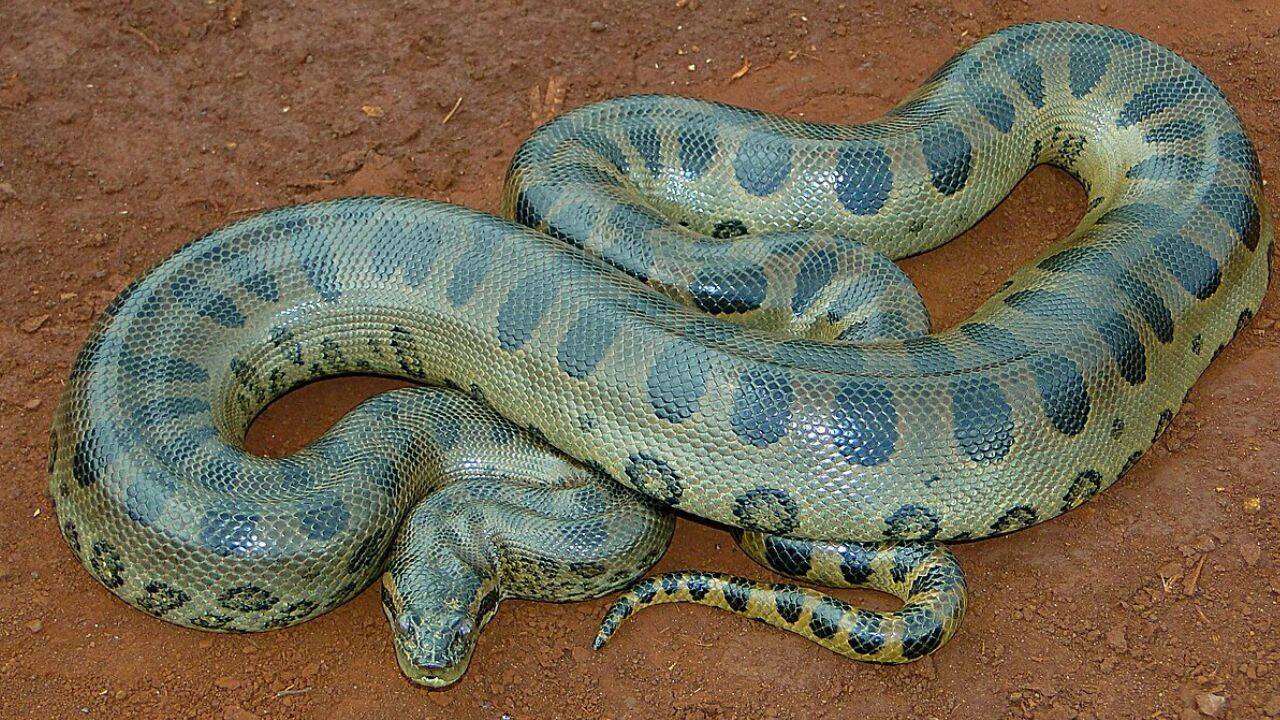
A 100-kg green anaconda can disappear beneath Amazonian vegetation

Read the original at Times of India ↗
Cite

TOI Science Desk. (2026, October 11). A 100-kg green anaconda can disappear beneath Amazonian vegetation. Times of India. https://timesofindia.indiatimes.com/science/wildlife/a-100-kg-green-anaconda-can-almost-vanish-in-the-amazon-scientists-found-giant-snakes-hiding-under-logs-leaf-matter-vegetation-and-riverbanks/articleshow/134791175.cms

Dated when The Aporia collected the article, usually within hours of publication. Check the original for its exact date and byline.

Times of India · collected 2026-10-11 · by TOI Science Desk

Quick Summary

A study published in the Journal of Natural History reveals that 100 kg green anacondas in Peru's Madre de Dios region are extremely difficult to spot due to their ability to hide beneath fallen logs, leaf matter, and submerged vegetation. Researchers made 180 observations of at least 50 individual snakes over a period from 2008 to 2020, noting that radio-tracked anacondas were visible only when basking; otherwise, they remained concealed in various habitats like rivers, oxbow lakes, and aguajales. The study highlights the challenges of detecting these elusive snakes for conservation purposes.
Written by AI on 2026-10-11, from this article's own text only (the story summary below draws on all the coverage).

AI analysis

Story summary

A study published in the Journal of Natural History reveals that green anacondas in Peru's Madre de Dios region can be extremely difficult to spot due to their ability to blend into the dense Amazonian vegetation. Researchers tracked 50 individual snakes and found that only 17.7% of radio-tracked locations involved snakes visible without disturbance, primarily when basking. The anacondas used fallen logs, leaf matter, submerged vegetation, fallen palm trunks, or riverbanks for concealment. Four adults were fitted with radio transmitters to track their movements across various water bodies and wetlands. This study highlights the challenges in assessing the population trends of these elusive snakes due to their secretive nature.

Written for “Anaconda Camouflage Abilities” on 2026-11-04, grounded in this article and the 0 other(s) covering the same event.

Story

📰 Anaconda Camouflage Abilities
Science · 1 article(s) covering the same event.

Compared with similar articles

Nothing to compare against. No article is close enough to this one for the pipeline to have linked or judged the pair.
How this article was measured signals, leaning charts, publisher record, byline, topics and claims

Signals How these are calculated →

Claims extracted
31
sentences that state something as happening or true
Uncertain
6%
2 of 31 hedged ("reportedly", "may", "according to")
Leaning
not political
takes no side on a contested political question
Publisher signals
59/100
Times of India's corrections and hedging, across everything collected from it. Not a measure of accuracy.
Outlets on this story
1
Science
Same framing elsewhere
1
articles that frame the event the way this one does
Analyzed 2026-10-11 · how these are computed

How this is being covered How these are calculated →

Article leaning vs. publisher reliability
Source leaning vs. consistency

Publisher

Times of India · 4052 article(s) · 4 correction(s) detected
Running correction rate · 4 correction(s)

Who wrote this

TOI Science Desk
308 article(s) here · 1 carrying a prediction
🔮 Researchers are continuing to examine daily measurements to determine whether temperatures will climb further.
🔮 According to Reuters reporting by Will Dunham, a new study published in the journal Spixiana documents more than 90 Bangka slow lorises identified between 2015 and 2025.
🔮 “Normally, my job is quite monotonous, so I wanted to create something that would entertain people, turning my ‘serious’ job into something fun,” he said in a Guinness World Records news release.
🔮 The subsequent collision between the two galaxy clusters may then have compressed the cloud or re-energised its particles, causing it to shine more brightly in radio wavelengths once again.
🔮 The mathematicians at the University of California, Davis, argue that the answer may already lie within Einstein’s own equations and that an invisible form of energy may not be needed at all.
🔮 The work will be carried out by the West Tennessee River Basin Authority, which is preparing a plan to restore the river and the land around it.
🔮 Cornell University scientists have developed genetically engineered tomato plants that turn red-purple when nitrogen becomes scarce, giving farmers a visible warning that crops may need fertiliser.
🔮 By studying these crystals and other mineral grains, scientists could establish the meteorite's age and identify later changes caused by water.
🔮 Centuries later, bronze objects found in Scandinavia would preserve chemical signatures consistent with the metals produced at this Spanish site, offering evidence of connections that may have crossed much of Europe.
🔮 Deposited impurities and staining may also have contributed, while low temperatures and humidity could cause the fabric to crack.
Wire or desk byline, not an individual reporter.
Also by TOI Science Desk
Nothing else under this byline is closely related to this article, so these are simply their most recent.
All 308 articles by TOI Science Desk →

Topics

Peru the Journal of Natural History

Subjects

Peru GPE · 3× the Journal of Natural History ORG · 1×

Narrative

When they were not basking, radio-tracked anacondas were almost always partly or completely concealed by fallen logs, leaf matter, submerged vegetation, fallen palm trunks, or riverbanks.
framing: assertive · carried by 1 article(s) · first seen 2026-10-11
🔮 Only 17.7% of the radiolocations of tagged individuals involved snakes that researchers could observe without disturbance.
2026-10-11 · Times of India
A 100-kg green anaconda can disappear beneath Amazonian vegetation · assertive framing

Claims (31 extracted, 2 hedged)

Green anacondas can remain difficult to spot in the western Amazon, even when they weigh 100 kg. asserted
they → remain → kg
A study of the snakes in Peru found that they were usually visible only when basking. asserted
they → find → Peru
When they were not basking, radio-tracked anacondas were almost always partly or completely concealed by fallen logs, leaf matter, submerged vegetation, fallen palm trunks, or riverbanks. asserted
anacondas → bask → logs
Researchers recorded 180 observations of at least 50 individual Green Anacondas in the Madre de Dios region. asserted
Researchers → record → region
Four adults were fitted with radio transmitters and tracked across rivers, streams, oxbow lakes, and aguajales. asserted
adults → fit → rivers
According to the study published in the Journal of Natural History titled ' Habitat use of cryptic Green Anaconda (Eunectes murinus) in the western Amazon', the snakes’ hidden behaviour can affect efforts to detect them and assess their presence in Amazon rainforest habitats and population trends. uncertain
behaviour → accord → habitats
What habitats did Green Anacondas use for shelter and basking The study found that Green Anacondas were difficult to detect unless they were basking. asserted
they → use → shelter
Only 17.7% of the radiolocations of tagged individuals involved snakes that researchers could observe without disturbance. uncertain
researchers → tag → disturbance
At other locations, the researchers had to disturb the snakes to determine their location. asserted
researchers → have → location
When not basking, the radio-tracked anacondas were almost always partly or entirely concealed. asserted
anacondas → bask → ?
They hid among fallen logs, detritus and submerged vegetation, inside fallen Mauritia flexuosa trunks, beneath undercut banks and, on one occasion, inside a burrow of unknown origin. asserted
They → hide → origin
On rivers, log jams appeared to be the preferred basking habitat. asserted
jams → appear → rivers
In oxbow lakes and aguajales, the snakes basked on fixed or free-floating vegetation mats, while well-vegetated embankments were also used as basking sites by snakes. asserted
embankments → bask → snakes
PC: Wikipedia Green Anacondas were recorded across diverse habitats in Peru asserted
Anacondas → record → Peru
Researchers combined opportunistic sampling, intensive surveys, and radio telemetry tracking in the Madre de Dios region of Peru. asserted
Researchers → combine → Peru
Sampling took place between 2008 and 2020 across primary and disturbed lowland humid tropical rainforests. asserted
Sampling → take → rainforests
The team recorded Green Anacondas in rivers, oxbow lakes, aguajales and streams, with observations also made in rural communities, urbanised zones, river ports and agricultural areas. asserted
observations → record → communities
Most records came from protected areas or privately protected conservation and ecotourism concessions. asserted
records → come → areas
Among the 166 records with forest type information, 91.6% were associated with floodplain forests, while 8.4% were recorded on terra firma. asserted
% → associate → firma
Green Anacondas used logs and floating vegetation for basking In rivers, Green Anacondas initially observed by researchers were basking or had recently been killed by people. asserted
Anacondas → use → people
Basking snakes were found on top of or intertwined in log piles and under overhanging vegetation. asserted
snakes → bask → vegetation
In aguajales and associated lakes, individuals were commonly found basking on floating vegetation mats or heavily vegetated embankments. asserted
individuals → associate → mats
Some were seen facing the shoreline with their heads barely breaking the water surface. asserted
heads → see → surface
In surrounding flooded aguajales, snakes moved through dense vegetation while remaining partly in water or completely within decaying vegetation. asserted
snakes → surround → vegetation
In permanent oxbow lakes, all nine initially found anacondas were basking on floating grass mat vegetation. asserted
anacondas → find → vegetation
Temporary oxbow lakes were used when filled with water, with a tracked snake hidden by emergent vegetation, detritus, or logs nearby. asserted
snake → use → vegetation
How did researchers locate hidden Green Anacondas One radio-tracked female weighed 100 kg and measured 486 cm in snout-to-vent length, with a 77 cm tail. asserted
female → locate → tail
During June and July, she was located in the closed-canopy aguajal in 63.3% of records, while other records placed her on grass mats in open water. asserted
records → locate → water
Another tracked male was nearly invisible in shallow pools beneath dense vegetation in temporarily flooded forest. asserted
male → track → forest
On one occasion, researchers found him buried by leaf matter and shallow water, with only his nares exposed. asserted
nares → find → matter
In streams, the same male was only partially visible in 8.3% of records and was otherwise hidden in log jams, embedded trees, or stream banks. asserted
male → hide → jams

💬Give feedback
🕘History 🎫Support