Photo via Reason

New York's Controversial Anti-Swastika Law Turns Prosecutors Into Speech Police

Read the original at Reason ↗
Cite

O'Rourke, M. (2026, October 11). New York's Controversial Anti-Swastika Law Turns Prosecutors Into Speech Police. Reason. https://reason.com/2026/10/11/new-york-tries-to-legislate-away-hate/

Dated when The Aporia collected the article, usually within hours of publication. Check the original for its exact date and byline.

Reason · collected 2026-10-11 · by Meagan O'Rourke

Quick Summary

New York's controversial anti-swastika law allows prosecutors to charge individuals with aggravated harassment based on intent to harass a specific religious group by etching or painting a swastika on property. In recent cases, protesters who vandalized Teslas with swastikas and an NYU student who raised a flag with swastikas were investigated as hate crimes. First Amendment advocates argue that such provisions are unconstitutional because they target specific ideological expressions rather than criminal acts.
Written by AI on 2026-10-11, from this article's own text only (the story summary below draws on all the coverage).

AI analysis

Story summary

In New York, a controversial law has drawn criticism for classifying certain acts of vandalism as hate crimes, raising concerns about free speech. Under this legislation, drawing or painting a swastika on public or private property can be considered aggravated harassment in the first degree if intended to harass someone based on their religious identity. This provision requires prosecutors to make subjective judgments about intent and has sparked debate following incidents last year where anti-Elon Musk protesters vandalized Teslas with swastikas, leading The New York Times to report that such acts were meant to attack Musk rather than promote Nazi ideology. Critics argue this law turns prosecutors into de facto speech police by criminalizing symbolic expression that may not be genuinely hateful or threatening to any specific individual or group.

Written for “Anti Swastika Law” on 2026-11-05, grounded in this article and the 0 other(s) covering the same event.

Story

📰 Anti Swastika Law
Politics · 1 article(s) covering the same event.

Compared with similar articles

Nothing to compare against. No article is close enough to this one for the pipeline to have linked or judged the pair.
How this article was measured signals, leaning charts, publisher record, byline, topics and claims

Signals How these are calculated →

Claims extracted
22
sentences that state something as happening or true
Uncertain
14%
3 of 22 hedged ("reportedly", "may", "according to")
Leaning
withheld
no quote in the article backed the model's score
Publisher signals
67/100
Reason's corrections and hedging, across everything collected from it. Not a measure of accuracy.
Outlets on this story
1
Politics
Same framing elsewhere
1
articles that frame the event the way this one does
Analyzed 2026-10-11 · how these are computed

How this is being covered How these are calculated →

Article leaning vs. publisher reliability
Source leaning vs. consistency

Publisher

Reason · 1144 article(s) · 4 correction(s) detected
Running correction rate · 4 correction(s)

Who wrote this

Meagan O'Rourke
12 article(s) here · 1 carrying a prediction
🔮 Another New York City Mayor Zohran Mamdani campaign promise could be closer to becoming reality.
🔮 Based on the film's trailer alone, one might believe that The Devils is truly about demonic forces possessing a convent of nuns.
🔮 The piece argued that the discourse surrounding the alleged rape at Cornell University infantilizes women by omitting the possibility that in a post–sexual revolution, liberal society, women may make regrettable but consensual choices.
🔮 The Democratic Socialists of America (DSA) candidates running for the House of Representatives and endorsed by NYC Mayor Zohran Mamdani are all but guaranteed to win their general elections this November, but that does not mean the midterm drama is over in New York.
🔮 The term hate crime may evoke an image of an antisemite punching a Jewish person or a racist pushing an Asian woman onto the subway tracks.
🔮 Given elected officials' passion for saving this AMC, one would think the movie theater is being replaced by a drone factory or a slaughterhouse.
🔮 New York City Mayor Zohran Mamdani, who has faced accusations of antisemitism since his mayoral campaign, was never going to please everyone with his plan to "combat antisemitism."
🔮 In a May post on X, OpenAI CEO Sam Altman mused that "in the long term, we imagine everyone having a personal robot doing anything they need."
🔮 On Tuesday, the House passed the AM Radio for Every Vehicle Act, which would require the Transportation Department to issue a rule "requiring AM radio capabilities to be standard in all new passenger vehicles."
🔮 The Board of Regents will vote on the final changes in June.
Also by Meagan O'Rourke
Nothing else under this byline is closely related to this article, so these are simply their most recent.
All 12 articles by Meagan O'Rourke →

Topics

Asian Brooklyn Israel Jewish New York

Subjects

New York GPE · 5× Israel GPE · 2× Asian NORP · 1× Brooklyn GPE · 1× Jewish NORP · 1× Manhattan GPE · 1× Musk PERSON · 1× Teslas ORG · 1× The New York Times ORG · 1× anti–Elon Musk PERSON · 1×

Narrative

Last year, when anti–Elon Musk protesters in Brooklyn and Manhattan vandalized Teslas with swastikas, The New York Times reported that it was "clear that the vandals…were using the swastikas to attack" Musk, Tesla's CEO and a top Trump administration adviser—"not to broadcast their own support of Nazism.
framing: assertive · carried by 1 article(s) · first seen 2026-10-11
🔮 The term hate crime may evoke an image of an antisemite punching a Jewish person or a racist pushing an Asian woman onto the subway tracks.

Claims (22 extracted, 3 hedged)

The term hate crime may evoke an image of an antisemite punching a Jewish person or a racist pushing an Asian woman onto the subway tracks. uncertain
antisemite → evoke → tracks
But in New York, hate crimes can include more than illegal acts committed against individuals. asserted
crimes → include → individuals
They can also include crimes committed against property. asserted
They → include → property
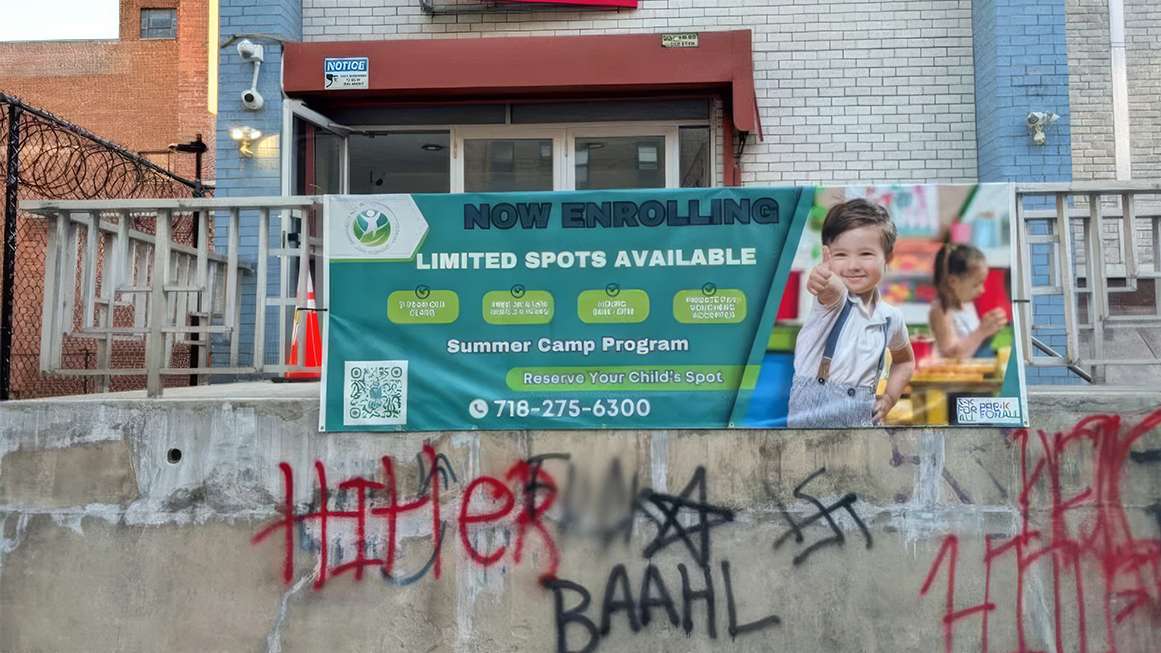
In New York, certain forms of graffiti can count as aggravated harassment in the first degree under a controversial law that raises free speech concerns. asserted
that → count → concerns
"A person is guilty of aggravated harassment in the first degree" when he or she commits a variety of offenses "with intent to harass, annoy, threaten or alarm another person" based on that individual's identity, including "race, color, national origin, ancestry, gender," or religion. asserted
he → commit → race
The law applies to anyone who "etches, draws, paints," or otherwise places a swastika on public or private property. asserted
who → apply → property
The aggravated harassment provision requires law enforcement to make subjective determinations. asserted
provision → require → determinations
The state must decide whether an act, such as drawing a swastika, is intended to harass a specific religious group. asserted
act → decide → group
Last year, when anti–Elon Musk protesters in Brooklyn and Manhattan vandalized Teslas with swastikas, The New York Times reported that it was "clear that the vandals…were using the swastikas to attack" Musk, Tesla's CEO and a top Trump administration adviser—"not to broadcast their own support of Nazism. asserted
vandals → vandalize → Nazism
Yet the cases were investigated as hate crimes. asserted
cases → investigate → crimes
In June, a student who raised a flag with two swastikas and a Star of David above a New York University building was charged with aggravated harassment and other hate crimes. asserted
who → raise → harassment
The student admitted to the conduct but pleaded not guilty to the hate crime and aggravated harassment charges. asserted
student → admit → charges
According to the New York Post, he raised the flag because "he was upset with how NYU handled political issues around Israel." uncertain
NYU → accord → Israel
Is it a crime to criticize your school's handling of political issues regarding Israel? asserted
it → criticize → Israel
In New York, law enforcement makes that call. asserted
enforcement → make → call
First Amendment advocates have previously scrutinized the provision. asserted
advocates → scrutinize → provision
In 2018, a SUNY Purchase student was charged with aggravated harassment after he put up posters around a campus building featuring Adolf Hitler, a swastika, and a quote from Mel Brooks' movie The Producers. asserted
he → charge → movie
Hoover Institution fellow Eugene Volokh called the prosecution "unconstitutional," noting thatthe government"can't target for special criminal punishment racist signs. asserted
Volokh → call → signs
Under R.A.V. v. City of St. Paul (1992), he noted, "a ban on racist 'fighting words' is unconstitutional even if a ban on 'fighting words' generally is constitutional, so a ban on unauthorized signs that display a swastika is unconstitutional even if a ban on unauthorized signs generally is not." asserted
ban → note → signs
In other words, the government cannot forbid a specific expression of speech. asserted
government → forbid → speech
While New York residents and leaders may rightfully condemn swastikas, the state should prosecute criminals for illegal actions, not motivating ideologies. uncertain
state → condemn → ideologies
This article originally appeared in print under the headline "New York Tries To Legislate Away 'Hate'." asserted
York → appear → Hate

💬Give feedback · no sign-in needed

No sign-in needed for now. Your note is sent without a name, so it cannot be answered.

🕘History 🎫Support