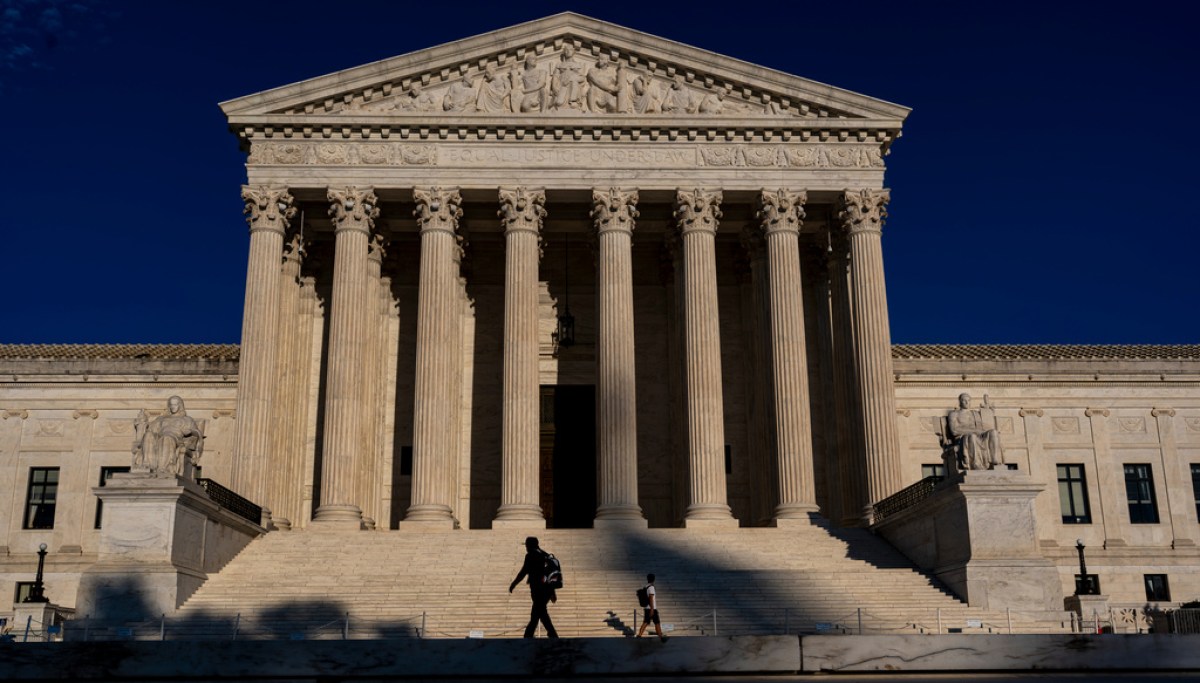
Photo via Washington Examiner

It’s time conservatives admit it: Citizens United broke states’ rights

Read the original at Washington Examiner ↗
Cite

Thompson, J. E. (2026, October 11). It’s time conservatives admit it: Citizens United broke states’ rights. Washington Examiner. https://www.washingtonexaminer.com/op-eds/4754151/citizens-united-states-rights-federalism-reform/

Dated when The Aporia collected the article, usually within hours of publication. Check the original for its exact date and byline.

Washington Examiner · collected 2026-10-11 · by Jason E. Thompson

Quick Summary

Conservatives have long argued for limiting federal power over states, but they've supported expansive rulings on money in politics, such as Citizens United v. Federal Election Commission in 2010, which allowed corporations and unions to spend unlimited amounts on political advertising independently of candidates or parties. The article discusses how this support conflicts with their broader principles of federalism and state sovereignty, questioning whether these court decisions have curtailed states' ability to regulate campaign financing effectively. It highlights a recent case in Montana where the state attempted to uphold its century-old restrictions on corporate political spending but was overruled by the U.S. Supreme Court, illustrating the conflict between state-specific needs and federal constitutional limits.
Written by AI on 2026-10-11, from this article's own text only (the story summary below draws on all the coverage).

AI analysis

Story summary

Conservatives have long argued against federal overreach in various policy areas but make an exception when it comes to regulating political spending, citing the 2010 Citizens United v. Federal Election Commission decision. This landmark Supreme Court ruling stated that the government cannot restrict independent political spending by corporations or unions, though it upheld disclosure and disclaimer requirements. The case has become contentious as critics argue it undermines states' rights to regulate money in politics despite conservatives supporting state sovereignty on other issues like education or healthcare. Some suggest Congress might consider strengthening disclosure rules to identify fund sources for election-related spending and prevent circumvention tactics through pass-through entities, reflecting a potential shift towards more regulation of political finance.

Written for “Citizens United Controversy” on 2026-11-04, grounded in this article and the 0 other(s) covering the same event.

Story

📰 Citizens United Controversy
Politics · 1 article(s) covering the same event.

Compared with similar articles

Nothing to compare against. No article is close enough to this one for the pipeline to have linked or judged the pair.
How this article was measured signals, leaning charts, publisher record, byline, topics and claims

Signals How these are calculated →

Claims extracted
87
sentences that state something as happening or true
Uncertain
7%
6 of 87 hedged ("reportedly", "may", "according to")
Leaning
withheld
no quote in the article backed the model's score
Publisher signals
69/100
Washington Examiner's corrections and hedging, across everything collected from it. Not a measure of accuracy.
Outlets on this story
1
Politics
Same framing elsewhere
1
articles that frame the event the way this one does
Analyzed 2026-10-11 · how these are computed

How this is being covered How these are calculated →

Article leaning vs. publisher reliability
Source leaning vs. consistency

Publisher

Washington Examiner · 4136 article(s) · 8 correction(s) detected
Running correction rate · 8 correction(s)

Who wrote this

Jason E. Thompson
2 article(s) here · 1 carrying a prediction
🔮 Congress could consider strengthening disclosure rules to identify the sources of substantial funds used for election-related spending, along with anti-circumvention rules designed to prevent disclosure requirements from being defeated through pass-through entities.
Also by Jason E. Thompson
Have Americans forgotten how to argue?
2026-09-18 · Washington Examiner
Nothing else under this byline is closely related to this article, so these are simply their most recent.

Topics

Citizens United Conservatives Montana Utah Washington

Subjects

Montana GPE · 7× Utah GPE · 5× Citizens United ORG · 4× Washington GPE · 3× Congress ORG · 2× Conservatives NORP · 2× Federal Election Commission ORG · 2× The Supreme Court ORG · 2× National Republican Senatorial Committee ORG · 1× Supreme Court ORG · 1×

Narrative

But I’m not comfortable assuming that every effort to give voters more information about political money, or every argument for returning some authority to Congress and the states, is hostile to free speech.
framing: assertive · carried by 1 article(s) · first seen 2026-10-11
🔮 Congress could consider strengthening disclosure rules to identify the sources of substantial funds used for election-related spending, along with anti-circumvention rules designed to prevent disclosure requirements from being defeated through pass-through entities.
2026-10-11 · Washington Examiner
It’s time conservatives admit it: Citizens United broke states’ rights · assertive framing

Claims (87 extracted, 6 hedged)

Conservatives have spent years claiming Washington holds too much power. asserted
Washington → spend → power
We make this argument about education, land use, energy, healthcare, elections, you name it. asserted
you → make → it
A republic of 50 sovereign states wasn’t built for every political disagreement to end with Washington’s decision. asserted
disagreement → build → decision
Utah should run itself like Utah. asserted
Utah → run → Utah
Montana should get to be Montana. asserted
Montana → get → ?
Federal courts have spent decades building constitutional barriers that limit what Congress and state legislatures can do about political spending. asserted
Congress → spend → spending
The 2010 decision gets cited all the time — sometimes inaccurately. asserted
decision → cite → ?
Citizens United didn’t eliminate campaign finance law. asserted
United → eliminate → law
It didn’t say corporations can donate unlimited sums directly to candidates. asserted
corporations → say → candidates
The Supreme Court still upheld disclosure and disclaimer requirements. asserted
Court → uphold → requirements
What it said was: The government can’t block independent political spending just because the speaker is a corporation or a union. asserted
speaker → say → spending
Conservatives have a serious argument for that result. asserted
Conservatives → have → result
Political speech costs money. asserted
speech → cost → money
Running digital ads, launching a website, sending mailers, commissioning polls, organizing volunteers — all of it costs money. asserted
all → run → money
If the government decides how much you can spend promoting political ideas, it gets real power over speech. asserted
it → decide → speech
And who makes those decisions? asserted
who → make → decisions
Anyone wary of government should think twice before handing the people in office more power to regulate attempts to vote them out. asserted
Anyone → think → them
The 10th Amendment doesn’t give states the right to ignore the First Amendment. asserted
Amendment → give → Amendment
Federalism does not give states authority to violate constitutional rights. asserted
Federalism → give → rights
The tricky part is finding the line. asserted
part → find → line
Have campaign finance rulings set the First Amendment boundary so wide that Congress and the states have little room to govern elections within their own jurisdictions? asserted
Congress → set → jurisdictions
The Supreme Court weighed in again this year in National Republican Senatorial Committee v. Federal Election Commission. asserted
Court → weigh → Committee
The justices struck down federal limits on political parties’ coordinated expenditures with their candidates. asserted
justices → strike → candidates
It wasn’t Citizens United all over again, but the central question remained: How much room do legislatures have to regulate political money? asserted
legislatures → remain → money
Over a hundred years ago, the Copper Kings there weren’t just fighting for mines — they fought for control of mines, newspapers, judges, legislators, and political offices. asserted
they → fight → mines
The corruption spurred the state’s 1912 Corrupt Practices Act, which restricted corporate political spending. asserted
which → spur → spending
After Citizens United, Montana wanted to keep its law. asserted
Montana → want → law
Montana’s Supreme Court concluded that the state’s history justified it. asserted
history → conclude → it
But the U.S. Supreme Court disagreed and quickly reversed Montana’s high court in American Tradition Partnership v. Bullock. asserted
Court → disagree → Bullock
Montana faced a problem. asserted
Montana → face → problem
Montanans created a solution. asserted
Montanans → create → solution
Their courts weighed their specific history. asserted
courts → weigh → history
Washington still supplied the answer. asserted
Washington → supply → answer
The Federal Election Commission says independent expenditures for the 2023-24 federal election cycle hit $4.4 billion. asserted
expenditures → say → billion
The Brennan Center for Justice estimates that nonprofit groups and shell companies that did not disclose their donors put more than $1.9 billion into the 2024 federal election cycle. asserted
that → estimate → cycle
I am experiencing it in my own race for the Utah House. asserted
I → experience → House
An outside group can spend big while disclosing its donors. asserted
group → spend → donors
In my race, the money is flowing through groups that don’t reveal where it’s actually coming from. asserted
it → flow → where
I have an obvious interest here. asserted
I → have → interest
Readers are free to discount my complaint accordingly. asserted
Readers → discount → complaint
…and 47 more, not listed.

💬Give feedback · no sign-in needed

No sign-in needed for now. Your note is sent without a name, so it cannot be answered.

🕘History 🎫Support