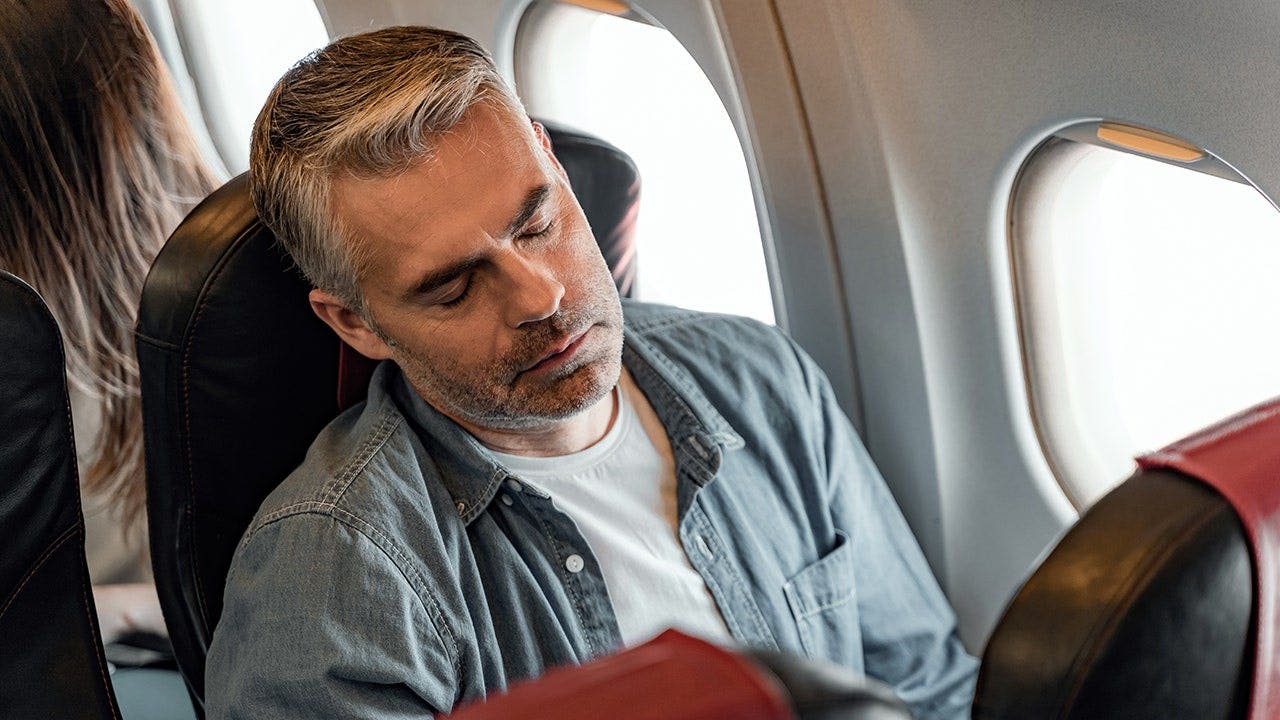
An everyday habit during a long-haul flight could have painful consequences for certain travelers — with a recent case highlighting some serious dangers.
uncertain
case → have → dangers
The dry air inside an airplane cabin, combined with hours spent wearing contact lenses during a long travel day, can leave the lenses with less moisture and eyes feeling increasingly uncomfortable, experts say.
asserted
experts → combine → moisture
In some cases, irritation or damage to the surface of the eye can lead to more serious problems.
asserted
irritation → lead → problems
One traveler recently described temporarily losing vision in one eye after returning home from an international trip, according to the New York Post.
uncertain
traveler → describe → Post
The woman said she wore her contact lenses throughout an 11-hour flight home from Greece and for roughly 24 hours of travel — while also wearing them while swimming and showering, according to the outlet.
uncertain
she → say → outlet
Within days of returning home, the traveler developed pain and sensitivity to light before her vision significantly worsened.
asserted
vision → return → light
Doctors eventually diagnosed her with a corneal ulcer.
asserted
Doctors → diagnose → ulcer
She underwent weeks of treatment with eye drops and was left with a small scar that continues to blur part of her vision, the outlet reported.
asserted
outlet → undergo → vision
The traveler developed pain and sensitivity to light before her vision significantly worsened.
Valerie Kattouf, an Illinois-based optometrist, told Fox News Digital that wearing contacts during extended flights can increase dry-eye symptoms and lead to irritation, a "sandy, gritty feeling" and intermittent blurred vision.
asserted
wearing → develop → irritation
"The cabin air has significantly reduced humidity that can actually remove moisture from the contact lens and create more dryness," Kattouf said.
asserted
Kattouf → reduce → dryness
Falling asleep during a long or overnight flight can add another concern for travelers wearing contacts.
asserted
Falling → fall → contacts
"People often sleep on long flights, which contributes to more risk with contact [lens] wear," Kattouf said.
asserted
Kattouf → sleep → wear
As a contact lens loses moisture, it may move less freely on the eye, Kattouf said.
uncertain
Kattouf → lose → eye
Removing a particularly dry lens could potentially disturb the epithelium, the outer layer of the cornea, causing significant irritation and potentially affecting vision.
uncertain
Removing → remove → vision
For travelers preparing for a long flight, Kattouf recommends bringing an up-to-date pair of prescription glasses.
asserted
Kattouf → prepare → glasses
"Wearing glasses during a long flight is more ideal for eye health and long-term comfortable contact [lens] wear," she said.
asserted
she → wear → health
As another option, travelers who begin their journey wearing contacts can switch to glasses before sleeping or partway through the flight, Kattouf suggested.
uncertain
Kattouf → begin → flight
For those who keep their contacts in, single-use vials of artificial tears may also help provide additional lubrication during the flight, according to Kattouf.
uncertain
vials → keep → Kattouf
The issue has also led to discussion among travelers online, with some saying they routinely opt for glasses during longer trips.
asserted
they → lead → trips
"I [always] wear glasses on long flights," one Reddit user wrote.
asserted
user → wear → flights
"My eyes just feel so much more comfortable by the time I land, and I don't have to worry about taking them out at the airport or on the plane, or sleeping on the plane."
asserted
I → feel → plane
Another traveler said that leaving contacts in place during a flight left the person regretting the decision.
asserted
leaving → say → decision
"My eyes were so dry at the end, even with eyedrops," the person wrote.
asserted
person → write → eyedrops
 The Aporia