Photo via Times of India

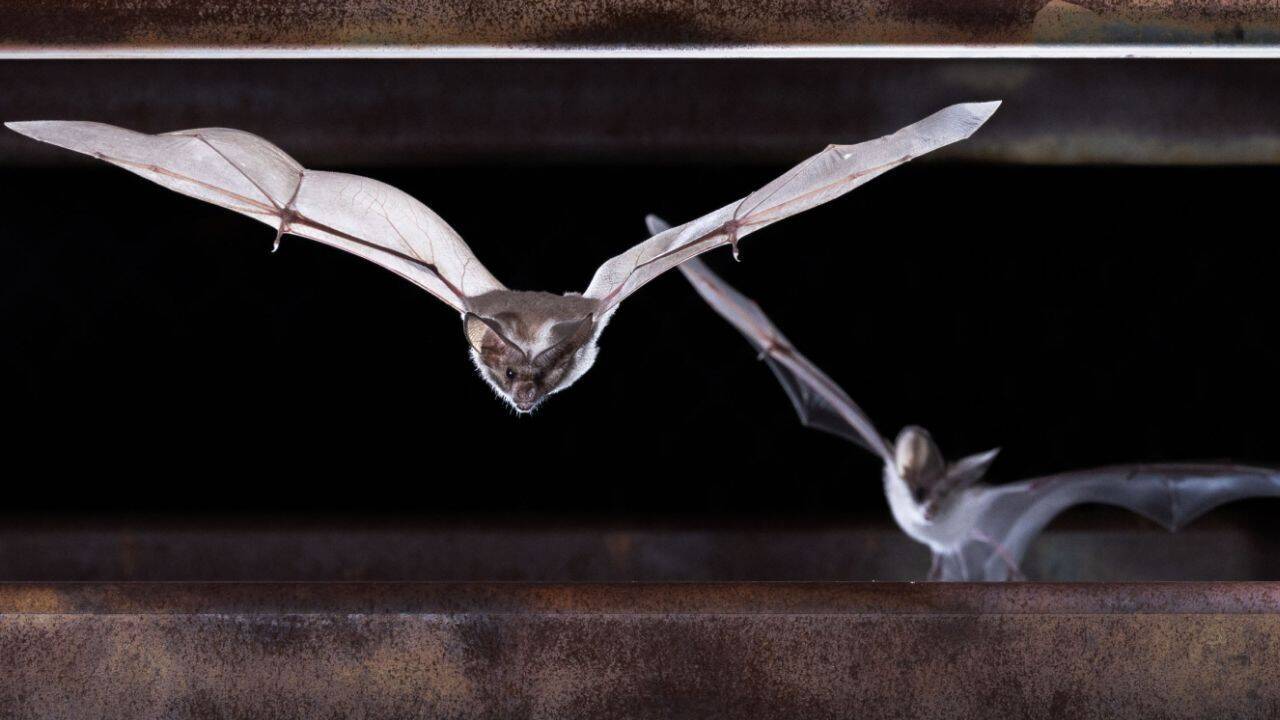
Hundreds of thousands of abandoned US mines now shelter bats and snakes after mining booms

Read the original at Times of India ↗
Cite

TOI World Desk. (2026, October 12). Hundreds of thousands of abandoned US mines now shelter bats and snakes after mining booms. Times of India. https://timesofindia.indiatimes.com/world/us/hundreds-of-thousands-of-abandoned-us-mines-were-left-behind-after-mining-booms-bats-snakes-and-bobcats-now-use-them-as-refuges/articleshow/134867645.cms

Dated when The Aporia collected the article, usually within hours of publication. Check the original for its exact date and byline.

Times of India · collected 2026-10-12 · by TOI World Desk

Quick Summary

Across the United States, former mining sites are transforming into vital habitats for bats and other wildlife due to their natural shelter qualities. Bat Conservation International (BCI) collaborates with federal agencies to protect these underground environments while ensuring they remain inaccessible to humans through the installation of "bat gates." The BCI's Abandoned Mine Lands program identifies potential hazards, conducts biological surveys, and implements safety measures to preserve both human safety and wildlife habitats. Species like Townsend’s big-eared bats, California leaf-nosed bats, and pallid bats frequently use these abandoned mines for shelter.
Written by AI on 2026-10-12, from this article's own text only (the story summary below draws on all the coverage).

AI analysis

Story summary

Across the United States, former gold, coal, and other mines have become crucial shelters for bats and various wildlife species due to their tunnels, shafts, and crevices offering refuge where natural caves are scarce. Bat Conservation International (BCI) has documented numerous animals using these sites, including foxes, bobcats, weasels, ringtails, coatis, javelinas, snakes, frogs, owls, swallows, and insects. However, the unstable structures and environmental hazards of abandoned mines pose dangers to humans and could harm ecosystems if not properly managed.

BCI collaborates with state and federal agencies to secure these habitats for wildlife while ensuring human safety through measures such as installing “bat gates” that prevent unauthorized entry by people but allow bats and other animals free passage. Additionally, a national inventory is being developed to map abandoned mine features, identify potential hazards, and prioritize sites requiring safety interventions. This initiative aims to balance the need for protecting wildlife habitats with mitigating risks to human communities.

Written for “Abandoned Mines Wildlife Habitat” on 2026-10-30, grounded in this article and the 0 other(s) covering the same event.

Story

📰 Abandoned Mines Wildlife Habitat
Environment · 1 article(s) covering the same event.

Compared with similar articles

Nothing to compare against. No article is close enough to this one for the pipeline to have linked or judged the pair.
How this article was measured signals, leaning charts, publisher record, byline, topics and claims

Signals How these are calculated →

Claims extracted
36
sentences that state something as happening or true
Uncertain
11%
4 of 36 hedged ("reportedly", "may", "according to")
Leaning
not political
takes no side on a contested political question
Publisher signals
59/100
Times of India's corrections and hedging, across everything collected from it. Not a measure of accuracy.
Outlets on this story
1
Environment
Same framing elsewhere
1
articles that frame the event the way this one does
Analyzed 2026-10-12 · how these are computed

How this is being covered How these are calculated →

Article leaning vs. publisher reliability
Source leaning vs. consistency

Publisher

Times of India · 3707 article(s) · 2 correction(s) detected
Running correction rate · 2 correction(s)

Who wrote this

TOI World Desk
1240 article(s) here · 1 carrying a prediction
🔮 People from outside Indiana University had also contacted Brian Williams, a professor at the Kelley School of Business who helped develop the programme, expressing interest in taking the course.
🔮 Thus, a decade ago, he began collecting Halloween costumes for kids who couldn't afford them.
🔮 He expressed concern that the confrontation could cost him his job.
🔮 They said the celebrity's "suicide risk" could be lowered through treatment.
🔮 In one recording, Higby explained that they wanted to find out whether people could vote without showing identification.
🔮 According to Farm Journal, Pottinger discovered Sabanto, a company developing technology to convert conventional tractors into autonomous machines, after his lender suggested further equipment savings could improve the farm’s cash flow.
🔮 Under the West Virginia law that was struck down, a person could be sued and face set damages for showing or publishing covered personal information online.
🔮 An Australian man searching desperately for his missing dog offered a A$10,000 reward for its safe return, hoping someone would help bring his beloved pet home.
🔮 For weeks, it may have been hiding in plain sight, tucked beneath rows of corn in an otherwise unremarkable Minnesota field.
🔮 Over the next few years, the owners put the land up for sale but could not find a buyer.
Wire or desk byline, not an individual reporter.
Also by TOI World Desk
Nothing else under this byline is closely related to this article, so these are simply their most recent.
All 1240 articles by TOI World Desk →

Topics

BCI Bat Conservation International California United States the United States

Subjects

BCI ORG · 3× Bat Conservation International ORG · 3× the United States GPE · 3× California GPE · 1× Josh Hydeman/ PERSON · 1× USGS ORG · 1× USMIN ORG · 1× United States GPE · 1× the US Geological Survey ORG · 1×

Narrative

Bat Conservation International (BCI) has recorded many other animals using these sites, including foxes, bobcats, weasels, ringtails, coati, javelina, snakes, frogs, owls, swallows, and insects.
framing: assertive · carried by 1 article(s) · first seen 2026-10-12
🔮 Bats that usually roost in caves and cavities may rely on these underground sites in areas where natural caves are limited.

Claims (36 extracted, 4 hedged)

Across the United States, former gold, coal and other mines are becoming important refuges for bats and other wildlife. asserted
gold → become → bats
Their tunnels, shafts and crevices can provide shelter in areas where natural caves are limited. asserted
caves → provide → areas
However, unstable structures and environmental hazards make these sites dangerous for people and potentially harmful to ecosystems. asserted
sites → make → ecosystems
Bat Conservation International (BCI) works with state and federal agencies to protect these underground habitats while reducing the risks they pose. asserted
they → work → risks
Keeping people out of dangerous mines while allowing wildlife to use them remains a key challenge. asserted
wildlife → keep → them
Special barriers called ‘bat gates’ address this problem by blocking human access while allowing bats to fly in and out freely. asserted
bats → call → access
At the same time, a national inventory is being developed to map abandoned mine features, identify potential hazards and help authorities prioritise sites that need safety measures. asserted
that → develop → measures
How conservationists are protecting bats in abandoned US mines asserted
conservationists → protect → mines
According to Bat Conservation International, its Abandoned Mine Lands (AML) programme works with state and federal agencies to protect people and wildlife at abandoned mining sites. uncertain
programme → accord → sites
The programme supports the safeguarding process, from identifying mines and conducting biological and cultural surveys to meet environmental requirements and building closures. asserted
programme → support → requirements
Before entering a mine, the team first assesses whether it is safe to proceed. asserted
it → enter → mine
Specialists then search for bats and signs of their presence, such as guano and piles of insect wings left behind after feeding. asserted
Specialists → search → feeding
They also record historical and archaeological evidence found at the site. asserted
They → record → site
These surveys help identify valuable underground habitats while preserving evidence of the mines’ past. asserted
surveys → help → past
The surveys help authorities reduce risks to people while protecting the underground habitats that bats and other wildlife rely on for shelter. asserted
bats → help → shelter
Abandoned mines are providing shelter for bats and other wildlife Dark, enclosed spaces make former mines suitable habitats for a wide range of wildlife. asserted
mines → abandon → wildlife
Bats that usually roost in caves and cavities may rely on these underground sites in areas where natural caves are limited. uncertain
caves → roost → areas
Mines can offer additional roosting options and reduce competition for shelter. asserted
Mines → offer → shelter
Their isolation can provide wildlife with shelter in places where human disturbance is less frequent. asserted
disturbance → provide → places
This is especially important during hibernation, when human activity can make it harder for bats to survive the winter. asserted
bats → make → winter
Bat Conservation International (BCI) has recorded many other animals using these sites, including foxes, bobcats, weasels, ringtails, coati, javelina, snakes, frogs, owls, swallows, and insects. asserted
International → record → foxes
Some mines also support distinct underground microbial communities. asserted
mines → support → communities
Which bat species live in abandoned mines across the United States Several cave-roosting bat species use abandoned mines, particularly in the western United States. asserted
species → live → States
BCI identifies Townsend’s big-eared bats, California leaf-nosed bats, pallid bats, big brown bats, and various Myotis species among those frequently found in mines. asserted
BCI → identify → mines
Nectar bats are also occasionally spotted, especially in the southwest. asserted
bats → spot → southwest
The distribution of abandoned mines reflects the country's mining history. asserted
distribution → abandon → history
Coal mines occur throughout the United States but are most common in the east. asserted
mines → occur → east
The west has a particularly high concentration of abandoned mines, with estimates ranging upwards of 500,000. asserted
estimates → have → 500,000
Many date to the 1800s and early 1900s, although some mining activities are much older. asserted
activities → date → 1800s
Balancing public safety with wildlife conservation Abandoned mines can contain unstable rocks, poisonous gases, and dangerous drops. asserted
mines → balance → rocks
Open shafts and tunnels may also collapse, while some sites create environmental hazards such as acid mine drainage, which can contaminate soil and water. uncertain
which → collapse → soil
According to the US Geological Survey (USGS), its USMIN project is building a national inventory of abandoned hardrock mine features using information from federal, state and tribal agencies. uncertain
project → accord → agencies
The inventory aims to improve risk assessment, support land management decisions and help prioritise hazard mitigation and ecosystem restoration. asserted
inventory → aim → mitigation
At individual sites, bat gates provide one way to address safety concerns without removing wildlife habitat. asserted
gates → provide → habitat
Their horizontal bars allow bats to fly through while preventing people from entering. asserted
bats → allow → people
The approach helps authorities balance public safety with the protection of underground ecosystems. asserted
authorities → help → ecosystems

💬Give feedback
🕘History 🎫Support