Photo via The Independent

Why are Yemen’s Houthis attacking Saudi Arabia and how are they breaching its air defences?

Read the original at The Independent ↗
Cite

Reynolds, J. C. (2026, October 12). Why are Yemen’s Houthis attacking Saudi Arabia and how are they breaching its air defences? The Independent. https://www.independent.co.uk/news/world/middle-east/saudi-houthis-war-trump-iran-us-b3065061.html

Dated when The Aporia collected the article, usually within hours of publication. Check the original for its exact date and byline.

The Independent · collected 2026-10-12 · by James C. Reynolds

Quick Summary

Yemen’s Houthi rebels have intensified their attacks on Saudi Arabia, including a recent deadly assault on King Khalid International Airport that killed at least 13 people. By seizing control of the Bab el-Mandeb strait in the Red Sea, the Houthis aim to pressure Saudi oil exports and align with Iran's regional ambitions. This development forces Gulf states to reconsider their stance on dealing with Iran or tolerating the current situation, highlighting the complex dynamics between regional powers and global trade security.
Written by AI on 2026-10-12, from this article's own text only (the story summary below draws on all the coverage).

AI analysis

Story summary

As of October 16, 2026, UN Security Council strongly condemned "escalatory" attacks by Houthi rebels on Saudi Arabia, including deadly strikes on Riyadh's King Khalid International Airport. The airport has faced at least 20 attacks since early October; the latest attack on October 10 killed 17 people and injured 333 others, according to Turki al-Maliki, spokesperson for the Saudi-led coalition in Yemen. Additionally, an earlier attack on Abha International Airport on October 6-7 killed two women (one Moroccan and one Algerian) and wounded 28 others. The increased Houthi aggression has raised concerns over threats to global shipping routes and critical Middle East infrastructure, with Tim Lenderking, former U.S. special envoy for Yemen, warning that the Houthis are now operating more independently of Iran's control, posing a significant danger beyond just regional conflicts.

Written for “Trump Condemns Houthi Actions” on 2026-11-04, grounded in this article and the 128 other(s) covering the same event.

Story

📰 Trump Condemns Houthi Actions
Politics · 129 article(s) covering the same event. Compare every outlet's account →

Compared with similar articles

This article reads leans strongly right and hedges 8% of its claims. Each row says how that neighbour differs.
Al Jazeera
Hedges 1 of 9 claims Outlet record 60/100
“The articles describe different events; one reports on Yemeni government forces' actions against Houthis, while the other focuses on Houthi offensive and attacks on Saudi Arabia.”
The Guardian
Hedges 3 of 34 claims Outlet record 66/100
“Article A discusses the Houthis' warning about using Saudi airports after an attack on Riyadh, while Article B covers a broader offensive and seizing of strategic locations by the Houthis.”
Toronto Star
Hedges 3 of 31 claims Outlet record 64/100
New York Post
Hedges 5 of 12 claims Outlet record 66/100
“The articles discuss different aspects of Houthi activities - one describes a military offensive and attacks on Saudi Arabia, while the other discusses weapon development with Chinese parts.”
Daily Mail
Hedges 6 of 64 claims Outlet record 69/100
“The articles describe different aspects of Houthi activities; one reports on a military offensive and attacks, while the other discusses weapon production.”
Al Jazeera
Hedges 0 of 16 claims Outlet record 60/100
“Article A reports on a specific attack at Riyadh International Airport that killed at least 12 people, while Article B discusses broader military offensives and attacks by Houthis but does not specifically mention the same event described in Article A.”
Dawn
Hedges 5 of 30 claims Outlet record 72/100
“The articles describe different stages of conflict between Houthis and Saudi Arabia with a time gap and distinct events (offensive by Houthis vs. retaliatory strikes by Saudis).”
Al Jazeera
Hedges 3 of 15 claims Outlet record 60/100
“The articles describe different actions by opposing sides in a conflict.”
The Guardian
⚖️ Leans right further left than this Hedges 4 of 39 claims Outlet record 66/100
“Article A describes a specific attack on Riyadh airport that killed 12 people and wounded over 300, while Article B discusses broader Houthi offensive activities and missile/drone attacks but does not explicitly mention the same Riyadh airport incident.”
Euronews
Hedges 2 of 30 claims Outlet record 60/100
“While both articles discuss Houthi attacks in Saudi Arabia, Article A is more focused on the broader offensive and control over strategic straits, whereas Article B specifically mentions an attack on Riyadh’s international airport that killed 14 people.”
How this article was measured signals, leaning charts, publisher record, byline, topics and claims

Signals How these are calculated →

Claims extracted
53
sentences that state something as happening or true
Uncertain
8%
4 of 53 hedged ("reportedly", "may", "according to")
Leaning
Leans strongly right
of the writing, not the subject · beta estimate
Publisher signals
59/100
The Independent's corrections and hedging, across everything collected from it. Not a measure of accuracy.
Outlets on this story
129
Politics
Same framing elsewhere
1
articles that frame the event the way this one does
Analyzed 2026-10-12 · how these are computed

How this is being covered How these are calculated →

Article leaning vs. publisher reliability
Source leaning vs. consistency

Publisher

The Independent · 3647 article(s) · 10 correction(s) detected
Running correction rate · 10 correction(s)

Who wrote this

James C. Reynolds
65 article(s) here · 1 carrying a prediction
🔮 Donald Trump has said that the US will no longer provide funding to Israel at the end of this year after striking a new deal with Benjamin Netanyahu.
🔮 But the student representatives, who have been protesting classroom conditions since September 17, said the offers were not enough and they would keep protesting.
🔮 Some 20,000 protesters were expected to march in the Italian capital on Friday morning, as part of wider demonstrations scheduled in more than 50 cities over war and the rising cost of living.
🔮 The eldest son of former far-right president Jair Bolsonaro had been expected to win the election but ended up losing in a shock result to leftist incumbent Luiz Inacio Lula da Silva.
🔮 His Russian counterpart, Yana Lantratova, added that space would also be provided for their pets.
🔮 Flydubai Flight 1073 from Dubai to Tel Aviv plunged 16,000ft in 30 seconds before the attacker was overwhelmed and two other pilots who were on board were able to safely land in Saudi Arabia. Capt Machchhar, still wearing a sling and with stitches in the back of his head, told UAE president Sheikh Mohammed during yesterday’s ceremony that it would still be another two months before he heals fully.
🔮 I love, I loved, and I will always love being your mum.”
🔮 Eisenkot’s bloc was projected to win 48 seats in the election with almost all votes counted, while Netanyahu is on course for 53.
🔮 “It will not be enough to extinguish the anger.”
🔮 US president Donald Trump has said he will “take a look” at helping Benjamin Netanyahu after the prime minister claimed the Israel election was “stolen”.
Also by James C. Reynolds
Nothing else under this byline is closely related to this article, so these are simply their most recent.
All 65 articles by James C. Reynolds →

Topics

Houthi Houthis Independent Iran Yemen

Subjects

Iran GPE · 8× Houthis NORP · 7× Houthi NORP · 6× Yemen GPE · 6× Saudi NORP · 4× Riyadh GPE · 3× Saudi Arabia GPE · 3× Hormuz GPE · 2× Independent ORG · 2× Saudi Arabia’s GPE · 1×

Narrative

Firing multi-million-dollar interceptors to destroy cheap, assembled drones rapidly drains Saudi and allied missile stockpiles during sustained multi-wave attacks. What has changed on the ground? Houthi commanders announced a broad offensive targeting critical energy infrastructure and urban centres across southern and central Saudi Arabia as their ground forces pushed west. The capture of key coastal hubs like al-Mokha and strategic points on Perim Island effectively divides the Bab el-Mandeb strait.
framing: assertive · carried by 1 article(s) · first seen 2026-10-12
🔮 Gulf states – already deliberating over Iran’s ambitions to control shipping through Hormuz – will have to choose between tolerating the status quo and engaging with Tehran to protect trade across the region, they say.

Claims (53 extracted, 4 hedged)

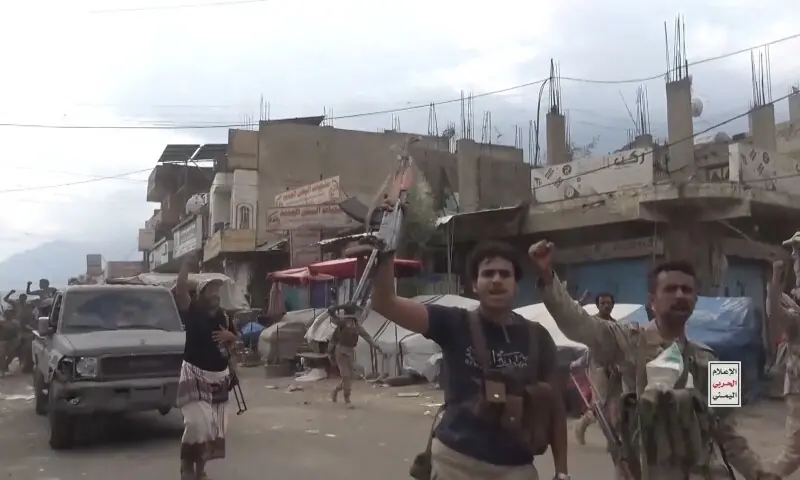
Yemen’s Houthi rebels have launched a lightning offensive across the country's Red Sea coast, seizing control of the strategic Bab el-Mandeb strait and threatening to expand the frozen US-Israeli conflict with Iran to the east. asserted
rebels → launch → east
The land grab has been backed by a deadly campaign of deep strikes inside the kingdom. asserted
grab → back → kingdom
Over the weekend, Houthi missile and drone attacks struck King Khalid International Airport in Riyadh, killing at least 13 people — marking the deadliest attack in the kingdom in more than a decade. asserted
attacks → strike → decade
By securing a position overlooking the narrow Bab el-Mandeb strait, the Iran-aligned group has opened a second pressure point, further squeezing Saudi Arabia’s oil exports already diverted from the Strait of Hormuz. asserted
group → secure → Hormuz
Analysts say the main aim of the offensive is to secure control over the Red Sea as Iran maintains its grip over Hormuz, allowing them to raise oil prices and making it harder for Washington to resolve the crisis. asserted
Washington → say → crisis
Gulf states – already deliberating over Iran’s ambitions to control shipping through Hormuz – will have to choose between tolerating the status quo and engaging with Tehran to protect trade across the region, they say. asserted
they → deliberate → region
Already fighting a deeply unpopular war to the east, Donald Trump has avoided any commitment to bailing ally Saudi Arabia out with strikes against the Houthis, though experts say US intervention may be needed to break the Houthi grip on the Red Sea. uncertain
intervention → fight → Sea
The Independent looks at how the Houthis are advancing, and what this means for regional stability. asserted
this → look → stability
Why are the Houthis fighting with Saudi Arabia? asserted
Houthis → fight → Arabia
The Houthi rebels are a military, political and religious movement that rules over most of northwest Yemen and has disrupted global trade and energy markets with strikes on cargo ships and tankers in the Red Sea. asserted
that → rule → Sea
The group exploited the chaos of the 2011 Arab Spring to oust the internationally recognised government from Sanaa in 2014, beginning the devastating Yemeni civil war. asserted
group → exploit → war
Fearing the Iran-aligned group could seize control of the Bab el-Mandeb strait, and therefore threaten Riyadh’s ability to export oil, Saudi Arabia intervened a year later, supported by the US, UK, France and others. uncertain
Arabia → fear → US
A UN-brokered ceasefire followed in 2022 and since then, both sides have refrained from major escalatory actions. asserted
sides → broker → actions
Iran has not directly intervened in Yemen, but the fighting is considered part of a wider Iran-Saudi proxy conflict. asserted
fighting → intervene → conflict
It was during the Israeli war in Gaza, from 2023 to 2025, that the Houthis started attacking ships in the Red Sea in support of Iran-aligned Hamas. asserted
Houthis → start → Hamas
The UK and US hit Houthi targets in 2025 as part of a campaign to restore freedom of navigation. asserted
UK → hit → navigation
Crucially, Trump last year struck a deal to end the US strikes on the Houthis in exchange for a halt to strikes on Red Sea shipping. asserted
Trump → strike → shipping
Taking on the group now would likely expose US forces in the region to missile attacks from Yemen. asserted
Taking → take → Yemen
Clashes with Saudi Arabia restarted in July as both sides enforced new blockades on maritime traffic. asserted
sides → restart → traffic
The Houthis struck Saudi oil tankers accused of violating their blockade. asserted
Houthis → strike → blockade
What are they doing now? asserted
they → do → What
Despite years of conflict – and with some 14 per cent of Yemen’s population displaced – the Houthis last week oversaw an astonishing push east to the coast, granting them much greater control over traffic through the Red Sea. The escalation has since expanded into a direct campaign against Saudi territory. asserted
escalation → displace → territory
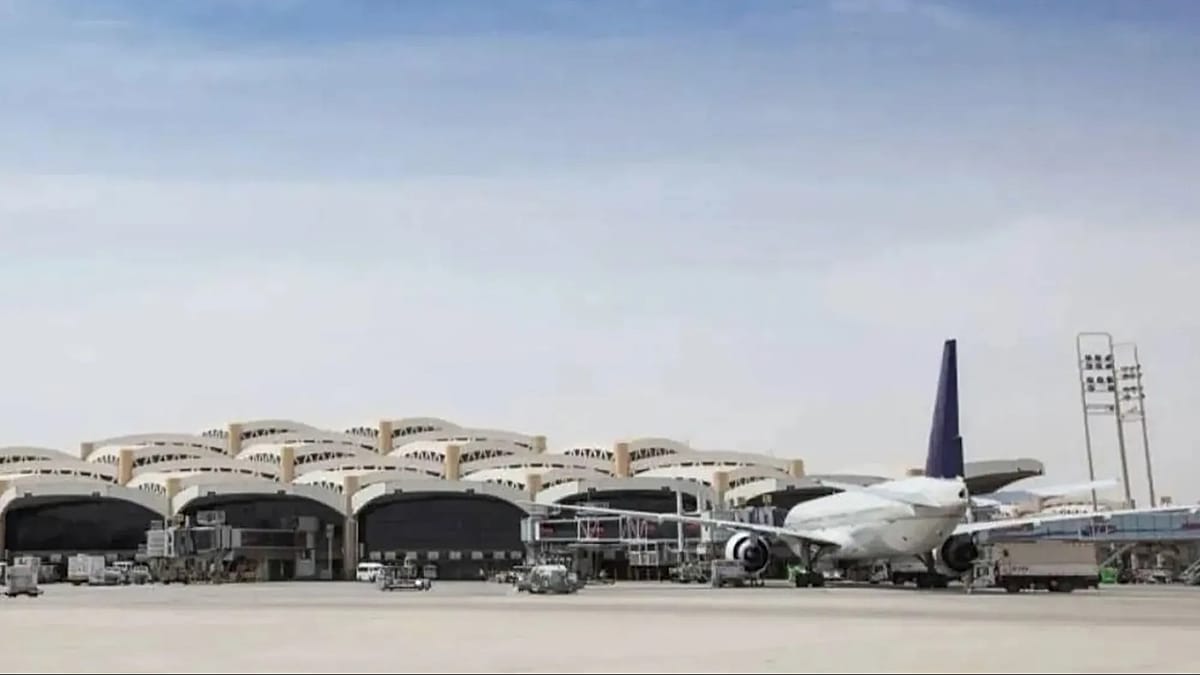
Over the weekend, a barrage of Houthi missile and drone strikes hit King Khalid International Airport in Riyadh, killing at least 13 people — including a US citizen — and injuring more than 300. asserted
barrage → hit → 300
Additional strikes targeting Saudi energy infrastructure and municipal facilities have forced temporary airport closures and heightened regional security alerts. Edmund Fitton-Brown, a former UK ambassador to Yemen, told The Independent that after months of attacks at sea, the Houthis “think the moment has come to call the Saudi bluff”. asserted
moment → target → bluff
“They think the Saudis have lost the stomach for the fight. asserted
Saudis → think → fight
They think that they showed themselves to be weak and frightened in the face of the Iranians,” said Mr Fitton-Brown, a senior fellow at Foundation for Defense of Democracies. asserted
Brown → think → Democracies
“And the Houthis think that this is the moment where they can effectively raise their demands and get the Saudis to concede even more advantageous terms than they were previously willing to do.” With Iran controlling the strait on one side of the Arabian peninsula, and the allied Houthis controlling the other, the wider war has handed more regional influence in the region to Tehran, with Gulf countries now forced to accept they may have to engage with Iran and give up their faith in Washington as a guarantor of security. The war presents the US with a dilemma, too: intervene and spend huge resources on a second front in the deeply unpopular war with Iran, or watch on and undermine the relationship with another ally in the region. uncertain
war → think → region
Sources told CNN that the US has offered intelligence and targeting support to the Saudis in lieu of military support. asserted
US → tell → support
How are the Houthis breaching Saudi’s air defences? asserted
Houthis → breach → defences
While Saudi Arabia operates advanced air defence networks — including US-supplied Patriot and THAAD missile batteries — Houthi attacks continue to slip through. asserted
attacks → operate → batteries
This is because the Houthis rely on a combination of staggered salvoes and mixed arsenals to overwhelm radar capabilities. asserted
Houthis → rely → capabilities
By launching slow-moving suicide drones first, followed by low-altitude cruise missiles and high-speed ballistic missiles only minutes later, the Houthis force defensive systems to engage multiple distinct threats arriving at the exact same moment. asserted
Houthis → launch → moment
Low-flying drones often bypass long-range radar designed primarily to track high-altitude targets. asserted
drones → fly → targets
At the same time, the vast geographical footprint of the kingdom — covering major airports, military bases, and oil fields across millions of square kilometres — makes complete coverage nearly impossible. asserted
coverage → cover → kilometres
The tactic also imposes a severe cost asymmetry on defenders. asserted
tactic → impose → defenders
Firing multi-million-dollar interceptors to destroy cheap, assembled drones rapidly drains Saudi and allied missile stockpiles during sustained multi-wave attacks. What has changed on the ground? Houthi commanders announced a broad offensive targeting critical energy infrastructure and urban centres across southern and central Saudi Arabia as their ground forces pushed west. The capture of key coastal hubs like al-Mokha and strategic points on Perim Island effectively divides the Bab el-Mandeb strait. asserted
capture → fire → strait
Middle East analyst Fawaz Gerges described the seizure of key positions along the waterway as a structural shift in regional dynamics. asserted
Gerges → describe → dynamics
“It changes the balance of power and gives them far greater geopolitical and geoeconomic leverage over Saudi Arabia, the Gulf, the United States and global trade,” he said. asserted
he → change → Arabia
Concurrently, attacks attributed to regional proxy networks struck Saudi Arabia’s East-West pipeline, severely impacting the primary overland bypass used to transport crude past the blocked Strait of Hormuz. asserted
attacks → attribute → Hormuz
Sources told Reuters that rising economic losses and Washington's initial reluctance to launch direct strikes are convincing several Gulf leaderships that diplomatic outreach to Tehran may be necessary for self-preservation. uncertain
outreach → tell → preservation
…and 13 more, not listed.

💬Give feedback
🕘History 🎫Support