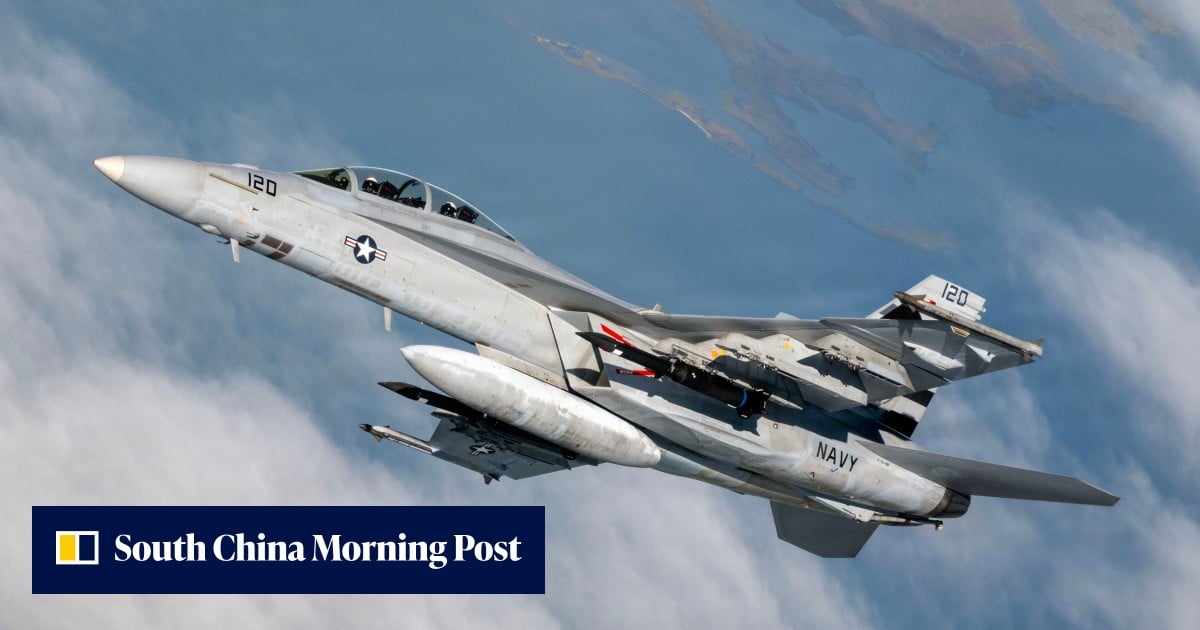
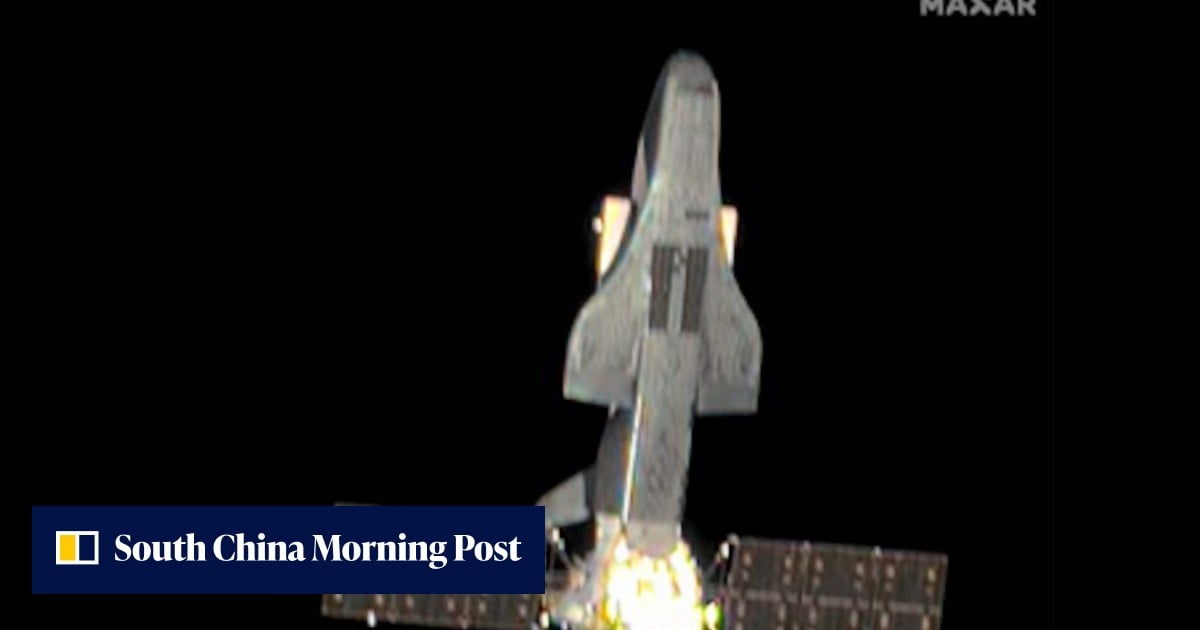
Photo via South China Morning Post

US turns to low-cost Blackbeard hypersonic missiles to overwhelm Chinese defences

Read the original at South China Morning Post ↗
Cite

Dominguez, G. (2026, October 12). US turns to low-cost Blackbeard hypersonic missiles to overwhelm Chinese defences. South China Morning Post. https://www.scmp.com/news/china/military/article/3370598/us-turns-low-cost-blackbeard-hypersonic-missiles-overwhelm-chinese-defences?utm_source=rss_feed

Dated when The Aporia collected the article, usually within hours of publication. Check the original for its exact date and byline.

South China Morning Post · collected 2026-10-12 · by Gabriel Dominguez

Quick Summary

The U.S. military is developing low-cost Blackbeard hypersonic missiles, priced at around $385,000 each, to counter Chinese defenses more effectively and affordably than current options like the LRASM missile from Lockheed Martin, which costs about $3.25 million per unit. In May, the Pentagon requested funding for over 12,000 Blackbeard missiles to be deployed across various branches of the military over five years.
Written by AI on 2026-10-12, from this article's own text only (the story summary below draws on all the coverage).

AI analysis

Story summary

The US Navy is developing a new hypersonic missile called Blackbeard, designed to be more affordable and mass-producible than existing options like Lockheed Martin’s LRASM. In May, the Pentagon requested congressional approval for funding to buy over 12,000 Blackbeard missiles at an estimated cost of US$385,000 each unit, aimed for deployment across various military branches over five years. This move is seen as a strategic response to Chinese defense challenges, with the lower price point allowing the US Navy to field large numbers of these weapons compared to more expensive alternatives like LRASM which costs around US$3.25 million per missile according to the 2024 US Air Force budget figures.


Written for “US Hypersonic Missiles Development” on 2026-11-04, grounded in this article and the 0 other(s) covering the same event.

Story

📰 US Hypersonic Missiles Development
Politics · 1 article(s) covering the same event.

Compared with similar articles

Nothing to compare against. No article is close enough to this one for the pipeline to have linked or judged the pair.
How this article was measured signals, leaning charts, publisher record, byline, topics and claims

Signals How these are calculated →

Claims extracted
3
sentences that state something as happening or true
Uncertain
33%
1 of 3 hedged ("reportedly", "may", "according to")
Leaning
not political
takes no side on a contested political question
Publisher signals
62/100
South China Morning Post's corrections and hedging, across everything collected from it. Not a measure of accuracy.
Outlets on this story
1
Politics
Same framing elsewhere
1
articles that frame the event the way this one does
Analyzed 2026-10-12 · how these are computed

How this is being covered How these are calculated →

Article leaning vs. publisher reliability
Source leaning vs. consistency

Publisher

South China Morning Post · 3696 article(s) · 8 correction(s) detected
Running correction rate · 8 correction(s)

Who wrote this

Gabriel Dominguez
26 article(s) here · 1 carrying a prediction
🔮 US warns China is expanding its space toolkit with spaceplane and energy weapons While Beijing says it opposes space militarisation, US intelligence warns it could deploy orbital weapons by decade’s end A spaceplane is a spacecraft designed to operate in orbit and return to Earth through the atmosphere, much like the US Space Shuttle, although China’s secretive vehicle is believed to be uncrewed and more closely resembles the smaller American X-37B.
🔮 China’s next-generation KJ-3000 radar planes may have quietly entered production Satellite imagery hints at KJ-3000 production, which could boost target detection and tracking in the western Pacific Satellite imagery captured on October 5 by US geospatial intelligence company Vantor
🔮 “We will seriously consider [the possibility] in a concrete and realistic manner,” Takaichi told the Japanese parliament on October 14.
🔮 Both feature conspicuous vertical structures at the stern that naval analysts believe could be used to lower large underwater drones into the water and recover them.
🔮 How a new US Army unit could challenge the PLA’s area-denial strategy in a Taiwan conflict
🔮 Could Pakistan’s Chinese-made weapons help protect Saudi Arabia from Houthi attacks?
🔮 US turns to low-cost Blackbeard hypersonic missiles to overwhelm Chinese defences At US$385,000 per unit, the carrier-launched weapons are being developed with an emphasis on affordability and mass production In May, the Pentagon sought congressional authorisation and funding to buy more than 12,000 Blackbeard missiles for deployment across the armed services over five years.
🔮 How will new longer-range aircraft boost Manila’s South China Sea surveillance?
🔮 At least 10 FK-2000 vehicles – along with an array of other Chinese-made military equipment – could be seen in footage of Turkmenistan’s Independence Day parade in Ashgabat on September 27.
🔮 US Navy launches drone command that could reshape Taiwan war planning The centre aims to integrate air, surface and underwater unmanned platforms into a unified combat-ready force The Robotic and Autonomous Systems Warfighting Development Centre, formally established on September 24 in Virginia, will develop doctrine and tactics for unmanned systems, train sailors to use them, and test whether they can keep operating under realistic conditions.
Also by Gabriel Dominguez
Nothing else under this byline is closely related to this article, so these are simply their most recent.
All 26 articles by Gabriel Dominguez →

Topics

Blackbeard Chinese Lockheed Martin’s Pentagon US Navy

Subjects

Chinese NORP · 1× Lockheed Martin’s ORG · 1× Pentagon ORG · 1× US Air Force ORG · 1× US Navy ORG · 1×

Narrative

In contrast, the cost of Lockheed Martin’s larger Long-Range Anti-Ship Missile (LRASM) is estimated in US Air Force budget figures for the 2024 financial year to be about US$3.25 million.
framing: mixed · carried by 1 article(s) · first seen 2026-10-12
🔮 US turns to low-cost Blackbeard hypersonic missiles to overwhelm Chinese defences At US$385,000 per unit, the carrier-launched weapons are being developed with an emphasis on affordability and mass production In May, the Pentagon sought congressional authorisation and funding to buy more than 12,000 Blackbeard missiles for deployment across the armed services over five years.
2026-10-12 · South China Morning Post
US turns to low-cost Blackbeard hypersonic missiles to overwhelm Chinese defences · mixed framing

Claims (3 extracted, 1 hedged)

US turns to low-cost Blackbeard hypersonic missiles to overwhelm Chinese defences At US$385,000 per unit, the carrier-launched weapons are being developed with an emphasis on affordability and mass production In May, the Pentagon sought congressional authorisation and funding to buy more than 12,000 Blackbeard missiles for deployment across the armed services over five years. uncertain
Pentagon → turn → years
US Navy projections put the average gross unit cost at about US$385,000 in the financial years 2028-31. asserted
projections → put → years
In contrast, the cost of Lockheed Martin’s larger Long-Range Anti-Ship Missile (LRASM) is estimated in US Air Force budget figures for the 2024 financial year to be about US$3.25 million. asserted
cost → estimate → year
💬Give feedback
🕘History 🎫Support