Photo via The Sydney Morning Herald

Why Sydney’s metro line won’t be getting longer trains

Read the original at The Sydney Morning Herald ↗
Cite

O'Sullivan, M. (2026, October 12). Why Sydney’s metro line won’t be getting longer trains. The Sydney Morning Herald. https://www.smh.com.au/national/nsw/why-sydney-s-metro-line-won-t-be-getting-longer-trains-20261013-p60tem.html?ref=rss&utm_medium=rss&utm_source=rss_feed

Dated when The Aporia collected the article, usually within hours of publication. Check the original for its exact date and byline.

The Sydney Morning Herald · collected 2026-10-12 · by Matt O'Sullivan

Quick Summary

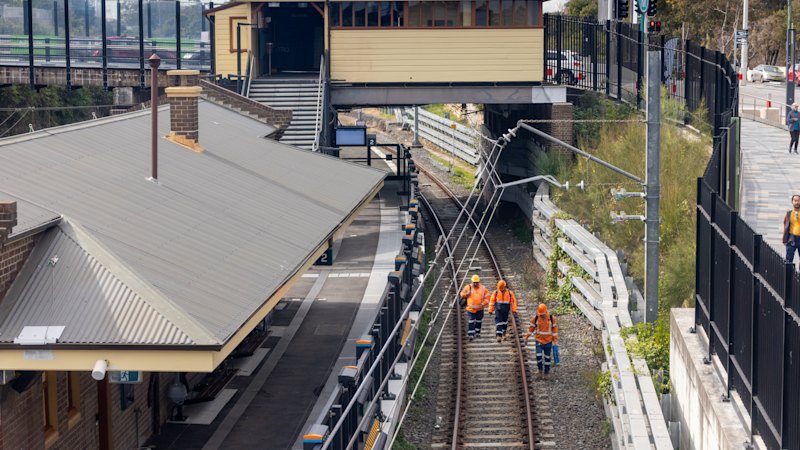
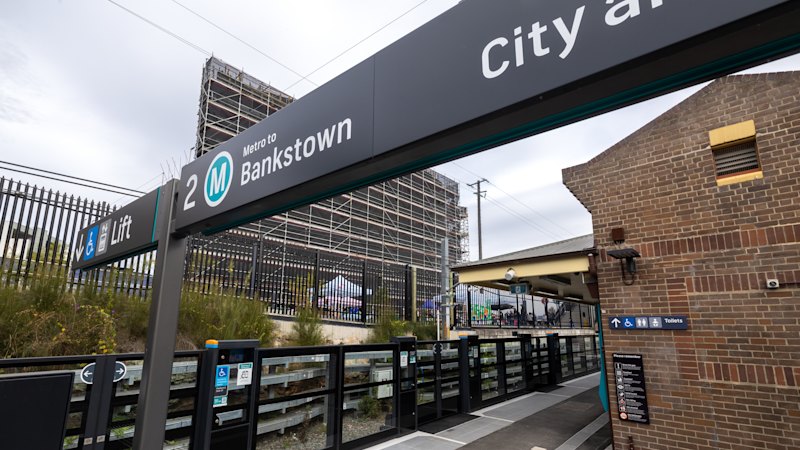
Sydney’s M1 metro line, part of a $30 billion project converting the T3 heavy rail line, faces limitations due to shorter platforms at five stations between Sydenham and Bankstown. These platforms are 163 to 169 meters long, unable to accommodate eight-carriage trains which would span 176 meters but sufficient for six-carriage trains currently in use. Instead of extending the platforms, Sydney Metro plans to increase train frequency from every four minutes to every three minutes during peak times by purchasing additional trains of the same length, prioritizing customer preference for more frequent services over longer wait times between trains.
Written by AI on 2026-10-12, from this article's own text only (the story summary below draws on all the coverage).

AI analysis

Story summary

The final section of Sydney’s $30 billion M1 metro line, between Sydenham and Bankstown, will open with shorter platforms that limit train lengths to six-carriage sets. These stations have the shortest platforms at 163 metres (Bankstown) up to 169 metres (Belmore and Lakemba), which cannot accommodate longer eight-carriage trains spanning 176 metres. As a result, increasing passenger capacity will involve buying more six-car train sets rather than extending platforms for larger trains, leading to more frequent services every three minutes during peak hours instead of the current four-minute interval. The project's target opening date in mid-October is uncertain due to pending national rail regulator approval. Sydney Metro’s customer and operations head, Hugh Lawson, noted that buying additional shorter trains would be less disruptive and costly than extending platforms post-opening.

Written for “Sydney Metro Expansion Issues” on 2026-11-04, grounded in this article and the 0 other(s) covering the same event.

Story

📰 Sydney Metro Expansion Issues
Other · 1 article(s) covering the same event.

Compared with similar articles

This article reads unscored and hedges 9% of its claims. Each row says how that neighbour differs.
The Sydney Morning Herald
Hedges 1 of 22 claims Outlet record 61/100
“The articles describe different aspects of the Sydney M1 metro line project; Article A focuses on train length restrictions due to platform limitations, while Article B discusses the imminent opening date for the final stage.”
How this article was measured signals, leaning charts, publisher record, byline, topics and claims

Signals How these are calculated →

Claims extracted
23
sentences that state something as happening or true
Uncertain
9%
2 of 23 hedged ("reportedly", "may", "according to")
Leaning
not political
takes no side on a contested political question
Publisher signals
61/100
The Sydney Morning Herald's corrections and hedging, across everything collected from it. Not a measure of accuracy.
Outlets on this story
1
Other
Same framing elsewhere
1
articles that frame the event the way this one does
Analyzed 2026-10-12 · how these are computed

How this is being covered How these are calculated →

Article leaning vs. publisher reliability
Source leaning vs. consistency

Publisher

The Sydney Morning Herald · 6052 article(s) · 15 correction(s) detected
Running correction rate · 15 correction(s)

Who wrote this

Matt O'Sullivan
16 article(s) here · 1 carrying a prediction
🔮 A multibillion-dollar upgrade to one of Australia’s busiest motorways will be completed within weeks, ending almost five years of disruption for residents along the corridor and motorists who have had to navigate repeated changes to lanes during construction.
🔮 Passengers who have been flying in and out of Sydney’s new international airport since it opened a week ago might be forgiven for thinking that it was an inevitability in a fast-growing city.
🔮 About $6.8 billion will be funnelled into removing bottlenecks on the passenger train line from Sydney to the South Coast and electrifying it all the way to Bomaderry as part of a re-election pledge by the Minns Labor government.
🔮 Albanese said that the city had looked to the harbour and the CBD for too long, and the new $6 billion airport would turn that around to where people lived and worked in western Sydney.
🔮 In any case, it wouldn’t have happened if the land was not acquired at that time.”
🔮 In the case of the latter, it will hinge on airlines passing on the prospect of lower airport fees and the extent to which they have to discount fares to put bums on seats.
🔮 A fitout that is under way at Qantas’ highly automated freight facility at the new $6 billion airport at Luddenham comes just days before the terminal opens to passengers on Sunday, when a Jetstar aircraft will take off for the Gold Coast.
🔮 “If you stepped outside my office, you could just look down and see the World Trade Centre,” he recalls.
🔮 The NSW government has ruled out the final stage of Sydney’s M1 metro line opening this weekend but will not reveal a date despite internal documents showing it will occur before November 15, when a new rail timetable is introduced for the double-decker train network.
🔮 Shorter platforms on the final section of Sydney’s $30 billion M1 metro line will restrict the operator to providing more frequent services rather than longer trains as passenger demand grows.
Also by Matt O'Sullivan
Nothing else under this byline is closely related to this article, so these are simply their most recent.
All 16 articles by Matt O'Sullivan →

Topics

Bankstown Belmore Marrickville Sydenham Sydney

Subjects

Bankstown GPE · 3× Lawson PERSON · 3× Sydenham GPE · 3× Belmore GPE · 1× Hugh Lawson PERSON · 1× Lakemba GPE · 1× Marrickville GPE · 1× Sydney GPE · 1× Sydney Metro ORG · 1× Sydney Metro’s ORG · 1×

Narrative

Any proposal to lengthen the platforms after it opens would be more disruptive, costly and take longer than buying extra trains to increase frequency to a service every three minutes during the peak, from every four minutes at present. Sydney Metro customer and operations head Hugh Lawson said the agency would probably first recommend, if required, increased frequency, which would involve buying more trains of the same length as the existing six-carriage sets.
framing: assertive · carried by 1 article(s) · first seen 2026-10-12
🔮 Shorter platforms on the final section of Sydney’s $30 billion M1 metro line will restrict the operator to providing more frequent services rather than longer trains as passenger demand grows.
2026-10-12 · The Sydney Morning Herald
Why Sydney’s metro line won’t be getting longer trains · assertive framing

Claims (23 extracted, 2 hedged)

Shorter platforms on the final section of Sydney’s $30 billion M1 metro line will restrict the operator to providing more frequent services rather than longer trains as passenger demand grows. asserted
demand → restrict → trains
Despite the costly and disruptive project to convert the old T3 heavy rail line, platforms at five refurbished stations along the metro line’s 13-kilometre stretch between Sydenham and Bankstown would need to be extended to fit longer eight-carriage trains, which span 176 metres. asserted
which → convert → metres
The six-carriage trains running on the existing M1 line, and which will carry passengers along the final stage when it finally opens, are about 132 metres long. asserted
it → run → stage
The final stage is set to miss Sydney Metro’s internal target date of “mid-October” for its opening. asserted
stage → set → opening
The first service hinges on approval by the national rail regulator, which will then allow the government to reveal a date. asserted
government → hinge → date
Any proposal to lengthen the platforms after it opens would be more disruptive, costly and take longer than buying extra trains to increase frequency to a service every three minutes during the peak, from every four minutes at present. Sydney Metro customer and operations head Hugh Lawson said the agency would probably first recommend, if required, increased frequency, which would involve buying more trains of the same length as the existing six-carriage sets. asserted
which → lengthen → sets
“Frequency is the easier and quicker pathway to provide more capacity, and also we know from our customers that frequency is something they really value,” he said. asserted
he → provide → customers
Lawson, who was project director for the M1 line’s city and south-west sections for six years, said longer eight-carriage trains would involve significantly more work to extend platforms at stations along the south-west corridor. asserted
trains → say → corridor
While some stations could be more easily extended, others would require train tracks to be moved before constructing platform extensions. uncertain
tracks → extend → extensions
“It’s certainly quite an involved piece of work to go to longer trains. asserted
It → ’ → trains
It’s much more straightforward to implement more trains because all the infrastructure is already configured for trains of that length. asserted
infrastructure → ’ → length
It’s just about running them more frequently,” Lawson said. asserted
Lawson → ’ → them
“If you wanted to go to longer trains in the future, then there would be work needed, and it varies from platform to platform and station to station. asserted
it → want → station
Apart from lengthening platforms at stations in the south-west, Lawson said glass panels at underground stations on the M1’s city-section between Chatswood and Sydenham could have to be replaced with screen doors while a major change to the signalling system would be needed to accommodate eight-carriage trains. uncertain
change → lengthen → trains
“They obviously are heavier [and] brake differently. asserted
They → brake → ?
They need to stop in slightly different locations, dependent on whether the extended bit of the platform is at the front or back of the train,” he said. asserted
he → need → train
“It’s all achievable, but it’s certainly quite an involved piece of work to go to longer trains. asserted
it → ’ → trains
In 2018, the then Coalition government decided to retain existing curved platforms on the line for the metro conversion. asserted
government → decide → conversion
Straightening them would have required some stations, tracks, bridges and roads to be shifted, and would have proven costly. asserted
stations → straighten → them
When the south-west section opens, trains will be able to carry about 18,000 passengers an hour in each direction between Bankstown and Sydenham during peak periods. asserted
trains → open → periods
An increased frequency to a train every three minutes would provide capacity for about 23,000 passengers an hour in each direction. asserted
frequency → increase → direction
In contrast, the T3 heavy rail line carried about 12,000 people an hour before it was permanently closed in 2024 to be converted to metro train standards. asserted
it → carry → standards
Asked in September whether the purchase of extra trains was under serious consideration, Transport Minister John Graham said the government was thinking about “long-term decisions including new rolling stock”, but it would depend on patronage once the south-west section was bedded in. asserted
section → ask → patronage

💬Give feedback
🕘History 🎫Support