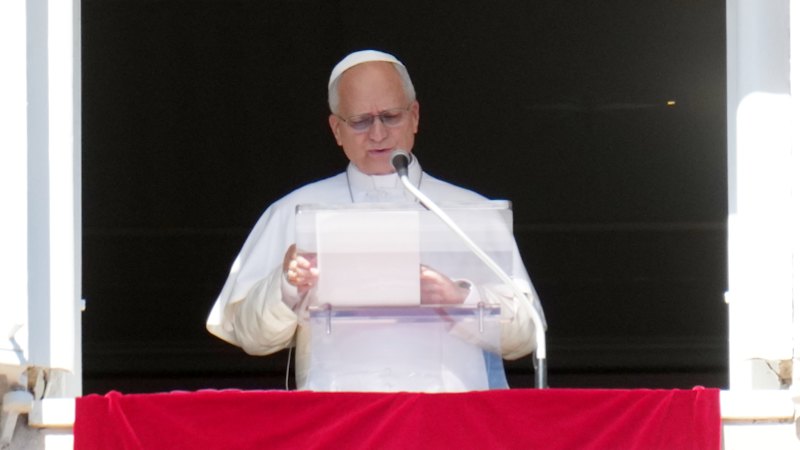
Photo via The Independent

What is a lung nodule? Pope Leo undergoes surgery after cancer diagnosis

Read the original at The Independent ↗
Cite

What is a lung nodule? Pope Leo undergoes surgery after cancer diagnosis. (2026, October 13). The Independent. https://www.independent.co.uk/news/world/europe/pope-leo-lung-nodule-cancer-surgery-b3066222.html

Dated from the outlet's own feed. Check the original for its byline.

The Independent · collected 2026-10-13 · by Eddie

Quick Summary

Pope Leo will undergo surgery to remove a lung nodule detected during a routine check-up. The 71-year-old pope described the growth as "well contained" and spotted early. A lung nodule is a small growth within the lungs, typically no larger than 3 centimeters in diameter, often discovered incidentally through chest imaging like X-rays or CT scans. While most nodules are benign, approximately 3.7 to 5.5% may indicate early-stage cancer, making it crucial for doctors to assess risk factors such as nodule size, density, patient age, smoking history, and family medical background to determine necessary treatment.
Written by AI on 2026-10-13, from this article's own text only (the story summary below draws on all the coverage).

AI analysis

Story summary

Pope Leo XIV, aged 71, underwent surgery on October 13 at Rome’s Gemelli hospital to remove a malignant nodule from his lung. The procedure went smoothly, confirming he had adenocarcinoma, the most common type of lung cancer. Despite this health scare, doctors have given him the green light to proceed with his previously planned trip to Uruguay, Argentina, and Peru from November 6-17. Pope Leo made the announcement during a Sunday prayer service on October 11, stating that he is in good health and looking forward to the trip "with great joy and enthusiasm." The Vatican press office confirmed on October 26 that no medical contraindications exist for his travel plans, which involve visits to ten cities across three countries. Leo has expressed gratitude for worldwide support during his recovery and remains committed to resuming his full schedule while adhering to medical recommendations. His trip will include stops in Montevideo, Buenos Aires, Lima, Chiclayo, Cuzco, and Pucallpa among others.

Written for “Pope Leo Recovering From Lung Cancer Surgery” on 2026-11-06, grounded in this article and the 115 other(s) covering the same event.

Story

📰 Pope Leo Recovering From Lung Cancer Surgery
World · 116 article(s) covering the same event. Compare every outlet's account →

Compared with similar articles

This article reads unscored and hedges 15% of its claims. Each row says how that neighbour differs.
NPR
Hedges 2 of 14 claims Outlet record 60/100
CBS News
Hedges 0 of 3 claims Outlet record 69/100
NBC News
Hedges 7 of 18 claims Outlet record 72/100
The Independent
Hedges 1 of 8 claims Outlet record 59/100
“The first article announces Pope Leo's upcoming surgery to remove a lung nodule found in an early stage, while the second article reports on the diagnosis and confirms he has undergone surgery but does not provide details of it being the same specific occurrence as initially announced.”
Times of India
Hedges 1 of 17 claims Outlet record 59/100
The Sydney Morning Herald
Hedges 1 of 18 claims Outlet record 61/100
Washington Examiner
Hedges 2 of 18 claims Outlet record 69/100
The Hindu
Hedges 1 of 14 claims Outlet record 77/100
The Straits Times
Hedges 1 of 13 claims Outlet record 66/100
The Straits Times
Hedges 4 of 20 claims Outlet record 66/100
How this article was measured signals, leaning charts, publisher record, byline, topics and claims

Signals How these are calculated →

Claims extracted
33
sentences that state something as happening or true
Uncertain
15%
5 of 33 hedged ("reportedly", "may", "according to")
Leaning
not political
takes no side on a contested political question
Publisher signals
59/100
The Independent's corrections and hedging, across everything collected from it. Not a measure of accuracy.
Outlets on this story
116
World
Same framing elsewhere
1
articles that frame the event the way this one does
Analyzed 2026-10-13 · how these are computed

How this is being covered How these are calculated →

Article leaning vs. publisher reliability
Source leaning vs. consistency

Publisher

The Independent · 3835 article(s) · 10 correction(s) detected
Running correction rate · 10 correction(s)

Who wrote this

No reporter is named on this article, beyond the feed's “Eddie”.

Topics

Independent Netherlands The Independent the United States

Subjects

Independent ORG · 1× Netherlands GPE · 1× The Independent ORG · 1× the United States GPE · 1×

Narrative

The risk of developing a new lung cancer remained at 3–6% and did not change over time. This is compared to a 0.055% chance of developing lung cancer per year in the general population (55 cases per 100,000 people per year). Lung cancer remains the most deadly form of cancer in Australia, as it is usually detected at a late stage, when treatment is very difficult.
framing: assertive · carried by 1 article(s) · first seen 2026-10-13
🔮 Pope Leo will undergo surgery in the coming days to remove a lung nodule that was detected during a routine check-up.
2026-10-13 · The Independent
What is a lung nodule? Pope Leo undergoes surgery after cancer diagnosis · assertive framing

Claims (33 extracted, 5 hedged)

This article was originally published on October 13, 2026, and is being republished by The Independent after the Pope was diagnosed with lung cancer. asserted
Pope → publish → cancer
Pope Leo will undergo surgery in the coming days to remove a lung nodule that was detected during a routine check-up. asserted
that → undergo → up
The 71-year-old said the growth was “well contained” and spotted early. asserted
growth → say → ?
So what exactly is a lung nodule, and what’s the link with cancer? asserted
link → ’ → cancer
Most are spotted incidentally asserted
Most → spot → ?
Lung nodules are small growths found in the spongy tissue of the lungs. asserted
nodules → find → lungs
They are no more than 3 centimetres in diameter, and can be round or irregularly shaped. asserted
They → shape → diameter
Anything larger is referred to as a mass. asserted
Anything → refer → mass
Lung nodules are usually detected by imaging of the chest, often using an X-ray or a computed tomography (CT) scan. asserted
nodules → detect → ray
While some people undergo screening specifically for lung nodules due to their increased risk of cancer, many nodules are picked up incidentally from unrelated scans. asserted
nodules → undergo → scans
In a study of 10,431 non-smoking (never or former smoking) participants given a chest CT scan in the northern Netherlands, 37.7% of women and 47.5% of men had at least one lung nodule. asserted
% → give → nodule
In the United States, lung nodules are detected in 31% of chest CT scans. asserted
nodules → detect → scans
The Australian National Lung Screening program suggests that lung nodules will be found in up to half of all people screened, but that most are neither symptomatic nor cancer-related. uncertain
most → suggest → people
As imaging technology improves, and scans are performed more often, more lung nodules are likely to be detected. What causes lung nodules? Older people, those who smoke, people with a family history of lung cancer and those exposed to asbestos are more likely to have lung nodules. asserted
who → improve → nodules
Around 95% of lung nodules tend to be benign (non-cancerous), and are instead caused by factors such as infections, immune-related diseases, and genetic abnormalities. asserted
% → tend → infections
However, in rare cases (3.7–5.5%), lung nodules may represent the early stages of lung cancer. uncertain
nodules → represent → cancer
A major challenge for clinicians is deciding which nodules are likely to be harmless (or benign), and which are likely to be cancerous and require removal. asserted
which → decide → removal
Risk assessment considers factors such as the nodule size, density and location, as well as the patient’s age, smoking status and family history of cancer. asserted
assessment → consider → cancer
It’s also important to refer to any previous medical imaging to detect whether nodule size or characteristics have changed. asserted
size → ’ → imaging
In some cases, a biopsy of the nodule may also be performed. uncertain
biopsy → perform → nodule
Many tools are also being developed to help clinicians make these decisions, including machine learning, as a potential way to help determine whether a nodule is likely to be malignant. asserted
nodule → develop → way
Biomarkers, such as proteins in the blood, or gene expression of surrounding lung cells, are also being investigated as ways to improve decision-making. asserted
Biomarkers → surround → making
If a nodule is causing pain or other symptoms, is growing rapidly, or is determined to be a high risk for cancer, it may be removed surgically. uncertain
it → cause → cancer
Open-lung surgery involves making an incision between the ribs to access the lungs. asserted
surgery → involve → lungs
Other, less-invasive surgeries involve smaller chest incisions that allow a camera and surgical tools to access the lung. asserted
camera → involve → lung
A surgeon can then cut out the nodule, either directly or with robotic assistance. asserted
surgeon → cut → assistance
What does it mean for cancer risk? asserted
it → mean → risk
If a nodule is confirmed to be cancerous after removal, then follow-up treatment may be recommended to ensure the cancer hasn’t spread. uncertain
cancer → confirm → removal
The risk of the cancer returning after the cancerous nodule is removed depends on the particular type of lung cancer diagnosed. asserted
nodule → return → cancer
One study on early-stage, non-small cell lung cancer showed the risk of cancer recurrence was 6–10% for the first four years after surgery, and then decreased to 2% per year. asserted
risk → show → year
The risk of developing a new lung cancer remained at 3–6% and did not change over time. This is compared to a 0.055% chance of developing lung cancer per year in the general population (55 cases per 100,000 people per year). Lung cancer remains the most deadly form of cancer in Australia, as it is usually detected at a late stage, when treatment is very difficult. asserted
treatment → develop → stage
It is hoped that the new National Lung Cancer Screening program will help to detect lung cancer early in those at high risk. asserted
program → hop → risk
If you have concerns, speak to your doctor. asserted
you → have → doctor

💬Give feedback · no sign-in needed

No sign-in needed for now. Your note is sent without a name, so it cannot be answered.

🕘History 🎫Support