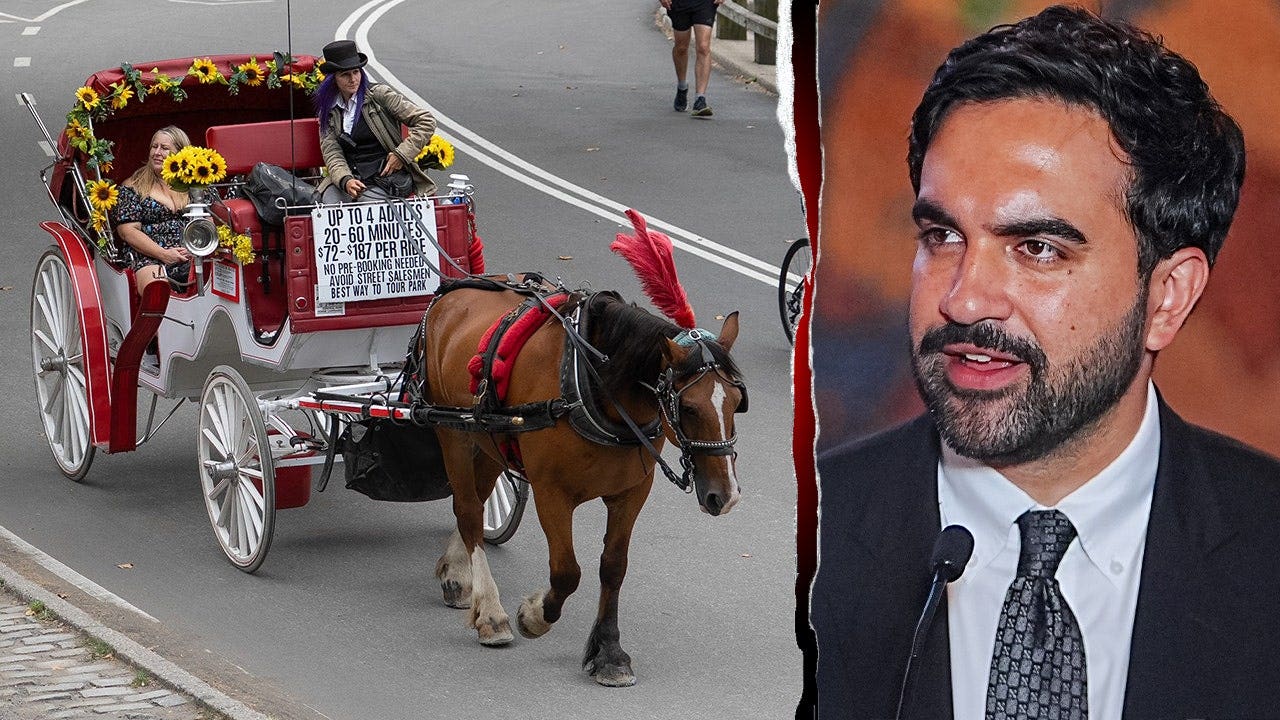
Photo via The Sydney Morning Herald

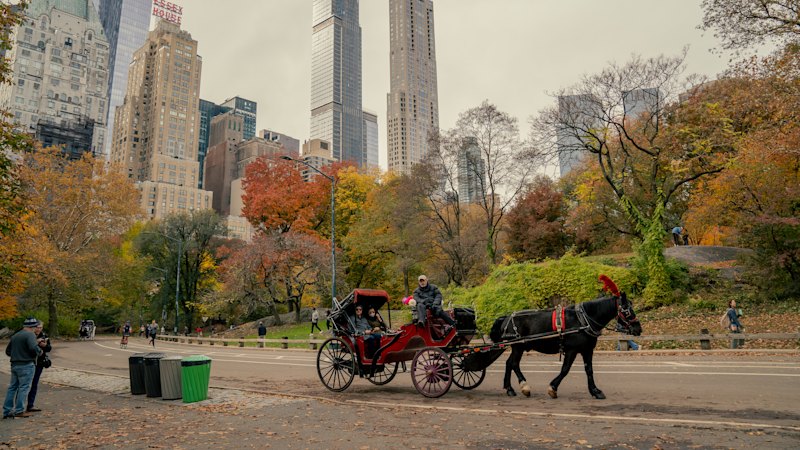
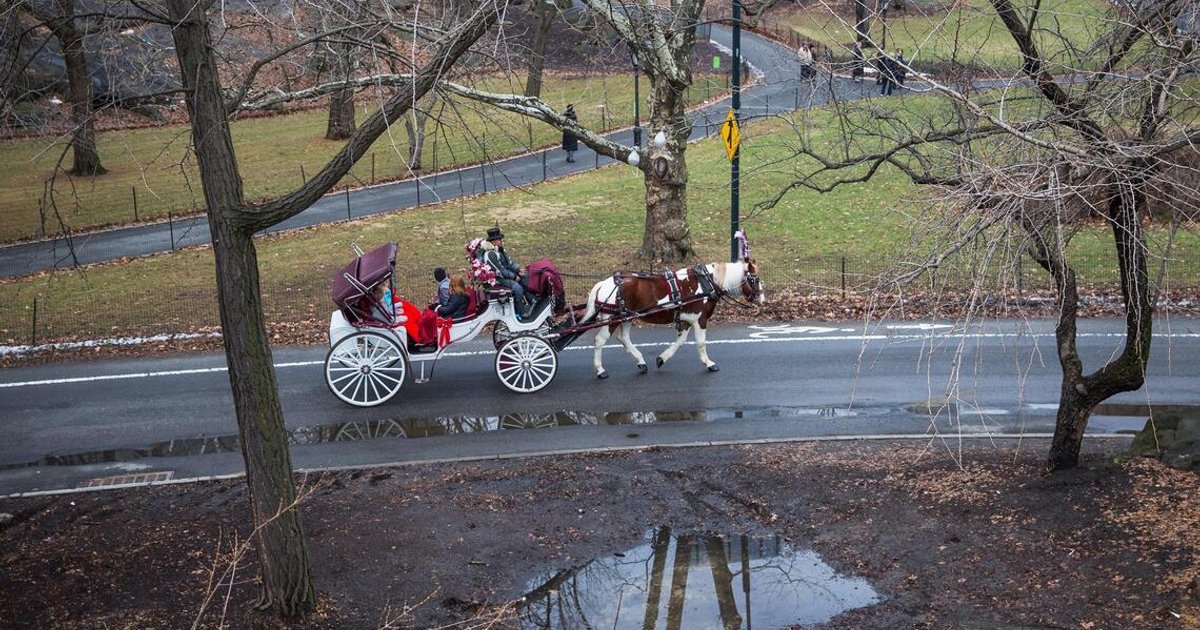
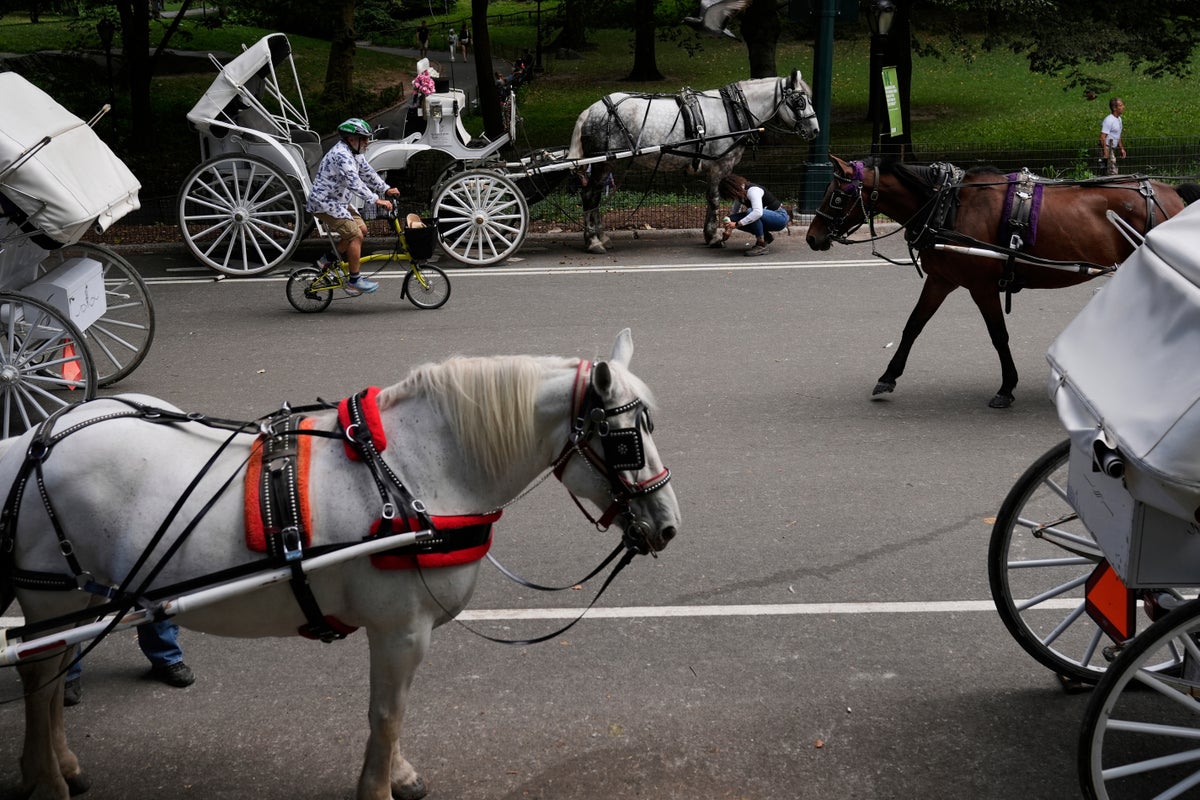
New York’s famous Central Park horse-drawn carriages set to be banned

Read the original at The Sydney Morning Herald ↗
Cite

Nahmias, L., & Church, S. A. (2026, October 14). New York’s famous Central Park horse-drawn carriages set to be banned. The Sydney Morning Herald. https://www.smh.com.au/world/north-america/new-york-s-famous-central-park-horse-drawn-carriages-set-to-be-banned-20261014-p615bz.html?ref=rss&utm_medium=rss&utm_source=rss_feed

Dated from the outlet's own feed. Check the original for its byline.

The Sydney Morning Herald · collected 2026-10-14 · by Laura Nahmias, Samuel A. Church

Quick Summary

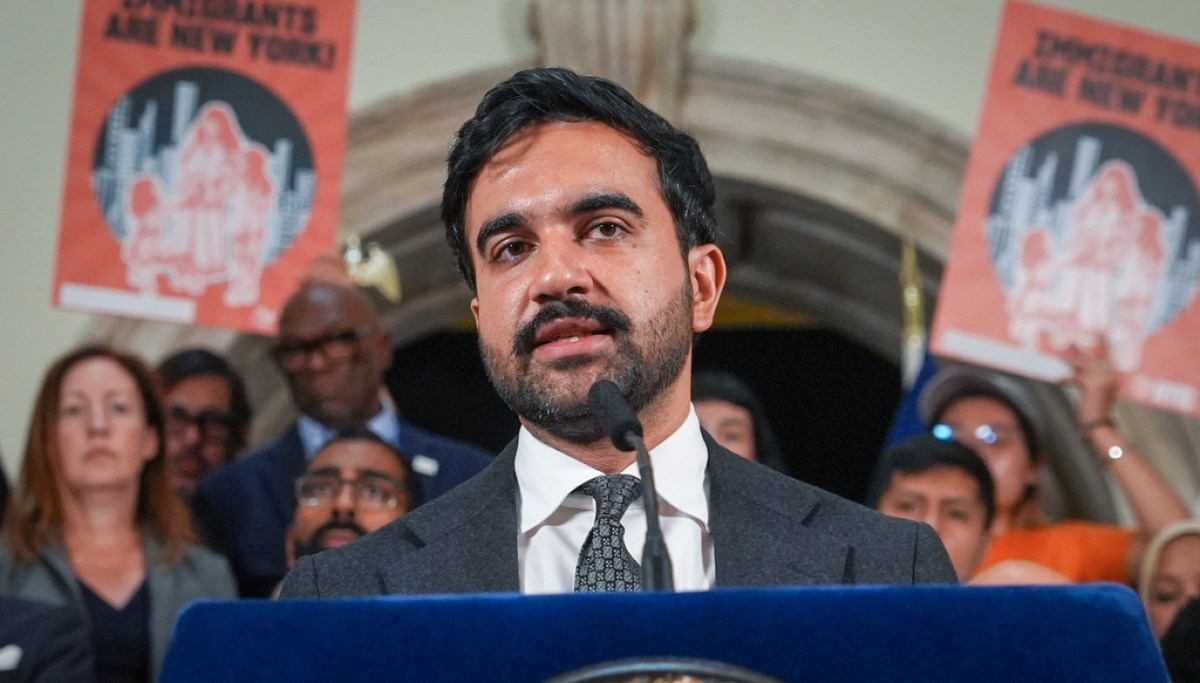
Mayor Zohran Mamdani and New York City Council Speaker Julie Menin reached an agreement to ban horse-drawn carriages in Central Park. The legislation, set for a vote on October 22, would end the operation of sixty-eight carriage cabs that employ around 150 drivers and over 180 horses. If passed, the ban will take effect June 1, 2028, following the death of Romanch Mahajan in June and increased safety concerns highlighted by recent incidents involving carriage accidents.
Written by AI on 2026-10-14, from this article's own text only (the story summary below draws on all the coverage).

AI analysis

Story summary

The New York City Council voted on October 22, 2026, to ban horse-drawn carriages from city streets and Central Park starting June 1, 2028. The bill, named Romanch’s Law after the death of an 18-year-old tourist, Romanch Mahajan, who died in a carriage accident earlier this year, was supported by Mayor Zohran Mamdani and passed with 40 out of 51 votes. It aims to end a 160-year-old tradition while providing transition support for the approximately 150 drivers currently employed in the industry. The legislation includes provisions to ensure humane treatment for retired horses, preventing their sale or transfer to other carriage companies. Critics argue that carriages harm animal welfare and pose safety risks, while supporters highlight the cultural significance and job creation aspects of the longstanding tourist attraction.

Written for “NYC Horse Carriage Ban Deal” on 2026-10-31, grounded in this article and the 27 other(s) covering the same event.

Story

📰 NYC Horse Carriage Ban Deal
Politics · 28 article(s) covering the same event. Compare every outlet's account →

Compared with similar articles

This article reads leans left and hedges 17% of its claims. Each row says how that neighbour differs.
The Straits Times
⚖️ Leans left Hedges 5 of 35 claims Outlet record 66/100
Washington Examiner
⚖️ Leans left Hedges 1 of 19 claims Outlet record 70/100
The Guardian
⚖️ Leans left Hedges 1 of 16 claims Outlet record 66/100
New York Post
Hedges 3 of 38 claims Outlet record 66/100
The Hindu
⚖️ Leans left Hedges 1 of 17 claims Outlet record 77/100
New York Post
Hedges 1 of 7 claims Outlet record 66/100
The Independent
⚖️ Leans left Hedges 2 of 32 claims Outlet record 59/100
New York Post
⚖️ Leans left Hedges 0 of 7 claims Outlet record 66/100
BBC News
⚖️ Leans left Hedges 1 of 20 claims Outlet record 68/100
Fox News
Hedges 2 of 54 claims Outlet record 69/100
How this article was measured signals, leaning charts, publisher record, byline, topics and claims

Signals How these are calculated →

Claims extracted
30
sentences that state something as happening or true
Uncertain
17%
5 of 30 hedged ("reportedly", "may", "according to")
Leaning
Leans left
of the writing, not the subject · beta estimate
Publisher signals
61/100
The Sydney Morning Herald's corrections and hedging, across everything collected from it. Not a measure of accuracy.
Outlets on this story
28
Politics
Same framing elsewhere
2
articles that frame the event the way this one does
Analyzed 2026-10-14 · how these are computed

How this is being covered How these are calculated →

Article leaning vs. publisher reliability
Source leaning vs. consistency

Publisher

The Sydney Morning Herald · 5640 article(s) · 15 correction(s) detected
Running correction rate · 15 correction(s)

Who wrote this

Laura Nahmias
1 article(s) here · 1 carrying a prediction
🔮 Mayor Zohran Mamdani and the New York City Council speaker reached a deal on legislation to ban horse-drawn carriages, potentially putting an end to a Central Park staple and tourist magnet that began operating more than 150 years ago.
The only article under this byline in the corpus.
Samuel A. Church
1 article(s) here · 1 carrying a prediction
🔮 Mayor Zohran Mamdani and the New York City Council speaker reached a deal on legislation to ban horse-drawn carriages, potentially putting an end to a Central Park staple and tourist magnet that began operating more than 150 years ago.
The only article under this byline in the corpus.

Topics

City Council New York City New York City Council the Central Park Conservancy the City Council

Subjects

Romanch Mahajan PERSON · 3× Mahajan PERSON · 2× Menin PERSON · 2× Bill de Blasio PERSON · 1× Christina Hansen PERSON · 1× Julie Menin PERSON · 1× New York City GPE · 1× New York City Council GPE · 1× Zohran Mamdani PERSON · 1× the City Council ORG · 1×

Narrative

Mayor Zohran Mamdani and the New York City Council speaker reached a deal on legislation to ban horse-drawn carriages, potentially putting an end to a Central Park staple and tourist magnet that began operating more than 150 years ago.
framing: assertive · carried by 2 article(s) · first seen 2026-10-14
🔮 Mayor Zohran Mamdani and the New York City Council speaker reached a deal on legislation to ban horse-drawn carriages, potentially putting an end to a Central Park staple and tourist magnet that began operating more than 150 years ago.
2026-10-14 · The Sydney Morning Herald
New York’s famous Central Park horse-drawn carriages set to be banned · assertive framing
2026-10-14 · The Straits Times
New York City horse carriages set to be banned in 2028 after deal · assertive framing

Claims (30 extracted, 5 hedged)

Mayor Zohran Mamdani and the New York City Council speaker reached a deal on legislation to ban horse-drawn carriages, potentially putting an end to a Central Park staple and tourist magnet that began operating more than 150 years ago. asserted
that → reach → staple
The legislation is set for a vote on October 22 and, if passed, the ban would take effect June 1, 2028. asserted
ban → set → effect
It would require “humane disposition” of the animals, forbidding the horses’ sale for slaughter or transfer to other carriage companies. asserted
It → require → companies
Sixty-eight horse cabs currently operate in Central Park, employing roughly 150 drivers and more than 180 horses, according to industry spokesperson Christina Hansen. uncertain
cabs → operate → Hansen
The new legislation lists 29 sponsors in the City Council, which is enough support for the measure to pass the 51-member body. asserted
measure → list → body
The agreement was confirmed by council speaker Julie Menin’s office. asserted
agreement → confirm → office
Horse-drawn carriages in the city have long-faced opposition from animal rights activists who argue that forcing the animals to work in urban conditions undermines their long-term health and is unsafe. asserted
forcing → draw → health
While on the campaign trail in 2013, former Mayor Bill de Blasio promised to shut down the industry on his first day in office, though he ultimately failed after his plan did not secure support from City Council. asserted
plan → promise → Council
But after a recent carriage-related death, concerns over the industry proved impossible to ignore. asserted
concerns → relate → industry
On June 17, 18-year-old Romanch Mahajan fell off a runaway carriage and died while on a family trip to the city. asserted
Mahajan → fall → city
His death prompted carriage services to shut down for six days while drivers reviewed safety protocols. asserted
drivers → prompt → protocols
A poll from the Central Park Conservancy, which advocated for the ban, found that 68 per cent of New Yorkers supported prohibiting the carriages after Mahajan’s death. asserted
cent → advocate → death
“This is fundamentally about public safety,” said David Saltonstall, the CPC’s vice president for government relations. asserted
Saltonstall → say → relations
“It’s about mitigating a known and growing risk that we have watched build for years, which very sadly culminated in the death of Romanch Mahajan.” asserted
which → ’ → Mahajan
Saltonstall cited a growing list of carriage-related incidents. asserted
Saltonstall → cite → incidents
At least seven people – including drivers and tourists – have been injured since May 2025, according to the conservancy. uncertain
people → include → conservancy
Mahajan’s death is believed to be the first fatality resulting from a carriage accident in Central Park’s history. asserted
death → believe → history
Carriage operators say the rate of horse-related injuries was still much lower than other permitted park activities, such as riding e-bikes or scooters. asserted
rate → say → bikes
They also say that without carriage revenue, they’ll struggle to care for their horses and pay fees to relocate them after the ban goes into effect. asserted
ban → say → effect
The amended bill would require agencies chosen by the mayor to deliver a plan to support carriage drivers, owners and stable workers by April 1, 2027. asserted
bill → amend → April
That support could include financial compensation, but the legislation requires only that the city consider compensating carriage owners, and does not promise payments. Transport Workers Union International President John Samuelsen pushed back against the bill in a statement, calling it “political opportunism”. uncertain
Samuelsen → include → it
He said it provided “no meaningful economic relief for workers”. asserted
it → say → workers
Hansen, the industry spokesperson, said taking care of her horse, Sherman, cost about $US10,000 ($14,000) a year. asserted
taking → say → US10,000
“There is no pool of money set aside for the future, the next 20 years of Sherman’s life,” she said. asserted
she → be → life
The bill also includes what Menin’s office described as stronger protections for horses – barring owners from selling or transferring licensed horses for slaughter or to other carriage businesses. asserted
office → include → businesses
Owners would have to notify the Health Department and the Mayor’s Office of Animal Welfare at least 10 business days before getting rid of a horse, and anyone caught running a horse-drawn carriage after the ban takes effect could face civil penalties of $US10,000. uncertain
ban → have → US10,000
“The tragic and preventable death of 18-year-old Romanch Mahajan made clear that the status quo is no longer acceptable,” Menin said in a statement about the deal. asserted
Menin → make → deal
There are about140 carriage horses in the city at any given time, according to Conor McHugh, who manages the Clinton Park Stables, one of the three locations where most of the animals are housed. uncertain
most → be → animals
He has said that if a ban passes, the stable – which has been open for more than 150 years – would be forced to shut down. asserted
which → say → years
Get a note directly from our foreign correspondents on what’s making headlines around the world. asserted
what → get → world

💬Give feedback
🕘History 🎫Support