Photo via Toronto Star

The not-so-secret vulnerability in Ukraine's drone arsenal? Chinese technology

Read the original at Toronto Star ↗
Cite

Kullab, S. (2026, October 14). The not-so-secret vulnerability in Ukraine's drone arsenal? Chinese technology. Toronto Star. https://www.thestar.com/news/world/europe/the-not-so-secret-vulnerability-in-ukraine-s-drone-arsenal-chinese-technology/article_6466a6b4-6b15-545c-805c-55196c6c9264.html

Dated from the outlet's own feed. Check the original for its byline.

Toronto Star · collected 2026-10-14 · by Samya Kullab

Quick Summary

Ukraine has become reliant on Chinese technology for its military drone production since Russia's invasion began more than four years ago. While Ukraine is attempting to reduce this dependency by sourcing from Taiwan, Europe, and the U.S., it remains highly vulnerable because alternatives are costlier and less available. The fear is that China could restrict or redirect supplies crucial to Ukrainian drones, potentially aiding Russia instead. Despite some progress in domestic manufacturing, costs would increase by up to 60% if Ukraine switched entirely to Western suppliers.
Written by AI on 2026-10-14, from this article's own text only (the story summary below draws on all the coverage).

AI analysis

Story summary

Since Russia invaded Ukraine more than four years ago, Ukraine has become a global leader in military drone innovation. However, this technological advancement comes with a significant vulnerability: Ukrainian drones are highly dependent on electronic components made by China, which is a key ally of Russia. Ukraine fears that the Chinese government could severely restrict its access to these critical parts or prioritize supplies for Russian defense companies instead.

Over the past two years, Ukraine has attempted to reduce its reliance on China by expanding domestic manufacturing and importing more supplies from countries like Taiwan, Europe, and the U.S., minimizing its need for Chinese-made electric motors, flight controllers, and other components. However, Ukraine cannot completely break free from China due to the latter's lower costs and significantly larger production capacity compared to allied suppliers.

Artur Savchii, an analyst at the Kyiv-based think tank Serpens Center for International Security, noted that while domestic drones can be redesigned quickly to meet battlefield demands, changes in foreign supply chains like those from China can take months. This dependency leaves Ukraine potentially vulnerable if China decides to limit or halt supplies.

Written for “Chinese Technology In Ukraine Drones” on 2026-11-02, grounded in this article and the 0 other(s) covering the same event.

Story

📰 Chinese Technology In Ukraine Drones
Technology · 1 article(s) covering the same event.

Compared with similar articles

This article reads unscored and hedges 12% of its claims. Each row says how that neighbour differs.
Al Jazeera
Hedges 0 of 4 claims Outlet record 60/100
“Article A discusses Ukraine's reliance on Chinese technology for their drones, while Article B reports on a specific drone strike in Russian territory.”
Al Jazeera
Hedges 1 of 24 claims Outlet record 60/100
“Article A discusses Ukraine's dependence on Chinese technology for its drones, while Article B reports on a Russian attack that killed at least six people and caused power cuts in Kyiv.”
CBC News
Hedges 4 of 30 claims Outlet record 74/100
“Article A discusses Ukraine's dependency on Chinese technology for its drones, while Article B addresses President Zelenskyy's claims about a drone attack on Yandex data centers and its impact on social media bots.”
NBC News
⚖️ Leans left Hedges 6 of 44 claims Outlet record 60/100
“The articles discuss different aspects of Ukraine's technological vulnerabilities but describe distinct incidents: one focuses on dependence on Chinese electronics, while the other discusses Starlink internet service restrictions.”
Al Jazeera
Hedges 2 of 16 claims Outlet record 60/100
“The articles discuss different issues affecting Ukraine's military capabilities: one focuses on dependency on Chinese technology for drones, while the other discusses alleged throttling of Starlink services by SpaceX impacting drone operations.”
The Guardian
⚖️ Leans left Hedges 5 of 28 claims Outlet record 66/100
“The articles discuss different aspects of the conflict, with one focusing on technological vulnerabilities related to Chinese parts in Ukrainian drones and the other on civilian casualties due to Russian attacks and restrictions on Starlink services.”
Times of India
⚖️ Leans left Hedges 5 of 54 claims Outlet record 59/100
“The articles discuss different issues related to Ukraine's drone operations and technological dependencies, rather than the same specific incident.”
BBC News
⚖️ Leans left Hedges 6 of 53 claims Outlet record 68/100
“The articles describe different aspects of Ukraine's ongoing military situation and technological dependencies, not a single specific incident.”
BBC News
Hedges 4 of 20 claims Outlet record 68/100
“The articles discuss different aspects of Ukraine's technological challenges and advantages in warfare, but do not describe the same specific incident.”
The Dispatch
Hedges 0 of 2 claims Outlet record 61/100
“Article A discusses Ukraine's dependence on Chinese technology for its drones, while Article B describes a specific military operation where Ukrainian drones destroyed Russian data centers.”
How this article was measured signals, leaning charts, publisher record, byline, topics and claims

Signals How these are calculated →

Claims extracted
58
sentences that state something as happening or true
Uncertain
12%
7 of 58 hedged ("reportedly", "may", "according to")
Leaning
withheld
no quote in the article backed the model's score
Publisher signals
64/100
Toronto Star's corrections and hedging, across everything collected from it. Not a measure of accuracy.
Outlets on this story
1
Technology
Same framing elsewhere
1
articles that frame the event the way this one does
Analyzed 2026-10-14 · how these are computed

How this is being covered How these are calculated →

Article leaning vs. publisher reliability
Source leaning vs. consistency

Publisher

Toronto Star · 11094 article(s) · 28 correction(s) detected
Running correction rate · 28 correction(s)
2026-10-26
Correction
2026-10-24
Correction
2026-10-07
Correction
2026-09-24
Correction

Who wrote this

Samya Kullab
8 article(s) here · 1 carrying a prediction
🔮 He clings to hope that one day he will see with the other because he can still discern faint traces of light.
🔮 If it proves reliable in combat, it could transform battlefield evacuations, reaching soldiers in places that ground vehicles cannot access and potentially saving those so severely wounded that hours of waiting could cost them their lives.
🔮 Ukraine’s greatest fear is that the Chinese government could severely restrict its access to these critical parts.
🔮 Putin, meanwhile, is pressing ahead with the invasion in the belief that Ukrainians will buckle under the pressure and Kyiv’s Western supporters won’t stay the course, Western analysts say.
🔮 Building the prototype interceptors in sufficient numbers, and training pilots to fly them, could take up to six months, manufacturers say.
🔮 Despite a health condition, she has traveled from city to city to take part, and she said that she hopes the talks in Moscow and Kyiv will finally bring an end to the war.
Also by Samya Kullab
Nothing else under this byline is closely related to this article, so these are simply their most recent.
All 8 articles by Samya Kullab →

Topics

China Chinese Russia Ukraine Ukrainian

Subjects

China GPE · 14× Ukraine GPE · 12× Ukrainian NORP · 8× Chinese NORP · 4× KYIV GPE · 2× Russia GPE · 2× Russian NORP · 2× Vyriy ORG · 2× Taiwan GPE · 1× U.S. GPE · 1×

Narrative

Drones and drone components made domestically can be redesigned in a matter of days to meet urgent demands on the battlefield, whereas it can take months for such changes to filter through foreign supply chains, said Artur Savchii, an analyst at the Kyiv-based think tank Serpens Center for International Security.
framing: assertive · carried by 1 article(s) · first seen 2026-10-14
🔮 Ukraine’s greatest fear is that the Chinese government could severely restrict its access to these critical parts.

Claims (58 extracted, 7 hedged)

Since Russia invaded more than four years ago, Ukraine has become a global leader in military drone innovation, enabling its forces to grind a much larger enemy to a stalemate. asserted
Ukraine → invade → stalemate
But this technological force multiplier has come with an unsettling vulnerability: Ukrainian drone makers are highly dependent on electronics made by China, a key Russian ally. asserted
makers → come → China
Ukraine’s greatest fear is that the Chinese government could severely restrict its access to these critical parts. uncertain
government → restrict → parts
It also worries that Russian defense companies that need these same supplies could be given preferential treatment by Chinese factories. uncertain
that → worry → factories
Over the past two years, Ukraine has sought to break its dependence on China by expanding domestic manufacturing and importing more supplies from Taiwan, Europe and the U.S. That has minimized its need for Chinese-made electric motors, flight controllers and other parts. asserted
That → seek → motors
Yet Ukraine cannot entirely break free from China, whose lower costs and vastly greater production capacity cannot be matched by allied suppliers. asserted
costs → break → suppliers
“If China stops their production to us ... we are blinded,” said Andrii Taganskyi, an executive at Odd Systems, a Ukrainian weapons manufacturer that develops cameras for drones. asserted
that → stop → drones
China has tightened controls on exports of drones and related equipment for several years, citing concerns about prolonging the war in Ukraine. asserted
China → tighten → Ukraine
While the restrictions have not stopped the flow of Chinese components to Ukraine, they have caused delays and driven up costs, pushing Ukrainian companies toward intermediaries in third countries. asserted
they → stop → countries
“China has leverage,” said Robert Tallost, a researcher at the think tank RUSI. asserted
Tallost → have → tank
“They could direct more material to Russia while restricting supplies to the West.” uncertain
They → direct → West
China’s Foreign Ministry said Beijing takes a “prudent and responsible” approach to military exports. asserted
Beijing → say → exports
It said it opposes the use of civilian drones for military purposes, and urged all sides to find a political settlement of the war. asserted
it → say → war
Switching away from China would be expensive Ukraine has earned worldwide recognition for its cutting-edge drone industry, designing and assembling systems that have changed modern warfare. asserted
that → switch → warfare
Yet many of the materials and components that go into Ukrainian drones cannot be localized anytime soon. asserted
that → go → drones
Magnets, motors, chips, thermal sensors, battery cells and more still largely come from China, a dozen Ukrainian manufacturers said. asserted
manufacturers → come → China
Switching entirely to Western alternatives could raise costs by as much as 60% and cut production by a similar amount, said Oleksandr Yakovenko of TAF Industries, a major Ukrainian defense company. uncertain
Yakovenko → switch → Industries
That is not a viable tradeoff, Yakovenko and other executives said. asserted
Yakovenko → say → ?
Still, Ukrainian drone makers have begun to wean themselves off of China. asserted
makers → begin → China
Three years ago, the Ukrainian drone maker Vyriy relied upon China for nearly 90% of the components in its attack drones. asserted
maker → rely → drones
“Today, about 70% to 80% of our components are made in Ukraine,” said Vyriy’s founder, Oleksii Babenko. asserted
founder → make → Ukraine
This increasing self-reliance has an extra benefit in the midst of a grueling war. asserted
reliance → increase → war
Drones and drone components made domestically can be redesigned in a matter of days to meet urgent demands on the battlefield, whereas it can take months for such changes to filter through foreign supply chains, said Artur Savchii, an analyst at the Kyiv-based think tank Serpens Center for International Security. asserted
Savchii → make → Security
At the beginning of 2024, nearly 90% of Ukraine’s imported drone parts came directly from China. asserted
% → import → China
In the first eight months of 2026, it was just 28%, according to Ukraine Customs data. uncertain
it → accord → data
But the drop may not be as dramatic as it seems. uncertain
it → seem → ?
Many components recorded as coming from Poland and the Czech Republic, for example, very likely were manufactured in China and routed through those countries. asserted
components → record → countries
Thermal cameras show why China is hard to replace Ukraine can assemble batteries but must import the cells inside them. asserted
Ukraine → show → them
Motors require imported magnets and copper. asserted
Motors → require → magnets
And while Ukraine can manufacture some electronics, Chinese companies can produce them at far greater scale and roughly half the cost. asserted
companies → manufacture → scale
Thermal cameras show just how difficult it is for Ukraine to break its dependence. asserted
Ukraine → show → dependence
Ukrainian companies design the cameras themselves but still rely on imported sensors, which detect infrared radiation, and lenses that cannot be made domestically, manufacturers said. asserted
manufacturers → design → radiation
One of the key raw materials is germanium, an element which China has in abundance, making Chinese lenses far cheaper than European alternatives. asserted
lenses → have → alternatives
Although the U.S. and Europe also make sensors, most of them are used domestically. asserted
most → make → them
Ukraine could build thermal cameras entirely from European components, Taganskyi said, but capacity and cost are barriers: Europe produces about 600,000 thermal sensors a year, versus Ukraine’s estimated need for 4 million, he said. uncertain
he → build → million
For now, some Chinese components remain essential. asserted
components → remain → ?
“Without this 5%, there is no camera,” Taganskyi said. asserted
Taganskyi → be → %
Ukraine competes with Russia for Chinese components To be sure, Russia is even more dependent on China than Ukraine, experts say – in part because of Western sanctions that restrict its access to other markets. asserted
that → compete → markets
The difference is that Moscow doesn’t face the risk of its allies in Beijing tipping the scales in favor of Ukraine. asserted
allies → face → Ukraine
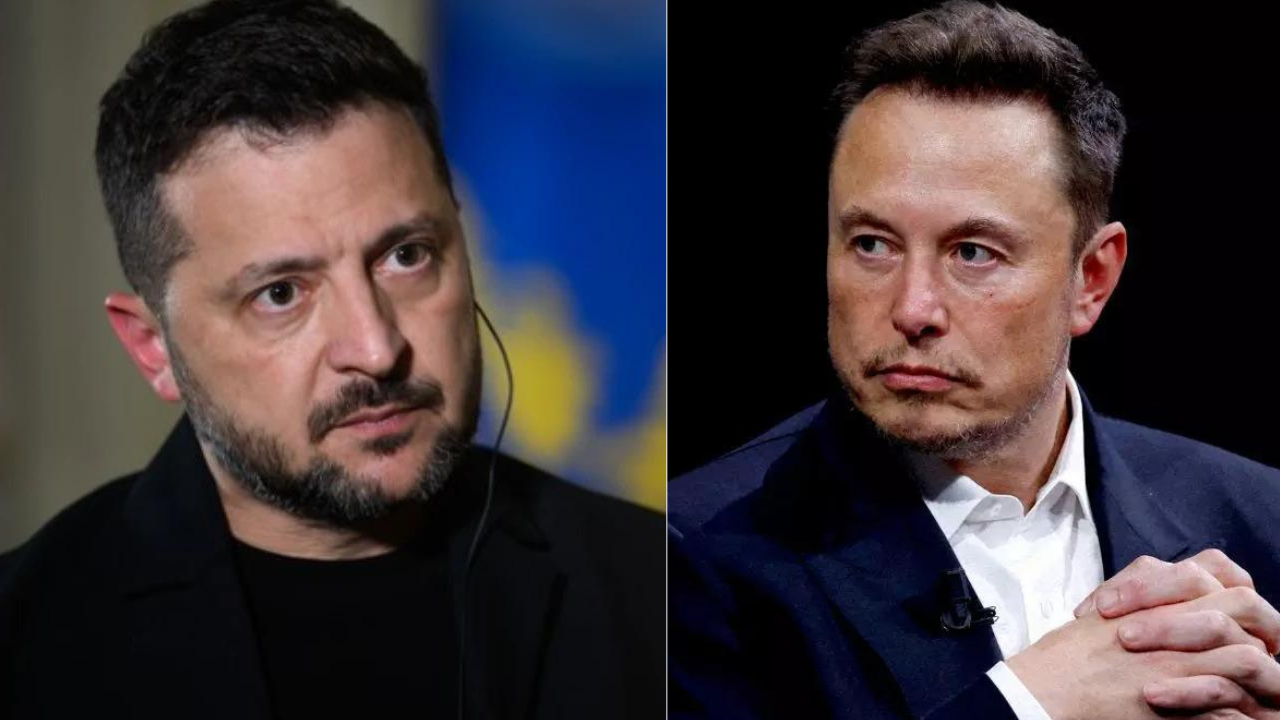
Ukrainian President Volodymyr Zelenskyy addressed Russia’s advantage vis-a-vis its relationship with China during a recent interview. asserted
Zelenskyy → address → interview
…and 18 more, not listed.

💬Give feedback
🕘History 🎫Support