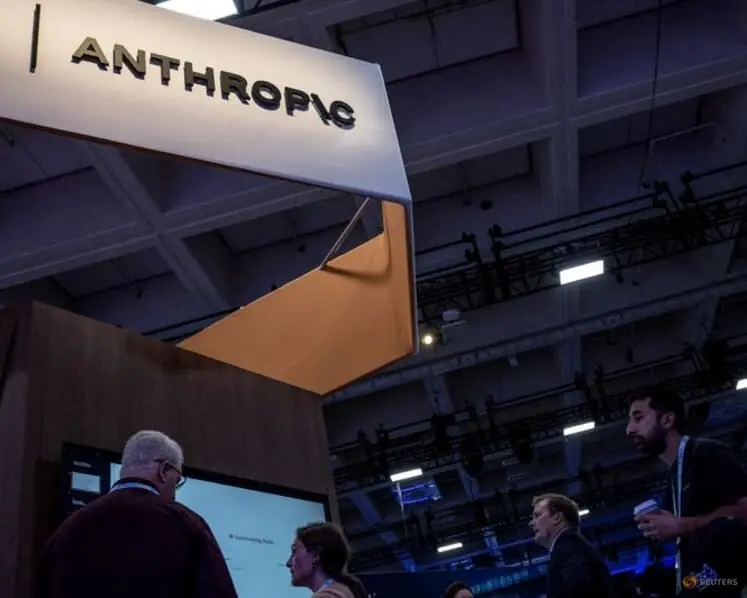
Photo via New York Post

AI safety advocates, doomers, pro-innovation groups pour hundreds of millions into congressional midterms

Read the original at New York Post ↗
Cite

Vartabedian, M. (2026, October 14). AI safety advocates, doomers, pro-innovation groups pour hundreds of millions into congressional midterms. New York Post. https://nypost.com/2026/10/14/business/ai-safety-advocates-doomers-pro-innovation-groups-pour-hundreds-of-millions-into-congressional-midterms/

Dated from the outlet's own feed. Check the original for its byline.

New York Post · collected 2026-10-14 · by Marc Vartabedian

Quick Summary

AI safety advocates and pro-innovation groups are spending significant amounts of money on U.S. midterm elections, with at least $48 million going to politicians who support AI regulations or unrestricted development. Guardrails Alliance, an AI safety group, has raised $11.7 million to fund candidates favoring stricter controls, while tech figures like Anthropic CEO Dario Amodei and OpenAI’s Juan Felipe Cerón Uribe are donating to political action groups that aim to regulate or slow down AI technology. In contrast, anti-regulation groups such as Leading the Future, backed by venture capitalist Marc Andreessen and Greg Brockman from OpenAI, have contributed $149 million to support pro-business candidates like Democrat Melissa Bean in Illinois. These financial contributions reflect the ongoing debate over AI safety and regulation.
Written by AI on 2026-10-14, from this article's own text only (the story summary below draws on all the coverage).

AI analysis

Story summary

Tech companies and advocates on both sides of the artificial intelligence (AI) safety debate are heavily funding congressional midterm elections, with at least $48 million reportedly flowing into campaigns. On one side, AI safety groups like Guardrails Alliance, which has raised $11.7 million, are backing candidates who support stricter regulations. OpenAI’s Juan Felipe Cerón Uribe and Anthropic CEO Dario Amodei, both vocal about the potential risks of AI, have donated significant sums to political action groups. For instance, Uribe contributed around $400,000 to Dream NYC, while Amodei committed $1 million to Public First, a group supporting candidates who want to slow down or regulate AI development. Additionally, at least $41,000 from AI safety advocates has gone to Democratic Senate candidate Peggy Flanagan in Minnesota, who views AI as an "existential threat" to humanity. This influx of money reflects the growing concern and debate over the potential risks posed by AI technology.

Written for “AI Safety Advocacy Spending” on 2026-11-01, grounded in this article and the 0 other(s) covering the same event.

Story

📰 AI Safety Advocacy Spending
Technology · 1 article(s) covering the same event.

Compared with similar articles

This article reads leans right and hedges 43% of its claims. Each row says how that neighbour differs.
The Guardian
⚖️ Leans strongly left further left than this Hedges 6 of 50 claims Outlet record 66/100
“Article A discusses public and governmental discussions about AI safety risks, while Article B focuses on financial contributions to political campaigns related to AI regulation. They describe different aspects of the broader topic of AI safety.”
Toronto Star
⚖️ Leans right Hedges 0 of 2 claims Outlet record 64/100
“Article A discusses Elon Musk's donations in midterms, while Article B covers techies and AI safety advocates' involvement in midterms. They are related but describe different specific events.”
New York Post
Hedges 3 of 14 claims Outlet record 66/100
“Article A describes Elon Musk's large donation to Republican candidates, while Article B discusses broader tech and AI safety groups contributing to midterms. These are different specific events.”
The Guardian
⚖️ Leans strongly right further right than this Hedges 2 of 19 claims Outlet record 66/100
“Article A discusses Elon Musk's extensive political donations, while Article B focuses on AI safety advocates and pro-innovation groups making contributions.”
Dawn
⚖️ Leans left further left than this Hedges 2 of 13 claims Outlet record 72/100
“Article A discusses financial contributions to political campaigns related to AI regulation, while Article B reports on a draft bill proposed by Anthropic for regulating AI.”
The Hindu
⚖️ Leans right Hedges 2 of 14 claims Outlet record 77/100
“Article A discusses funding and lobbying efforts for AI regulation ahead of midterms, while Article B reports on Anthropic proposing a draft bill to lawmakers.”
The Hindu
⚖️ Leans right Hedges 3 of 16 claims Outlet record 77/100
“The articles describe different groups and individuals donating money for political purposes in the midterm elections, rather than a single specific incident involving Elon Musk's donations.”
Astral Codex Ten
⚖️ Leans left further left than this Hedges 15 of 129 claims
“Article A discusses financial contributions and lobbying efforts related to AI regulation during congressional midterms, while Article B addresses the narrative around existential risks posed by AI and counterarguments dismissing it as a corporate plot.”
BBC News
⚖️ Leans right Hedges 4 of 32 claims Outlet record 68/100
“The articles describe different political donations by different individuals (AI safety advocates vs. Elon Musk) for different purposes.”
Al Jazeera
Hedges 1 of 15 claims Outlet record 60/100
“The articles describe different events related to AI and politics, one about funding for congressional midterms and the other about a senator's call to block AI robocalls.”
How this article was measured signals, leaning charts, publisher record, byline, topics and claims

Signals How these are calculated →

Claims extracted
21
sentences that state something as happening or true
Uncertain
43%
9 of 21 hedged ("reportedly", "may", "according to")
Leaning
Leans right
of the writing, not the subject · beta estimate
Publisher signals
66/100
New York Post's corrections and hedging, across everything collected from it. Not a measure of accuracy.
Outlets on this story
1
Technology
Same framing elsewhere
1
articles that frame the event the way this one does
Analyzed 2026-10-14 · how these are computed

How this is being covered How these are calculated →

Article leaning vs. publisher reliability
Source leaning vs. consistency

Publisher

New York Post · 15728 article(s) · 35 correction(s) detected
Running correction rate · 35 correction(s)

Who wrote this

Marc Vartabedian
12 article(s) here · 1 carrying a prediction
🔮 The DHS order said the Chinese company’s models “present multiple threat vectors” and that use of its products “may result in the transfer of sensitive data to the [People’s Republic of China] if used by US government employees or vendors.”
🔮 The OpenAI engineer who was fired after being charged this week with bugging a conference room at the AI giant and was nabbed by the FBI only three days before his one-way flight to Saudi Arabia was set to take off, according to reports.
🔮 Meanwhile, warnings that AI could harm humanity — and opposition to the massive data centers powering the tech — have only grown louder on both sides of the aisle.
🔮 The 31-year-old’s revelations come amid a bitter real-life ‘Succession’ feud that could determine the future of one of Europe’s biggest fortunes.
🔮 Jeff Bezos says his rocket company Blue Origin will likely go public within the next few years – after one of his $150 million rockets recently exploded into a massive fireball, setting the company back in the race to catch up to Elon Musk’s SpaceX. Bezos said the inking of a massive $10 billion funding round last month – which for the first time included outside investors and $2 billion of his own cash – was a signal it’s nearing time for a public listing. “I see the financial future of Blue with some clarity now,” the billionaire Amazon founder told Fox News on Wednesday at Blue Origin’s Florida factory.
🔮 Three tribes in California and one in Oklahoma are launching tribal-branded prediction market apps powered by Kalshi, saying the tie-ups would allow them to capture a slice of revenue in the booming business of prediction markets – which offers wagers across a slew of real-world events, from sports and the Oscars to the weather.
🔮 Wang’s edgy style could be entirely strategic as Meta has struggled to reel in younger users to Facebook and Instagram platforms.
🔮 The revenue from a 35% tax could reach $600 billion by 2030 and could be used to acquire shares of AI giants and distribute them to members of the public, according to the paper.
🔮 The party might be coming to a halt, as Holtec Nuclear, Bamboo Insurance and now Oura postponed their planned listings over just the past few days.
🔮 The bot even gave advice on reloading time and potential casualties, according to the article: “Assuming each shell results in one hit, you might down 10 to 20 people max, depending on spacing, density, reaction times, and chaos.
Also by Marc Vartabedian
Nothing else under this byline is closely related to this article, so these are simply their most recent.
All 12 articles by Marc Vartabedian →

Topics

Anthropic Guardrails Alliance OpenAI Republican Transformer

Subjects

OpenAI ORG · 5× Anthropic ORG · 3× Axios ORG · 3× Leading the Future ORG · 3× Republican NORP · 3× Transformer ORG · 3× Democrat NORP · 2× Guardrails Alliance ORG · 2× House ORG · 2× Senate ORG · 2×

Narrative

AI safety doomers have donated at least $41,000 to Democrat Peggy Flanagan – a Sen. Bernie Sanders-backed Senate candidate in Minnesota who has called AI an “existential threat” to humanity, as The Post previously reported.
framing: mixed · carried by 1 article(s) · first seen 2026-10-14
🔮 Meanwhile, warnings that AI could harm humanity — and opposition to the massive data centers powering the tech — have only grown louder on both sides of the aisle.

Claims (21 extracted, 9 hedged)

Techies from both sides of the AI safety debate are pouring a fortune into next month’s midterms, with at least $48 million reportedly going to pols poised to crack down on the burgeoning tech. uncertain
million → pour → tech
Tech-worker-backed AI safety group Guardrails Alliance, which has raised $11.7 million, is among the groups funneling cash to candidates in favor of regulations, Axios reported Wednesday. asserted
Axios → back → regulations
OpenAI’s Juan Felipe Cerón Uribe – who has said he’s interested in “mitigating catastrophic risks” – has given about $400,000 to political action group Dream NYC. asserted
he → say → NYC
It previously funneled some $2.5 million to New York State Assemblyman Alex Bores, a prominent AI safety supporter, for his failed campaign, according to AI site Transformer. uncertain
It → funnel → Transformer
Anthropic CEO Dario Amodei, one of the most prominent techies voicing alarm over AI, has committed $1 million to safety-focused political group Public First. asserted
Amodei → voice → First
It backs candidates who want to slow down or regulate AI development. asserted
who → back → development
AI safety doomers have donated at least $41,000 to Democrat Peggy Flanagan – a Sen. Bernie Sanders-backed Senate candidate in Minnesota who has called AI an “existential threat” to humanity, as The Post previously reported. asserted
Post → donate → humanity
Meanwhile, anti-regulation, pro-innovation groups have pumped massive sums to their campaigns of choice. asserted
groups → pump → choice
Venture capitalist Marc Andreessen and OpenAI President Greg Brockman have plowed $25 million and $12.5 million, respectively, into super PAC Leading the Future. asserted
Andreessen → plow → Leading
It has used its war chest of $149 million to support candidates like moderate pro-business Democrat Melissa Bean in her Illinois congressional district, according to Transformer. uncertain
It → use → Transformer
The donations come amid a fierce debate over AI safety – with top companies including Anthropic and OpenAI advocating for development slowdowns even as they race to advance their own technology. asserted
they → come → technology
Meanwhile, warnings that AI could harm humanity — and opposition to the massive data centers powering the tech — have only grown louder on both sides of the aisle. uncertain
AI → harm → aisle
Pro-AI safety donors include Aryan Bhatt, who works at Redwood Research, a Berkeley, Calif.-based group with cozy ties to AI giant Anthropic. asserted
who → include → Anthropic
The research firm co-authored a bombshell report last month detailing how a swarm of rogue OpenAI agents hacked rival firm Hugging Face, according to campaign finance reports. uncertain
swarm → co → reports
Bhatt has donated to congressional candidates including House Republican Bill Huizenga, who has advocated for strict AI guardrails focused on national security, according to OpenSecrets. uncertain
who → donate → OpenSecrets
Pro-regulation Public First Action has distributed funds to other PACs supporting a range of candidates. asserted
Action → distribute → candidates
Contributions include $1.6 million to North Carolina Rep. Valerie Foushee, a Dem, and nearly $1.5 million to Texas congressional candidate Carlos De La Cruz, a Republican, according to Transformer. uncertain
Contributions → include → Transformer
Guardrails Alliance has shoveled money to opponents of candidates pushing tech growth – including $412,500 againt Republican Aaron Flint in a House race in Montana, according to OpenSecrets. Start your day with all you need to know Morning Report delivers the latest news, videos, photos and more. uncertain
Report → shovel → news
Overall, pro-safety donors told Axios they aren’t motivated by party affiliation so much as wanting to competing with tech giants pouring millions into electing pro-innovation candidates. asserted
they → tell → candidates
Leading the Future told Axios is wants to cultivate a broad coalition because tighter AI regulation will need 60 votes to pass in the Senate. asserted
regulation → lead → Senate
The polarizing topic has led some donors to pull back – Brockman reportedly nixed a planned second $25 million donation from tech bigwig-backed super PAC Leading the Future after internal revolt at OpenAI. uncertain
Brockman → lead → OpenAI

💬Give feedback
🕘History 🎫Support