Photo via Times of India

Washington uses helicopters to fly 6,000 logs into remote streams to restore salmon habitats

Read the original at Times of India ↗
Cite

TOI World Desk. (2026, October 15). Washington uses helicopters to fly 6,000 logs into remote streams to restore salmon habitats. Times of India. https://timesofindia.indiatimes.com/world/us/washington-flew-6000-logs-by-helicopter-into-24-miles-of-remote-streams-to-rebuild-salmon-spawning-grounds-and-help-creeks-hold-water/articleshow/134963185.cms

Dated from the outlet's own feed. Check the original for its byline.

Times of India · collected 2026-10-15 · by TOI World Desk

Quick Summary

Helicopters have been used to place over 6,000 logs into remote streams in central Washington, covering more than 24 miles of waterways. This large-scale restoration project aims to improve habitats for salmon and bull trout by creating sheltered areas and pools in the streams. The logs come from forest-thinning work conducted by organizations like The Nature Conservancy, and their placement is guided by Yakama Nation habitat biologists and partner groups.
Written by AI on 2026-10-15, from this article's own text only (the story summary below draws on all the coverage).

AI analysis

Story summary

Helicopters were used to transport over 6,000 logs into remote streams in central Washington as part of a major river restoration project aimed at revitalizing habitats for salmon and bull trout. The logs, including Douglas fir, grand fir, and cedar, come from forest-thinning efforts by The Nature Conservancy. This initiative covers more than 24 miles of streams across the Yakama Reservation and ceded lands. The logs help create pools and sheltered areas crucial for fish survival and spawning, while also slowing down currents to allow water to spread into floodplains and recharge groundwater. Partner organizations involved in this project include the Yakama Nation, Mid Columbia Fisheries Enhancement Group, and others, marking a shift from earlier practices that saw large log jams as barriers rather than habitat features.

Written for “Logs Dropped By Helicopter To Restore Salmon Habitats” on 2026-11-03, grounded in this article and the 0 other(s) covering the same event.

Story

📰 Logs Dropped By Helicopter To Restore Salmon Habitats
Environment · 1 article(s) covering the same event.

Compared with similar articles

Nothing to compare against. No article is close enough to this one for the pipeline to have linked or judged the pair.
How this article was measured signals, leaning charts, publisher record, byline, topics and claims

Signals How these are calculated →

Claims extracted
29
sentences that state something as happening or true
Uncertain
10%
3 of 29 hedged ("reportedly", "may", "according to")
Leaning
not political
takes no side on a contested political question
Publisher signals
59/100
Times of India's corrections and hedging, across everything collected from it. Not a measure of accuracy.
Outlets on this story
1
Environment
Same framing elsewhere
1
articles that frame the event the way this one does
Analyzed 2026-10-15 · how these are computed

How this is being covered How these are calculated →

Article leaning vs. publisher reliability
Source leaning vs. consistency

Publisher

Times of India · 4036 article(s) · 4 correction(s) detected
Running correction rate · 4 correction(s)

Who wrote this

TOI World Desk
1401 article(s) here · 1 carrying a prediction
🔮 "It is back to the way Abraham Lincoln would have wanted it."
🔮 As reported by The Salt Lake Tribune, he began considering whether similar infrastructure could work on his Utah property.
🔮 On 30 May 2024, the court held that the transactions qualified as donationes mortis causa, a legal term for gifts made in anticipation of death.
🔮 James Patterson is best known as one of the world’s most successful thriller writers, but his most consequential work may be happening far from the bestseller lists.
🔮 The money will benefit After-School All-Stars, a non-profit organisation that works with children and young people through free after-school programmes.
🔮 Why Richard would rather play outside than watch screens, and what his mother saw in kindergarten
🔮 Commercial Braille embossers can cost more than £1,000 and may be bulky, making them difficult to access for individuals and smaller organisations with limited budgets.
🔮 Mukhtar argued that she could still earn the same base salary as him if she returned to full-time work.
🔮 For someone passing through a cemetery, a lantern or a plant might appear to be an ordinary possession.
🔮 A British man’s handwritten will, drafted on the cardboard packaging of a frozen fish box and a mince pie packet, has been ruled valid by the High Court, clearing the way for a diabetes charity to inherit his estate worth approximately £180,000.
Wire or desk byline, not an individual reporter.
Also by TOI World Desk
Nothing else under this byline is closely related to this article, so these are simply their most recent.
All 1401 articles by TOI World Desk →

Topics

Mid Columbia Fisheries Enhancement Group Northwest Public Broadcasting The Nature Conservancy Washington Yakama Nation

Subjects

Northwest Public Broadcasting ORG · 2× Washington GPE · 2× Courtney Flatt PERSON · 1× Mid Columbia Fisheries Enhancement Group ORG · 1× Phil Rigdon PERSON · 1× Reese Lolley PERSON · 1× The Nature Conservancy ORG · 1× The Nature Conservancy’ ORG · 1× Yakama Nation GPE · 1× the Yakama Nation Department of Natural Resources ORG · 1×

Narrative

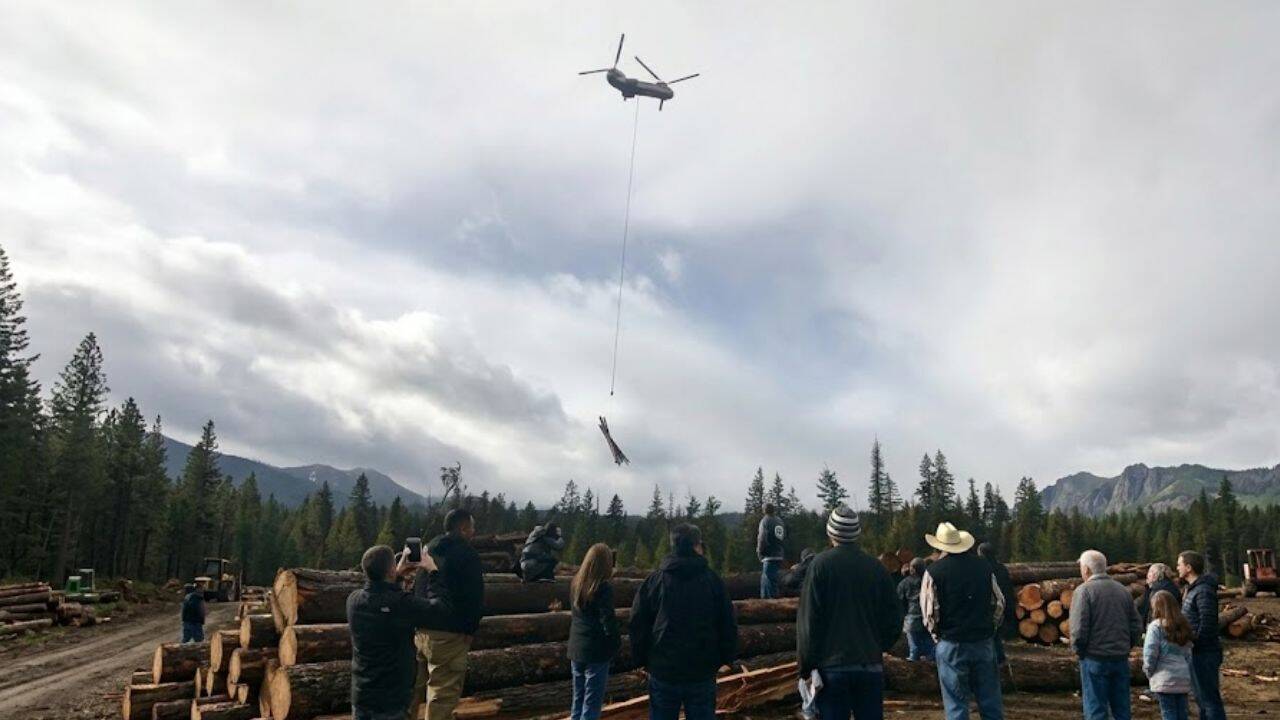
PC: Courtney Flatt/Northwest Public Broadcasting Where do the logs come from, and how are they transported to remote streams The logs, which include Douglas fir, grand fir and cedar, come from forest-thinning work carried out by ‘The Nature Conservancy’.
framing: assertive · carried by 1 article(s) · first seen 2026-10-15
🔮 While some of the timber could have been sold, other logs would not have been sold.

Claims (29 extracted, 3 hedged)

Helicopters were used to place more than 6,000 logs into remote streams in central Washington as part of Northwest’s largest river restoration efforts. asserted
Helicopters → use → efforts
The project focuses on remote waterways inaccessible by road and aims to restore habitats for salmon and bull trout. asserted
project → focus → salmon
According to Northwest Public Broadcasting, the work covers more than 24 miles of streams across the Yakama Reservation and ceded lands. uncertain
work → accord → Reservation
The logs create pools and sheltered areas for fish, while trapping gravel that fish use to spawn. asserted
fish → create → that
They also reduce the speed of the current, allowing water to spread across floodplains, seep into the ground, and gradually return to streams. asserted
water → reduce → streams
How are helicopters transporting thousands of logs to remote streams The project involves Yakama Nation habitat biologists and partner organizations, including The Nature Conservancy and Mid Columbia Fisheries Enhancement Group. asserted
project → transport → Conservancy
At the time, fisheries specialists often viewed large log jams as barriers that prevented fish from moving freely. asserted
that → view → fish
That approach has since changed, with the project returning more than 6,000 logs to waterways across Central Washington. asserted
project → change → Washington
Helicopters carried the timber from staging areas to sections of streams that roads no longer reach. asserted
roads → carry → that
Biologists use pink and blue flagging tape to show pilots where the logs should be placed. asserted
logs → use → pilots
The project covers more than 24 miles of streams on tribal and other lands. asserted
project → cover → lands
PC: Courtney Flatt/Northwest Public Broadcasting Where do the logs come from, and how are they transported to remote streams The logs, which include Douglas fir, grand fir and cedar, come from forest-thinning work carried out by ‘The Nature Conservancy’. asserted
which → come → Conservancy
While some of the timber could have been sold, other logs would not have been sold. uncertain
logs → sell → timber
Reese Lolley, the organisation’s director of forest restoration and fire in Washington, said, “We’re thinking more towards whole landscape restoration, both the aquatic and the upland”. asserted
We → say → restoration
Removing selected trees can also help reduce the risk of large fires. asserted
Removing → remove → fires
Helicopters allow teams to transport timber from remote areas where building roads would be impractical or too expensive. asserted
roads → allow → areas
The logs are then placed in streams to restore fish habitats and help reconnect waterways with surrounding floodplains. asserted
logs → place → floodplains
How do logs help restore fish habitats damaged by past river management Logs make waterways more varied by creating sheltered spaces where salmon and bull trout can swim and spawn. asserted
salmon → help → spaces
They also form pools and trap gravel that fish need for spawning. asserted
fish → form → spawning
Aquatic insects feed on algae growing on the wood. asserted
insects → feed → wood
The restoration project aims to address damage caused by past practices, including overgrazing, railroad logging, splash dam logging, and the removal of wood from streams. asserted
project → aim → streams
Phil Rigdon, director of the Yakama Nation Department of Natural Resources, said, “We’re trying to learn from our mistakes and find a better way to manage.” asserted
We → say → way
How can the logs help streams retain water as the climate warms The logs slow the movement of water, allowing it to collect in pools and seep into the ground. asserted
it → help → ground
They also help water spread across floodplains, where it can be stored and gradually released back into streams. asserted
it → help → streams
This process helps keep waterways cooler and may reduce the risk of streams running dry. uncertain
streams → keep → risk
Kelly Clayton, a habitat biologist with the Yakama Nation, said, “This project is what will keep our creeks from running dry.” asserted
what → say → creeks
Nicolai said, “Back in the day, when they ran bulldozers down the creek, cleaning it out, making the water run off faster, that disconnected these floodplains from the river.” asserted
that → say → river
“We used to treat our streams like they were just for drainage - get the water off the land. asserted
they → use → land
Now we’re learning that’s not such a great idea.” asserted
that → learn → ?

💬Give feedback
🕘History 🎫Support