Photo via Times of India

Scientists make cells from an 80-year-old donor appear young, advancing ageing research

Read the original at Times of India ↗
Cite

TOI Science Desk. (2026, October 15). Scientists make cells from an 80-year-old donor appear young, advancing ageing research. Times of India. https://timesofindia.indiatimes.com/science/discovery/scientists-turn-blood-cell-precursors-from-an-80-year-old-donor-into-neural-stem-cells-with-epigenetic-age-below-20-100-day-process-reveals-cellular-rejuvenation-could-aid-aging-and-alzheimers-research/articleshow/134975919.cms

Dated from the outlet's own feed. Check the original for its byline.

Times of India · collected 2026-10-16 · by TOI Science Desk

Quick Summary

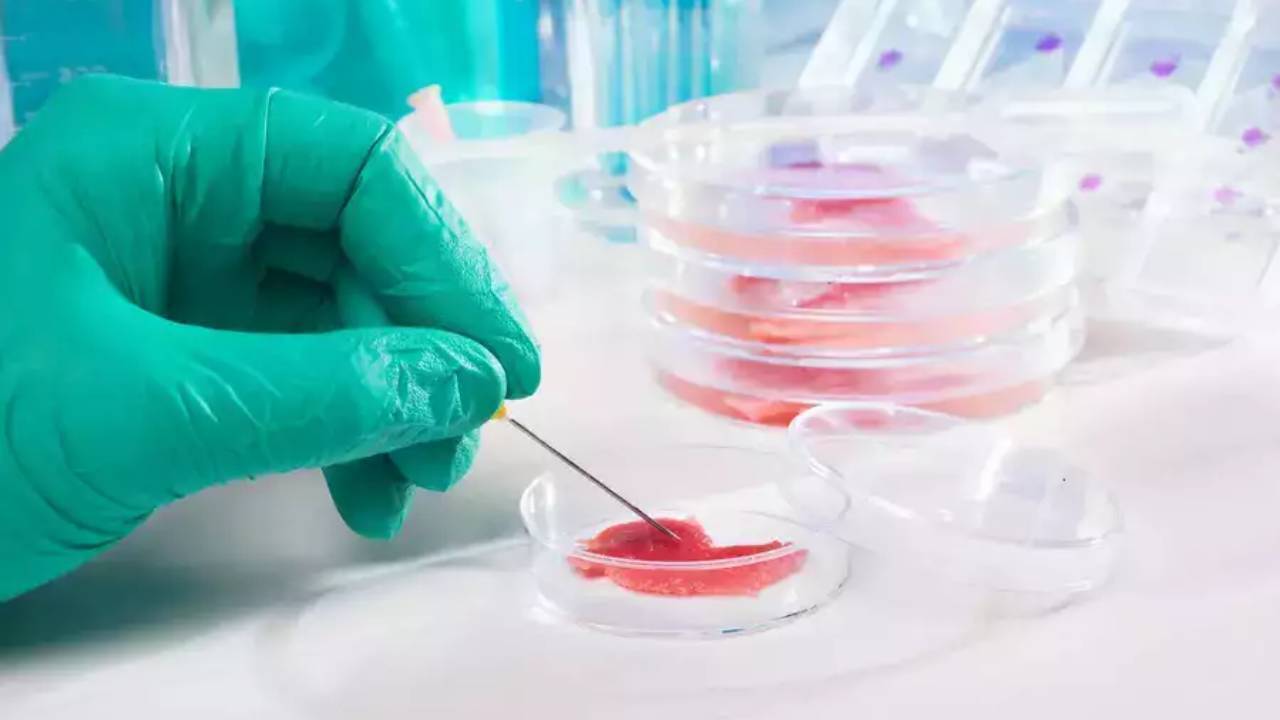
Scientists at the University of Bonn have developed a method to make cells from an 80-year-old donor appear biologically younger than age 20 by converting blood-cell precursors into neural stem cells over more than 100 days. The study, published in Aging Cell in 2026, uses epigenetic markers to measure cellular aging and suggests that the gradual reprogramming process can alter molecular markers linked to aging, potentially helping researchers understand age-related changes and whether they can be reversed. Professor Oliver Brustle notes that this approach allows for observing how cells actually function as they become younger, beyond just measuring biological age.
Written by AI on 2026-10-16, from this article's own text only (the story summary below draws on all the coverage).

AI analysis

Story summary

Scientists at the University of Bonn in Germany have developed a method to make human cells appear biologically younger, with cells from an 80-year-old donor showing an epigenetic age below 20. This breakthrough was published in the journal *Aging Cell* and involves converting blood-cell precursors into neural stem cells using specialized proteins called transcription factors. The process took more than 100 days, indicating that the rejuvenation is not immediate but gradual.

Professor Oliver Brustle, director of the Institute of Reconstructive Neurobiology at University Hospital Bonn, stated that this epigenetic rejuvenation ensures the cells behave like young cells, beyond just appearing younger. This research could significantly advance understanding of age-related changes and whether they can be reversed.

Written for “Cell Rejuvenation Breakthrough” on 2026-10-31, grounded in this article and the 0 other(s) covering the same event.

Story

📰 Cell Rejuvenation Breakthrough
Science · 1 article(s) covering the same event.

Compared with similar articles

Nothing to compare against. No article is close enough to this one for the pipeline to have linked or judged the pair.
How this article was measured signals, leaning charts, publisher record, byline, topics and claims

Signals How these are calculated →

Claims extracted
32
sentences that state something as happening or true
Uncertain
28%
9 of 32 hedged ("reportedly", "may", "according to")
Leaning
not political
takes no side on a contested political question
Publisher signals
59/100
Times of India's corrections and hedging, across everything collected from it. Not a measure of accuracy.
Outlets on this story
1
Science
Same framing elsewhere
1
articles that frame the event the way this one does
Analyzed 2026-10-16 · how these are computed

How this is being covered How these are calculated →

Article leaning vs. publisher reliability
Source leaning vs. consistency

Publisher

Times of India · 3798 article(s) · 2 correction(s) detected
Running correction rate · 2 correction(s)

Who wrote this

TOI Science Desk
295 article(s) here · 1 carrying a prediction
🔮 She explored whether an inexpensive device could capture airborne genetic material and support the detection of bacterial pathogens.
🔮 This control may help it maintain its orientation and move along a narrow path without losing its bearings.
🔮 The university says the sculpture will subsequently go on permanent display at its Turner Museum of Glass.
🔮 By bringing together nature, wellness facilities and educational spaces, Winter Garden aimed to create a setting where visitors could exercise, learn about nutrition and gardening, and spend time outdoors.
🔮 Also discovered was a 4,500-year-old humanoid idol, which archaeologists hope will help shed light on the cultural traditions of the region.
🔮 When garlic mustard spreads across the forest floor, other plants may struggle to obtain the resources they need to survive.
🔮 The train delay that could not have happened in 1841 The mystery originated in an account published anonymously in the scientific journal Nature on October 5, 1871.
🔮 A late-night snack may do more than add extra calories to your day.
🔮 The work offers a glimpse of such a future, where living organisms could become an active part of the robotic systems.
🔮 A centuries-old archaeological puzzle at Westminster Abbey in London may finally be nearing a resolution, with new research suggesting that a skeleton discovered inside a Roman stone coffin belonged to a medieval abbot rather than the Roman-era man named on its inscription.
Wire or desk byline, not an individual reporter.
Also by TOI Science Desk
Nothing else under this byline is closely related to this article, so these are simply their most recent.
All 295 articles by TOI Science Desk →

Topics

Aging Cell Bonn Germany the Institute of Reconstructive Neurobiology the University of Bonn

Subjects

Bonn GPE · 2× Brustle PERSON · 2× Aging Cell ORG · 1× Germany GPE · 1× Oliver Brustle PERSON · 1× University Hospital Bonn ORG · 1× the Institute of Reconstructive Neurobiology ORG · 1× the University of Bonn ORG · 1×

Narrative

Professor Oliver Brustle, director of the Institute of Reconstructive Neurobiology at University Hospital Bonn, said the changes extended beyond measurements of biological age. “We also know that this epigenetic rejuvenation ensures that the cells actually behave like young cells,” Brustle said.
framing: mixed · carried by 1 article(s) · first seen 2026-10-16
🔮 The findings, published in the journal Aging Cell in 2026, could help researchers understand how age-related changes occur and whether some of them can be reversed.

Claims (32 extracted, 9 hedged)

Scientists at the University of Bonn in Germany have found a way to make human cells display biological characteristics associated with much younger cells, with those derived from an 80-year-old donor showing an epigenetic age below 20. asserted
those → find → 20
The findings, published in the journal Aging Cell in 2026, could help researchers understand how age-related changes occur and whether some of them can be reversed. uncertain
some → publish → them
According to the research, announced on October 9, scientists converted blood-cell precursors from an elderly donor into neural stem cells using specialised proteins called transcription factors. uncertain
scientists → accord → proteins
These stem cells can develop into nerve cells and provide researchers with a model for investigating age-related changes in the nervous system. asserted
cells → develop → system
The study's notable finding was not just the apparent rejuvenation of the cells, but also the time it took for the changes to occur. asserted
changes → take → cells
Rather than producing the transformation rapidly, the researchers observed the process unfolding over more than 100 days. asserted
process → produce → days
Cells showed an epigenetic age below 20 Biological age does not always correspond to the number of years a person has lived. asserted
person → show → years
Scientists can estimate a cell's biological age by examining epigenetic markers, chemical modifications to DNA that influence how genes function. asserted
genes → estimate → DNA
In the Bonn study, cells derived from an 80-year-old donor displayed epigenetic characteristics associated with cells younger than 20. asserted
cells → derive → 20
The findings suggest that the cellular reprogramming process can substantially alter molecular markers linked to aging. asserted
process → suggest → aging
Professor Oliver Brustle, director of the Institute of Reconstructive Neurobiology at University Hospital Bonn, said the changes extended beyond measurements of biological age. “We also know that this epigenetic rejuvenation ensures that the cells actually behave like young cells,” Brustle said. asserted
Brustle → say → cells
The observation is significant because researchers want to understand whether changes in epigenetic age correspond to meaningful differences in how cells function. asserted
cells → want → differences
Reprogramming process unfolded over more than 100 days Earlier approaches to cellular reprogramming have often involved converting mature cells into pluripotent stem cells before directing them to develop into another specialised cell type. asserted
approaches → reprogramme → type
Such methods can produce substantial changes in cellular identity and age-associated markers over a relatively short period. asserted
methods → produce → period
The Bonn team used a different approach, directly reprogramming blood-cell precursors into neural stem cells. asserted
team → use → cells
This allowed the researchers to observe the gradual changes without first passing through the pluripotent stem-cell stage. asserted
researchers → allow → stage
The process unfolded over more than 100 days, offering scientists an opportunity to study how epigenetic changes develop over time. asserted
changes → unfold → time
Brustle said the slower transformation could help researchers identify the factors and substances that influence cellular rejuvenation. uncertain
that → say → rejuvenation
By examining the process as it happens, scientists may be able to investigate which changes are essential, which can be interrupted and how different stages relate to the cells' eventual characteristics. uncertain
stages → examine → characteristics
Findings could help research into Alzheimer's and other neurological conditions Neural stem cells can generate nerve cells, making them useful for laboratory studies of the nervous system. uncertain
them → help → system
Researchers hope the approach could help them investigate how aging affects neural cells and contribute to research into age-related neurological conditions, including Alzheimer's disease. uncertain
aging → hope → disease
A model that captures aspects of cellular aging may help scientists study disease mechanisms and test research hypotheses under controlled laboratory conditions. uncertain
scientists → capture → conditions
It could also provide a way to examine whether particular interventions influence age-associated molecular changes. uncertain
interventions → provide → changes
However, the study does not establish that the method can prevent or treat Alzheimer's disease. asserted
method → establish → disease
Further research would be needed to determine how the findings translate to disease models and, eventually, potential clinical applications. asserted
findings → need → models
Cellular rejuvenation is not the same as reversing human aging asserted
rejuvenation → reverse → aging
Despite the striking result, the findings should not be interpreted as evidence that scientists have reversed aging in a person. asserted
scientists → interpret → person
The researchers studied cells under laboratory conditions; they did not make an 80-year-old person biologically younger, demonstrate an increase in life expectancy or develop an anti-aging treatment for patients. asserted
person → study → patients
It does not, by itself, establish that every aspect of a cell's function or health has returned to a younger state. asserted
aspect → establish → state
The research offers a model for examining how cells change during reprogramming and may help scientists investigate the mechanisms underlying cellular aging. uncertain
scientists → offer → aging
Whether these findings can eventually inform therapies for age-related diseases remains an open question. asserted
inform → inform → diseases
For now, the study represents a development in laboratory research into cellular rejuvenation, rather than a proven method of reversing aging in humans. asserted
study → represent → humans

💬Give feedback
🕘History 🎫Support