After nearly a century, America has rediscovered the wealth tax.
asserted
America → rediscover → tax
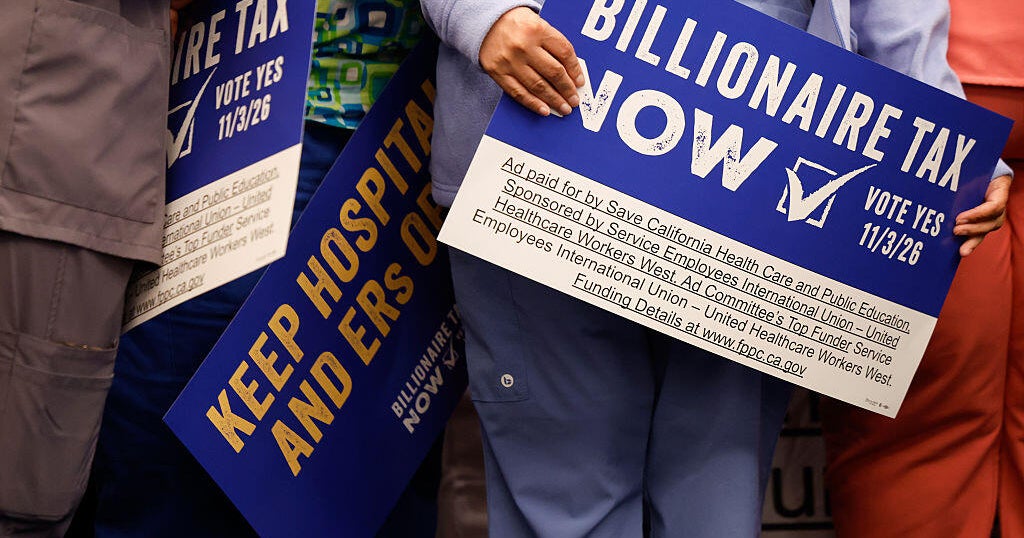
This November, Californians will vote on Proposition 40, a union-backed initiative levying a one-time 5% tax on the net worth of the state's billionaires.
asserted
Californians → vote → billionaires
Senator Bernie Sanders and Representative Ro Khanna have introduced a federal version; a dozen states have advanced millionaire or billionaire taxes this year; and Maine, Washington, Hawaii, and Rhode Island have all enacted one.
asserted
Maine → introduce → one
Not since the Progressive Era has taxing the rich had this much momentum.
asserted
taxing → tax → momentum
The energy is easy to understand.
asserted
energy → understand → ?
The 25 wealthiest Americans pay a “true tax rate” of just 3.4%—a fraction of what nurses and teachers pay—while holding about 2% of the nation's wealth.
asserted
nurses → pay → wealth
That’s nearly as much as the entire bottom half of the country combined.
asserted
That → ’ → country
This spring, Forbes counted a record 3,428 billionaires worth $20.1 trillion, up $4 trillion since last year.
asserted
Forbes → count → year
Elon Musk topped the list at $839 billion, and this summer he became history's first trillionaire.
asserted
he → top → billion
At the same time, workers' share of economic output fell to 52.8%, the lowest since records began in 1947.
asserted
records → fall → 1947
One obvious response is to tax the fortunes at the top and redistribute those funds.
asserted
response → tax → funds
But I worry that the wealth-tax movement is aimed at the wrong target.
asserted
movement → worry → target
Billionaires create a lot of damage, to be sure.
asserted
Billionaires → create → damage
As Alex Gibney’s new documentary Musk lays out, the Tesla and SpaceX CEO spent nearly $300 million helping elect a president and then slashed federal agencies, including several investigating his own companies.
asserted
CEO → lay → companies
Still, he and his tech-bro pals are not themselves the underlying reason for our economic dysfunction.
asserted
he → underlie → dysfunction
In my view, the root cause is corporate power—the way modern corporations are owned, governed, and permitted to organize markets and politics to their own advantage—and how relentlessly that power has concentrated over the past 50 years.
asserted
power → own → years
Since the late 1990s, three-quarters of American industries have grown more concentrated.
asserted
quarters → grow → industries
Corporate margins have roughly tripled since 1980, and after-tax profits—below 10% of GDP for virtually all of 1950 to 2010—now exceed 12%, near the record.
asserted
profits → triple → record
Economist Thomas Philippon calculates that weakened competition costs the typical household about $300 a month.
asserted
competition → calculate → 300
Since 1970, when Milton Friedman declared that a corporation's only social responsibility is profit, businesses have been re-engineered around delivering the most value possible to shareholders.
asserted
businesses → declare → shareholders
Today, the bulk of many senior executives’ pay comes in the form of stock options and share buybacks (when a company spends its earnings to buy up its own stock and lift the price), which now send over a trillion dollars a year to shareholders rather than into wages or investment.
asserted
which → come → wages
Before 1982, this practice was viewed as market manipulation.
asserted
practice → view → manipulation
In the following decades, the forces that once pushed back against inequality were gutted: union membership fell from 20% of American workers to 10%, and antitrust enforcement was consistently muted.
asserted
enforcement → follow → %
This is where billionaires come in.
asserted
billionaires → come → ?
Nobody earns $839 billion from a paycheck.
asserted
Nobody → earn → paycheck
A fortune of that scale can only be made by accumulating equity.
asserted
fortune → make → equity
Profit is simply what remains after wages are held down, taxes are minimized, and costs are pushed onto workers, communities, and the environment.
asserted
costs → remain → workers
It makes little difference whether the claim to those profits comes from founding a company or, as with hedge-fund and private-equity fortunes, from the fruit of corporations other people built.
uncertain
people → make → corporations
Because the richest tenth of Americans own nearly 90% of household stock-market wealth, every dollar shifted from paychecks to profit flows almost undiluted to the top.
asserted
dollar → own → top
You don't have to look hard for examples.
asserted
You → have → examples
The Walton fortune rests on wages so low that a federal watchdog found Walmart among the biggest employers of workers on Medicaid and food stamps.
asserted
watchdog → rest → Medicaid
In other words, taxpayers are subsidizing the payroll beneath a dynastic fortune.
asserted
taxpayers → subsidize → fortune
Amazon founder and CEO Jeff Bezos's wealth compounded over years during which Amazon paid no federal income tax on billions in profit while fighting its warehouse workers' union drives.
asserted
Amazon → compound → drives
In each case, the fortune is substantially extracted from workers and the public, not the market reward it is billed as.
asserted
it → extract → workers
None of this would last without help from Washington.
asserted
None → last → Washington
Over the past half century, political spending has become a core business strategy and arguably the highest-return investment a large company can make.
asserted
company → become → century
In a 1971 memorandum, future Supreme Court justice Lewis Powell urged the Chamber of Commerce to put business on a political war footing.
asserted
Powell → urge → footing
Today, lobbying has grown into a multibillion-dollar industry and business now outspends labor and public-interest groups 34-to-one.
asserted
business → grow → one
Since Citizens United removed the last meaningful limits on business political spending in 2010, every election has cost more than the last—nearly $16 billion in 2024, mostly corporate money.
asserted
election → remove → 2024
Under President Donald Trump, the exchange has become impossible to ignore.
asserted
exchange → become → Trump
…and 21 more, not listed.
 The Aporia