Photo via The Sydney Morning Herald

Smart traps and AI baits: The high-tech push to target Australia’s foxes

Read the original at The Sydney Morning Herald ↗
Cite

Harris, R. (2026, October 17). Smart traps and AI baits: The high-tech push to target Australia’s foxes. The Sydney Morning Herald. https://www.smh.com.au/politics/federal/smart-traps-and-ai-baits-the-high-tech-push-to-target-australia-s-foxes-20261017-p613n0.html?ref=rss&utm_medium=rss&utm_source=rss_feed

Dated from the outlet's own feed. Check the original for its byline.

The Sydney Morning Herald · collected 2026-10-17 · by Rob Harris

Quick Summary

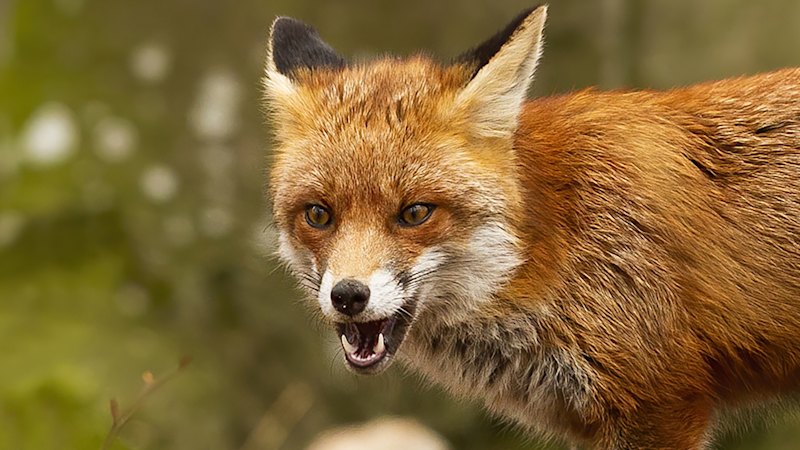
Australia is developing advanced technology like AI bait stations and image-recognition traps to combat its invasive fox population, which covers 80% of the country and kills over 300 million native animals annually. The draft national threat abatement plan aims to make fox control more precise using tools such as sentinel bait stations that use artificial intelligence to distinguish between target and non-target species. Populations are particularly dense in areas like central Queensland, New South Wales, Victoria, and South Australia, with an estimated 1.7 million total foxes nationwide. The strategy also explores improvements in grooming traps and remote monitoring devices to ensure the technology can prevent harm to domestic animals while targeting invasive foxes effectively.
Written by AI on 2026-10-17, from this article's own text only (the story summary below draws on all the coverage).

AI analysis

Story summary

Artificial intelligence is being developed as a new weapon against the invasive European red fox population in Australia, which was introduced between 1845 and 1879 by wealthy settlers for hunting. The draft national threat abatement plan released recently highlights that these foxes occupy about 80% of Australia and are estimated to kill over 367 million mammals, including 108 million native mammals, annually. AI-powered bait stations, image-recognition traps, thermal cameras, and remotely monitored devices could make the control more targeted and effective. One such system, called a sentinel bait station, uses AI to distinguish between target and non-target animals before delivering poison. Fox densities in some temperate areas can reach 16 foxes per square kilometre, affecting regions from central Queensland through NSW, Victoria, and South Australia, with populations now expanding into Western Australia.

Written for “Fox Control In Australia” on 2026-11-04, grounded in this article and the 0 other(s) covering the same event.

Story

📰 Fox Control In Australia
Technology · 1 article(s) covering the same event.

Compared with similar articles

Nothing to compare against. No article is close enough to this one for the pipeline to have linked or judged the pair.
How this article was measured signals, leaning charts, publisher record, byline, topics and claims

Signals How these are calculated →

Claims extracted
32
sentences that state something as happening or true
Uncertain
9%
3 of 32 hedged ("reportedly", "may", "according to")
Leaning
not political
takes no side on a contested political question
Publisher signals
61/100
The Sydney Morning Herald's corrections and hedging, across everything collected from it. Not a measure of accuracy.
Outlets on this story
1
Technology
Same framing elsewhere
1
articles that frame the event the way this one does
Analyzed 2026-10-17 · how these are computed

How this is being covered How these are calculated →

Article leaning vs. publisher reliability
Source leaning vs. consistency

Publisher

The Sydney Morning Herald · 5986 article(s) · 15 correction(s) detected
Running correction rate · 15 correction(s)

Who wrote this

Rob Harris
33 article(s) here · 1 carrying a prediction
🔮 Political divisions are increasingly spilling into personal relationships, with more than one in five young Australians admitting they would rule out friendships with people who hold different political views.
🔮 The report, from Strategic Analysis Australia, challenges lobbying by companies including OpenAI and Anthropic, which have warned they will not train their most advanced AI models in Australia unless copyright protections are relaxed.
🔮 Finance Minister Katy Gallagher has refused to guarantee Labor will cut more than it spends in the upcoming budget update, despite warning that mounting pressures are forcing the government to examine every program ahead of a likely interest rate rise.
🔮 “Some commanders were alert to this data and rumours that accompanied it while others were not, which may suggest an abandonment of curiosity,” the report found.
🔮 A damning new report prepared for the Albanese government reveals almost two-thirds of homelessness providers are turning away desperate Australians they would once have helped, with some rejecting as many people as they take in.
🔮 She said many of those who had helped elect Haines were struggling to comprehend how the democratic process they had worked to strengthen could become the target of such violence.
🔮 A delegation of frontline workers and people with lived experience of homelessness, family violence and financial hardship will travel to Canberra during the next parliamentary sitting week to press the case directly with politicians.
🔮 Artificial intelligence could become a new weapon in the fight against Australia’s burgeoning fox population, as technology is developed to identify the invasive predators and deliver poison while sparing native wildlife.
🔮 Jim Chalmers knows the government is under the pump and he says Labor must up its game to battle inflation, the unintended consequences of its May budget and keep voters’ trust through a painful period of interest rate rises.
🔮 The findings will intensify pressure on federal and state governments – the majority of them Labor – to overhaul rural health funding, with the National Rural Health Alliance warning that Medicare’s traditional reliance on payments for individual consultations cannot sustain services in communities with small populations, higher operating costs and further workforce shortages.
Also by Rob Harris
Nothing else under this byline is closely related to this article, so these are simply their most recent.
All 33 articles by Rob Harris →

Topics

Australia NSW Queensland South Australia Victoria

Subjects

Australia GPE · 4× Brewster PERSON · 1× European NORP · 1× Invasive Species Council ORG · 1× NSW GPE · 1× Queensland GPE · 1× Rob Brewster PERSON · 1× South Australia GPE · 1× Victoria GPE · 1× Western Australia GPE · 1×

Narrative

Introduced by wealthy settlers for hunting between 1845 and 1879, the European red fox is estimated to kill about 367 million mammals each year, including 108 million native mammals, as well as 111 million birds and 88 million reptiles.
framing: assertive · carried by 1 article(s) · first seen 2026-10-17
🔮 Artificial intelligence could become a new weapon in the fight against Australia’s burgeoning fox population, as technology is developed to identify the invasive predators and deliver poison while sparing native wildlife.
2026-10-17 · The Sydney Morning Herald
Smart traps and AI baits: The high-tech push to target Australia’s foxes · assertive framing

Claims (32 extracted, 3 hedged)

Artificial intelligence could become a new weapon in the fight against Australia’s burgeoning fox population, as technology is developed to identify the invasive predators and deliver poison while sparing native wildlife. uncertain
technology → become → wildlife
The push comes as a new federal strategy lays bare the scale of the threat from foxes, which occupy about 80 per cent of Australia and are estimated to kill more than 300 million native animals each year. asserted
which → come → animals
The draft national threat abatement plan says AI-powered bait stations, image-recognition traps, thermal cameras and remotely monitored devices could make fox control more targeted and effective. uncertain
control → say → ?
One system, known as a sentinel bait station, uses AI to distinguish between target and non-target animals and restrict access to bait. asserted
system → know → bait
In some temperate areas, fox densities can reach 16 animals per square kilometre, from central Queensland, through NSW, Victoria and South Australia. asserted
densities → reach → NSW
Populations are also now thriving in Western Australia. asserted
Populations → thrive → Australia
The plan – which replaces strategy written almost 20 years ago – also examines improvements to grooming traps that use image recognition to identify animals before delivering a dose of poison. asserted
that → replace → poison
Bluetooth technology could eventually prevent devices from firing at tagged domestic dogs, while mobile and satellite connections could allow rangers to monitor equipment remotely. uncertain
rangers → prevent → equipment
An initial field test of a prototype produced promising results, although no foxes were encountered during the trial and further testing is required before the technology can be considered for wider use. asserted
technology → produce → use
The latest government estimates put Australia’s fox population at about 1.7 million, although officials warn the figure fluctuates with rainfall, food availability and other environmental conditions. asserted
figure → put → rainfall
Introduced by wealthy settlers for hunting between 1845 and 1879, the European red fox is estimated to kill about 367 million mammals each year, including 108 million native mammals, as well as 111 million birds and 88 million reptiles. asserted
fox → introduce → mammals
They have contributed to the extinction of at least 20 native mammal species. asserted
They → contribute → species
Invasive Species Council rewilding manager Rob Brewster said the new strategy was an opportunity to bring Australia’s approach to fox control into line with advances in conservation science. asserted
strategy → say → science
“Foxes have helped drive native animals to extinction and continue to prey on threatened mammals, birds and reptiles across huge areas of the country,” he said. asserted
he → help → country
“For animals like bandicoots, bettongs and many ground-dwelling birds, controlling foxes can be the difference between populations recovering or disappearing altogether.” asserted
populations → dwell → foxes
Brewster said emerging technology would need to be matched by sustained investment. asserted
technology → say → investment
“It is good to finally see a new national strategy on the table, but the final plan needs to be ambitious and backed by the funding needed to deliver real action on the ground,” he said. asserted
he → see → ground
“A strategy sitting on a shelf won’t protect wildlife. asserted
strategy → sit → wildlife
Governments need to invest in co-ordinated, sustained fox control across the landscapes where our most vulnerable native animals still survive. asserted
animals → need → landscapes
The draft plan says foxes can rapidly recolonise areas after control efforts stop, with individual animals recorded travelling as far as 300 kilometres. asserted
animals → say → kilometres
More than 40 fenced wildlife havens covering about 850 square kilometres have been established on the mainland to protect threatened mammals from foxes and feral cats. asserted
havens → fence → foxes
Conventional control programs have helped reverse declines in species including the boodie, woylie, bridled nail-tailed wallaby and western swamp tortoise. asserted
programs → help → boodie
But the government’s strategy envisages a combination of poisoning, trapping, shooting, exclusion fencing and eradication from priority islands, alongside research into emerging approaches. asserted
strategy → envisage → approaches
Hamish McIntyre, the president of the National Farmers Federation, said foxes were a “dreadful pest” particularly for lambs and kid goats but also in horticulture around grapes and berries. asserted
foxes → say → grapes
“It needs to be co-ordinated effort, obviously farmers, but also all the national parks and crown land,” he said, adding that “local, state, and federal governments should work together”. asserted
governments → need → ?
The draft strategy sets a 30-year goal of reducing fox impacts sufficiently to secure the long-term viability of affected native species. asserted
strategy → set → species
Dr Bronwyn Hradsky, from the school of agriculture, food and ecosystem sciences at the University of Melbourne, said no country had the tools to eradicate foxes at a continental scale. asserted
country → say → scale
“With current methods, it is feasible to eradicate foxes from a confined space such as a fenced reserve or an offshore island but impossible over vast areas,” she said. asserted
she → eradicate → areas
She said eradicating foxes from Australia would require some yet-to-be-developed form of biological control. asserted
eradicating → say → control
Brewster said Australia had developed effective tools for controlling introduced predators but needed to deploy them at a much greater scale. asserted
Australia → say → scale
AI is not presented as a replacement for existing control methods, but as a potential way to make them more precise, particularly in remote areas where monitoring traps and preventing harm to non-target animals can be difficult. asserted
monitoring → present → animals
Get to the heart of what’s happening with climate change and the environment. asserted
what → get → change

💬Give feedback
🕘History 🎫Support