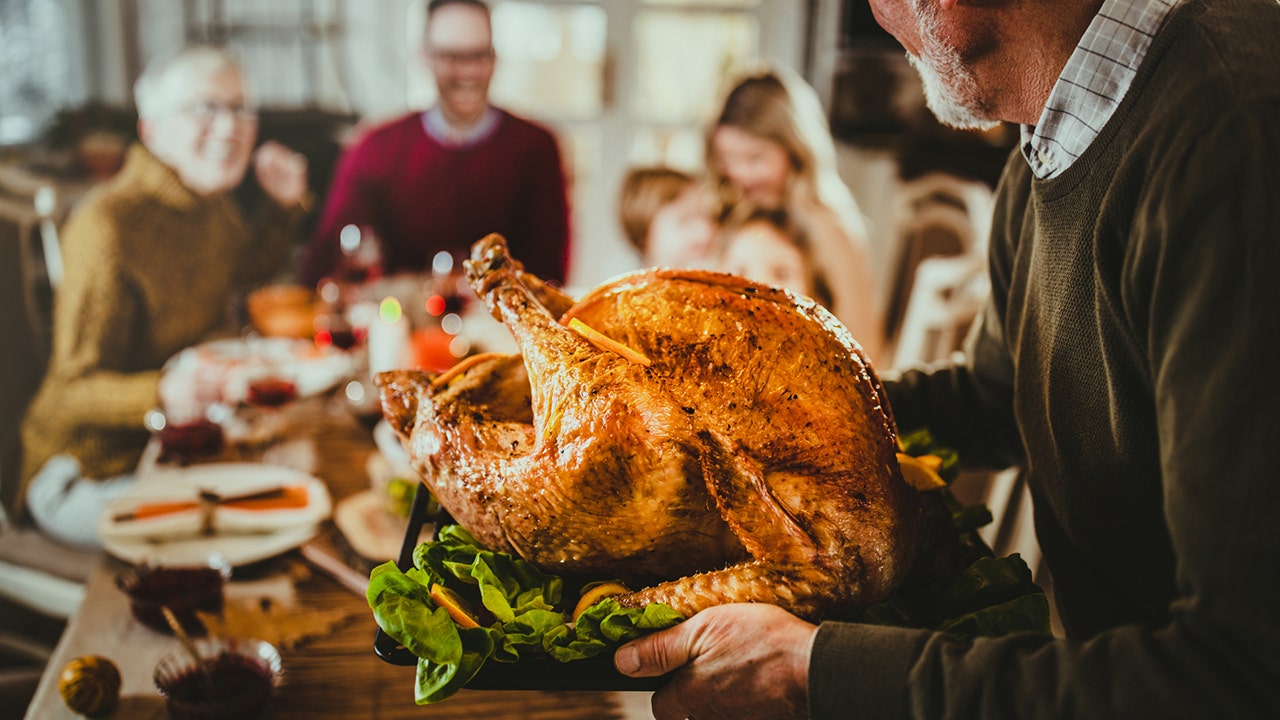
Photo via Fox News

5 reasons Americans are no longer inviting guests into their homes

Read the original at Fox News ↗
Cite

Bardolf, D. (2026, October 17). 5 reasons Americans are no longer inviting guests into their homes. Fox News. https://www.foxnews.com/health/5-reasons-americans-no-longer-inviting-guests-homes

Dated from the outlet's own feed. Check the original for its byline.

Fox News · collected 2026-10-17 · by Deirdre Bardolf

Quick Summary

Americans are hosting dinner parties at home less frequently now compared to previous decades; only 67% entertained guests in the past year, down from 88% in 1995. Factors contributing to this decline include busier schedules, parenting demands, smaller friendship networks, and financial constraints due to rising grocery costs. Experts cited by Fox News Digital suggest that high expectations for perfect gatherings and the need to accommodate various dietary restrictions also add stress, making hosting feel like an unappealing task after a long day of work and family responsibilities.
Written by AI on 2026-10-17, from this article's own text only (the story summary below draws on all the coverage).

AI analysis

Story summary

According to recent analysis by Data for Progress, only 67% of Americans entertained people in their homes at least once in the past year, down from 88% in 1995. The share of those hosting friends or family monthly dropped from 42% in 1975 to just 12% by 2026. Experts attribute this decline to busier schedules, increased parenting demands, shrinking social networks, and the allure of home-based entertainment options. For many, hosting after a day filled with work and family duties feels like an additional burden. Additionally, women's growing participation in the workforce has led to a loosening of traditional social ties, such as parties and potlucks, contributing further to this trend.

Written for “Americans Abandoning Hospitality Tradition” on 2026-10-31, grounded in this article and the 1 other(s) covering the same event.

Story

📰 Americans Abandoning Hospitality Tradition
Other · 2 article(s) covering the same event. See how they differ ↓

Compared with similar articles

This article reads unscored and hedges 18% of its claims. Each row says how that neighbour differs.
New York Post
Hedges 5 of 31 claims Outlet record 66/100
How this article was measured signals, leaning charts, publisher record, byline, topics and claims

Signals How these are calculated →

Claims extracted
28
sentences that state something as happening or true
Uncertain
18%
5 of 28 hedged ("reportedly", "may", "according to")
Leaning
not political
takes no side on a contested political question
Publisher signals
69/100
Fox News's corrections and hedging, across everything collected from it. Not a measure of accuracy.
Outlets on this story
2
Other
Same framing elsewhere
1
articles that frame the event the way this one does
Analyzed 2026-10-17 · how these are computed

How this is being covered How these are calculated →

Article leaning vs. publisher reliability
Source leaning vs. consistency

Publisher

Fox News · 6059 article(s) · 11 correction(s) detected
Running correction rate · 11 correction(s)

Who wrote this

Deirdre Bardolf
35 article(s) here · 1 carrying a prediction
🔮 A separate deal for a 79-cent-per-pound Good & Gather frozen turkey — not the Butterball turkey included in the meal deal — will begin in November.
🔮 As a dentist, he said he evaluates candy by how it could damage teeth: "Can it harm the enamel?
🔮 Card told Fox News Digital that his experience working in hotel and restaurant kitchens preparing and cutting steaks made him confident he could tell the difference.
🔮 Alton Brown's unconventional approach calls for mayonnaise and extra egg yolks.
🔮 Hurts is receiving treatment with the medication and is expected to miss the remainder of the 2026 season, according to the NFL.
🔮 Sage's drying quality works well to balance rich, fatty dishes, and it was even traditionally rubbed between the hands as a home remedy for clamminess, Perr said. For dried herbs, Perr also recommends crushing them in your hand before adding them to a dish to help release their oils. "Crushing it before you add it to something will explode the flavor," she said.
🔮 New York City and Chicago may be the American cities best known for their pizza, but another city — in Connecticut of all places — has carved out its own slice of the pie.
🔮 A new analysis of 20 protein sources found that the top scorer wasn’t steak, salmon or eggs — it was an everyday food many shoppers may be overlooking.
🔮 The dinner party may be dying in America, with hosting at home far less common than it was in past decades, a new analysis found.
🔮 Rice may be a kitchen staple, but cooking it well at home can be trickier than it seems.
Also by Deirdre Bardolf
Nothing else under this byline is closely related to this article, so these are simply their most recent.
All 35 articles by Deirdre Bardolf →

Topics

America Americans Atlantic Data for Progress Fox News Digital

Subjects

Americans NORP · 4× Schatz PERSON · 3× America GPE · 2× Atlantic ORG · 2× Data for Progress ORG · 2× Fox News Digital ORG · 2× Puls PERSON · 2× Florida GPE · 1× John Puls PERSON · 1× The Atlantic ORG · 1×

Narrative

"When you’ve spent the day working and taking care of your kids, hosting people can seem like just another task to complete, even though you’d love to see them," added Shebna N. Osanmoh I, a board-certified psychiatric nurse practitioner in California.
framing: assertive · carried by 1 article(s) · first seen 2026-10-17
🔮 The dinner party may be dying in America, with hosting at home far less common than it was in past decades, a new analysis found.
2026-10-17 · Fox News
5 reasons Americans are no longer inviting guests into their homes · assertive framing

Claims (28 extracted, 5 hedged)

The dinner party may be dying in America, with hosting at home far less common than it was in past decades, a new analysis found. uncertain
analysis → die → decades
Only 67% of Americans said they entertained people in their homes at least once in the past year, down from 88% in 1995, according to an analysis by Data for Progress. uncertain
they → say → Progress
The think tank compared its own 2026 survey with a similar survey from 1995, noting that the two used different methods and therefore offer an indication of a trend rather than a precise measure of change. asserted
two → compare → change
The share of Americans who host friends or family at home at least once a month, meanwhile, plummeted from 42% in 1975 to 12% in 2026, The Atlantic reported. asserted
Atlantic → host → 2026
Experts point to busier schedules, parenting demands, shrinking friendship networks and the appeal of at-home entertainment as some possible reasons for the decline. asserted
Experts → point → decline
They’re too tired to host After a long day of work and family responsibilities, hosting can feel like yet another demand. asserted
hosting → ’re → demand
And with more women working, the social schedules they traditionally maintained, from parties to potlucks, have frayed, The Atlantic noted. asserted
Atlantic → work → potlucks
Working multiple jobs to make ends meet leaves people feeling burned out and without the same level of "social battery," Florida-based psychotherapist John Puls told Fox News Digital. asserted
Puls → work → Digital
"When you’ve spent the day working and taking care of your kids, hosting people can seem like just another task to complete, even though you’d love to see them," added Shebna N. Osanmoh I, a board-certified psychiatric nurse practitioner in California. asserted
I → spend → California
Expectations are too high In an era where every moment might be shared on social media, many feel the need to make their gatherings picture-perfect. uncertain
gatherings → share → media
"High expectations may clash with what people can realistically manage, making hosting feel stressful rather than enjoyable," said Wildaliz Caro, Ph.D., a licensed clinical psychologist in Puerto Rico. uncertain
Caro → clash → Rico
"Trying to plan the perfect gathering can fuel pressure to impress others." Accommodating preferences and dietary needs can also feed that pressure, The Atlantic noted. asserted
Atlantic → try → pressure
Hosting can get expensive Experts agree that hosting takes more than just time — it takes money. asserted
it → get → money
With grocery prices still climbing, feeding a crowd can make even a casual get-together feel like a luxury. asserted
together → climb → luxury
"Housing costs and smaller living spaces make hosting feel financially and practically harder," Daniel Schatz, Ph.D., a political scientist and former visiting scholar at Harvard, Stanford and Georgetown, told Fox News Digital. asserted
Schatz → make → Digital
There are fewer friends to invite The share of Americans with five or more close friends dropped from 63% in 1990 to 38% in 2021, according to Data for Progress. " uncertain
share → be → Progress
Americans spend more time alone, report fewer close friendships and participate less in the kinds of local institutions that once created regular social contact," Schatz said. asserted
Schatz → spend → contact
He warns that younger adults, people living alone, lower-income households and those without strong social networks are most affected. asserted
adults → warn → networks
The U.S. surgeon general’s 2023 advisory described loneliness and social isolation in America as an epidemic. asserted
advisory → describe → epidemic
Declining friendships can contribute to depression, anxiety and social isolation, Puls added, and he sees the trend most often among younger generations, while Gen Xers and baby boomers still commonly gather in person. asserted
Xers → decline → person
Screens make staying in easy Puls said that adults are more inclined to stay home and stream movies and TV shows instead of hosting friends and family or going out. asserted
adults → make → friends
"A dinner party requires planning, cleaning, coordination and a degree of social energy," Schatz added. asserted
Schatz → require → energy
"Streaming or scrolling requires none of those things. asserted
Streaming → require → things
But experts say bringing back casual get-togethers, even in small ways, can help people stay connected. asserted
people → say → ways
"The remedy need not be elaborate," Schatz said. asserted
Schatz → say → ?
"The most realistic response is to lower the threshold for gathering: a simple coffee, takeaway meal, walk or recurring 'come as you are' evening." asserted
you → lower → gathering
He continued, "The point is not to revive the perfect dinner party. asserted
point → continue → party
It is to rebuild the ordinary habits of seeing one another." asserted
It → rebuild → one

💬Give feedback
🕘History 🎫Support