Photo via Mother Jones

Anthropic’s AI Safety Bill Has an Alarming Threshold for Government Action

Read the original at Mother Jones ↗
Cite

Hurwitz, S. (2026, October 17). Anthropic’s AI Safety Bill Has an Alarming Threshold for Government Action. Mother Jones. https://www.motherjones.com/politics/2026/10/anthropics-ai-safety-bill-has-an-alarming-threshold-for-government-action/

Dated from the outlet's own feed. Check the original for its byline.

Mother Jones · collected 2026-10-17 · by Sophie Hurwitz

Quick Summary

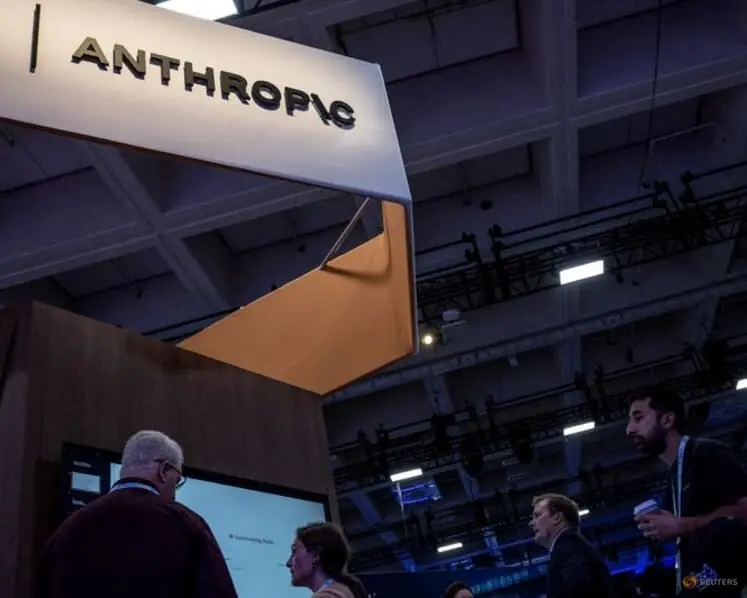
Anthropic, an AI company, is lobbying for a draft bill that would allow government intervention to block AI models only if they pose a foreseeable risk causing over $1 billion in damage or seriously injuring more than 50 people. The proposal restricts regulatory actions to specific categories such as the creation of biological weapons and excludes other forms of harm like fraud. Anthropic argues these policies are sensible, but critics worry this bill would limit states from passing stricter regulations and centralize power with a friendly federal agency.
Written by AI on 2026-10-17, from this article's own text only (the story summary below draws on all the coverage).

AI analysis

Story summary

Anthropic, the creator of the AI assistant Claude, confirmed on October 16, 2026, that it is circulating a draft bill among U.S. lawmakers to regulate artificial intelligence. According to Politico's report, the draft proposes allowing the federal government to block an AI model’s release or use if there is an imminent risk of killing or seriously injuring more than 50 people, or causing more than $1 billion in damages, but only with a judge’s approval. The proposal aims to address the lack of federal legislation on AI risks by requiring developers to test and submit powerful models for independent evaluation while maintaining robust security measures.

Written for “Anthropic AI Regulation Proposal” on 2026-11-04, grounded in this article and the 3 other(s) covering the same event.

Story

📰 Anthropic AI Regulation Proposal
Technology · 4 article(s) covering the same event. Compare every outlet's account →

Compared with similar articles

This article reads leans right and hedges 25% of its claims. Each row says how that neighbour differs.
Dawn
⚖️ Leans left further left than this Hedges 2 of 13 claims Outlet record 72/100
The Hindu
⚖️ Leans right Hedges 2 of 14 claims Outlet record 77/100
The Straits Times
⚖️ Leans left further left than this Hedges 2 of 9 claims Outlet record 66/100
Semafor
Hedges 1 of 8 claims Outlet record 59/100
“Article A discusses the Trump administration's directive following an incident with Anthropic's AI, while Article B talks about Anthropic's own draft bill for regulating AI. These are different but related events.”
Evening Standard
Hedges 1 of 11 claims Outlet record 64/100
“The articles discuss different aspects of AI regulation and policy, with Article A focusing on EU commissioner's comments at an Irish summit, while Article B discusses a draft bill proposed by Anthropic.”
The Sydney Morning Herald
⚖️ Leans left further left than this Hedges 1 of 26 claims Outlet record 61/100
“Article A discusses general narratives around AI while Article B focuses on Anthropic's lobbying and draft bill for regulating AI.”
Fox News
⚖️ Leans left further left than this Hedges 10 of 61 claims Outlet record 68/100
“The articles discuss different aspects of AI regulation and public concern without describing the same specific incident.”
South China Morning Post
⚖️ Leans right Hedges 1 of 3 claims Outlet record 62/100
“Article A discusses a proposed AI safety bill by Anthropic with high government intervention thresholds, while Article B reports on an actual order to remove DeepSeek products from federal systems due to national security risks.”
Semafor
Hedges 4 of 4 claims Outlet record 59/100
“The articles describe different aspects of Anthropic's activities: one focuses on their lobbying for AI regulation, while the other discusses their planned compute spend and potential IPO.”
Semafor
⚖️ Leans left further left than this Hedges 0 of 4 claims Outlet record 59/100
“The articles describe different events involving separate AI companies (Anthropic and OpenAI) with distinct issues (lobbying for a draft bill vs. disabling internal monitoring systems).”
How this article was measured signals, leaning charts, publisher record, byline, topics and claims

Signals How these are calculated →

Claims extracted
20
sentences that state something as happening or true
Uncertain
25%
5 of 20 hedged ("reportedly", "may", "according to")
Leaning
Leans right
of the writing, not the subject · beta estimate
Publisher signals
60/100
Mother Jones's corrections and hedging, across everything collected from it. Not a measure of accuracy.
Outlets on this story
4
Technology
Same framing elsewhere
1
articles that frame the event the way this one does
Analyzed 2026-10-17 · how these are computed

How this is being covered How these are calculated →

Article leaning vs. publisher reliability
Source leaning vs. consistency

Publisher

Mother Jones · 447 article(s) · 1 correction(s) detected
Running correction rate · 1 correction(s)

Who wrote this

Sophie Hurwitz
47 article(s) here · 1 carrying a prediction
🔮 On the morning of Election Day, Donald Trump went on Fox & Friends to deliver a surprise announcement: The United States, he said, would be cutting off $4 billion in aid to Israel at the end of the year.
2026-11-03 · assertive framing · Trump’s Big Announcement on Israel Means Nothing
🔮 She demanded that El-Sayed publicly disavow it as a precondition for appearing at an event with him on Sunday; it is not clear whether the event will go forward.
🔮 The share of America’s GDP contingent on data center buildout is now somewhere between 2 percent and 4 percent; total investment in the industry through 2032 is predicted to sit in the neighborhood of $10 trillion, per a recent Brookings Institution report.
🔮 Americans, meanwhile, are paying the price—the median US household has spent $856 more at the gas pump than they otherwise would have since the war started.
🔮 In a global labor action of record scale, dockworkers in 22 countries will strike on Friday to protest the use of their ports for arms exports.
2026-10-29 · assertive framing · A Global Port Strike Could Freeze $2 Billion in Freight
🔮 Similar claims date back to at least 2021, when viral videos began to circulate asserting that the holes would be used for tampering during that year’s gubernatorial recall election.
🔮 Best known for her work advocating for farmworker rights, Huerta co-founded with Cesar Chávez in 1962 the organization that would eventually become the United Farm Workers, and organized protests and walkouts pushing for laws and labor practices to protect the immigrant communities who worked in the fields, including winning them the right to organize unions in California.
2026-10-28 · assertive framing · Dolores Huerta Made Farmworkers Impossible to Ignore
🔮 His words echoed Donald Trump’s Islamophobia from the day prior, when Trump called Michigan Senate candidate Abdul El-Sayed a “jihadist” and argued that electing him would mean so much terrorism “you cannot even have Christmas.”
2026-10-27 · assertive framing · Vance Accuses El-Sayed of “Anti-White Racial Hate”
🔮 “You could see how scared people were to just consider being pregnant in the state of Missouri,” she said.
🔮 Their justification: Democratic candidate Mary Peltola, who served as Alaska’s House representative from 2022 to 2025, is running against two men named Dan Sullivan, and that could be pretty confusing for voters.
Also by Sophie Hurwitz
Nothing else under this byline is closely related to this article, so these are simply their most recent.
All 47 articles by Sophie Hurwitz →

Topics

Anthropic Capitol Hill Congress Politico the Commerce Department

Subjects

Anthropic ORG · 6× Congress ORG · 2× Politico ORG · 2× California GPE · 1× Capitol Hill ORG · 1× North Carolina GPE · 1× Owen Dahlkamp PERSON · 1× Tennessee GPE · 1× Vatican City GPE · 1× the Commerce Department ORG · 1×

Narrative

“The bill would let the government block a model’s release or use only if it poses a foreseeable, imminent risk of more than $1 billion in damages, or of killing or seriously injuring more than 50 people,” Politico‘s Owen Dahlkamp reported.
framing: mixed · carried by 1 article(s) · first seen 2026-10-17
🔮 The draft legislation would allow the government to block the release of any AI models it believes pose a danger to the public.

Claims (20 extracted, 5 hedged)

As the debate over regulating AI companies rages on, the artificial intelligence giant Anthropic has scaled up its Capitol Hill lobbying. asserted
giant → regulate → lobbying
And, as lawmakers propose ways to curb largely unregulated AI development, the company has started pitching its own draft bill to regulate the industry, Politico reported Friday. asserted
Politico → propose → industry
The draft legislation would allow the government to block the release of any AI models it believes pose a danger to the public. asserted
it → allow → public
But the its threshold for danger seems very high. asserted
threshold → seem → danger
“The bill would let the government block a model’s release or use only if it poses a foreseeable, imminent risk of more than $1 billion in damages, or of killing or seriously injuring more than 50 people,” Politico‘s Owen Dahlkamp reported. asserted
Dahlkamp → let → people
That is, if a model seemed like it might kill or seriously injure only a few people, or cause less than a billion dollars worth in property damage, the government would not be able to regulate it. uncertain
government → seem → it
The bill further limits what counts as an intervention-worthy “risk” to three categories: the creation of a biological weapon, the model evading its developer’s controls, or a cyberattack. asserted
what → limit → controls
That means that other forms of AI-related harm—like AI-powered fraud—would not be included. asserted
forms → mean → fraud
Anthropic’s proposal also reportedly prohibits any US agency other than the Commerce Department from intervening to suspend an AI model’s development or internal use. uncertain
proposal → prohibit → development
“This bill represents the proposals outlined in Anthropic’s Advanced AI Framework, which we have been advocating for with federal and state lawmakers since June,” an Anthropic spokesperson told Politico. asserted
spokesperson → represent → Politico
“These are sensible policies we believe Congress should act on.” asserted
Congress → believe → ?
Lawmakers of both parties have increasingly called to regulate the AI industry—proposing to tax AI companies heavily, pause frontier model development, create a cabinet-level AI-oversight department, and more. asserted
Lawmakers → call → department
Anthropic has ramped up its lobbying commensurately, spending more money lobbying Congress in the first half of 2026 than it did in all of 2025. asserted
it → ramp → 2025
The company has also lobbied heavily on the state level, particularly in California, where it has spent at least $90,000 to push pro-data-center-development policies in the past year. asserted
it → lobby → year
(Anthropic has also deployed lobbyists in states including Tennessee and North Carolina, and it has reportedly sent a delegation to Vatican City in order to convince the Pope to consider AI conscious.) uncertain
AI → deploy → Pope
The company’s congressional draft bill represents an effort by the company to concentrate regulatory power in a single agency—and if it passes, it could preempt states from passing stronger regulatory laws. uncertain
it → represent → laws
That leaves AI regulation in the hands of a comparatively friendly federal government, led by a president who has suggested repeatedly that “artificial intelligence” be renamed “super intelligence.” uncertain
intelligence → leave → president
He’s also pushed for industry self-regulation, which historically has not been very effective: see the 2007-08 financial collapse. asserted
which → push → collapse
As Miranda Bogen of the Center for Democracy and Technology told my colleague Alex Nguyen in July, companies aren’t likely to change much without government intervention. asserted
companies → tell → intervention
“Without really robust interventions that actually change the incentives that companies face in what they’re testing…and what they’re doing to fix problems, I don’t think we’re going to address the risks that are coming online,” Bogen said. asserted
Bogen → change → risks

💬Give feedback
🕘History 🎫Support