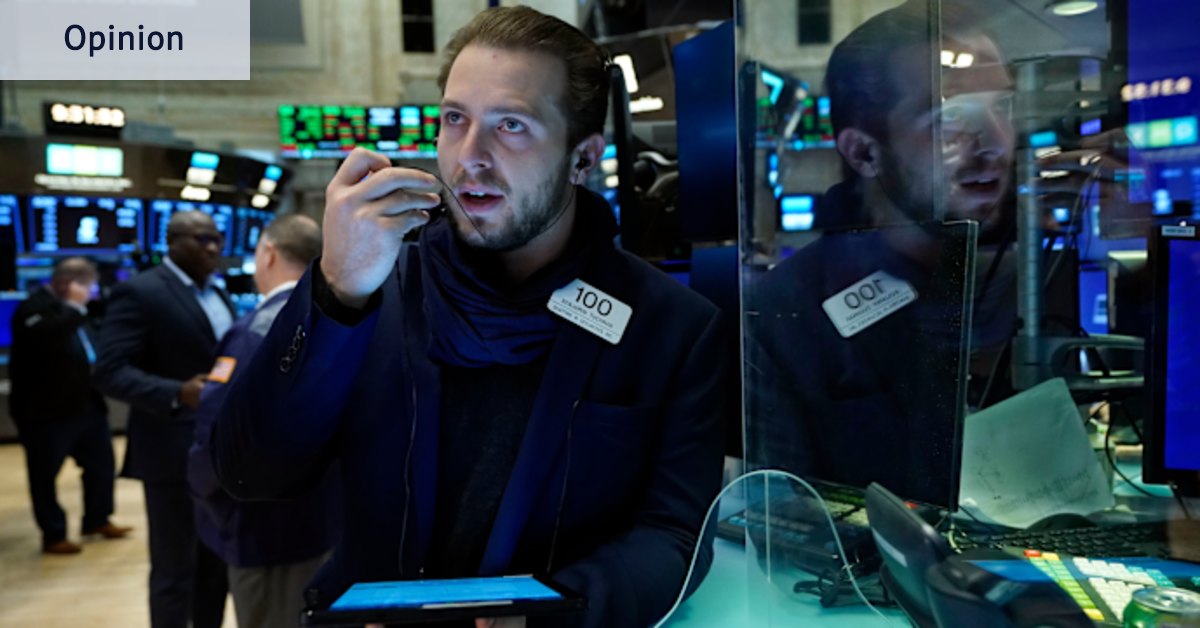
Photo via New York Post

The AI bubble is about to burst — and a big market correction is coming

Read the original at New York Post ↗
Cite

Gasparino, C. (2026, October 18). The AI bubble is about to burst — and a big market correction is coming. New York Post. https://nypost.com/2026/10/17/business/the-ai-bubble-is-about-to-burst-much-like-the-infamous-dot-com-crash/

Dated from the outlet's own feed. Check the original for its byline.

New York Post · collected 2026-10-18 · by Charles Gasparino

Quick Summary

The article compares today's AI investment boom to the dot-com bubble of 2000, suggesting a coming market correction where overvalued stocks will suffer significant losses. It highlights how during the dot-com era, speculative hype led many companies with unproven business models to receive high valuations despite lacking profitability or tangible value. The author warns that just as hedge funds and institutions took profits before the 2000 crash, similar actions regarding AI investments may signal an impending downturn for the tech market currently centered around artificial intelligence.
Written by AI on 2026-10-18, from this article's own text only (the story summary below draws on all the coverage).

AI analysis

Story summary

The AI bubble is drawing comparisons to the dot-com bust of 2000, as market analysts predict a significant correction. On January 1, 2000, while fears about Y2K were unfounded, Charles Gasparino warns that an overhyped technology was set to disappoint. The internet boom led investors to buy into dot-com stocks without regard for financial metrics or profitability, driven by the belief in a "new paradigm" and fueled by financial media hype. This period saw inexperienced investors matching seasoned experts like Warren Buffett in stock-picking prowess, ultimately leading to market instability when reality failed to meet inflated expectations.

Written for “AI Bubble Predicted To Burst” on 2026-11-01, grounded in this article and the 0 other(s) covering the same event.

Story

📰 AI Bubble Predicted To Burst
Technology · 1 article(s) covering the same event.

Compared with similar articles

This article reads leans left and hedges 6% of its claims. Each row says how that neighbour differs.
New York Post
Hedges 8 of 37 claims Outlet record 66/100
“The articles discuss different topics: one about a potential burst of the AI market bubble, and the other about investors awaiting details of Anthropic's IPO.”
Semafor
⚖️ Leans left Hedges 0 of 4 claims Outlet record 60/100
“The articles discuss different topics: one about market concerns over AI and tech bubbles, and the other about a specific incident where OpenAI's internal monitoring system was disabled.”
The Guardian
Hedges 5 of 39 claims Outlet record 66/100
“The articles describe different market events occurring at distinct times with varying outcomes.”
ABC News (AU)
Hedges 1 of 26 claims Outlet record 68/100
“The articles discuss related themes about market concerns over tech and AI companies but describe different aspects of the situation, with Article A focusing on record levels of credit default swaps for tech firms while Article B discusses broader implications of an AI bubble burst.”
The Sydney Morning Herald
Hedges 3 of 32 claims Outlet record 61/100
“Article A discusses a broader prediction about an AI market correction, while Article B focuses on specific financial events involving CoreWeave and other neoclouds.”
How this article was measured signals, leaning charts, publisher record, byline, topics and claims

Signals How these are calculated →

Claims extracted
34
sentences that state something as happening or true
Uncertain
6%
2 of 34 hedged ("reportedly", "may", "according to")
Leaning
Leans left
of the writing, not the subject · beta estimate
Publisher signals
66/100
New York Post's corrections and hedging, across everything collected from it. Not a measure of accuracy.
Outlets on this story
1
Technology
Same framing elsewhere
1
articles that frame the event the way this one does
Analyzed 2026-10-18 · how these are computed

How this is being covered How these are calculated →

Article leaning vs. publisher reliability
Source leaning vs. consistency

Publisher

New York Post · 15728 article(s) · 35 correction(s) detected
Running correction rate · 35 correction(s)

Who wrote this

Charles Gasparino
23 article(s) here · 1 carrying a prediction
🔮 OpenAI is saying it has no plans to go public this year – but senior Wall Street executives say they fully expect it will happen in the first quarter of 2027, On The Money has learned.
🔮 But as I’ve recently discovered, there’s a notable exception to this unhappy trend, and that would be Pot Inc.
🔮 “It will be years of hearings, investigations and nonstop turmoil,” one major Wall Street deal lawyer said.
🔮 With investors likely to get more details of Anthropic’s pending initial public offering as soon as Friday, the question is whether the official disclosures for the AI giant will actually stoke demand – or cause investors to think twice before tapping into stock, On The Money has learned.
🔮 A new and life-changing business known as the internet, you will recall, was going to make us all rich, and not just the oligarchs behind the technology.
🔮 Those two questions have become maybe the biggest parlor game in media circles these days now that David “Zas” Zaslav is no longer the CEO of Warner Bros Discovery, so I thought I would snoop around.
🔮 With $80 billion in debt and a sprawling media empire to combine, David Ellison will have his hands full with the now court-approved combination of Paramount and Warner Bros Discovery, known as Skydance.
🔮 The worry is that the firm collects sensitive customer data on Americans that could be shared with Chinese spies–something the company has steadfastly denied.
🔮 That could mean more wagering on high-profile M&A deals (Skydance’s recent purchase of WBD was one of the recent biggies), or picking winners of “Dancing With The Stars” or the upcoming midterm races in hotly contested Senate seats in Texas and Michigan.
🔮 That showdown was one of the few bright spots of Powell’s tenure as chair: Even he knew that cutting Fed Funds when the economy was booming would upend confidence in the Fed, stoke already sticky inflation and worsen the price impact of Trump’s tariffs and the Iran conflict. But that doesn’t come close to exempting Powell from being a bad Fed chair, whether it’s over his opulent new office space or his poor record fighting inflation.
Also by Charles Gasparino
Nothing else under this byline is closely related to this article, so these are simply their most recent.
All 23 articles by Charles Gasparino →

Topics

Microsoft Pets.com

Subjects

Anthropic ORG · 1× Buffetts PERSON · 1× Cassandras PERSON · 1× Microsoft ORG · 1× OpenAI ORG · 1× Pets.com ORG · 1× Warren Buffett PERSON · 1×

Narrative

I can’t tell you whether last week’s market ructions — spiking rates after a bad inflation report then a selloff in AI stocks — is the herd making its final statement on AI by rearing its ugly head as it did back in 2000.
framing: assertive · carried by 1 article(s) · first seen 2026-10-18
🔮 A new and life-changing business known as the internet, you will recall, was going to make us all rich, and not just the oligarchs behind the technology.
2026-10-18 · New York Post
The AI bubble is about to burst — and a big market correction is coming · assertive framing

Claims (34 extracted, 2 hedged)

On Jan. 1, 2000, the world got a reprieve from a much-hyped technological Armageddon when it turned out the Y2K crisis wasn’t a crisis after all. asserted
crisis → get → Armageddon
Still, a real threat was looming if anyone paid attention to the stock market. asserted
anyone → loom → market
A new and life-changing business known as the internet, you will recall, was going to make us all rich, and not just the oligarchs behind the technology. asserted
us → change → technology
Dot-com stocks — even those of companies that weren’t making money, and that means most of them — were also supposed to defy common sense and gravity. asserted
that → make → sense
We were in a “new paradigm” — the code word for the era’s irrational exuberance in which emotion rather than metrics pushed stock valuations. asserted
emotion → push → valuations
At the time, few people heeded warnings that not every business with that “new economy” suffix was destined for greatness. asserted
business → heed → greatness
It didn’t matter to masses of new investors who flooded the markets armed with the opinions of financial TV touts and newly invented discount brokerages as they kept buying with clicks on a computer screen. asserted
they → matter → screen
People with no real knowledge of Wall Street suddenly rivaled Warren Buffett for their acumen picking these no-lose stocks. asserted
People → rival → stocks
It was all the rage in financial media at the time, overwhelming the occasional Cassandras who just didn’t get it. asserted
who → overwhelm → it
There’s a glitch That is, until reality set in. asserted
reality → ’ → ?
In March of that year, the historic stock run-up was exposed as one of history’s great investment bubbles. asserted
up → expose → bubbles
Many of the business models of the companies in the middle of the frenzy and the subsequent collapse were outright insane; most just overvalued by the market. asserted
most → overvalue → market
A precious few held real and tangible promise, but they too needed to survive the correction. asserted
they → hold → correction
A generation of investors were burned. asserted
generation → burn → investors
The tech market took years to recover from the fallout. asserted
market → take → fallout
History, I’m afraid to say, does repeat itself when it comes to market manias. asserted
it → ’m → manias
That’s why our current mania involving all things AI will almost certainly follow the same trajectory with investor losses to follow. asserted
mania → ’ → losses
Exactly what prompted the internet mood shift back in the day — and what will spark the coming artificial intelligence 180 — is hard to pinpoint. asserted
what → prompt → intelligence
The most likely culprit: the collective instincts of the smart money of hedge funds and institutions that do their own research and filter out TV touts as opposed to the faux Buffetts who don’t. asserted
who → do → Buffetts
As they did back during the dot-com mania, these investors are now sensing that something isn’t quite right with AI, the data and the Wall Street sales machine. asserted
something → do → AI
Then as now, big investors began to take profits and then more. asserted
investors → begin → profits
When the market crashed back in 2000 it was not just speculative stuff like promises of a Pets.com becoming the next Microsoft. asserted
Pets.com → crash → promises
The aforementioned tech giant got swept up in the mood shift as well, as did just about any public company that was tied to this revolutionary business. asserted
that → sweep → business
Scary stuff for small investors who dived into the market and never looked back until they lost everything — and many did. asserted
many → dive → everything
What’s even scarier is that most investors either don’t remember those crazy days or are blissfully ignorant of the past as they weigh what’s up with AI and want to be part of the hype. asserted
what → ’ → hype
Don’t get greedy The AI hype is so similar to the dot-com hype it’s almost breathtaking. asserted
it → get → hype
The sales pitch is nearly the same: groundbreaking stuff (which is true) that all investors, not just the oligarchs, will get rich from (which really isn’t). asserted
which → get → ?
It may be true someday, though if history is any guide, that day is far off and getting there will be messy. uncertain
getting → get → ?
I can’t tell you whether last week’s market ructions — spiking rates after a bad inflation report then a selloff in AI stocks — is the herd making its final statement on AI by rearing its ugly head as it did back in 2000. asserted
it → tell → 2000
There might be more froth to come; IPOs by hyperscalers like Anthropic and possibly OpenAI could hit in the coming weeks and months. uncertain
IPOs → come → weeks
But common sense and history teaches us it won’t last. asserted
it → teach → us
Interest rates will increase because AI is in competition with the massive borrowing needs of the federal government. asserted
AI → increase → government
The correction is coming to AI and all the companies tapping into its technology through big spending, much of it using debt, the main ingredient of any crash. asserted
much → come → crash
If history is any guide, it’s time to take your profits and not get greedy — or pray that whichever AI you’re betting on will be a survivor of the crash that’s coming. asserted
that → ’ → crash

💬Give feedback
🕘History 🎫Support