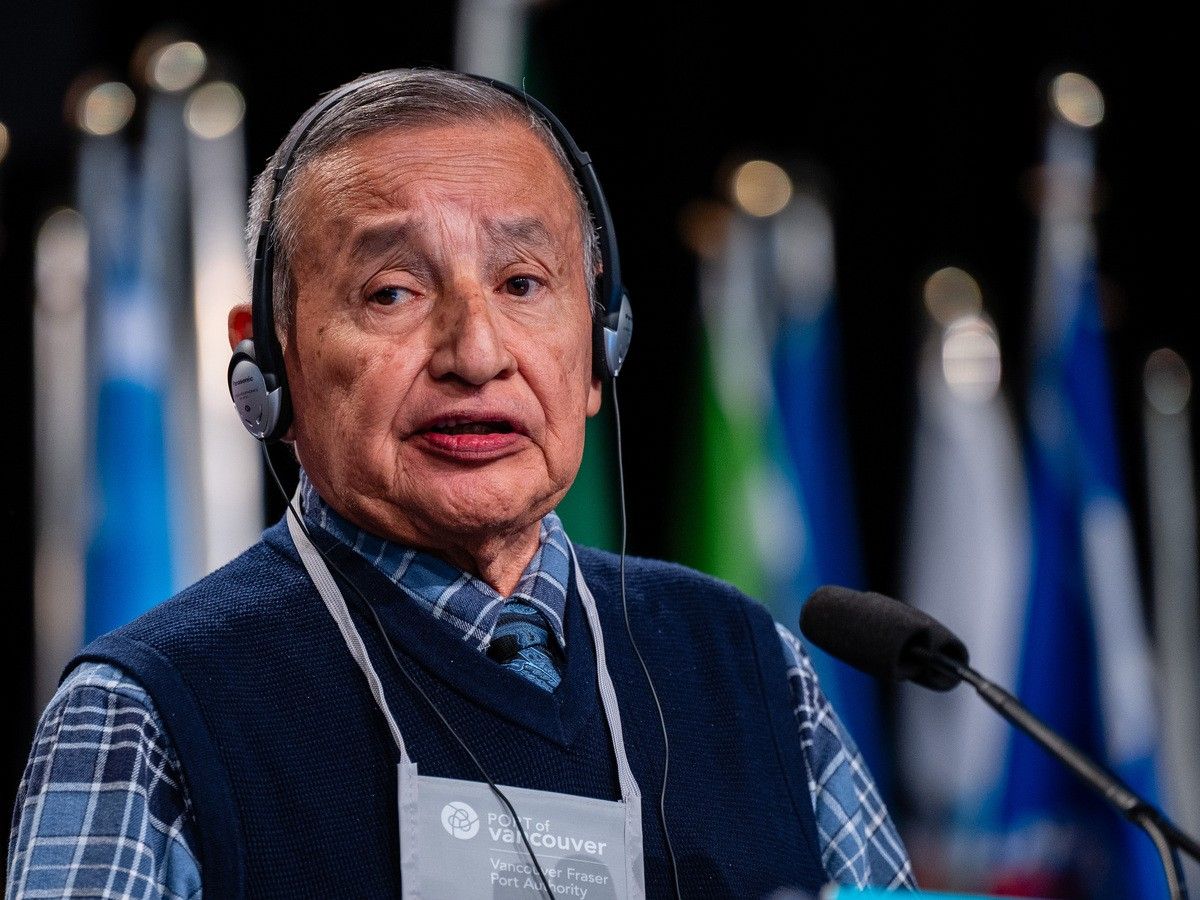
Photo via National Post

John Carpay: Supreme Court case on Indigenous domestic violence proves racial sentencing is absurd

Read the original at National Post ↗
Cite

Special to National Post. (2026, October 18). John Carpay: Supreme Court case on Indigenous domestic violence proves racial sentencing is absurd. National Post. https://nationalpost.com/opinion/john-carpay-supreme-court-case-on-indigenous-domestic-violence-proves-racial-sentencing-is-absurd

Dated from the outlet's own feed. Check the original for its byline.

National Post · collected 2026-10-18 · by Special to National Post analysis
Content note This article describes suicide or self-harm and sexual violence.

Quick Summary

On October 9, 2026, the Supreme Court of Canada issued a judgment in R. v. Cope regarding sentencing provisions for Aboriginal offenders under Canada’s Criminal Code. The case involves Harry Cope, an Indigenous Canadian who violently attacked his common-law partner Brittany Sack, also Indigenous, in Halifax in 2021. The court addressed legal sections that require judges to consider alternatives to imprisonment and emphasize harsher sentences for crimes against Aboriginal women. John Carpay critiques these provisions, arguing they are ineffective and counterproductive given the persistent overrepresentation of Indigenous people in Canadian prisons.
Written by AI on 2026-10-18, from this article's own text only (the story summary below draws on all the coverage).

AI analysis

Story summary

On October 9, 2026, the Supreme Court of Canada issued a ruling in R. v. Cope, addressing how sentences should be imposed for Aboriginal offenders when the victim is also Indigenous. The case stems from an incident in Halifax in 2021 where Harry Cope violently attacked his common-law partner, Brittany Sack, leaving her with multiple injuries including a broken facial bone and possible fractures. Cope's background includes poverty, abuse by his violent alcoholic father, and a history of drug use from an early age.

In 2012, the Supreme Court had previously stated in R. v. Ipeelee that Section 718.2(e) of Canada’s Criminal Code has not effectively addressed overrepresentation issues for Aboriginal people within the criminal justice system. This case revisits these concerns by examining whether such provisions have any tangible impact on sentencing disparities and overall systemic issues affecting Indigenous peoples in Canada.

Written for “Supreme Court Case On Indigenous Sentencing” on 2026-11-03, grounded in this article and the 0 other(s) covering the same event.

Story

📰 Supreme Court Case On Indigenous Sentencing
Politics · 1 article(s) covering the same event.

Compared with similar articles

Nothing to compare against. No article is close enough to this one for the pipeline to have linked or judged the pair.
How this article was measured signals, leaning charts, publisher record, byline, topics and claims

Signals How these are calculated →

Claims extracted
27
sentences that state something as happening or true
Uncertain
0%
0 of 27 hedged ("reportedly", "may", "according to")
Leaning
Leans left
of the writing, not the subject · beta estimate
Publisher signals
60/100
National Post's corrections and hedging, across everything collected from it. Not a measure of accuracy.
Outlets on this story
1
Politics
Same framing elsewhere
1
articles that frame the event the way this one does
Analyzed 2026-10-18 · how these are computed

How this is being covered How these are calculated →

Article leaning vs. publisher reliability
Source leaning vs. consistency

Publisher

National Post · 1242 article(s) · 2 correction(s) detected
Running correction rate · 2 correction(s)

Who wrote this

Special to National Post
104 article(s) here · 0 carrying a prediction
🔮 As the incoming B.C. Conservative government prepares to deliver on its promise to repeal the Declaration on the Rights of Indigenous Peoples Act (DRIPA), Grand Chief Stewart Phillip, president of the Union of B.C. Indian Chiefs, stated this week that doing so would be a “declaration of war.”
🔮 Buying through us may earn us a commission, which supports our work.
🔮 Based on a leaked draft “EU-Canada Joint Summit Statement,” much progress is expected to be made at the summit in areas such as defence and security, critical resources and digital research and communications technologies.
🔮 Last month, the Law Society of Ontario (LSO) did not agree to a formal request from 10 lawyers who wished to add to their Annual General Meeting (AGM) agenda a motion that could have revoked accreditation from Toronto Metropolitan University’s (TMU) Lincoln Alexander School of Law.
🔮 Buying through us may earn us a commission, which supports our work.
2026-10-28 · assertive framing · On the map: A new view of renting in Hamilton
🔮 It’s the story of one student, but it could be any student at any North American university.
🔮 Work, save, take a risk, start a company, buy a home, raise a family; the expectation held that effort might lead somewhere and that children could inherit better prospects than their parents.
🔮 Premier Paul St-Pierre Plamondon has vowed to defund the office of the lieutenant governor, said he will seek legal advice on keeping the Crown’s representative out of the opening of the legislature and has promised to cut Quebec’s ties to the monarchy.
🔮 St-Pierre Plamondon will lead a minority government, five seats short of a majority, and has promised to wait until Donald Trump leaves the White House in January 2029 before holding a sovereignty referendum.
🔮 As we wrap up a month of what has the potential to be one of the biggest missteps in British Columbia, or Canadian, political history, it bears examining whether David Eby’s attempt to position himself as a modern day Joseph McCarthy dedicated to rooting out thought criminals from his opposition will be ultimately effective.
Also by Special to National Post
Nothing else under this byline is closely related to this article, so these are simply their most recent.
All 104 articles by Special to National Post →

Topics

Aboriginal Canada Parliament the Criminal Code the Supreme Court of Canada

Subjects

Aboriginal NORP · 10× Canada GPE · 4× Brittany Sack PERSON · 3× Parliament ORG · 3× Brittany PERSON · 2× Harry PERSON · 2× Harry Cope PERSON · 2× Cope PERSON · 1× Court ORG · 1× the Supreme Court of Canada ORG · 1×

Narrative

In 2012, the Supreme Court asserted in R. v. Ipeelee that “Section 718.2(e) of the Criminal Code has not had a discernible impact on the overrepresentation of Aboriginal people in the criminal justice system,” and that “the overrepresentation and alienation of Aboriginal peoples in the criminal justice system has only worsened.”
framing: assertive · carried by 1 article(s) · first seen 2026-10-18

Claims (27 extracted, 0 hedged)

On October 9, 2026, the Supreme Court of Canada rendered a lengthy judgment in R. v. Cope, grappling with provisions in Canada’s Criminal Code that govern the sentencing of Aboriginal offenders, and how sentences should be imposed when the crime victim is Aboriginal. asserted
victim → render → offenders
The tragic facts before the Court arose in Halifax in 2021, when Harry Cope brutally attacked Brittany Sack, his common law partner. asserted
Cope → arise → Sack
A video recording documented a vicious, prolonged beating, during which Harry repeatedly punched and kicked Brittany. asserted
Harry → document → Brittany
Found lying on the sidewalk, Brittany had a broken bone in her face, a possible break in her breastbone, pooling of blood under the skin of her breastbone and significant swelling of her eye. asserted
Brittany → find → eye
Harry Cope had experienced poverty, abuse and a violent alcoholic father during his chaotic, traumatic childhood. asserted
Cope → experience → childhood
His mother’s subsequent partners also abused alcohol. asserted
partners → abuse → alcohol
Harry was introduced to drugs by his father at age 10. asserted
Harry → introduce → age
He was bullied at school, struggled with learning disabilities, started using cannabis and alcohol on a daily basis and dropped out after Grade 10. asserted
He → bully → Grade
He resorted to crime to support his dependency on prescription pills and street drugs. asserted
He → resort → pills
In 1995, Parliament added section 718.2(e) to the Criminal Code, requiring judges to consider “all available sanctions other than imprisonment, that are reasonable in the circumstances … with particular attention to the circumstances of aboriginal offenders.” asserted
that → add → offenders
Parliament noted the fact that nearly one third of inmates in Canadian jails were Aboriginal, while making up about 5 per cent of Canada’s population. asserted
third → note → population
In 2012, the Supreme Court asserted in R. v. Ipeelee that “Section 718.2(e) of the Criminal Code has not had a discernible impact on the overrepresentation of Aboriginal people in the criminal justice system,” and that “the overrepresentation and alienation of Aboriginal peoples in the criminal justice system has only worsened.” asserted
overrepresentation → assert → system
The Court blamed “colonialism” and residential schools for the “lower educational attainment, lower incomes, higher unemployment, higher rates of substance abuse and suicide, and of course higher levels of incarceration for Aboriginal peoples.” asserted
Court → blame → peoples
In 2019, Parliament added sections 718.04 and 718.201 to the Criminal Code. asserted
Parliament → add → Code
Section 718.04 requires judges to focus on denunciation and deterrence when sentencing an offender who abused a vulnerable person — especially someone who is female or Aboriginal. asserted
who → require → person
Section 718.201 requires judges to consider “the increased vulnerability of female persons …giving particular attention to the circumstances of Aboriginal female victims” when sentencing an offender guilty of abusing an intimate partner. asserted
Section → require → partner
When imposing a sentence on Harry Code, trial judge Christine Driscoll had instructions from the Criminal Code that victimizing Aboriginal women and Aboriginal intimate partners (like Brittany Sack) should lead to a harsher sentence that emphasizes denunciation and deterrence. asserted
that → impose → denunciation
She also had instructions from the Criminal Code that Aboriginal offenders (like Harry Code) should not be jailed, or (if jailed) should receive a lighter sentence. asserted
offenders → have → sentence
Driscoll imposed a five-year jail term. asserted
Driscoll → impose → term
The Nova Scotia Court of Appeal reduced the sentence to three years, ruling that she had given too little consideration to Criminal Code section 718.2(e), and too much consideration to sections 718.04 and 718.201. asserted
she → reduce → sections
Neither the Supreme Court’s majority (which agreed with the Court of Appeal) nor the dissent (which agreed with the trial judge) brought much clarity to these contradictory, race-based provisions in Canada’s Criminal Code. asserted
which → agree → Code
In light of the fact that Canada’s judges have always been required to consider the unique circumstances of each crime, each victim and each offender, why introduce race, ethnicity or ancestry into the Criminal Code in the first place? asserted
judges → require → place
Those supporting race-based distinctions in the Criminal Code sincerely desire to help Aboriginal Canadians thrive and prosper. asserted
Canadians → support → Code
However, as the Supreme Court asserted in Ipeelee in 2012, the rates of Aboriginal incarceration have increased since Parliament added section 718.2(e) to the Criminal Code in 1995. asserted
Parliament → assert → 1995
Reconciliation between Canadians of differing ethnicities requires focusing on our shared humanity, rather than what divides us. asserted
what → differ → us
Treating Aboriginal Canadians differently from other ethnic groups in Canadian law has proven to be a colossal failure. asserted
Treating → treat → law
It’s high time for Canada to embrace the principle of equal rights for all and special privileges for none. asserted
Canada → ’ → none

💬Give feedback
🕘History 🎫Support