Photo via Times of India

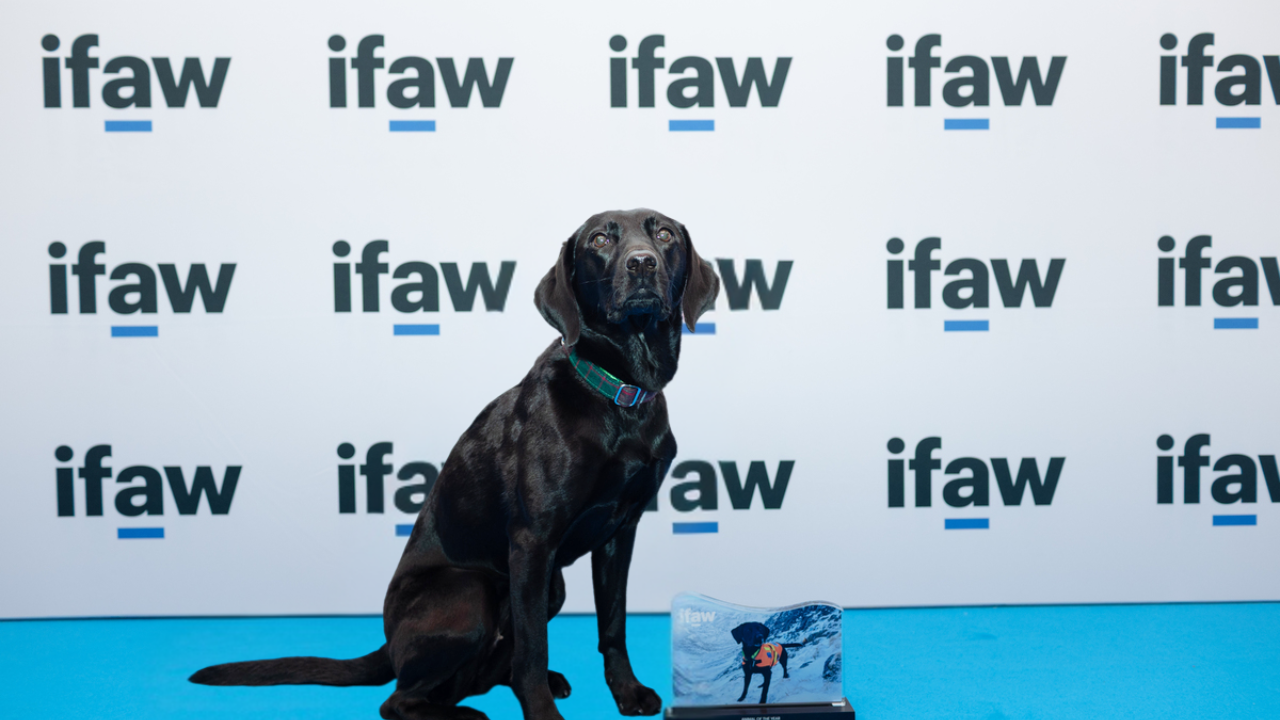
Meet Sgiath: The mountain rescue Labrador who has won IFAW’s 2026 Animal of the Year Award

Read the original at Times of India ↗
Cite

TOI Science Desk. (2026, October 18). Meet Sgiath: The mountain rescue Labrador who has won IFAW’s 2026 Animal of the Year Award. Times of India. https://timesofindia.indiatimes.com/science/nature/a-labrador-once-trained-for-mountain-rescue-becomes-a-marine-conservation-detection-dog-sgiath-can-sniff-out-the-invasive-organism-known-as-sea-vomit-and-wins-ifaws-2026-animal-of-the-year-award/articleshow/135028213.cms

Dated from the outlet's own feed. Check the original for its byline.

Times of India · collected 2026-10-18 · by TOI Science Desk analysis

Quick Summary

Sgiath, a six-year-old black Labrador from Scotland originally trained for mountain rescue, has won the 2026 Animal of the Year Award from IFAW for her ability to detect "sea vomit," an invasive marine organism. At the annual Animal Action Awards ceremony on October 15 in London, Sgiath was recognized alongside her handler Dr. Texa Sim for their work identifying and locating Didemnum vexillum in UK waters, which helps conservationists respond more effectively to threats posed by this invasive species.
Written by AI on 2026-10-18, from this article's own text only (the story summary below draws on all the coverage).

AI analysis

Story summary

Sgiath, a six-year-old black Labrador from Scotland, has been named Animal of the Year by the International Fund for Animal Welfare (IFAW) for her work in detecting invasive "sea vomit" organisms along UK coastlines. Originally trained as a mountain rescue dog, Sgiath now helps marine ecologist Dr Texa Sim locate colonies of the carpet sea squirt (Didemnum vexillum) during low tide. This invasive species can harm native wildlife and disrupt coastal economies by clogging aquaculture pens and marine infrastructure. The award ceremony took place at BAFTA in London on October 15, recognizing Sgiath's unique contribution to conservation efforts.

Written for “Animal Of The Year Award Honors Dogs” on 2026-11-03, grounded in this article and the 1 other(s) covering the same event.

Story

📰 Animal Of The Year Award Honors Dogs
Environment · 2 article(s) covering the same event. See how they differ ↓

Compared with similar articles

This article reads unscored and hedges 35% of its claims. Each row says how that neighbour differs.
BBC News
Hedges 4 of 33 claims Outlet record 68/100
How this article was measured signals, leaning charts, publisher record, byline, topics and claims

Signals How these are calculated →

Claims extracted
31
sentences that state something as happening or true
Uncertain
35%
11 of 31 hedged ("reportedly", "may", "according to")
Leaning
not political
takes no side on a contested political question
Publisher signals
59/100
Times of India's corrections and hedging, across everything collected from it. Not a measure of accuracy.
Outlets on this story
2
Environment
Same framing elsewhere
1
articles that frame the event the way this one does
Analyzed 2026-10-18 · how these are computed

How this is being covered How these are calculated →

Article leaning vs. publisher reliability
Source leaning vs. consistency

Publisher

Times of India · 4036 article(s) · 4 correction(s) detected
Running correction rate · 4 correction(s)

Who wrote this

TOI Science Desk
308 article(s) here · 1 carrying a prediction
🔮 Researchers are continuing to examine daily measurements to determine whether temperatures will climb further.
🔮 According to Reuters reporting by Will Dunham, a new study published in the journal Spixiana documents more than 90 Bangka slow lorises identified between 2015 and 2025.
🔮 “Normally, my job is quite monotonous, so I wanted to create something that would entertain people, turning my ‘serious’ job into something fun,” he said in a Guinness World Records news release.
🔮 The subsequent collision between the two galaxy clusters may then have compressed the cloud or re-energised its particles, causing it to shine more brightly in radio wavelengths once again.
🔮 The mathematicians at the University of California, Davis, argue that the answer may already lie within Einstein’s own equations and that an invisible form of energy may not be needed at all.
🔮 The work will be carried out by the West Tennessee River Basin Authority, which is preparing a plan to restore the river and the land around it.
🔮 Cornell University scientists have developed genetically engineered tomato plants that turn red-purple when nitrogen becomes scarce, giving farmers a visible warning that crops may need fertiliser.
🔮 By studying these crystals and other mineral grains, scientists could establish the meteorite's age and identify later changes caused by water.
🔮 Centuries later, bronze objects found in Scandinavia would preserve chemical signatures consistent with the metals produced at this Spanish site, offering evidence of connections that may have crossed much of Europe.
🔮 Deposited impurities and staining may also have contributed, while low temperatures and humidity could cause the fabric to crack.
Wire or desk byline, not an individual reporter.
Also by TOI Science Desk
Nothing else under this byline is closely related to this article, so these are simply their most recent.
All 308 articles by TOI Science Desk →

Topics

BAFTA BBC IFAW London the International Fund for Animal Welfare

Subjects

Sgiath PERSON · 9× IFAW ORG · 6× BBC ORG · 2× Sim PERSON · 2× the International Fund for Animal Welfare ORG · 2× BAFTA ORG · 1× Japan GPE · 1× London GPE · 1× Texa Sim PERSON · 1× The Independent ORG · 1×

Narrative

Another Labrador is learning the job Sgiath is not the only dog involved in the project. Sim is also training Uisge, a three-year-old Labrador, to detect the invasive organism and support the work.
framing: mixed · carried by 1 article(s) · first seen 2026-10-18
🔮 Her ability to track scents led Sim, a marine ecologist, to explore whether the Labrador could help identify an invasive species threatening marine habitats.

Claims (31 extracted, 11 hedged)

A six-year-old black Labrador from the Scottish Highlands in the UK has found an unusual new role in conservation. asserted
Labrador → find → conservation
Sgiath, who was originally trained as a mountain rescue search dog, can now detect an invasive marine organism known as “sea vomit” by smell. asserted
who → train → smell
Her work has earned her the 2026 Animal of the Year Award from the International Fund for Animal Welfare (IFAW). asserted
work → earn → Welfare
According to IFAW’s announcement, Sgiath is believed to be the first dog in the world trained to detect ‘Didemnum vexillum,’ commonly called carpet sea squirt or “sea vomit”. uncertain
Sgiath → accord → vexillum
She works alongside her handler, marine ecologist Dr Texa Sim, to help locate the organism in UK waters. asserted
She → work → waters
Sgiath received the award at IFAW’s annual Animal Action Awards ceremony, held at BAFTA in London on October 15. asserted
Sgiath → receive → October
The event recognised six people and one animal for their contributions to conservation and animal welfare. asserted
event → recognise → conservation
It is an invasive marine organism that can grow in thick, slimy colonies on seaweed, pontoons, oyster cages and other marine structures. asserted
that → grow → seaweed
According to IFAW, the species can spread rapidly and poses a threat to native marine life. uncertain
species → accord → life
As reported by The Independent carpet sea squirt can spread across harbours and oyster farms, where it can smother native organisms and become difficult to control once established. asserted
it → report → organisms
The organism is believed to have originated in Japan and was first reported on shorelines in England and Wales in 2008, according to a BBC report. uncertain
organism → believe → report
Its appearance can make it difficult to distinguish from other marine growth. asserted
it → make → growth
Finding it early is important because conventional identification can require specialist laboratory analysis and DNA testing. asserted
identification → find → analysis
Sgiath offers another way to search for it: using her sense of smell. asserted
Sgiath → offer → smell
How Sgiath moved from mountain rescue to marine conservation Photo credit: The International Fund for Animal Welfare (IFAW) Sgiath was initially trained as a mountain rescue search dog. asserted
Sgiath → move → dog
Her ability to track scents led Sim, a marine ecologist, to explore whether the Labrador could help identify an invasive species threatening marine habitats. uncertain
Labrador → track → habitats
The idea developed while Sim was working on a native oyster restoration project on Scotland’s west coast. asserted
Sim → develop → coast
She recognised that dogs, already used to locate invasive plants and animals on land, might also help detect an invasive organism in the marine environment. uncertain
dogs → recognise → environment
Sgiath has since been trained to give a passive indication when she detects the organism. asserted
she → train → organism
Rather than barking or rushing towards it, she signals the find by becoming still and staring at the target. asserted
she → bark → target
This is different from the more active indication she was trained to use during mountain rescue work. asserted
she → train → work
According to the BBC, Sgiath has already discovered hundreds of colonies of the invasive sea squirt. uncertain
Sgiath → accord → squirt
Why a dog’s nose could help conservationists Detecting an invasive species before it spreads widely can give conservation teams more time to respond. uncertain
it → help → time
Sgiath’s scent-based searches could help identify the organism in places where visual inspection alone may not be enough. uncertain
inspection → base → places
Her work is also helping explore a new use for detection dogs in marine conservation. asserted
work → help → conservation
IFAW described the project as a pioneering approach to tackling invasive marine species in UK waters. asserted
IFAW → describe → waters
The approach does not replace all existing detection methods, but it could provide conservationists and site managers with another tool for finding the species earlier and more efficiently. uncertain
it → replace → species
Another Labrador is learning the job Sgiath is not the only dog involved in the project. Sim is also training Uisge, a three-year-old Labrador, to detect the invasive organism and support the work. asserted
Sim → learn → work
According to West Coast Today, the dogs have demonstrated an ability to distinguish the target species from other sea squirts and marine organisms, including detecting traces of its scent in water samples. uncertain
dogs → accord → samples
Their work could become increasingly useful if changing sea conditions allow invasive marine species to spread into new areas. uncertain
species → become → areas
Early detection is particularly important because established colonies can be difficult and expensive to manage. asserted
colonies → establish → ?

💬Give feedback
🕘History 🎫Support