The 9 Libel-by-AI Cases in the U.S. Since 2023 (6 Still Going Forward)

Read the original at Reason ↗
Cite

Volokh, E. (2026, September 14). The 9 Libel-by-AI Cases in the U.S. Since 2023 (6 Still Going Forward). Reason. https://reason.com/volokh/2026/09/14/the-9-libel-by-ai-cases-in-the-u-s-since-2023-6-still-going-forward/

Dated when The Aporia collected the article, usually within hours of publication. Check the original for its exact date and byline.

Reason · collected 2026-09-14 · by Eugene Volokh

Quick Summary

Since 2023, nine libel-by-AI cases have occurred in the United States, with six still active as of the latest update. Cases include Walters vs. OpenAI, which resulted in no liability due to unique circumstances; Battle vs. Microsoft Corp., resolved through arbitration; and Starbuck v. Meta Platforms, settled out of court. Other ongoing lawsuits involve Google and X.AI, where plaintiffs claim false and reputation-damaging content generated by AI systems.
Written by AI on 2026-09-14, from this article's own text only (the story summary below draws on all the coverage).

AI analysis

Story summary

In 2023, there have been 9 libel-by-AI cases initiated against tech giants like Google LLC and OpenAI. As of now, 6 of these cases are still ongoing. Notable among them is Starbuck v. Google (Del. Super.) and LTL LED, LLC v. Google LLC (Minn. Dist.), where motions to dismiss were denied, allowing the cases to proceed further. Another significant case is Keene v. Google LLC (N.D. Ill.), involving author Jimmy Keene, who alleges that Google's AI repeatedly published false overviews about him from May 24 to June 27, 2025, stating he was serving life sentences for multiple crimes and drug trafficking, despite his conviction being expunged years ago. This case is significant as it highlights the potential legal repercussions of misinformation spread by AI technologies.
Written for “Libel by AI Cases” on 2026-11-03, grounded in this article and the 1 other(s) covering the same event.

Story

📰 Libel by AI Cases
Politics · 2 article(s) covering the same event. See how they differ ↓

Compared with similar articles

This article reads unscored and hedges 33% of its claims. Each row says how that neighbour differs.
Semafor
Hedges 1 of 32 claims Outlet record 59/100
“Article A lists several libel-by-AI cases and their outcomes, while Article B discusses AI companies' stance on regulation in Washington. They do not describe the same specific incident.”
New York Post
⚖️ Leans right Hedges 1 of 31 claims Outlet record 66/100
“Article A discusses specific libel cases involving AI since 2023, while Article B contains letters to the editor about general concerns and calls for regulation of AI technology.”
How this article was measured signals, leaning charts, publisher record, byline, topics and claims

Signals How these are calculated →

Claims extracted
3
sentences that state something as happening or true
Uncertain
33%
1 of 3 hedged ("reportedly", "may", "according to")
Leaning
not political
takes no side on a contested political question
Publisher signals
67/100
Reason's corrections and hedging, across everything collected from it. Not a measure of accuracy.
Outlets on this story
2
Politics
Same framing elsewhere
1
articles that frame the event the way this one does
Analyzed 2026-09-14 · how these are computed

How this is being covered How these are calculated →

Article leaning vs. publisher reliability
Source leaning vs. consistency

Publisher

Reason · 1074 article(s) · 4 correction(s) detected
Running correction rate · 4 correction(s)

Who wrote this

Eugene Volokh
187 article(s) here · 0 carrying a prediction
🔮 The requirement would hold DSPs liable for their failure to adhere to state-set publication standards, not only "treat[ing] [them] as … publisher[s] or speaker[s]," but treating them as publishers subject to sweeping state controls.
🔮 From Sanchez v. Almond, decided Wednesday by Judge John McConnell (D.R.I.): Mr. Sanchez began working at the office of Rhode Island Governor Daniel J. McKee in May 2021 as a "constituent services" staffer.
🔮 Beauchamp believed that the post appeared to condone murder based on the victim's political viewpoints and statements and became concerned that this post and perception would reflect on GCAO in the public's eyes and thereby undermine the public's trust in GCAO's official duty to prosecute homicides without bias and without regard to a victim's views, statements, or affiliations.
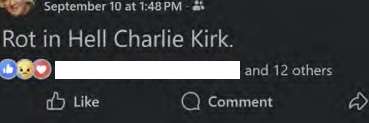
2026-11-02 · assertive framing · Firing for "Rot in Hell Charlie Kirk" Post Upheld
🔮 Some excerpts from the long First Superseding Indictment in U.S. v. Hakim (E.D. Mich.), filed Oct. 21, alleging conspiracy to transmit threats in interstate commerce as well as, for two defendants, witness intimidation and destruction of property to prevent seizure (8 of the 12 defendants had originally been indicted in May); the targets included UM officials and businesses connected with them, as well as the Jewish Federation of Metropolitan Detroit:
🔮 Because "[t]he costs and efforts required to defend a lawsuit through [discovery] could chill free speech nearly as effectively as the absence of the actual malice standard altogether[,]" a public figure plaintiff must plausibly allege actual malice at the outset of the litigation.
🔮 The First Amendment forbids a State from using its investigative power that way, and I will not allow it while this case is pending.
🔮 The same logic could apply to nuns who had felt religious pressure to do the educational or nursing work that their order was known for, or to monks who had felt religious pressure to do agricultural work that supports the monastery.
2026-10-30 · assertive framing · Amicus Brief in OneTaste Criminal Prosecution
🔮 Before doing so, "he entered the coffee shop to purchase a cookie, which he hoped would be seen as a sign of goodwill."
🔮 While individuals who are the subjects of unwanted speech may be able to limit some speech directed to them, they cannot limit offensive speech about them directed to others.
🔮 Because "the conduct regulated depend[ed] on—and [could not] be separated from—the ideas communicated," Florida's law was "functionally a regulation of speech" implicating the First Amendment.
Also by Eugene Volokh
Open Thread
2026-11-02 · Reason
Nothing else under this byline is closely related to this article, so these are simply their most recent.
All 187 articles by Eugene Volokh →

Topics

Ga. Super. Google Google LLC Openai, L.L.C. Super.

Subjects

Google LLC ORG · 3× Google ORG · 2× Grybniak ORG · 2× Starbuck PERSON · 2× Super. GPE · 2× Battle PERSON · 1× Ga. Super. GPE · 1× Microsoft Corp. ORG · 1× Openai, L.L.C. ORG · 1× Walters PERSON · 1×

Narrative

- Starbuck v. Google (Del. Super.): Motion to dismiss denied, case can go forward. - LTL LED, LLC v. Google LLC (Minn. Dist.): Case going forward, Google failed to properly get the case removed to federal court.
framing: mixed · carried by 1 article(s) · first seen 2026-09-14

Claims (3 extracted, 1 hedged)

- Starbuck v. Meta Platforms (Del. Super.): Settled. - Keene v. Google LLC (N.D. Ill.): Motion to dismiss denied, case can go forward. asserted
case → settle → Platforms
- Starbuck v. Google (Del. Super.): Motion to dismiss denied, case can go forward. - LTL LED, LLC v. Google LLC (Minn. Dist.): Case going forward, Google failed to properly get the case removed to federal court. asserted
case → dismiss → court
For a case that alleges false and reputation-damaging hallucinations but that doesn't include a defamation claim, see Doe v. OpenAI Found. (Cal. Super. Ct.); there also hasn't been judicial action there. uncertain
that → allege → Doe
💬Give feedback
🕘History 🎫Support