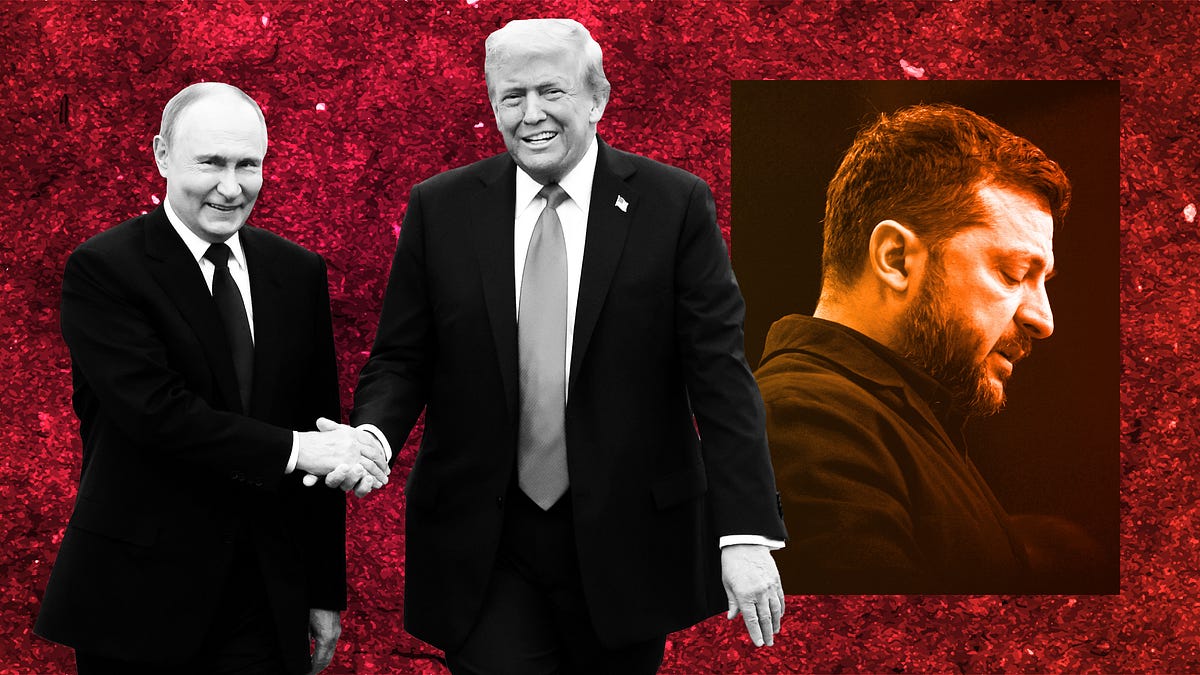
Photo via The Bulwark

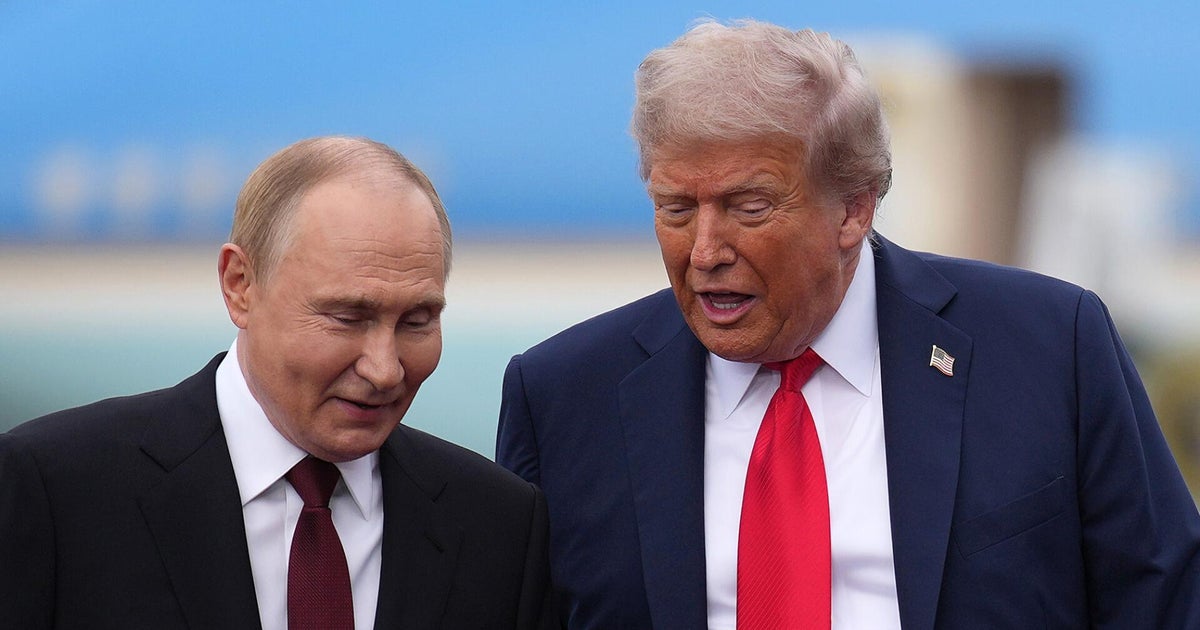
Siding With Russia Is a Double Betrayal

Read the original at The Bulwark ↗
Cite

Hertling, M. (2026, October 20). Siding With Russia Is a Double Betrayal. The Bulwark. https://www.thebulwark.com/p/siding-with-russia-is-a-double-betrayal-putin-trump-zelensky-ukraine-energy-gas

Dated from the outlet's own feed. Check the original for its byline.

The Bulwark · collected 2026-10-20 · by Mark Hertling commentary

Quick Summary

The article discusses President Donald Trump's decision to suspend new sanctions against Russia, arguing it is part of his effort to negotiate peace between Russia and Ukraine. The author criticizes this move as an abandonment of Ukraine, which is defending itself effectively in the conflict, and suggests it undermines American foreign policy traditions. Ukrainian President Volodymyr Zelensky warns that if the U.S. sides with Russia, Ukraine cannot prevail, reflecting a pragmatic assessment of the consequences.
Written by AI on 2026-10-20, from this article's own text only (the story summary below draws on all the coverage).

AI analysis

Story summary

On October 16, 2026, US President Donald Trump waived sanctions on Russian diesel and other oil-related exports, reversing actions he had taken just weeks earlier to impose new restrictions as part of the Lindsey O. Graham Sanctioning Russia and Iran Act. This decision has drawn criticism from both Democrats and Republicans who argue it undermines efforts to pressure Russia over its invasion of Ukraine. President Trump's move aims to lower diesel prices ahead of the midterm elections but has strained relations with Ukraine, where President Volodymyr Zelenskyy expressed frustration that his country has not received enough support from the US despite significant sacrifices in the ongoing conflict. The waiver also weakens economic sanctions meant to compel Russia to end its war in Ukraine and could embolden Russian President Vladimir Putin, who appears to have gained a strategic advantage over Trump through this political maneuvering. Critics argue that Trump's actions could jeopardize future leverage against Moscow, potentially undermining long-term US foreign policy objectives regarding Russia.

Written for “Trump Pauses Russia Sanctions” on 2026-11-01, grounded in this article and the 63 other(s) covering the same event.

Story

📰 Trump Pauses Russia Sanctions
Politics · 64 article(s) covering the same event. Compare every outlet's account →

Compared with similar articles

This article reads leans strongly left and hedges 7% of its claims. Each row says how that neighbour differs.
Al Jazeera
Hedges 1 of 22 claims Outlet record 60/100
CBS News
Hedges 0 of 2 claims Outlet record 66/100
CBS News
Hedges 0 of 3 claims Outlet record 66/100
CBS News
⚖️ Leans left further right than this Hedges 0 of 2 claims Outlet record 66/100
Washington Examiner
⚖️ Leans strongly left Hedges 0 of 4 claims Outlet record 70/100
“While both articles discuss Trump's stance on Russia and Ukraine, they describe different aspects of the situation rather than a single specific incident.”
BBC News
⚖️ Leans right further right than this Hedges 1 of 9 claims Outlet record 68/100
“While both articles discuss Trump's decision to suspend sanctions on Russia, they describe different aspects or stages of reporting on this event.”
NBC News
Outlet record 60/100
“The articles discuss different aspects: Article A focuses on Zelenskyy's statement about siding with Putin, while Article B discusses Trump's defense of his decision regarding sanctions and negotiations.”
The Straits Times
⚖️ Leans right further right than this Hedges 3 of 25 claims Outlet record 66/100
“Article A discusses Kremlin hawks' reaction to a rift between Trump and Zelenskiy, while Article B focuses on Trump's defense of his decision to suspend sanctions against Russia.”
The Sydney Morning Herald
⚖️ Leans strongly left Hedges 5 of 71 claims Outlet record 61/100
“The articles discuss different statements made by Trump regarding Russia and Ukraine, with Article A focusing on moral equivalence in 2017 while Article B covers a defense of suspending new sanctions against Russia in 2026.”
CBS News
Hedges 0 of 3 claims Outlet record 66/100
“The articles discuss different aspects of Trump's stance towards Russia and Ukraine, with Article A focusing on intelligence sharing critiques by Zelenskyy and an expert analysis, while Article B reports on Trump defending his decision to suspend sanctions.”
How this article was measured signals, leaning charts, publisher record, byline, topics and claims

Signals How these are calculated →

Claims extracted
83
sentences that state something as happening or true
Uncertain
7%
6 of 83 hedged ("reportedly", "may", "according to")
Leaning
Leans strongly left
expected in commentary, which argues a position · beta estimate
Publisher signals
not measured
these signals count newsroom corrections; Commentary has none to count
Outlets on this story
64
Politics
Same framing elsewhere
1
articles that frame the event the way this one does
Analyzed 2026-10-20 · how these are computed

How this is being covered How these are calculated →

Article leaning vs. publisher reliability
Source leaning vs. consistency

Publisher

The Bulwark · 565 article(s) · 0 correction(s) detected
No corrections detected for this publisher. That may mean careful reporting, or simply that nothing has been checked.

Who wrote this

Mark Hertling
12 article(s) here · 1 carrying a prediction
🔮 That is true, but nothing close to the whole truth, and so misleading that I worry it may cause some Americans—including policymakers—to arrive at unrealistic and dangerous conclusions about what kind of threat the Houthis pose to American interests and what American policy toward them should be.
2026-10-28 · assertive framing · America’s Other Middle East War
🔮 He repeated his argument: “I am in the process of negotiating Peace in the war between Russia and Ukraine, and don’t want to do anything that will drive, foolishly, Russia away from the bargaining table.
2026-10-20 · assertive framing · Siding With Russia Is a Double Betrayal
🔮 They offered something orders, operational plans, and military briefings could never provide: compassion in the face of unbearable loss.
🔮 It might be good to look at the overlap of these issues.
2026-10-14 · assertive framing · America Is Making Its Own Problems Worse
🔮 The unequivocalness of the president’s prediction—made months into a war he repeatedly said would last only days—set off alarm bells in my head.
🔮 Saudi Arabia also has a separate National Guard that itself represents a substantial ground force, also equipped with some of the best military equipment America and Europe would sell them.
2026-09-23 · assertive framing · Why Saudi Arabia’s Houthi Problem Is Our Problem, Too
🔮 They also examine reports that the Pentagon may be undercounting U.S. military deaths in the Middle East, as well as the growing cost of the Iran war.
🔮 FOR DECADES, THE SECURITY architecture of the Persian Gulf rested on an assumption: When the gravest regional threats emerged, the United States would be the power around which its partners organized.
🔮 Mark explains why Iran and the Houthis appear to have the initiative, why the U.S. is increasingly responding rather than setting the terms of the conflict, and how Saudi Arabia, Turkey, Pakistan and NATO could become entangled as the war continues to expand.
🔮 He also brought a remarkable announcement: Britain will share classified technical information that Ukraine needs to eventually assemble the Storm Shadow long-range stealthy cruise missile (called SCALP in the French version).
2026-08-27 · assertive framing · Inside Ukraine’s Breakthrough Missile Deal
Also by Mark Hertling
America’s Other Middle East War
2026-10-28 · The Bulwark
Nothing else under this byline is closely related to this article, so these are simply their most recent.
All 12 articles by Mark Hertling →

Topics

American Russia Russian Ukraine Ukrainian

Subjects

Ukraine GPE · 10× Russia GPE · 5× American NORP · 4× Russian NORP · 2× Soviet NORP · 2× Ukrainians NORP · 2× the Soviet Union GPE · 2× DONALD TRUMP PERSON · 1× Ukrainian NORP · 1× Volodymyr Zelensky PERSON · 1×

Narrative

When “a long train of abuses and usurpations, pursuing invariably the same Object evinces a design to reduce them under absolute Despotism,” what are the Ukrainians doing if not exercising their “right” and “duty” to “throw off such Government, and to provide new Guards for their future security”?
framing: assertive · carried by 1 article(s) · first seen 2026-10-20
🔮 He repeated his argument: “I am in the process of negotiating Peace in the war between Russia and Ukraine, and don’t want to do anything that will drive, foolishly, Russia away from the bargaining table.
2026-10-20 · The Bulwark
Siding With Russia Is a Double Betrayal · assertive framing

Claims (83 extracted, 6 hedged)

ON SUNDAY, PRESIDENT DONALD TRUMP defended his decision to suspend new sanctions against Russia. asserted
TRUMP → defend → Russia
He repeated his argument: “I am in the process of negotiating Peace in the war between Russia and Ukraine, and don’t want to do anything that will drive, foolishly, Russia away from the bargaining table. asserted
that → repeat → table
I WANT THIS WAR END!” asserted
WAR → want → ?
He rabidly criticized Ukraine’s attacks on Russian oil refineries and suggested that Ukrainian President Volodymyr Zelensky didn’t want to end the war and was contributing to rising fuel costs for American farmers and businesses. uncertain
Zelensky → criticize → farmers
At first glance, some of that might sound reasonable. uncertain
some → sound → that
In context, it is a disturbing and shameful abandonment not only of a would-be ally in need, but of the best and noblest traditions of American foreign policy dating back centuries. asserted
it → date → policy
Any military commander who has experienced war understands the value of diplomacy, and I have seen enough death and destruction to know that negotiations, even with terrible adversaries, are sometimes necessary. asserted
negotiations → experience → adversaries
But diplomacy requires understanding the interests of those across the table, and effective negotiations require leverage. asserted
negotiations → require → leverage
Instead of using American economic power to pressure the country that started this war but shows no capability of winning it, Trump is offering that country economic relief while criticizing the nation that is successfully defending itself. asserted
that → use → itself
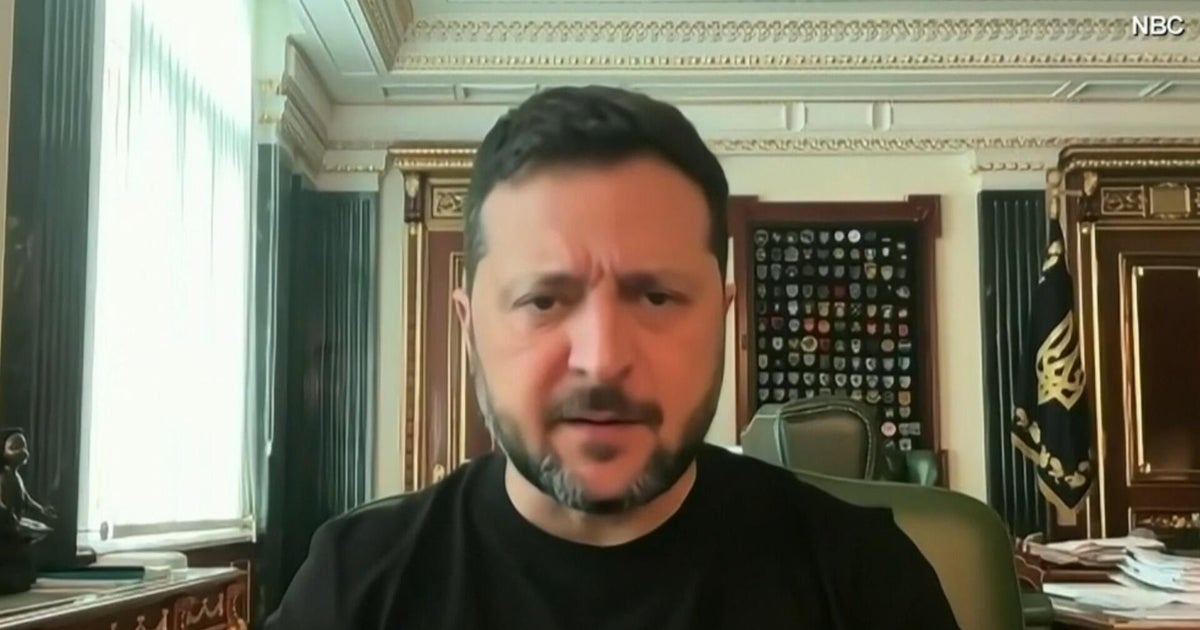
In an interview on NBC’s Meet the Press, he warned that if the United States formally sided with Russia, Ukraine would “not prevail.” asserted
Ukraine → warn → Russia
; it was his pragmatic assessment of the consequences of an American president who appears finally unable to resist his urge to side with the aggressor over the victim. asserted
who → appear → victim
I’ll readily admit my personal bias inclines me to root for Ukraine. asserted
bias → admit → Ukraine
When I commanded U.S. Army Europe, one of our most important partnerships was with Ukraine’s military, especially with their army leader, who became a dear friend, Col. Gen. Henadii Vorobiov. asserted
who → command → leader
He had asked us to help him transform a military that had inherited much of its structure, doctrine, and culture from the Soviet Union, and we spent significant resources doing just that. asserted
we → ask → that
We talked tactics, training, and leader development, and we helped them develop a professional noncommissioned officer corps, empower junior leaders, and build a military that served its citizens rather than a powerful ruler. asserted
that → talk → ruler
He understood that transforming an army required transforming its culture, and through our partnership I learned much about Ukraine’s history and its people’s aspirations. asserted
I → understand → history
Some of our most memorable conversations concerned Ukraine’s suffering under Soviet rule. asserted
Some → concern → rule
Vorobiov shared personal stories about his family’s experiences during the Holodomor, the catastrophic famine caused by Stalin’s policies in 1932–33 that killed millions of Ukrainians. asserted
that → share → Ukrainians
Those stories were not distant historical abstractions; they were events his grandparents had survived, and they formed part of the national consciousness that shaped how Ukrainians viewed Moscow. asserted
Ukrainians → survive → Moscow
Their country had lived under the Soviet thumb for far too long, and generations had suffered because of it. asserted
generations → live → it
After declaring independence from the Soviet Union in 1991, Ukraine was determined to pursue a different path. asserted
Ukraine → declare → path
Their political institutions were imperfect, corruption remained a challenge, and their military needed significant reform. asserted
military → remain → reform
I had also spent years dealing with Russian military leaders, and the contrast was striking. asserted
contrast → spend → leaders
Russia’s military culture remained rooted in centralized authority and rigid hierarchy, with a distrust of government and its authoritarian leaders, while Ukraine’s emerging leaders increasingly embraced initiative and accountability. asserted
leaders → remain → initiative
I don’t want to romanticize those encounters. asserted
I → want → encounters
Ukraine had serious problems then, and it still does. asserted
it → have → problems
But I saw something worth supporting: a nation struggling to define its own future rather than allowing its larger neighbor to define it. asserted
neighbor → see → it
Almost five years after Putin launched his full-scale invasion, Ukrainians are still fighting to determine their own government and destiny free from foreign control. asserted
Ukrainians → launch → control
Despite the destruction of their cities, the wanton and purposeful killing of their civilians, the displacement of millions, the kidnapping of tens of thousands of children, and hundreds of thousands of military casualties, their will remains, because they believe their country belongs to them. asserted
country → remain → them
Russia invades a neighboring country, attempts to destroy its government, annexes territory, attacks civilian infrastructure, and continues killing its citizens. asserted
Russia → invade → citizens
Ukraine responds by striking energy infrastructure that helps finance and supply those military operations. asserted
that → respond → operations
(Diesel is, of course, not just a commodity to be traded but also a fuel used in military machines.) asserted
Diesel → trade → machines
And the American president criticizes Ukraine for defending itself while offering economic benefits to Russia? asserted
president → criticize → Russia
There is an important distinction between wanting the fighting to stop and wanting peace. asserted
fighting → be → peace
In military strategy, we talk about ends, ways, and means: the objective, how we achieve it, and the resources employed. asserted
we → talk → it
If the objective is durable peace in Europe, the strategy must address the war’s fundamental cause: Putin’s determination to deny Ukraine (and others) its sovereignty. asserted
strategy → address → sovereignty
Instead, Trump’s approach appears designed to make aggression more tolerable for Putin while making resistance more difficult for Zelensky. asserted
resistance → design → Zelensky
Rewarding coercion is no recipe for a lasting peace. asserted
Rewarding → reward → peace
Zelensky understands this. asserted
Zelensky → understand → this
Ukraine has demonstrated extraordinary resilience and adaptability, but a nation’s ability to resist aggression depends on more than battlefield performance. asserted
ability → demonstrate → performance
…and 43 more, not listed.

💬Give feedback
🕘History 🎫Support