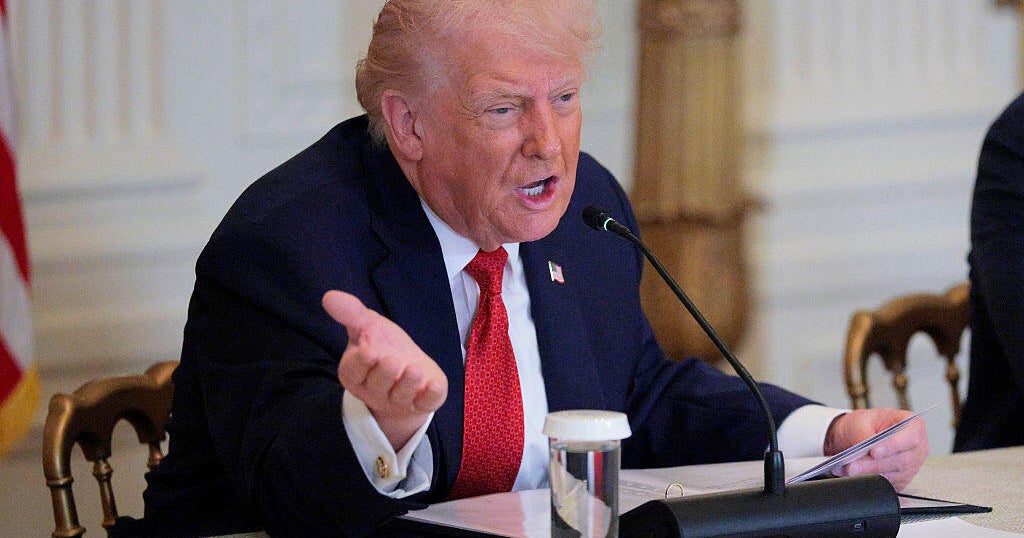
Photo via Mother Jones

Private Contractors Are Set to Cash In As Millions of Americans Lose Health Care

Read the original at Mother Jones ↗
Cite

Hurwitz, S. (2026, October 20). Private Contractors Are Set to Cash In As Millions of Americans Lose Health Care. Mother Jones. https://www.motherjones.com/politics/2026/10/contractors-profit-obbb-bill-medicaid-cuts-work-requirements-deloitte-gainwell/

Dated from the outlet's own feed. Check the original for its byline.

Mother Jones · collected 2026-10-20 · by Sophie Hurwitz

Quick Summary

Starting January 1, new federal Medicaid work requirements will take effect nationwide, potentially leading to millions losing health care access as states hire contractors to manage eligibility verification. Senators Ron Wyden, Elizabeth Warren, and Raphael Warnock released a report highlighting five tech companies—Maximus, Gainwell, General Dynamics, Conduent, and Deloitte—that are set to profit from implementing these work requirements despite having records of administrative failures. The Congressional Budget Office predicts that approximately 7.5 million people could lose their health care coverage by 2034 under the new rules, with about 2.6 million losing it due to difficulty navigating the verification process rather than eligibility issues.
Written by AI on 2026-10-21, from this article's own text only (the story summary below draws on all the coverage).

AI analysis

Story summary

Starting January 1, new Medicaid work requirements will go into effect nationwide, potentially leading to millions of Americans losing health care access. States are contracting with third-party companies to implement these rules, despite some firms having a history of "administrative and procedural failures." Senators Ron Wyden (D-Ore.), Elizabeth Warren (D-Mass.), and Raphael Warnock (D-Ga.) have released an interim report highlighting five tech companies—Maximus, Gainwell, General Dynamics, Conduent, and Deloitte—that will profit from these changes while likely causing millions to lose their health insurance. The Centers for Medicare and Medicaid Services issued an interim final rule in June mandating that "medically frail" patients regularly prove they cannot work full-time, even if already diagnosed with a debilitating condition.

Written for “Private Contractors Benefit Healthcare Losses” on 2026-11-04, grounded in this article and the 0 other(s) covering the same event.

Story

📰 Private Contractors Benefit Healthcare Losses
Health · 1 article(s) covering the same event.

Compared with similar articles

This article reads leans strongly left and hedges 21% of its claims. Each row says how that neighbour differs.
CBS News
⚖️ Leans right further right than this Hedges 1 of 45 claims Outlet record 65/100
“The articles describe different actions by the Trump administration: one about relaxing hospital construction regulations, the other about implementing Medicaid work requirements.”
How this article was measured signals, leaning charts, publisher record, byline, topics and claims

Signals How these are calculated →

Claims extracted
29
sentences that state something as happening or true
Uncertain
21%
6 of 29 hedged ("reportedly", "may", "according to")
Leaning
Leans strongly left
of the writing, not the subject · beta estimate
Publisher signals
60/100
Mother Jones's corrections and hedging, across everything collected from it. Not a measure of accuracy.
Outlets on this story
1
Health
Same framing elsewhere
1
articles that frame the event the way this one does
Analyzed 2026-10-21 · how these are computed

How this is being covered How these are calculated →

Article leaning vs. publisher reliability
Source leaning vs. consistency

Publisher

Mother Jones · 467 article(s) · 1 correction(s) detected
Running correction rate · 1 correction(s)

Who wrote this

Sophie Hurwitz
50 article(s) here · 1 carrying a prediction
🔮 But the day before the election, most Mainers still believed Collins would win, according to the Bangor Daily News.
🔮 The hard-fought measure—which would have amended the state constitution to ban almost all abortions as well as gender-affirming care for minors—lost with only 44 percent of the vote.
🔮 On the morning of Election Day, Donald Trump went on Fox & Friends to deliver a surprise announcement: The United States, he said, would be cutting off $4 billion in aid to Israel at the end of the year.
2026-11-03 · assertive framing · Trump’s Big Announcement on Israel Means Nothing
🔮 She demanded that El-Sayed publicly disavow it as a precondition for appearing at an event with him on Sunday; it is not clear whether the event will go forward.
🔮 The share of America’s GDP contingent on data center buildout is now somewhere between 2 percent and 4 percent; total investment in the industry through 2032 is predicted to sit in the neighborhood of $10 trillion, per a recent Brookings Institution report.
🔮 Americans, meanwhile, are paying the price—the median US household has spent $856 more at the gas pump than they otherwise would have since the war started.
🔮 In a global labor action of record scale, dockworkers in 22 countries will strike on Friday to protest the use of their ports for arms exports.
2026-10-29 · assertive framing · A Global Port Strike Could Freeze $2 Billion in Freight
🔮 Similar claims date back to at least 2021, when viral videos began to circulate asserting that the holes would be used for tampering during that year’s gubernatorial recall election.
🔮 Best known for her work advocating for farmworker rights, Huerta co-founded with Cesar Chávez in 1962 the organization that would eventually become the United Farm Workers, and organized protests and walkouts pushing for laws and labor practices to protect the immigrant communities who worked in the fields, including winning them the right to organize unions in California.
2026-10-28 · assertive framing · Dolores Huerta Made Farmworkers Impossible to Ignore
Also by Sophie Hurwitz
Nothing else under this byline is closely related to this article, so these are simply their most recent.
All 50 articles by Sophie Hurwitz →

Topics

Americans Georgia Medicaid Ore. the Senate Finance Committee

Subjects

Medicaid ORG · 15× Americans NORP · 3× Georgia GPE · 3× Deloitte ORG · 2× Georgians NORP · 2× Elizabeth Warren PERSON · 1× Mass. GPE · 1× Ore. GPE · 1× Ron Wyden PERSON · 1× the Senate Finance Committee ORG · 1×

Narrative

In June, the Centers for Medicare and Medicaid Services released its interim final rule on Medicaid work requirements, mandating that “medically frail” Medicaid patients regularly prove they are unable to work full-time, even if they have already been diagnosed with a debilitating condition and were previously enrolled in Medicaid.
framing: mixed · carried by 1 article(s) · first seen 2026-10-21
🔮 On January 1, new Medicaid work requirements will kick in nationwide, and states are scrambling to comply—a chaotic process which will lead to millions of people losing health care access.

Claims (29 extracted, 6 hedged)

On January 1, new Medicaid work requirements will kick in nationwide, and states are scrambling to comply—a chaotic process which will lead to millions of people losing health care access. asserted
millions → kick → access
Many states are paying third-party contractors millions to design and operate systems to determine which Americans remain eligible under the new law. asserted
Americans → pay → law
And some of the biggest corporations getting those contracts, according to a new report by members of the Senate Finance Committee, have a track record of “administrative and procedural failures.” uncertain
some → get → failures
Sens. Ron Wyden, (D-Ore.), Elizabeth Warren, (D-Mass.), and Raphael Warnock, (D-Ga.), today released an interim report on five tech companies that contract with state Medicaid programs. asserted
that → release → programs
Those companies—Maximus, Gainwell, General Dynamics, Conduent, and Deloitte—now stand to make millions of dollars implementing Medicaid work requirements, the report finds, under which millions of Americans are likely to lose their health insurance. asserted
millions → stand → insurance
In June, the Centers for Medicare and Medicaid Services released its interim final rule on Medicaid work requirements, mandating that “medically frail” Medicaid patients regularly prove they are unable to work full-time, even if they have already been diagnosed with a debilitating condition and were previously enrolled in Medicaid. asserted
they → release → Medicaid
Able-bodied recipients under 64 will have to prove at least 80 hours a month of work or other qualifying activities to avoid losing their coverage. asserted
recipients → have → coverage
The new federal Medicaid work requirements are being implemented as part of President Donald Trump’s “One Big Beautiful Bill,” a budget and spending bill granting tax breaks to the nation’s wealthiest people while cutting almost a trillion dollars from Medicaid’s budget over the next decade. asserted
requirements → implement → decade
The changes are scheduled to go into effect on January 1, despite a 25-state lawsuit filed in an attempt to block the Medicaid changes. asserted
changes → schedule → changes
In response to a request for comment, a Centers for Medicare and Medicaid Services spokesperson said that the agency “is committed to ensuring eligible people can access and maintain Medicaid coverage and that federal investments support accurate, timely eligibility decisions and processes.” The Congressional Budget Office predicts that about 7.5 million people will lose their health care coverage by 2034 under the new eligibility rules—and at least 2.6 million of those people will lose coverage not because they are ineligible, but because the verification process will be too difficult for them to navigate. “These are not people who failed to qualify—they are eligible Americans who will be stripped of coverage because they could not navigate a system designed to pile on paperwork, not to protect care,” the senators wrote in their report. uncertain
senators → say → report
They pointed to the state of Georgia as a cautionary tale. asserted
They → point → tale
In 2023, Georgia implemented state-level Medicaid work requirement rules. asserted
Georgia → implement → rules
Two years later, “approximately 8,077 Georgians were actively enrolled” in Medicaid—or only about 7 percent of the state’s eligible population of uninsured and low-income adults. asserted
Georgians → enrol → adults
And the program was expensive: its administrative costs totaled about $54 million, more than double the $26 million spent on actually insuring enrolled Georgians. asserted
costs → total → Georgians
Beyond that, $27 million went to consultants to set it up; Deloitte, one of the five companies mentioned in the Senate Finance Committee members’ report, was the primary contractor responsible for implementing Georgia’s Medicaid eligibility system. asserted
Deloitte → go → system
“When Arkansas attempted to implement Medicaid work reporting requirements in 2018, 17,000 people lost coverage in four months because they lacked internet access, never received notices, or could not navigate a glitchy website,” the senators wrote. uncertain
senators → attempt → website
“Michigan paused similar plans after projecting that 80,000 enrollees, fully one third of program participants, would lose coverage.” asserted
enrollees → pause → coverage
The health tech firm Gainwell Technologies, owned by Veritas Capital, also contracts with states seeking to determine Medicaid eligibility; it contracts to provide Medicaid-related IT services, including Medicaid claims processing services, to at least 43 state governments. uncertain
it → own → governments
In October of 2025, according to its website, Gainwell launched a “work requirements verification solution” product. uncertain
Gainwell → accord → product
But like Deloitte, Gainwell’s government contracts faced scrutiny even before they were named in Tuesday’s report. asserted
they → face → report
In a 2025 audit, the New York State Comptroller’s office found that a Gainwell subsidiary had failed to bill about $52.2 million to private insurance companies—and the state’s Medicaid budget ended up footing the bill. asserted
budget → find → bill
Matt Parr, of the Private Equity Stakeholder Project, a nonprofit watchdog group, said his organization’s research found “alleged problems with fraud detection, payment delays, and other system failures” across Gainwell’s government contracts. asserted
research → say → contracts
“With Gainwell and other contractors now positioned to receive more public money to carry out new Medicaid requirements, lawmakers should be looking at who owns these companies, how their acquisitions are financed, and whether financial pressures are affecting their work,” Parr said. asserted
Parr → position → work
“The pressure to cut costs and increase profits can be especially harmful when mistakes and system failures may cause someone to lose their health care coverage.” uncertain
someone → cut → coverage
The companies investigated by the Senate committee members said they were not evaluated on the basis of maximizing denials, but the report notes that “no vendor provided their contracts to the committee to demonstrate whether they contain adequate incentives for error-free administrative support.” asserted
they → investigate → support
Some lawmakers have questioned whether Medicaid work requirements—which are billed as a cost-saving measure—will save money in the long run. asserted
which → question → run
“The reason [OBBBA] saves money on Medicaid is because they know we’ll be kicking people off health care… asserted
we → save → care
And when people don’t have health care coverage, they will come in sicker, and they’ll come in later,” Minnesota State Sen. Matt Klein said. asserted
Klein → have → coverage
“Hospitals will be burdened with caring for them, regardless, and they’ll be uncompensated.” asserted
they → burden → them

💬Give feedback · no sign-in needed

No sign-in needed for now. Your note is sent without a name, so it cannot be answered.

🕘History 🎫Support