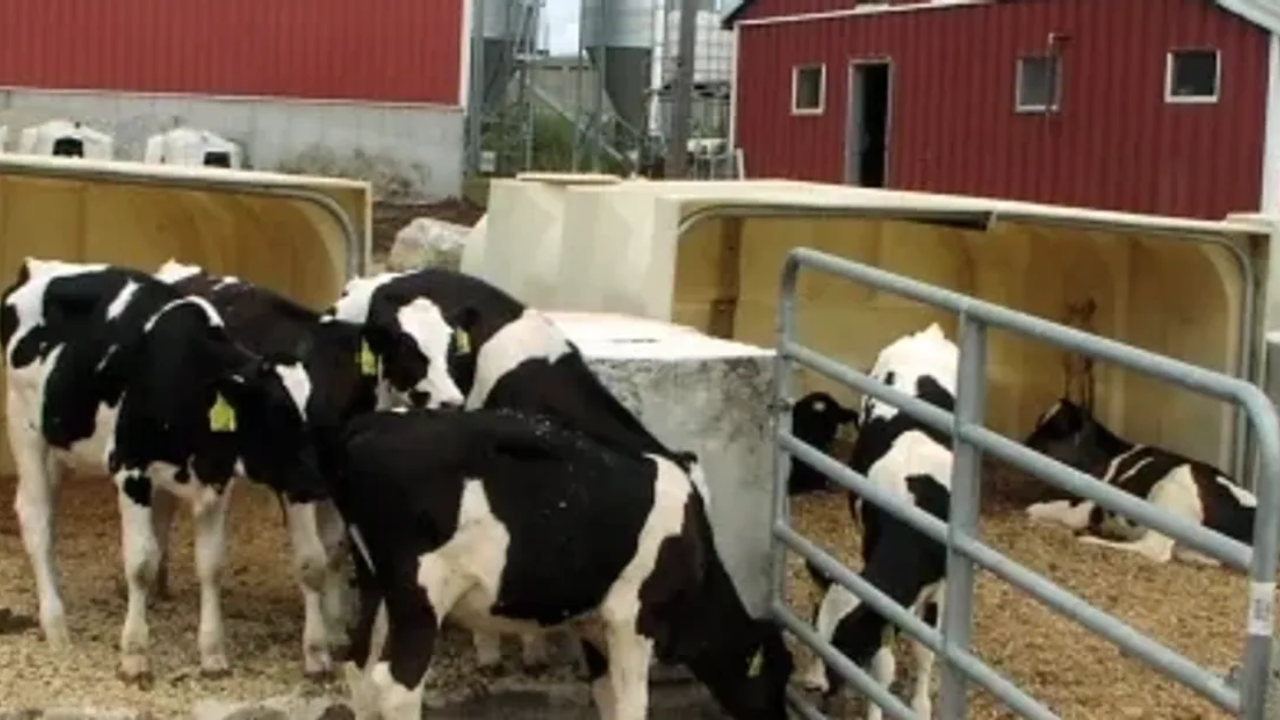
Photo via Times of India

Massachusetts dairy turned cow manure and food waste into energy; it now saves thousands on heat, fertiliser and bedding

Read the original at Times of India ↗
Cite

TOI World Desk. (2026, September 14). Massachusetts dairy turned cow manure and food waste into energy; it now saves thousands on heat, fertiliser and bedding. Times of India. https://timesofindia.indiatimes.com/world/us/in-2011-a-massachusetts-dairy-installed-the-states-first-agricultural-digester-by-2020-manure-and-food-waste-were-saving-it-155000-a-year-on-heat-fertiliser-and-bedding/articleshow/134239305.cms

Dated when The Aporia collected the article, usually within hours of publication. Check the original for its exact date and byline.

Times of India · collected 2026-09-14 · by TOI World Desk

Quick Summary

Jordan Dairy Farms in Rutland, Massachusetts, turned cow manure and food waste into a profitable resource by installing an anaerobic digester in 2011. The system processes around 20,000 tons of food waste and 9,125 tons of manure annually, generating about 4,200 megawatt-hours of renewable electricity yearly. This initiative saves the farm roughly $155,000 per year through reduced costs for heat, fertiliser, and bedding.
Written by AI on 2026-09-15, from this article's own text only (the story summary below draws on all the coverage).

AI analysis

Story summary

Jordan Dairy Farms in Rutland, Massachusetts, installed the state's first agricultural anaerobic digester in 2011 to address rising electricity costs. The system converts cow manure and food waste into biogas, generating clean energy that offsets approximately 5,500 pounds of carbon dioxide emissions daily and produces about 4,200 MWh annually of renewable electricity according to Vanguard Renewables, which partnered with the farm on this project. By 2020, the digester was saving the family-run dairy around $155,000 yearly by producing heat, fertilizer, and bedding from waste materials that would otherwise be discarded. This innovative approach not only reduces environmental impact but also enhances operational efficiency for the farm.

Written for “Cow Manure Energy Conversion” on 2026-10-31, grounded in this article and the 0 other(s) covering the same event.

Story

📰 Cow Manure Energy Conversion
Environment · 1 article(s) covering the same event.

Compared with similar articles

Nothing to compare against. No article is close enough to this one for the pipeline to have linked or judged the pair.
How this article was measured signals, leaning charts, publisher record, byline, topics and claims

Signals How these are calculated →

Claims extracted
44
sentences that state something as happening or true
Uncertain
14%
6 of 44 hedged ("reportedly", "may", "according to")
Leaning
not political
takes no side on a contested political question
Publisher signals
59/100
Times of India's corrections and hedging, across everything collected from it. Not a measure of accuracy.
Outlets on this story
1
Environment
Same framing elsewhere
1
articles that frame the event the way this one does
Analyzed 2026-09-15 · how these are computed

How this is being covered How these are calculated →

Article leaning vs. publisher reliability
Source leaning vs. consistency

Publisher

Times of India · 3798 article(s) · 2 correction(s) detected
Running correction rate · 2 correction(s)

Who wrote this

TOI World Desk
1247 article(s) here · 1 carrying a prediction
🔮 "But if someone is on the platform to learn about a topic or to connect with community members, then they might perceive AI-generated content as more problematic." Cazals said, "Unlike a lot of my followers, I'm not dogmatically against AI”. "I'm against the pollution online of AI slop that's made for quick entertainment and views”.
🔮 Anna plans to appear as a half-deer, half-goat creature on stilts, while Jimmy will dress as Jeepers Creepers, complete with custom wings that unfold.
🔮 Prince William and Kate Middleton may have been made aware of serious allegations against Meghan Markle’s father, Thomas Markle Sr., after a letter detailing the claims was reportedly sent to the joint office shared by the two royal couples at Kensington Palace in 2019.
🔮 The money will support nearly 7,000 children.
🔮 Within two months, Conard identified a property in a Denver strip mall that could be used for a haunted house.
🔮 They allege that Meta could combine this information with activity tracked on Eyemart’s website to identify them and deliver targeted advertisements.
🔮 People from outside Indiana University had also contacted Brian Williams, a professor at the Kelley School of Business who helped develop the programme, expressing interest in taking the course.
🔮 On October 31, the family will take the experience further by welcoming relatives from out of town to help bring the display to life with live actors.
🔮 Thus, a decade ago, he began collecting Halloween costumes for kids who couldn't afford them.
🔮 He expressed concern that the confrontation could cost him his job.
Wire or desk byline, not an individual reporter.
Also by TOI World Desk
Nothing else under this byline is closely related to this article, so these are simply their most recent.
All 1247 articles by TOI World Desk →

Topics

Jordan Dairy Farms Massachusetts Rutland Vanguard Vanguard Renewables

Subjects

Jordan GPE · 4× Jordan Dairy Farms ORG · 3× Massachusetts GPE · 2× The Washington Post ORG · 2× Vanguard ORG · 2× Bill Jorgenson PERSON · 1× Brian PERSON · 1× Randy Jordan PERSON · 1× Rutland PERSON · 1× Vanguard Renewables ORG · 1×

Narrative

The farm's own website says the digester generates enough clean energy each day to offset approximately 5,500 pounds of carbon dioxide emissions, while Vanguard estimates annual renewable electricity production at 4,200 MWh.
framing: assertive · carried by 1 article(s) · first seen 2026-09-15
🔮 Jordan Dairy Farms had hundreds of cows producing manure every day, and Jordan began exploring whether that waste could be converted into energy.

Claims (44 extracted, 6 hedged)

For generations, cow manure was simply an unavoidable byproduct of running a dairy farm. asserted
manure → run → farm
At Jordan Dairy Farms in Rutland, Massachusetts, however, it became something much more valuable: a source of electricity, heat, fertiliser and even animal bedding. asserted
it → become → electricity
In 2011, the family-run dairy installed what it describes as the first agricultural anaerobic digester in Massachusetts. asserted
it → run → Massachusetts
The system uses microorganisms to break down manure and other organic waste in an oxygen-free environment, producing biogas that can be used to generate electricity. asserted
that → use → electricity
Randy Jordan, who runs the farm with his brother Brian, was looking for a way to deal with rising electricity costs. asserted
who → run → costs
Jordan Dairy Farms had hundreds of cows producing manure every day, and Jordan began exploring whether that waste could be converted into energy. uncertain
waste → have → energy
By 2020, the system was saving the farm roughly $155,000 a year through heat, fertiliser, and bedding produced from what would otherwise have been waste. asserted
what → save → heat
How does a manure digester work? asserted
digester → work → ?
The science behind the system is based on a natural biological process. asserted
science → base → process
Organic material such as manure contains compounds that microorganisms can consume. asserted
microorganisms → contain → that
Inside an anaerobic digester, the material is kept without oxygen, allowing microbes to break it down and release a mixture of gases, including methane and carbon dioxide. asserted
microbes → keep → methane
The methane can then be burned to generate electricity and heat. asserted
methane → burn → electricity
At Jordan Dairy Farms, manure is not the only material entering the digester. asserted
manure → enter → digester
Food and beverage waste collected from businesses is mixed with the farm's manure, increasing the amount of organic material available for digestion. asserted
waste → collect → digestion
According to Vanguard Renewables, which operates the system, the farm's digester receives around 20,000 tons of food waste and 9,125 tons of manure every year. uncertain
digester → accord → manure
The material is processed inside a 500,000-gallon digestion tank. asserted
material → process → tank
Microorganisms break down the mixture, producing biogas that powers two engines. asserted
that → break → engines
Together, the engines have a capacity of about 800 kilowatts and generate approximately 4,200 megawatt-hours of renewable electricity annually, according to Vanguard. uncertain
engines → have → Vanguard
Manure becomes electricity, heat and fertiliser The process produces several useful outputs, turning one waste stream into multiple resources for the farm. asserted
process → become → farm
The electricity generated by the system can be used on the farm, while excess power has also been sold directly to nearby businesses. asserted
power → generate → businesses
The heat generated during the process is another important benefit. asserted
heat → generate → process
In 2020, Jordan told The Washington Post that heat and hot water produced by the digester saved the farm around $35,000 a year. asserted
heat → tell → 35,000
The farm also receives a huge volume of liquid fertiliser from the digestion process. asserted
farm → receive → process
Jordan said at the time that the system produced about 14 million gallons of liquid fertiliser annually, saving the farm roughly $100,000 in fertiliser costs. asserted
system → say → costs
The solid material left behind could also be used as animal bedding, providing another estimated $20,000 in annual savings. uncertain
material → leave → savings
Together, those savings amounted to around $155,000 a year. asserted
savings → amount → 155,000
The current project information from Vanguard similarly lists reduced energy costs, low-carbon fertiliser, heat reuse, reduced chemical fertiliser use and odour reduction among the farm's benefits. asserted
information → list → benefits
The idea of putting food waste into a manure digester was particularly important to the project's economics. asserted
idea → put → economics
When Jordan first investigated digesters, the technology had already existed for decades. asserted
technology → investigate → decades
But many earlier systems struggled financially and operationally. asserted
systems → struggle → ?
According to The Washington Post, energy consultant Bill Jorgenson proposed combining food waste with manure. uncertain
Jorgenson → accord → manure
The additional organic material could increase energy production, while companies looking to dispose of food waste could pay fees to have that material processed. uncertain
material → increase → fees
That created a second revenue stream around the same piece of infrastructure. asserted
That → create → infrastructure
The arrangement also addressed another environmental problem: organic waste sent to landfills can generate methane as it decomposes. asserted
it → address → methane
Capturing organic material in a controlled digester instead allows much of that methane to be collected and used. asserted
much → capture → methane
For the farm, waste from food processors and other businesses becomes an input rather than something with no value. asserted
waste → become → value
What happens to the methane? asserted
What → happen → methane
The biogas produced by the digester contains methane, which is the component used to generate energy. asserted
which → produce → energy
At Jordan Dairy Farms, the gas is directed to generators that produce electricity. asserted
that → direct → electricity
The heat produced in the process can also be recovered and used around the farm. asserted
heat → produce → farm
…and 4 more, not listed.

💬Give feedback
🕘History 🎫Support